
- Reaction score
- 3,259
- Points
- 1,140
We have 10 years. Thats a lot of lead time even if the worse comes to pass...and if one doesn't come quick enough?


We have 10 years. Thats a lot of lead time even if the worse comes to pass...and if one doesn't come quick enough?
Oh the rumbling and mumbling is there for sure, but the Liberal caucus has never given itself the powers available under the Reform Act so they have no formal mechanism to do anything about it. Also, it's one thing to be disgruntled on the backbenches of a party with a majority government one year in and with a leader still apparently enjoying a honeymoon with the voters. Quite another to be on the backbenches of a majority government half way through it's mandate and with a leader whose approval rating was lower than Liz Truss's, who was herself arguably less popular that a lettuce....It is too soon to see of Carney will experience a back bench revolt but the murmurs are there. It must make some of Trudeau's leftovers stifle their so called principles to be part of Carneys government. I have had some great fun with my Hardcore Liberal friends and family members by teasing them that the Harper second term being implemented by Carney seems to have very broad support.
Would a Trudeau have bought 65,402 AR-derived Assault rifles?
Would Trudeau have reduced the Women's Issues department budget from 486 Million to under 80?
Trudeau would have kicked Submarine questions down the street through 2035 if he was still around.
Climate anyone?, and Pipelines for all.
Add in parliamentary secretaries and committee chairs and really, the odds of getting some post on top of just being an MP are pretty good in Canada.With our Cabinet sizes running about 25% larger than the average UK government cabinet (30-40 Canada vs 20-30 UK) and our need for about 175 MP's for a majority, you've about about a 20ish% chance in Canada for being a CM vs the 326 MP's at a minimum in the UK. This translates to be about a less than 10% chance of being a CM in the UK.

Thatcher took over shortly after the UK joined the EU and while the 70s and 80s were generally volatile that's when their whole banking system was restructured and became a huge part of the UK economy (and conversely manufacturing dropped off a lot, and Thatcher went hard over on miners and other blue collar types).The UK has stagnated before. What's lacking is a Thatcher.
Ever closer union is stuttering in a lot of countries.

The UK did not shoot itself in the foot, unless you accept only limited criteria for measuring benefit and cost.Countries rarely decide to shoot itself in the foot, then blame every subsequent leader for not being able to keep up with its peers.
I am trying to think of any prior instance I've come across of someone advancing the proposition that moving from resources to services is not entirely a good idea, and coming up short. Usually in Canada we lament our position as "hewers-of-wood-and-drawers-of-water" and dream about moving up.then decided to pull out of it out of shear stupidity, after (largely Thatcher) burning through most of their natural resources turning UK into a service economy for the EU.
Sure thing. But when it comes to governance, the population isnt giving UK PMs grace to deal with those economic costs.The UK did not shoot itself in the foot, unless you accept only limited criteria for measuring benefit and cost.
Exiting the EU has economic costs.
Exiting the EU has political (sovereignty) benefits.
Maitres chez nous has immense value. It turned out EU membership imposes risks of lowest-common-denominator and tragedy-of-commons problems.

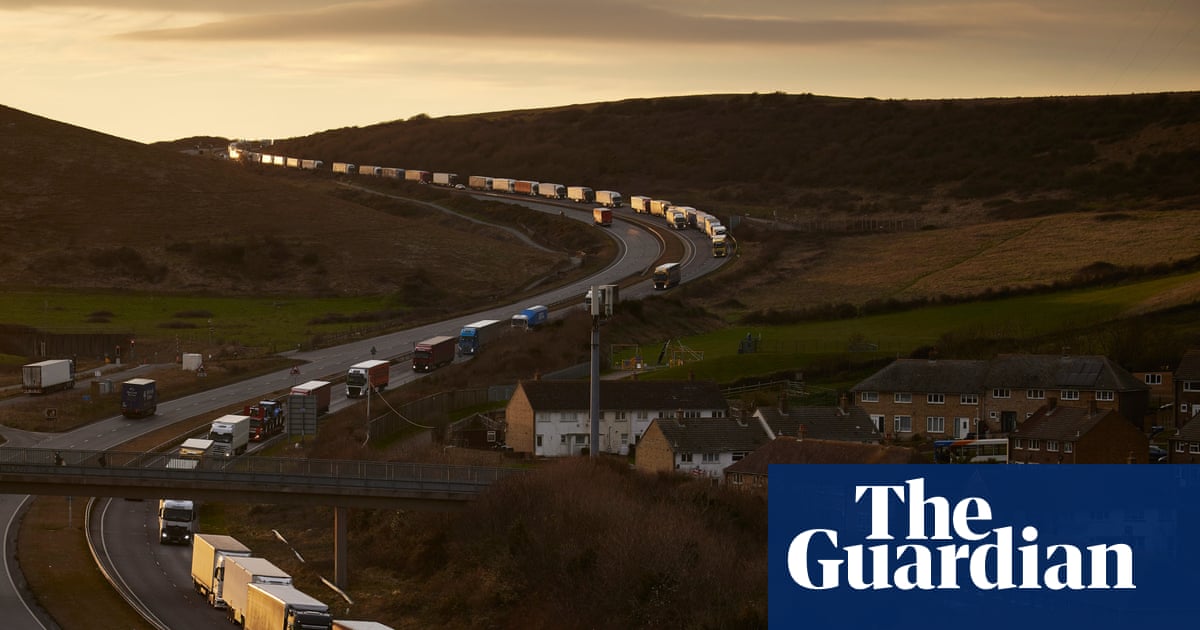
 www.theguardian.com

Now that the UK has full control over itself, UK PMs are in part not being given grace because they're moving too slowly making changes voters want made on matters other than purely economic/fiscal. All the recent headlines were about censorship, highly unsatisfying choices about which people are permitted room to misbehave and which are in trouble if they express a contrary opinion, and the specific behaviour of a few immigrants and the people who, apparently, enabled them because they were cowed by some variation of identity politics. Economy wasn't mentioned much.Sure thing. But when it comes to governance, the population isnt giving UK PMs grace to deal with those economic costs.
Pretty much every country and many of their lower level governments have revenue-expense imbalances on the adverse side right now. Not really much point singling out the UK. Maybe people who favoured Remain are having trouble letting go.They want their services, they dont want higher taxes, the UK economy cannot function because the financial sector doesnt have the seamless access to the continent.
Brexit was effect, not cause. The UK was already "broken", if "broken" just means there's a ruling class that persists in trying to govern the country at odds with a majority of the governed. Governments all over Europe are having that problem. In each case, something is going to give. The governing classes are remarkably obtuse and determined to have their way, so my money is on the people eventually overturning all the card tables.Talk sovereignty all you want, brexit broke the UK. And now nobody can run it.

Keeping in mind the leaders of the EU need to punish the UK, to keep the lesser nations inline, otherwise they might up and go as well. We are still in "punishment" stage, adding in Covid as well. I will argue that it is far to early to tell whether it is a success or failure.The revolving door at 10 Downing is unsurprising given the economic issues prevailing over the past decade or so...
How Brexit has made Britain poorer – in charts
Forecasters were wrong about an immediate recession but right that we would be worse off outside the EU
But experts agree the long-term forecasters were on the money: the economy is significantly smaller than it would otherwise have been, trade has suffered, business investment and productivity growth have stalled, and families are on average thousands of pounds a year worse off.
How Brexit has made Britain poorer – in charts
Forecasters were wrong about an immediate recession but right that we would be worse off outside the EU
Its ten years later, they are markedly poorer, and have gone through more prime ministers than Italy and one less than France over the same timeframe.Keeping in mind the leaders of the EU need to punish the UK, to keep the lesser nations inline, otherwise they might up and go as well. We are still in "punishment" stage, adding in Covid as well. I will argue that it is far to early to tell whether it is a success or failure.
Britons are much better off than Iranians, and some people here are spouting off about how successful Iran has been lately. Maybe calibrate your superlatives?Massive failure. How much more time do we all need to see that?
One. Keep threads on proper topics maybe?Britons are much better off than Iranians, and some people here are spouting off about how successful Iran has been lately. Maybe calibrate your superlatives?
This is on topic. You're just throwing out superlatives: "massively", "spectacularly". Nothing remotely quantifiable or even justifiable by relative comparisons.One. Keep threads on proper topics maybe?
Two. The UK was in line with its peers in terms of political stability and economic performance, and since brexit have failed spectacularly at both.
And my contention is that departing the EU was an effect of dissatisfaction. PM churn started before Brexit, which makes Brexit a poor candidate for your claims about dissatisfaction.If you want to say sovergnity is worth that, be my guest, but judging by the churn at the top of british politics since brexit, the public clearly aren't happy.
Yeah, sure, the UK is 10 percent poorer now because of brexit, better?This is on topic. You're just throwing out superlatives: "massively", "spectacularly". Nothing remotely quantifiable or even justifiable by relative comparisons.
The UK is massively underperforming it's peers in the EU post Brexit. The UK was matching their peers in the EU pre brexit.Haiti is a massively or spectacularly failed nation. The UK is not. Among "its peers" it ranks well in absolute GDP and per capita GDP. "Failure" isn't on any list of remotely non-risible descriptions.
The PM churn absolutely did not start before brexit.And my contention is that departing the EU was an effect of dissatisfaction. PM churn started before Brexit, which makes Brexit a poor candidate for your claims about dissatisfaction.

A Labour PM will have a tough time no matter what.
The people don’t want Labour, they won because of first past the post rather than growing support. It’s more the Tories split and the votes went to a bunch of different parties other than Labour, allowing Labour to win enough seats to form government.
That means the public really isn’t interested in their policies.
If the PM tries to govern too far down Labours ideology the public is upset. If they don’t, the party is upset and you get kicked out.
Rock and hard place.

 globalnews.ca
If Labour can get back the voters they lost to the greens they will br fine electorally. But they cannot afford the vote split.And it looks like they're heading further Left, with hints of favouring a stronger command economy vs. free marketeering ...
“Andy Burnham is probably one of the most popular politicians in the country,” Bale said. “Although, to be honest, that is not saying much.”
Andy Burnham aims to replace Keir Starmer as U.K. PM. Who is he?
Burnham is perceived to be to the political left of Starmer – an asset with Labour members – and is acknowledged as one of the party’s best communicators. The rather stiff public speaker of his earlier leadership bids has been replaced by a relaxed figure in jeans and open-necked shirts.
His three mayoral election victories and decisive win in Thursday’s election in Makerfield, where he trounced the candidate of the anti-immigration party Reform UK, have cemented his status as a winner. Many in the party hope he can reverse Labour’s precipitous decline in popularity since Starmer won an election landslide two years ago.
In a postelection speech to supporters, Burnham sketched out his priorities: better vocational education and jobs for young people, lower energy bills and rail fares and “an end to trickle down economics, which didn’t trickle down very much at all to places like this.”
Critics say Burnham’s politics are vague and fail to grapple with tough issues, such as where the money will come from to pay for his pledges. And they note that running a country of 70 million is a lot different from overseeing a city region of 3 million.
Andy Burnham aims to replace Keir Starmer as U.K. PM. Who is he? - National | Globalnews.ca
Burnham is an experienced politician whose career has taken him from high-level government jobs to the mayoralty of Greater Manchester, and now to the cusp of the PM’s office.


