


- Reaction score
- 35
- Points
- 560
With U.S. Aid, Warlord Builds an Afghan Empire
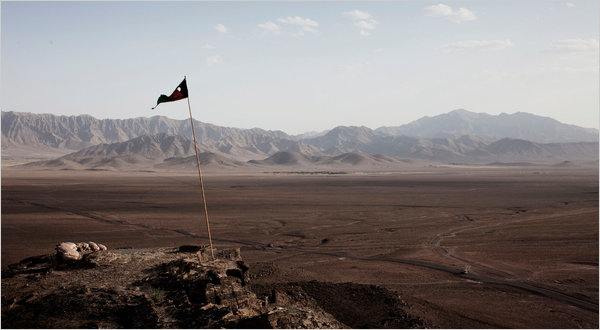
TIRIN KOT, Afghanistan — The most powerful man in this arid stretch of southern Afghanistan
is not the provincial governor, nor the police chief, nor even the commander of the Afghan Army.
It is Matiullah Khan, the head of a private army that earns millions of dollars guarding NATO
supply convoys and fights Taliban insurgents alongside American Special Forces. In little more
than two years, Mr. Matiullah, an illiterate former highway patrol commander, has grown stronger
than the government of Oruzgan Province, not only supplanting its role in providing security but
usurping its other functions, his rivals say, like appointing public employees and doling out govern-
ment largess. His fighters run missions with American Special Forces officers, and when Afghan
officials have confronted him, he has either rebuffed them or had them removed.
“Oruzgan used to be the worst place in Afghanistan, and now it’s the safest,” Mr. Matiullah said
in an interview in his compound here, where supplicants gather each day to pay homage and
seek money and help. “What should we do? The officials are cowards and thieves.”
Mr. Matiullah is one of several semiofficial warlords who have emerged across Afghanistan in
recent months, as American and NATO officers try to bolster — and sometimes even supplant —
ineffective regular Afghan forces in their battle against the Taliban insurgency. In some cases,
these strongmen have restored order, though at the price of undermining the very institutions
Americans are seeking to build: government structures like police forces and provincial adminis-
trations that one day are supposed to be strong enough to allow the Americans and other
troops to leave.
In other places around the country, Afghan gunmen have come to the fore as the heads of private
security companies or as militia commanders, independent of any government control. In these
cases, the warlords not only have risen from anarchy but have helped to spread it.
For the Americans, who are racing to secure the country against a deadline set by President Obama,
the emergence of such strongmen is seen as a lesser evil, despite how compromised many of them
are. In Mr. Matiullah’s case, American commanders appear to have set aside reports that he connives
with both drug smugglers and Taliban insurgents.
“The institutions of the government, in security and military terms, are not yet strong enough to be
able to provide security,” said Maj. Gen. Nick Carter, commander of NATO forces in southern
Afghanistan. “But the situation is unsustainable and clearly needs to be resolved.”
Many Afghans say the Americans and their NATO partners are making a grave mistake by tolerating
or encouraging warlords like Mr. Matiullah. These Afghans fear the Americans will leave behind an
Afghan government too weak to do its work, and strongmen without any popular support.
“Matiullah is an illiterate guy using the government for his own interest,” said Mohammed Essa, a
tribal leader in Tirin Kot, the Oruzgan provincial capital. “Once the Americans leave, he won’t last.
And then what will we have?”
Building a Fortune
Mr. Matiullah does not look like one of the aging, pot-bellied warlords from Afghanistan’s bygone
wars. Long and thin, he wears black silk turbans and extends a pinky when he gestures to make
a point. Mr. Matiullah’s army is an unusual hybrid, too: a booming private business and a govern-
ment-subsidized militia. His main effort — and his biggest money maker — is securing the chaotic
highway linking Kandahar to Tirin Kot for NATO convoys. One day each week, Mr. Matiullah declares
the 100-mile highway open and deploys his gunmen up and down it. The highway cuts through
an area thick with Taliban insurgents.
Mr. Matiullah keeps the highway safe, and he is paid well to do it. His company charges each NATO
cargo truck $1,200 for safe passage, or $800 for smaller ones, his aides say. His income, according
to one of his aides, is $2.5 million a month, an astronomical sum in a country as impoverished as
this one. “It’s suicide to come up this road without Matiullah’s men,” said Mohammed, a driver
hauling stacks of sandbags and light fixtures to the Dutch base in Tirin Kot. The Afghan government
even picks up a good chunk of Mr. Matiullah’s expenses. Under an arrangement with the Ministry
of the Interior, the government pays for roughly 600 of Mr. Matiullah’s 1,500 fighters, including
Mr. Matiullah himself, despite the fact that the force is not under the government’s control.
page 2
page 3
TIRIN KOT, Afghanistan — The most powerful man in this arid stretch of southern Afghanistan
is not the provincial governor, nor the police chief, nor even the commander of the Afghan Army.
It is Matiullah Khan, the head of a private army that earns millions of dollars guarding NATO
supply convoys and fights Taliban insurgents alongside American Special Forces. In little more
than two years, Mr. Matiullah, an illiterate former highway patrol commander, has grown stronger
than the government of Oruzgan Province, not only supplanting its role in providing security but
usurping its other functions, his rivals say, like appointing public employees and doling out govern-
ment largess. His fighters run missions with American Special Forces officers, and when Afghan
officials have confronted him, he has either rebuffed them or had them removed.
“Oruzgan used to be the worst place in Afghanistan, and now it’s the safest,” Mr. Matiullah said
in an interview in his compound here, where supplicants gather each day to pay homage and
seek money and help. “What should we do? The officials are cowards and thieves.”
Mr. Matiullah is one of several semiofficial warlords who have emerged across Afghanistan in
recent months, as American and NATO officers try to bolster — and sometimes even supplant —
ineffective regular Afghan forces in their battle against the Taliban insurgency. In some cases,
these strongmen have restored order, though at the price of undermining the very institutions
Americans are seeking to build: government structures like police forces and provincial adminis-
trations that one day are supposed to be strong enough to allow the Americans and other
troops to leave.
In other places around the country, Afghan gunmen have come to the fore as the heads of private
security companies or as militia commanders, independent of any government control. In these
cases, the warlords not only have risen from anarchy but have helped to spread it.
For the Americans, who are racing to secure the country against a deadline set by President Obama,
the emergence of such strongmen is seen as a lesser evil, despite how compromised many of them
are. In Mr. Matiullah’s case, American commanders appear to have set aside reports that he connives
with both drug smugglers and Taliban insurgents.
“The institutions of the government, in security and military terms, are not yet strong enough to be
able to provide security,” said Maj. Gen. Nick Carter, commander of NATO forces in southern
Afghanistan. “But the situation is unsustainable and clearly needs to be resolved.”
Many Afghans say the Americans and their NATO partners are making a grave mistake by tolerating
or encouraging warlords like Mr. Matiullah. These Afghans fear the Americans will leave behind an
Afghan government too weak to do its work, and strongmen without any popular support.
“Matiullah is an illiterate guy using the government for his own interest,” said Mohammed Essa, a
tribal leader in Tirin Kot, the Oruzgan provincial capital. “Once the Americans leave, he won’t last.
And then what will we have?”
Building a Fortune
Mr. Matiullah does not look like one of the aging, pot-bellied warlords from Afghanistan’s bygone
wars. Long and thin, he wears black silk turbans and extends a pinky when he gestures to make
a point. Mr. Matiullah’s army is an unusual hybrid, too: a booming private business and a govern-
ment-subsidized militia. His main effort — and his biggest money maker — is securing the chaotic
highway linking Kandahar to Tirin Kot for NATO convoys. One day each week, Mr. Matiullah declares
the 100-mile highway open and deploys his gunmen up and down it. The highway cuts through
an area thick with Taliban insurgents.
Mr. Matiullah keeps the highway safe, and he is paid well to do it. His company charges each NATO
cargo truck $1,200 for safe passage, or $800 for smaller ones, his aides say. His income, according
to one of his aides, is $2.5 million a month, an astronomical sum in a country as impoverished as
this one. “It’s suicide to come up this road without Matiullah’s men,” said Mohammed, a driver
hauling stacks of sandbags and light fixtures to the Dutch base in Tirin Kot. The Afghan government
even picks up a good chunk of Mr. Matiullah’s expenses. Under an arrangement with the Ministry
of the Interior, the government pays for roughly 600 of Mr. Matiullah’s 1,500 fighters, including
Mr. Matiullah himself, despite the fact that the force is not under the government’s control.
page 2
page 3


