• Thanks for stopping by. Logging in to a registered account will remove all generic ads. Please reach out with any questions or concerns.

Navy to potentially create training ships on great lakes

The agreement says "that the Naval Force to be maintained upon the American Lakes." It has always been interpreted to not mean vessels being constructed, or conducting things like summer cruises.

Everybody that I met that was involved in Rush-Bagot understood it's purpose. It was a symbolic treaty that represented the working relationship on the Lakes, and indeed, the actual working relationships on the coasts. It's hard to take seriously people talking about armed patrols, and naval boarding parties, to "counter" the US when they have exchange planning staff in our Maritime Op Centers and vice versa.

Historically, US enforcement teams embark on Canadian ships, and the opposite. The strength of the relationship is working together. As long as they aren't doing anything we consider illegal or against or national values, work with them. That includes on immigration; nobody wants undocumented and unvetted immigrants going in etiher direction.

If Canada is working with the US to have an Orca replacement available on the Great Lakes to participate in that, great. If people are tossing around the idea to play to current anti-American sentiment, then they are short sighted at best. Just because the current administration is going against historical norms doesn't mean we should over-react. We should be trying to figure out where this is going and react accordingly.
If it gets more usable warships into fleet I wouldn't care if it were anti- Martian sentiment .
Well that's not quite true but ....
I do understand the problems that could be generated by short term political ...Well stupidity actually.
Do we really want to threaten or at least appear to threaten an apparently deranged US Government ?
If we could sell it as part of being a responsible partner in border security.
 
It was interesting that the Rush-Bagot Treaty differentiated between Navy and Armed Coast Guard and have apparently continued that distinction even when the Coast Guard has effectively become an inshore navy.

Other countries engage their Coast Guard as an armed division of the Navy as well.

So our issues seem to be derived from our adamantly civilian Coast Guard. And its complete separation from the RCN.

If there was free movement between the Coast Guard, or at least a Patrol section, and the Navy, then it seems to me a bunch of problems would disappear.

Navalize one portion of the Coast Guard for armed patrols and leave the Navaids, science and SAR to the civilians.
 
Canada needs to step up to the plate more for Sovereignty Operations to Protect Canada and North America. Central Canada has become out of control as a result of Uncontrolled Immigration, Gang Bangers, and one of the largest Stolen Vehicle Operations on our planet earth right now. The Gang Bangers ripping off peoples vehicles while they pull up into their driveways or trying to kick down front doors to do home invasions happening around the GTA are going to have a very bad day when they pull that in Rural Alberta. Our Premier of Alberta is introducing Legislation to Enforce the Castle Law which allows you to use Reasonable Force to protect your Castle from Intruders. 46 States have OPEN CARRY and is something a Sovereign Alberta will be introducing to allow OPEN CARRY here in our Province. Alberta Premier Danielle Smith knows my views about the use of the Canadian Armed Forces Regular Force and Reserve Units posted to Alberta like the National Guard, Marines and US Army have been deployed to beef up the Southern Borders, Fight Crime in Cities, and support the CBSA if required for removal of illegal aliens who have come into Canada illegally. Tough Times require Tough Choices! Canada is no longer what it once was, and is under attack on a daily basis, just not seen by the commoner folks who wear blinders and do not see what is really going on.

Luckily, we have national health care to help take care of all the SIWs from NDs ;)
 
It was interesting that the Rush-Bagot Treaty differentiated between Navy and Armed Coast Guard and have apparently continued that distinction even when the Coast Guard has effectively become an inshore navy.

Other countries engage their Coast Guard as an armed division of the Navy as well.

So our issues seem to be derived from our adamantly civilian Coast Guard. And its complete separation from the RCN.

If there was free movement between the Coast Guard, or at least a Patrol section, and the Navy, then it seems to me a bunch of problems would disappear.

Navalize one portion of the Coast Guard for armed patrols and leave the Navaids, science and SAR to the civilians.

Wouldn't that bring us back around to DFO Fisheries Officers being distinct from Transport Canada?

And if DFO with constabulary powers then does the RCMP need to be on the water?
 
Which then leads to Transport Canada managing Navigation on water and in the air, charting, hydrography and SAR. Take over the RCAF SAR as well?

Maritime Transport? Extend the Marine Atlantic formula to the Arctic and David Eby's Pacific?

How about environmental hazard response? And could that extend off the water to forests? Crown lands generally?

Finally, re training, what if Transport Canada were responsible for training and licensing all drivers, boaters and pilots and that a civilian licence was a prerequisite for a military career? Transport Canada responsible for ensuring everybody understands the rules of the road.
 
Navalize one portion of the Coast Guard for armed patrols and leave the Navaids, science and SAR to the civilians.

Yep: Definitely going back to DFO style para-military maritime force.

Finally, re training, what if Transport Canada were responsible for training and licensing all drivers, boaters and pilots and that a civilian licence was a prerequisite for a military career? Transport Canada responsible for ensuring everybody understands the rules of the road.

Transport Canada does not train anyone in anything, and as a result, doesn't know a thing about training people. It is however in charge of licensing of all merchant marine personnel, pilots and boaters (that little card you get to carry for the rest of your life once you passed the exam), except the military, which certifies its own. All of those civilian people, except the boaters, are trained at specialized institutes that are akin to Community Colleges, and with courses that run about the same length of time as a Community College degree.

But. as I have indicated in another place not too long ago, the merchant standards and methods of operation are different than the naval ones, with the current naval ones - with the exception of cargo work, where the merchant beat us by miles - far more complex and exceeding the levels and methods of the merchant service. As a result, you'd have to waste nearly two years in the civilian side of things before coming into the military side and almost re-learning everything from scratch. It is a waste, and the reason we don't do it.

Your apparent problem appears to be with "understanding of the rules of the road". I am unaware of any military deficiency in teaching such understanding to pilots or sailors. In fact, I would venture (pun intended) that the RCN officers have a much more thorough knowledge and understanding of the Nautical Rules of the Road than merchant seamen do.
 
Yep: Definitely going back to DFO style para-military maritime force.


Transport Canada does not train anyone in anything, and as a result, doesn't know a thing about training people. It is however in charge of licensing of all merchant marine personnel, pilots and boaters (that little card you get to carry for the rest of your life once you passed the exam), except the military, which certifies its own. All of those civilian people, except the boaters, are trained at specialized institutes that are akin to Community Colleges, and with courses that run about the same length of time as a Community College degree.

But. as I have indicated in another place not too long ago, the merchant standards and methods of operation are different than the naval ones, with the current naval ones - with the exception of cargo work, where the merchant beat us by miles - far more complex and exceeding the levels and methods of the merchant service. As a result, you'd have to waste nearly two years in the civilian side of things before coming into the military side and almost re-learning everything from scratch. It is a waste, and the reason we don't do it.

Your apparent problem appears to be with "understanding of the rules of the road". I am unaware of any military deficiency in teaching such understanding to pilots or sailors. In fact, I would venture (pun intended) that the RCN officers have a much more thorough knowledge and understanding of the Nautical Rules of the Road than merchant seamen do.

I don't have a problem ... I am just trying to figure out how to make a Whole Of Government approach work effectively before we tackle the Whole Of Society option referenced by the CDS in asking for 400,000 volunteers.

Frankly I am not sure if I really like Whole Of Society plans.....I keep sensing Huxley, Orwell and Bradbury in the wings.

PS - Transport Canada may not do the training but as you say the licence the trainees. How about certifying the schools and courses?

We are already talking about civilian colleges and credentials for technicians of all sorts. What is one step more to relieve the burden on naval and military schools?
 
The DND CABAL tried to shut down the Mewata Armouries in downtown Calgary, and shove everybody into Super Armouries like they did in Edmonton, with the Debney and Jefferson Armouries. The Calgary Highlanders have very wealthy Sugar Daddies that have fought off any take over of this World War 1 era Armoury for decades. I was posted to support the Calgary Highlanders and Kings Own Calgary Regiment at the Mewata Armories within the new Armoury Support Centre Concept invented by 41 CBG. The Ghost that lives in Mewata Armoury will make it very difficult for Construction Contractors to tear down and remediate the Armoury. It was used to train Canadian Soldiers for World War 1, 2, Korean War, and have sent one of the highest percentages of Reservists to !992 - Present UN and NATO Operations than any other Reserve Unit in Canada. The First CRIC or Composite Reserve Infantry Company within a Battle Group was led by the Calgary Highlanders for a Rotation in former Yugoslavia. Tearing down Historic Reserve Armouries that have history built into every brick of these buildings is always a very bad idea. London lost a huge piece of their history when the DND CABAL sold it to the DELTA HOTEL Franchise. It was home to the Regular Force RCR and the Cream of the Crop Top Regular Force 2 Brigade Combat Arms Units in Canada, before being handed over to Reserve Units.
Yes, so lets keep it until the asbestos starts flaking into the HVAC system and the entire place needs to be condemned. Or better yet it burns down one winter because the electrical is ancient. Sometimes old buildings need to be flattened when they are a hazard (A Block in Halifax is a good example) and historical buildings can be preserved (The Admirals House on the same base is now a museum). The London armories proved something. You can leave the outside all nice and historical and completely revamp the inside.
 
Fortunately, that's not a decision either the RCN or NTOG gets to make. That decision is made by the Government on behalf of the People of Canada.

As one of those "people," I'd prefer that was left to the RCMP and CBSA, given that is literally their job. I don't beleive the current situation warrants the CF being used as an Aid to the Civil Power.

As an aside, your colorful description of why NTOG wants to do that gives me no confidence that they should.
Edit: read down afterwards and realized I'm late to the party...

Fortunately the Rush Bagot Treaty is still in effect, so it's actually up to both Canada and the US, given that the border is demilitarized. Similarly there are rules around transiting and sailing around the St. Lawrence that are also goverened by a treaty, so it's easier operationally to run ships on the coasts, and run boats in the rivers and lakes that are wholely within Canada.

Unarmed training ships with a whack of trainees are one thing; armed warships (outside dog and pony shows for short durations, and transits from yards) is still a no-go.

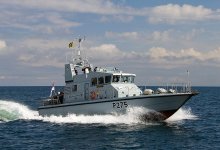
Orcas have no armament, ammo storage, sensors (beyond commercial) or otherwise setup for anything other than training without modification, so would likely be fine, if they were basically run intermittently to train up Naval Reservists, but honestly still overkill if you just want time on the water doing basic navigation and seamanship. We'd probably get better bang for our buck running a small passenger ship using a standard commercial design with more berths than build more Orcas, which had fun defects like the anti-corrosion system being installed with reverse polarity and causing severe corrosion on the underwater hull.

NTOG is a bit of a potemkin capability that does some cool training, looks good on recruitment videos and never gets ROEs beyond self defence so lot less cost effective than the basic boarding party for what we use them for. The smart ones get quickly disillusioned with how little they actually do, so the long term ones are the real kool-aid drinkers that know way less then they think, and are a solution looking for an actual problem.
 
Yes, so lets keep it until the asbestos starts flaking into the HVAC system and the entire place needs to be condemned. Or better yet it burns down one winter because the electrical is ancient. Sometimes old buildings need to be flattened when they are a hazard (A Block in Halifax is a good example) and historical buildings can be preserved (The Admirals House on the same base is now a museum). The London armories proved something. You can leave the outside all nice and historical and completely revamp the inside.
But what if... we put in a risk assessment and ask someone that doesn't work in the building to accept the risk? Meeting the building code is for weenies who don't live large. The Canadian Labour Code and the DND General Safety program is for simps and betas.

Oh, and TBS in their directive on real property management. But who cares what they think?
 
But what if... we put in a risk assessment and ask someone that doesn't work in the building to accept the risk? Meeting the building code is for weenies who don't live large. The Canadian Labour Code and the DND General Safety program is for simps and betas.

Oh, and TBS in their directive on real property management. But who cares what they think?
I get it. My point (roundabout) was that a lot of people put the power into the hands of the Regimental Senates and rich locals when really the power is in the fact that there is no infrastructure budget and no money for fixing up facilities at all. The James St. Armouries was almost abondoned about 10 years ago with the units going to move to the recently closed Asylum (not joking...). But that as well was to expensive.
 
I keep saying that the army in Hamilton needs to move the the old high school on York (Sir John A..). Better parking, proper classrooms, newer building, gym, large training area out back (football field) etc...

If they want to keep the armouries so much then they can renovate them in the meantime.
 
Back
Top