• Thanks for stopping by. Logging in to a registered account will remove all generic ads. Please reach out with any questions or concerns.

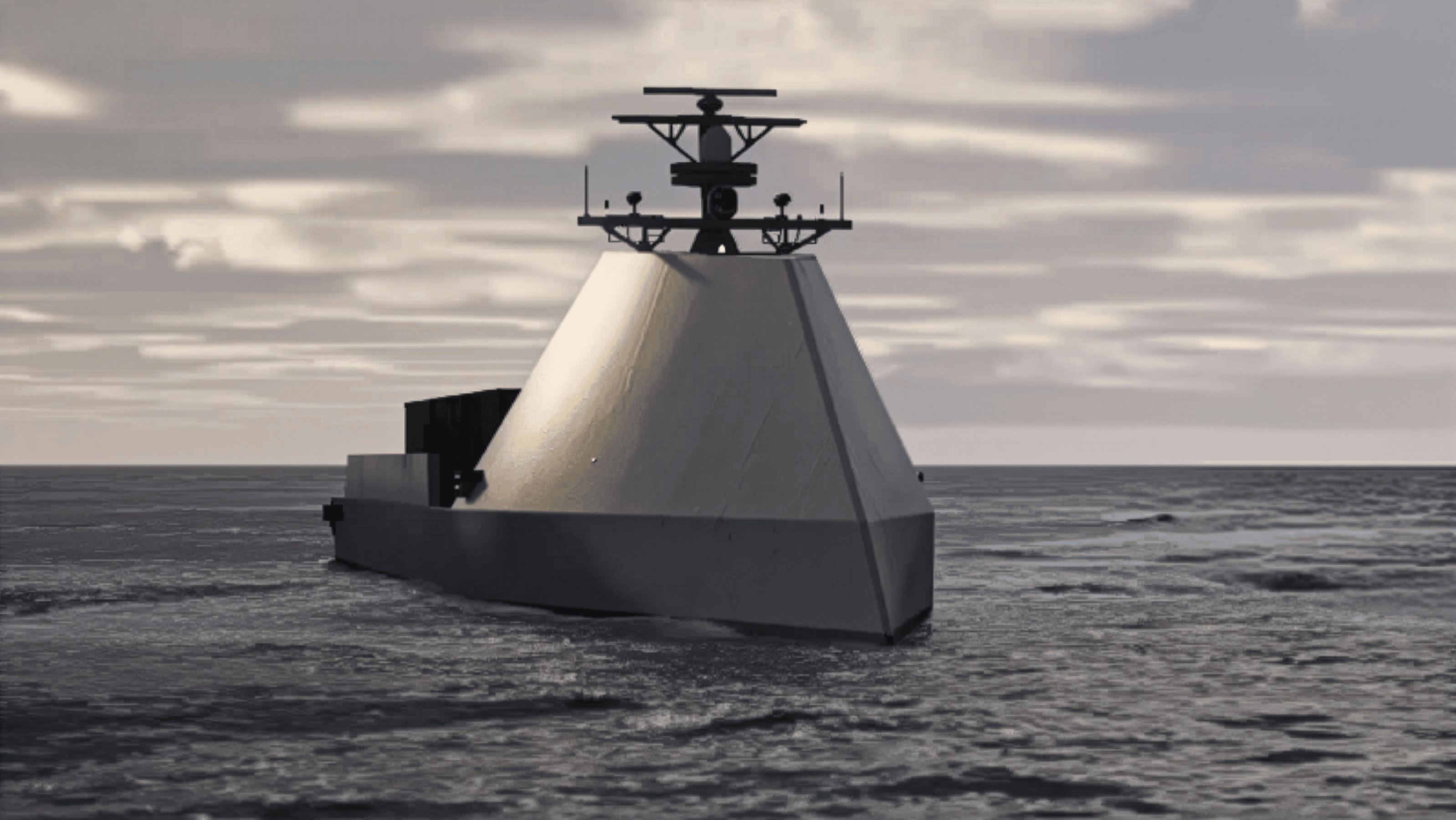
Continental Defence Corvette

Continental threat revisions.


I think this is the idea.

It communicates this fact to everyone else through data link.

People seem to be under the misunderstanding that ships do anti submarine warfare on their own. Let me make this clear. A ship doing anti submarine warfare on its own is probably DEAD.

I don't know how many times I need to say this, but ASW is a full team sport.

The team will be task groups assigned to ASW. And that could consist of a Patrol Submarine, 2-3x CDC, 1 RCD and an MPA. Maybe an AOPS to launch and recover UUV's that patrol areas. They will work in conjunction over an area, detect enemy subs and then as a team deal with the problem. Or its also very likely that they detect submarines at ranges where they can't interact with them (sonar does this with ducting sometimes). In that case its one sensor hit in the sensor net and other things are needed to define that contact.

The other thing is that perhaps the CDC isn't an ASW specialist, the new submarines are the specialists. CDC does self defense air warfare and surface warfare. Its the punch that the AOPS doesn't have and it integrates with RCD's and air assets in a network to monitor and defend Canadian waters.
I get what you're saying but what I'm trying to point out is that there seems to be a disconnect between the capabilities that are being suggested for the CDC don't match what is being proposed as the mission for the CDC.

I have yet to read anything that suggests the CDC being deployed as part of a TG consisting of multiple CDC's, an RD, an CPS and MPA's. What I've read goes from ABM platforms stationed along the coast to individual CDC's patrolling along the edge of the ice pack (far from local air cover and no mention of multi-platform Task Groups).

If the CDC is to be an ABM defence platform then no need for the ability to prosecute ASW targets. If the CDC is going to be deploying on its own in the high Arctic seeking submarines thousands of miles away from our MPA bases then maybe it becomes a priority.

Provide some clarity on what exactly these ships are supposed to do and then we can discuss what capabilities they need. The problem is Adm. Topshee seems to be throwing contradictory ideas against the wall about what these ships are meant to do to see what sticks. I don't think that's the right way to go about this.
 
I have yet to read anything that suggests the CDC being deployed as part of a TG consisting of multiple CDC's, an RD, an CPS and MPA's. What I've read goes from ABM platforms stationed along the coast to individual CDC's patrolling along the edge of the ice pack (far from local air cover and no mention of multi-platform Task Groups).

If the CDC is to be an ABM defence platform then no need for the ability to prosecute ASW targets. If the CDC is going to be deploying on its own in the high Arctic seeking submarines thousands of miles away from our MPA bases then maybe it becomes a priority.
Have you considered that there is a massive difference between what a warship will be tasked to do during peace-time, and during war?

The talk of CDCs patrolling along the ice edge is a peace-time tasking to establish a well armed presence in the Arctic, not a description of the tactical deployment of the ships in war.

Talk of TGs and such is entirely in relation to employing a platform in an ASW scenario, which is also how the RCDs and CPFs would conduct ASW.

I'm pretty sure the ABM thing wasn't even from the CRCN, it was conjecture based on the new name for the idea. The RCDs aren't even being discussed as ABM platforms, and they are planned to have the radar and VLS capability to do so.
 
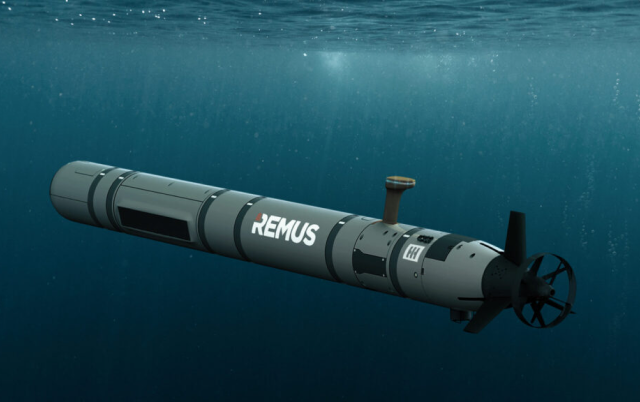
And this is part of the evolving seascape in which a Continental Defence Corvette and a Canadian Patrol Submarine will be operating


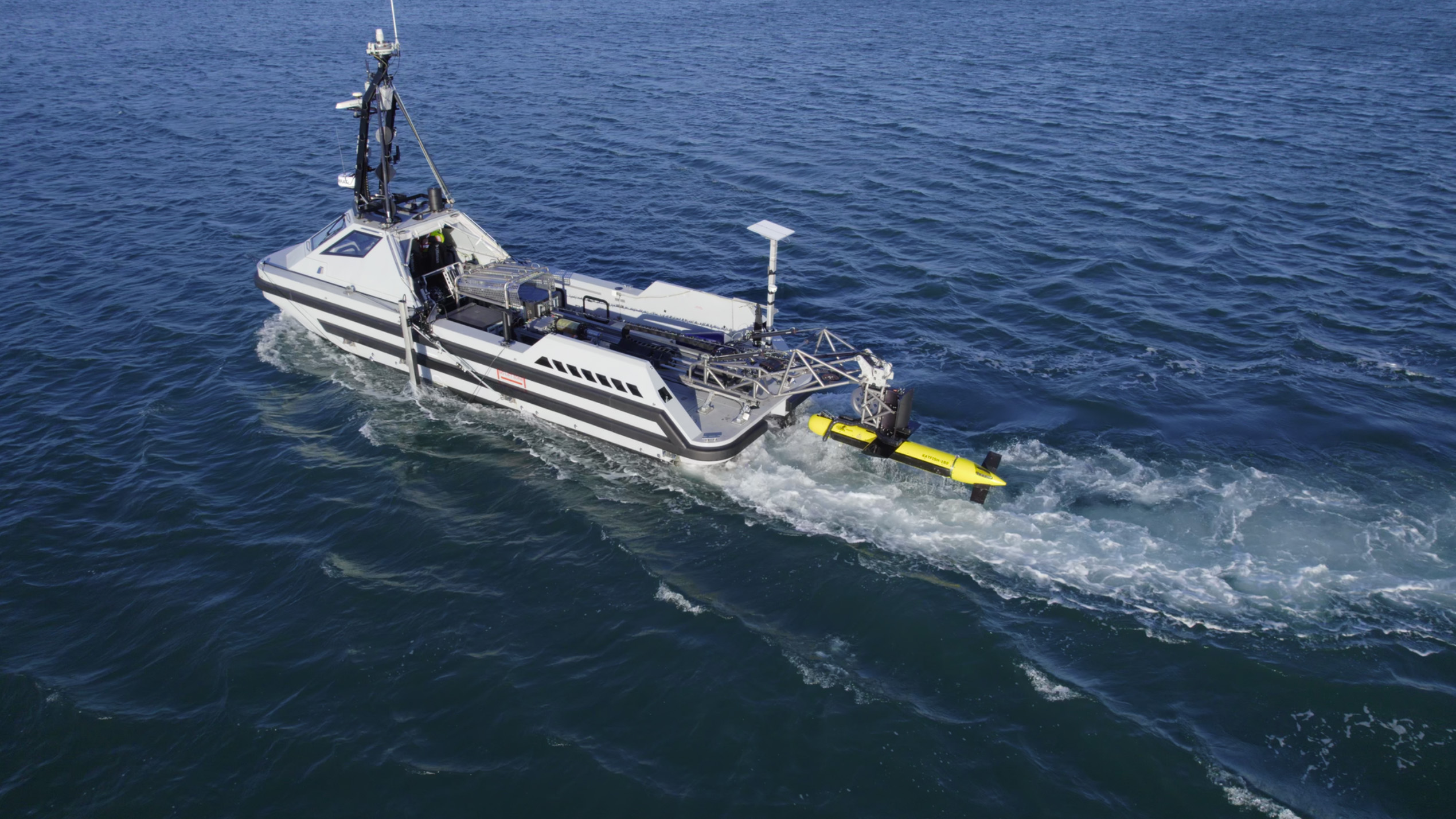
ARCIMs is an 11 m unmanned launch that operates off the backs of motherships. 40 kts unladen and 8 kts when towing.

Katfish is a synthetic aperture sonar that sweeps a path 400 m wide and 300 m deep.

....

Cost of 1 to 2 MUSD, perhaps less.
Payload of 3000 kg
ADCAP torpedo weight of about 1700 kg.
Spearfish torpedo weight of 1800 kg
Sting Ray torpedo weight of 267 kg
 
Last edited:
That does put a different spin on it!

I do long for the days when DREA (now DRDC), CFMWC, the fleet, MAG E&R, and industry had the resources and support to work together and come up with innovative solutions. If we had vision we could pick some obtainable capabilities and become world leaders.

Doing future force planning based on capabilities that do not yet exist and hand waving away the complexities as CRCN seems to do won’t accomplish that, it takes vision, resources, and effort. There are plenty of examples where organizations with more of all three underestimated the complications of maintaining air assets at sea.
At one point recently there was a cell in MEPM that did initial concept designs, which was a good way to get an idea on what kind of changes to one piece of kit can have to the whole design spiral of the platform, and have some concept designs for different projects to do OA with (like the naval large tugs).

I think they mostly disappeared, and the CDC team seems to be a few random NWOs in DNR that don't really understand any of that, so a lot of apparent googling and vision boards or something. I don't think any of them have experience with any of the in service maintenance or training side of things either, which are all pretty important to actually delivering a capability if you are serious about it.

I think a lot of that is a waste of time, as will possible get the Big Giant Heads all hot and bothered for capabilities that may not actually be possible, practical, feasible or create massive combat vulnerabilities, and we may end up with legacy unicorn requirements. I think it would make a lot more sense to see what capabilites we need to have, what the gap is with the future fleet plan, and then let a competent designer go from there, vice inventing it from the ground up with cool toys and then inventing a capability gap it would fill, but my opinion and $4 will get you a cup of coffee.

It's really weird, but also don't want to ask many questions in case I get matrixed into the HMCS Sisyphus project concept design.
 

I don't think any of them have experience with any of the in service maintenance or training side of things either, which are all pretty important to actually delivering a capability if you are serious about it.
I spent a career trying to implement good ideas, while compensating for “the good idea club” not caring about those things, so I hear you. Hence my concern over whether what was being mused about could be properly executed.
 
I spent a career trying to implement good ideas, while compensating for “the good idea club” not caring about those things, so I hear you. Hence my concern over whether what was being mused about could be properly executed.
Compared to the support from a lot of world class experts that went into a lot of the performance based design criteria the combat recoverability and other aspects of the design were done around for the CPFs (and the 280 TRUMP program) it's a very big difference, which is unfortunate. I think the Germans did a lot of good work on JSS (some of which we screwed up by arbitrarily adding/changing things), and similarly the RN still does a lot of, that we similarly messed up while turning an ASW platform into a larger AAW platform with AEGIS bolted on.

I think a lot of it has to do with the authority levels, and what seems to be blind deferrence to 'operations', even at the cost of actual operational performance from a lot of the naval engineering community. Glad all that expertise went into the 280s and CPFs though; the RCN now has managed to significantly undermine a lot of the baseline design intent and performance by doing stupid things and not actually maintaining equipment, so all that legacy redundancy has saved our ass a few times. Not sure if we'll end up with the same amount of 'dumb ideas' margins in the RCD, so less confident those will have a similarly successful lifespan without major changes to the institution. None of that is really my problem though, as I doubt I'll be around before they even hit FOL, but hopefully have been able to contribute to some things in the basic design that helps avoid problems 30 years downstream.
 
I spent a career trying to implement good ideas, while compensating for “the good idea club” not caring about those things, so I hear you. Hence my concern over whether what was being mused about could be properly executed.
This is standard stuff. Big ideas, then you hit the design phase and things get cut off the tree of ideas pretty quick.

My future career goal is to work in that office. They need an engineer to keep them honest.
 
This is standard stuff. Big ideas, then you hit the design phase and things get cut off the tree of ideas pretty quick.
My experience has been more along the lines of the “good ideas club” created a Cadillac spec, but were told “not the Cadillac” so they cut the budget but not the good ideas, and then it took forever to deliver those good ideas (not the least because some of them weren’t well thought out or described), and then when it finally went to see the GoFos we’re falling all over themselves saying “it’s the best in the world,” even though it wasn’t supposed to be, and now those same GoFos can’t understand why it isn’t supportable.

And one of the FOs thinks he knows more about it than anybody even though he has no demonstrated knowledge or staff expertise.
 
My experience has been more along the lines of the “good ideas club” created a Cadillac spec, but were told “not the Cadillac” so they cut the budget but not the good ideas, and then it took forever to deliver those good ideas (not the least because some of them weren’t well thought out or described), and then when it finally went to see the GoFos we’re falling all over themselves saying “it’s the best in the world,” even though it wasn’t supposed to be, and now those same GoFos can’t understand why it isn’t supportable.

And one of the FOs thinks he knows more about it than anybody even though he has no demonstrated knowledge or staff expertise.
What you said isn't incompatible with what I said. Ideas get cut. For example, the River Class has now gone from all the requirements the RCN needs in a single ship to all the requirements the RCN needs to the ships class.

Example, naval gunfire support. I suspect that later flights of the RCD will not have the 127mm because the requirement for the RCN to provide that is inherent in the first six six ships but might be removed for the next 6 ships to make way for more missiles, lasers and whatnot.
 
Example, naval gunfire support. I suspect that later flights of the RCD will not have the 127mm because the requirement for the RCN to provide that is inherent in the first six six ships but might be removed for the next 6 ships to make way for more missiles, lasers and whatnot.

Look, lasers are for sharks, not ships.

200.gif
 
This is standard stuff. Big ideas, then you hit the design phase and things get cut off the tree of ideas pretty quick.

My future career goal is to work in that office. They need an engineer to keep them honest.

Judging from the number of instances of scope creep in Western military projects not enough limbs get butchered soon enough.

Every service in every 5-Eyes nation seems to be guilty.
 
Back
Top