• Thanks for stopping by. Logging in to a registered account will remove all generic ads. Please reach out with any questions or concerns.

Continental Defence Corvette

Start from here for your corvette fleet.


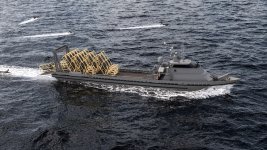
What can you do with one ship? Two or three? Unmanned? In company with a Halifax? A River? Working with smaller UxVs?
Maybe in conjunction with Vard70 OPVs and AOPSs.


Further to


45m Swiftship OSV as patrol boat.
 
What are the chances of us sending over a few dozen sailors to the RN for training once their T26's start coming online?
I dunno about a few dozen, but it will be guaranteed that some folks will find their way across. Just like we'll have Cdn Sailors on USN ships for the combat systems famil at some point.
 
I dunno about a few dozen, but it will be guaranteed that some folks will find their way across. Just like we'll have Cdn Sailors on USN ships for the combat systems famil at some point.
Maybe its time to up those numbers. I'm sure that they'd love to embed a half-dozen sailors onto HDW for example when its deployed into the Arctic for 3-4 months.
 
There may have been a consensus of those of us who were ignored during the reorganization of CFNES to NFS(A) to "Let it fail".

Senior instructors attempted to input advice to the change initiative, but were shut down hard. Training Chiefs attempted, but the only space that had some success was DC DIV, where the direct fleet impact of staff reductions would have been felt in very short order.

"Not enough instructors to run a DCOTT = worse fleet readiness"

As such, much of the staffing at DC Div remained at pre-NFS(A) levels, but, the rest of the school was gutted.

The NET(A)/W ENG(S) Training section went from a P1, five P2's, and seven MS with a P1 at Standards supporting, to a P1, two P2s and two MS, with the Senior Instructor being their own "Standards" 13 - 5.

With 13 instructors, you could run 4 courses (QL3/QL5) with 2 instructors each and have spare people to send on leave, MATA/PATA, Nijmegen, Shooting Teams, PLQ, swap out with a buddy that needed a break from a ship, etc.

With 5, you have no depth of field - you can run 2 courses at a time with 2 instructors each (required for safety on electronics/powered systems) but you have no redundancy - what happens when MS Jones calls in sick? What happens when PO2 Smith goes on ILP?

The response was that any empty staff spots at the school would be filled by CFTPO'ing people in from the fleet....which is the opposite of how VCDS manning priorities actually work.

So, until you build up the instructor cadre again, you're going to be screwed for producing new techs.

And those of us who attempted input and were resoundingly told to 'shut up' by leadership were left only with the "Let it Fail" solution....and that has home to roost. Long after the leadership who imposed it have been given their awards and retired, the pieces are left to the Navy of Today to pick up.

It'll take a lot of work to rebuild what's been lost in the RCN's training system.

I was leaving OT div as that was starting, it was pretty brutal to see. We also would occasionally get CFTPOs from the school for critical vacancies, which was particularly stupid as courses got cancelled/delayed, and after a few of those in a row they just asked to be posted to a ship so they could at least have a reliable schedule.

Got fortunate to have some great instructors, and the best ones in uniform were also generally really high flyers in the trade so got pulled back to the fleet way before their time, so didn't even really get any shore time as a break. The couple I knew that were at CFNES around that time that really liked teaching got pretty discouraged and I think all of them that could left ASAP.

The Halifax DC school catching on fire Xmas day a few years ago was probably a good summary of the state of the training system, and I think that was about a year after the electrical fire at CFNES on a main power panel. Too many fingers in the pie to try and address the underlying issues, and also too many silos to actually fix obvious problems because of lack of coordination/common priorities. I was glad to leave that behind, even with something unfinished, but still better than when I got there I guess.
 
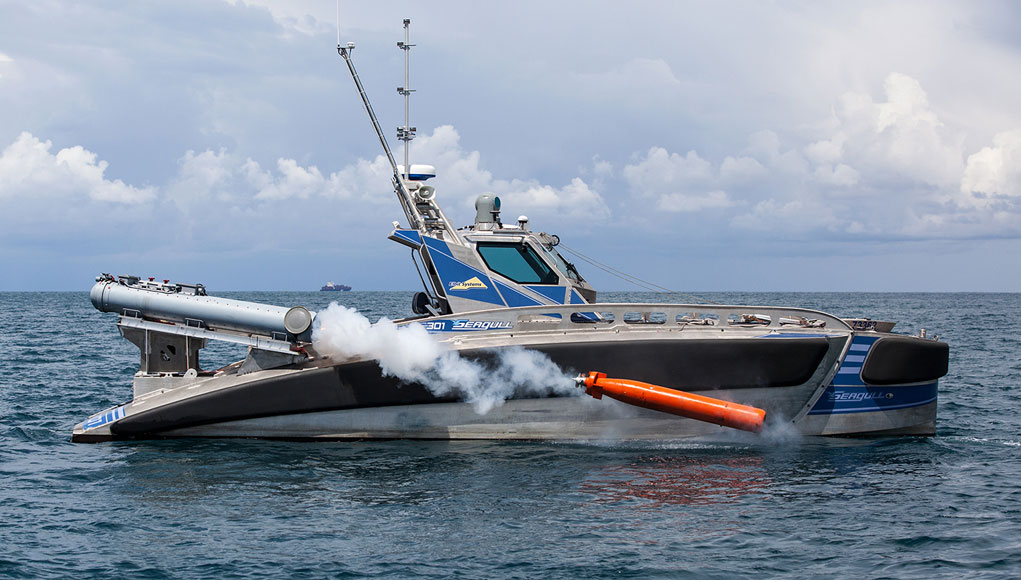
I previously suggested it wouldn't be long before somebody stuck a torpedo or two on a USV.
As @ytz has discovered I continue my lifelong streak of being a day late and a dollar short.


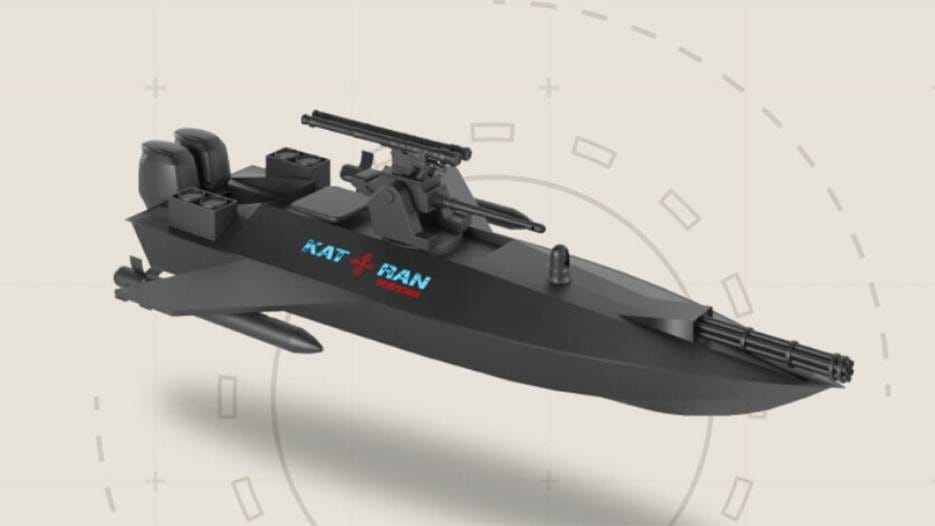
And a Ukrainian offering.


1767656161374.jpeg

My problem with the Ukrainian stuff is that the all look like the GI Joe stuff my kid used to play with.
It is hard to know when Budanov is trolling us.


(I played proper soldiers with Action Man and Brittan soldiers)
1767656080284.jpeg
 
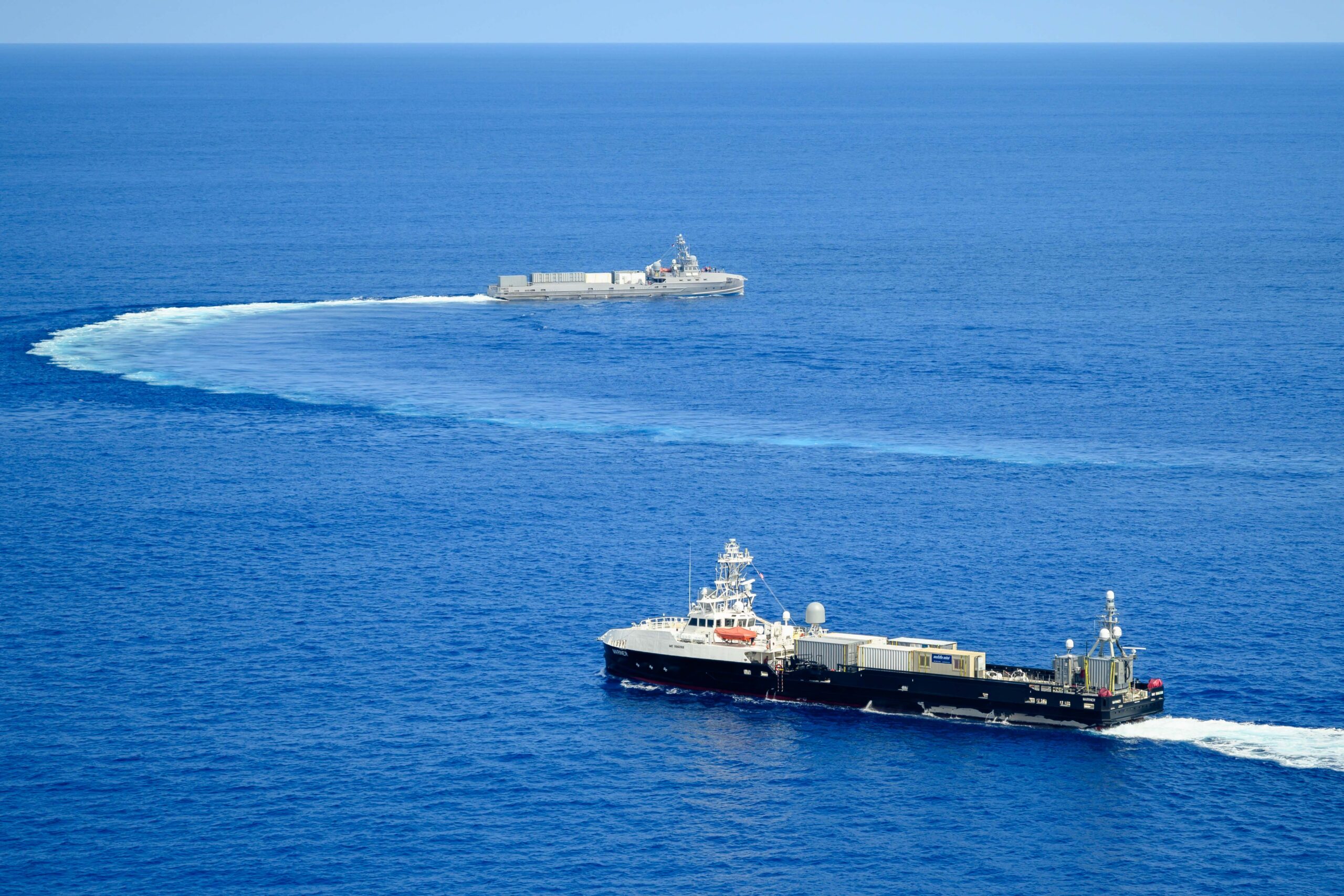
Further to those Swiftship OSV-PB/Corvettes

Same yards

An OUSV deploying USVs

View attachment 97592


Several of these loaded with sea-gliders:
 
I previously suggested it wouldn't be long before somebody stuck a torpedo or two on a USV.
As @ytz has discovered I continue my lifelong streak of being a day late and a dollar short.


And a Ukrainian offering.


View attachment 97595

My problem with the Ukrainian stuff is that the all look like the GI Joe stuff my kid used to play with.
It is hard to know when Budanov is trolling us.


(I played proper soldiers with Action Man and Brittan soldiers)
View attachment 97594
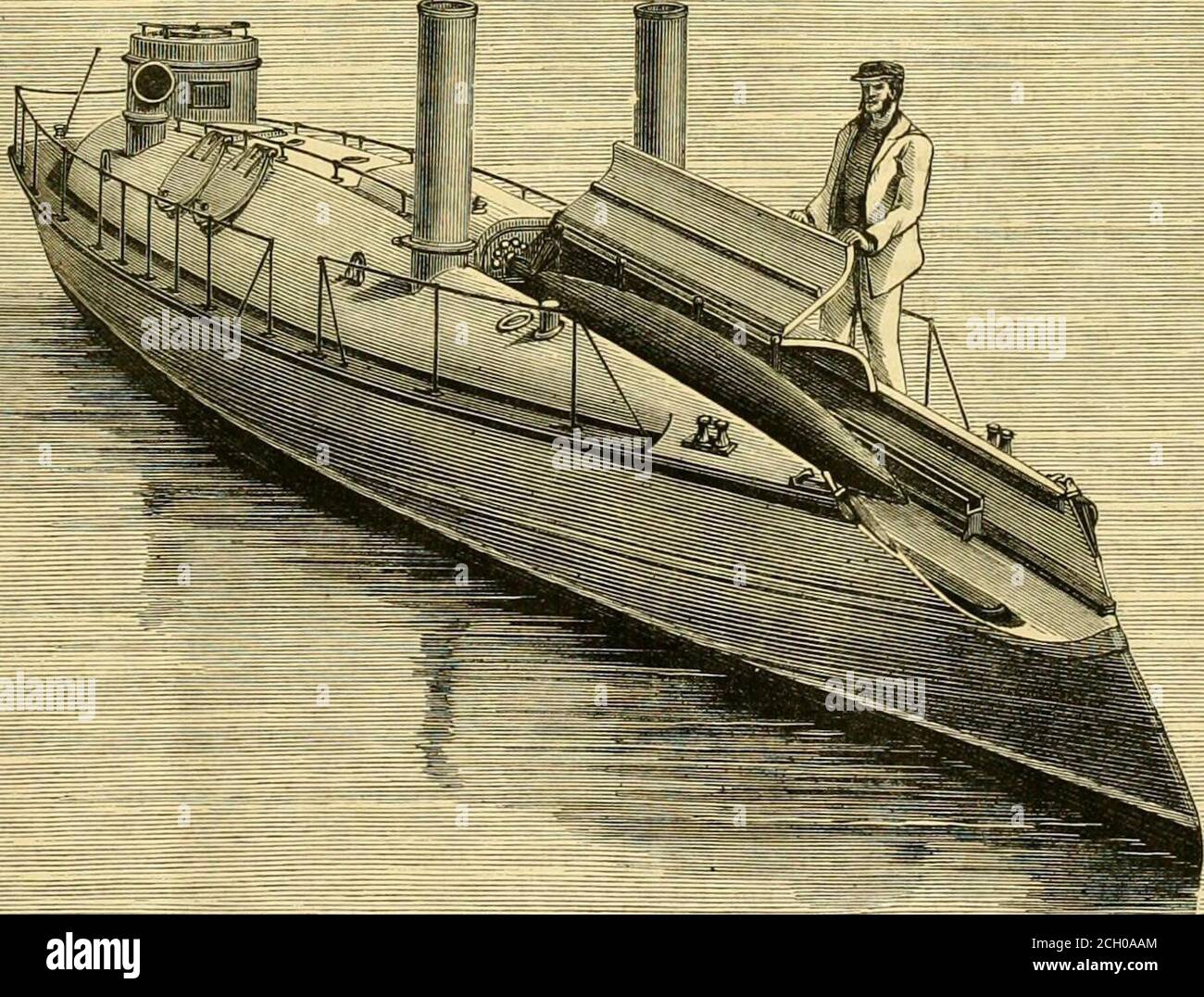
What is old is sort of new again

scientific-news-for-general-readers-a-popular-illustrated-weekly-journal-of-science-jiimbaucd-second-class-yarrow-torpedo-boat-showing-whitehead-torpedo-in-position-took-the-matter-up-and-after-a-long-series-of-experimentsproduced-the-whitehead-torpedo-in-the-year-1870-mr-whitehead-came-to-england-andput-his-invention-before-the-british-admiralty-he-wasafforded-a-trial-and-succeeded-in-destroying-an-old-hulkwhich-was-moored-at-the-mouth-of-the-river-medway-fromthat-date-the-fortune-of-the-whitehead-torpedo-or-ratherof-its-inventor-may-be-said-to-have-been-made-hereceived-at-2CH0AAM.jpg
 
"Not all maritime warfare happens in a hail of hypersonic missiles and heavyweight torpedoes: in fact, almost none of it does. We need to expedite the build of our own Type 31 light frigate, order more,"


.......

I am posting this article here for these paragraphs....

"Most interesting, perhaps, is Defence Secretary John Healey’s line: “The UK will continue to step up our action against shadow fleet activity.”

What does this mean? Denmark, Estonia, Finland, Sweden and France have all boarded shadow fleet vessels since 2022, we have not. We politely ask them to provide proof of registration and insurance and let them on their way almost regardless of what made-up document is submitted. We must remain legal but in this there is always a grey zone. Has the US just shown us how to do it? Regaining control of the petro-dollar is a complex business, but minimising money for Putin’s war effort is a relatively simple matter of stopping the shadow fleet. Our current sanctions policy isn’t really achieving this: time to step it up.

To do this, we need more warships. This whole operation proved beyond doubt the utility of small, fast, lightly armed – and numerous – vessels. The US Navy has recognised this by selecting the class of ship the US Coast Guard used here, the Legend class cutters, to be the basis of a new light frigate. Not all maritime warfare happens in a hail of hypersonic missiles and heavyweight torpedoes: in fact, almost none of it does. We need to expedite the build of our own Type 31 light frigate, order more, and replace our excellent-but-scarce Batch 2 Offshore Patrol Vessels. This operation was also a case study in why some warships will always need to have people on them. Unmanned systems are going to be vital, but not universal.

Overall, this was another tactical masterpiece delivered at range by the US,"
 
You are correct that an AOPS would not be used in a real MCM scenario and frankly, I hope it never is, because it shouldn’t be but that's part of our answer for the lost of capability of the Kingston with not direct backup. That observation, however, actually reinforces the case for a dedicated and credible MCM capability rather than weakening it.

In your rant you make a lot of assumptions here. Before a single MCM vessel sails on Op REASSURANCE, we already exercise scenarios where Canadian ports are mined, Halifax, Esquimalt, approaches, choke points, anchorages. We do this because the threat is credible, cheap for an adversary, and disproportionately disruptive. Sea mines remain one of the most cost effective naval weapons ever devised, and no serious navy assumes “there won’t be many” or that CLDs alone solve the problem particularly against influence mines, buried mines, or deliberately complex denial fields. The risk will even escalate in the future with the introduction of AI in the new generation of smart mines.

MCM is not about having lightly armed ships into missile envelopes. It is about access, assurance, tempo, and freedom of manoeuvre, clearing approaches, opening Q routes, and enabling follow on forces and logistics. That capability is also perishable. The planning, classification, disposal skills, and command and control expertise cannot be surged once a crisis starts. This is exactly why NATO maintains standing MCM groups and why sailors in those formations remain deeply committed to the mission they understand that if you let the skill weaken, you don’t suddenly regenerate it when ports suddenly need to be opened.

Reducing MCM to “just diplomacy” also misses the point. Yes, deployments reassure allies and it helps meet our NATO commitments, but they also ensure Canada can operate in mined environments alongside NATO, rather than relying on others to clear the very harbours and sea lanes we intend to use. Telling a partner nation “it’s your responsibility to clear the harbour” while we sit offshore launching long range weapons assumes a lot. It assumes permissive access, unlimited standoff options, and zero political constraints none of which are guaranteed.

Finally, framing MCM as something that competes with “core warfighting capability” is not really valid. Access is warfighting. Sustainment is warfighting. Modular MCM solutions on future platforms make sense but only if they are built on an existing, practiced MCM culture and that comes with a dedicated MCM capability. Without that foundation, you are not fielding a capability; you are bolting equipment onto a hull and hoping the skill appears when needed and hope for the best.

I think its safe to say that we all hope we never have to do serious MCM at home or abroad. But hope is not a plan and mines remain cheap, effective, and likely. Ignoring that reality is how navies relearn old lessons the hard way.
We don't have coastal defence batteries in Canada (either anti-ship or anti-air), because the likelihood of attack on our shores is basically nil. Why do you think that there is a higher likelihood of mines being deployed on our coasts that CLDs can't handle?

If we were at war with Russia and asked by NATO to deploy a TG to the Baltic and the Russians managed to mine the Kattegat or the Danish straits, do you envision that NATO would expect Canada to also be required to establish the Q-route for our entry into the Baltic?

If we were at war with China and asked to send a TG into the SCS and the Chinese had managed to mine the Balabac strait, do you think we'd be expected to clear that route? (if we were ever even thinking about ever sending a ship that close to China in the first place)

To deal with realistic mine threats against Canada itself, we have the capabilities we need. Everywhere else we are going to operate is either deep water open ocean, or in someone else's backyard. Either they have the capabilities to clear the mines for us, or else it's a non-permissive environment in which case we're not clearing the mines even if we had the capability.

The crux of my argument is that we should not be looking AT ALL into giving the CDC (or the RCD, for that matter), an MCM capability. Focus the design effort, cost, training, maintenance, and upkeep on ensuring you get the best bang for your buck in the other core warfare areas. Don't let MCM be a distraction; we have what we need.
 
We don't have coastal defence batteries in Canada (either anti-ship or anti-air), because the likelihood of attack on our shores is basically nil. Why do you think that there is a higher likelihood of mines being deployed on our coasts that CLDs can't handle?

If we were at war with Russia and asked by NATO to deploy a TG to the Baltic and the Russians managed to mine the Kattegat or the Danish straits, do you envision that NATO would expect Canada to also be required to establish the Q-route for our entry into the Baltic?

If we were at war with China and asked to send a TG into the SCS and the Chinese had managed to mine the Balabac strait, do you think we'd be expected to clear that route? (if we were ever even thinking about ever sending a ship that close to China in the first place)

To deal with realistic mine threats against Canada itself, we have the capabilities we need. Everywhere else we are going to operate is either deep water open ocean, or in someone else's backyard. Either they have the capabilities to clear the mines for us, or else it's a non-permissive environment in which case we're not clearing the mines even if we had the capability.

The crux of my argument is that we should not be looking AT ALL into giving the CDC (or the RCD, for that matter), an MCM capability. Focus the design effort, cost, training, maintenance, and upkeep on ensuring you get the best bang for your buck in the other core warfare areas. Don't let MCM be a distraction; we have what we need.
You just given the best argument I've seen for acquiring an MCM capability.
The Americans haven't sufficient capability to clear their own ports. And our next closest allies are at least 3000 miles away..
Yeah you're right we have absolutely nothing to worry about
It's just a distraction ...until it isn't .
 
You just given the best argument I've seen for acquiring an MCM capability.
The Americans haven't sufficient capability to clear their own ports. And our next closest allies are at least 3000 miles away..
Yeah you're right we have absolutely nothing to worry about
It's just a distraction ...until it isn't .
I didn't say we didn't need an MCM capability, I said we already have the MCM capability we have, and that thinking about adding an MCM capability to the CDC should stop. Any additional MCM capability should be looked at as something that gets bolted into the AOPS or a new class of small tenders.
 
When I worked with Route Survey, we were able to conduct MCM operations using the old 30-ish foot harbour defense jet boats that we had in Halifax. The boat was able to be fitted to tow a Klein 5000 series tow-fish, setup the operator displays in the cabin, and we'd have had enough space to put one of the SeaBotix vLBV 900s onboard as well. (I proposed this as a trial, but it wasn't actioned while I was still with Route Survey.)

With that, you've got a small vessel capable of being transported by road to any harbour on the east coast within a day, deploy an MCM team, and conduct Q-Route sweeps in any harbour.

No, it's not going to work well in rough weather, and it's going to be a bad time for the crew in anything but good weather with low winds, BUT, it was a capability that could be easily deployed.

The 'most likely' mining scenario would be for a 'shadow fleet' ship or malign actor vessel to approach and enter a harbour and to be seen with things 'splashing' into the water off the back end as the ship was departing.

There are 'swimming' anti-ship mines that will propel themselves off-axis as they sink, so you end up having to sweep a broader area, but, with a setup as described above, you could deploy, scan, identify, and prosecute items of interest in the harbour approaches within 2 days.

We used an MCDV as our offshore scanning unit, and the jet boat for within the harbour itself.

Losing the MCDV's doesn't mean you've lost the offshore capability. It just means you have to use a different platform to do the same thing....and it doesn't need to even be a ship as bit as an MCDV. We could grab a Glen Tug and fit the Klein to that and have a go offshore, and the 'new' FDU dive support boats are a good size for the in-harbour sweeping.

I'm not saying the MCDV's are redundant - they did damn fine work for many years, but saying that the CDC needs to have a mine countermeasures package onboard is not the case. There are other solutions if you're imaginative.
 
We don't have coastal defence batteries in Canada (either anti-ship or anti-air), because the likelihood of attack on our shores is basically nil. Why do you think that there is a higher likelihood of mines being deployed on our coasts that CLDs can't handle?

If we were at war with Russia and asked by NATO to deploy a TG to the Baltic and the Russians managed to mine the Kattegat or the Danish straits, do you envision that NATO would expect Canada to also be required to establish the Q-route for our entry into the Baltic?

If we were at war with China and asked to send a TG into the SCS and the Chinese had managed to mine the Balabac strait, do you think we'd be expected to clear that route? (if we were ever even thinking about ever sending a ship that close to China in the first place)

To deal with realistic mine threats against Canada itself, we have the capabilities we need. Everywhere else we are going to operate is either deep water open ocean, or in someone else's backyard. Either they have the capabilities to clear the mines for us, or else it's a non-permissive environment in which case we're not clearing the mines even if we had the capability.

The crux of my argument is that we should not be looking AT ALL into giving the CDC (or the RCD, for that matter), an MCM capability. Focus the design effort, cost, training, maintenance, and upkeep on ensuring you get the best bang for your buck in the other core warfare areas. Don't let MCM be a distraction; we have what we need.
I think this line of reasoning underestimates both how mines are actually used and where Canada is most likely to be exposed, even if the probability of a direct, deliberate “attack on Canada” remains low.

First, the absence of coastal defence batteries doesn’t explain the mine problem. Coastal missile and air defence batteries are overt, escalatory, and attributable. Mines are the opposite: cheap, covert, deniable, and asymmetric. You don’t need to “invade Canada” to mine approaches to Halifax, Esquimalt, or the St. Lawrence you only need to create uncertainty long enough to halt commercial traffic, delay naval movements, and force political decision making under pressure. That asymmetry is why mines remain relevant when other forms of coastal attack do not. We have exercised covert port mining scenarios for years in the MCM community because it is feasible and concerning because the economic and operational consequences for a trading nation with concentrated maritime infrastructure are disproportionate.

Second, CLDs are not a substitute for a modern MCM capability. They are a last ditch, high risk capability for limited clearance under the right conditions. Certainly not a scalable answer for sustained operations: not for port approaches, not for multi day Q route clearance, and not when fatigue, op tempo, and safety margins start to matter. We have a finite number of CLDs, and in any serious scenario they would be pulled in multiple directions at once. Domestic reassurance, key approaches, expeditionary commitments because Canada only has so much capacity to surge.

On NATO tasking: no, NATO would not expect Canada to single handedly open the Kattegat or the Danish Straits but that’s not the expectation. The expectation is whether Canada shows up as a contributor rather than a consumer of security. Alliances don’t function if every nation assumes “someone else will clear the mines.” MCM is exactly the sort of niche, perishable skill set that becomes decisive when the coalition needs it most and the uncomfortable truth is that many navies have let it wither. If Canada deploys into a mined theatre, the expectation is not that we bring only platforms that can shoot; it’s that we bring a balanced contribution that includes the capability that keep sea lanes open and shoulder some of the burden.

The South China Sea example actually reinforces the point. In a high end conflict with China, mining choke points and straits isn’t speculative, it’s a predictable way to impose delay, and complicate coalition operations. Whether Canada chooses to sail “that close” is almost beside the point. The issue is whether we retain an interoperable MCM skill set so that when we operate with allies we are not simply waiting for others to make the sea safe for us. Mines are one of the few area denial tools that even a dominant naval coalition cannot ignore, which is why serious navies maintain MCM and treat it as a serious perishable skill, not a peacetime hobby.

Where I agree is on platform design: MCM should not drive the CDC or RCD designs, and it should never compromise core ASW, AAW, or strike performance. But that doesn’t mean MCM should be abandoned , it means it should be modular, and focused, exactly as modern practice intends. Treating MCM as a “distraction” misunderstands its role: it is a significant capability with perishable skills, not something to bolt on and forget about it.

The likelihood of mines being used against Canadian or our allies may be low, but it is still more likely than the likelihood of coastal missile batteries appearing opposite Halifax. Mines don’t need permission, warning, or escalation to be effective. That is why Canada should retain the capability and, frankly, expand it: through dedicated systems and training pipelines, not by wishing the problem away in the name of “focus.” If we are serious about resilience at home and credibility abroad, the logical next step is not to pretend CLDs can cover the gap, they are complimentary and integral to the MCM capability platforms we have now, it is to advocate for a renewed MCM approach, including a new class of MCM oriented vessels built around remote and autonomous mine hunting and disposal. If that means ships taken up from trade that the CRCN has motioned so be it but the smart play would to build new cheap, platforms with the basics to cover domestic and international scenarios and leave the combatants to fulfill their core mission of warfighting.
 
I'm pretty sure MCM is one of the tasks the CRCN was talking about using civilian owned, or civilian style OSVs to accomplish.
He did and that's the capability we should be advocating for along with other options such as the CLD's which are complimentary to the type of MCM we do now and as a stand alone capability. I would like to see purpose built COTS MCM ships with a greater capability than the Kingston Class. for domestic and overseas work. I also think we should get back in the mining business for the storm that is coming.
 
He did and that's the capability we should be abdicating advocating for along with other options such as the CLD's which are complimentary to the type of MCM we do now and as a stand alone capability. I would like to see purpose built COTS MCM ships with a greater capability than the Kingston Class. for domestic and overseas work. I also think we should get back in the mining business for the storm that is coming.

Is my correction correct ?
 
Back
Top