• Thanks for stopping by. Logging in to a registered account will remove all generic ads. Please reach out with any questions or concerns.

Canada moves to 2% GDP end of FY25/26 - PMMC

I saw this on the 'Royal Canadian Navy Yesterday and Today' FB page:

Here’s the reality check people don’t like hearing about the “arm the Coast Guard” debate.
There’s a big difference between designing ships so they could be armed in wartime and turning the Canadian Coast Guard into a second navy in peacetime. Quietly improving sensors, communications, and data sharing with the Royal Canadian Navy under Department of National Defence oversight makes total sense and that's the current plan. That builds the maritime picture, which is often more valuable than another gun. A CCG ship spotting, tracking, and reporting in the Arctic can be strategically more important than one pretending to be a warship.
Some Coast Guard operations already involve firearms in a law-enforcement context, especially during fisheries enforcement. Small arms and even .50 cal capability for force protection isn’t the same thing as turning a vessel into a warship. We have CCG ships for fisheries enforcement that have .50 Cals operated by CCG crews. Mounts, lockers, and ammo storage are technically easy to add. Engineering isn’t the issue.
Where the fantasy starts is the “just put containerized missiles on them” crowd. Missiles aren’t plug and play. They need environmental control, constant maintenance, trained operators, and integration into a fire-= control network. That’s not “open a container and push a button.” Very few navies actually operate containerized systems in a ready, sustained way for a reason, it’s logistically messy and operationally fragile.
The bigger problem is construction standards. Coast Guard ships are built to civilian maritime rules: efficiency, endurance, crew safety. Warships are built to survive being hit. They have shock hardening, protected magazines, redundant firefighting, and serious compartmentalization to stop flooding from spreading. Put missile containers full of explosives on a civilian-standard deck and you haven’t created a combatant , you’ve created a floating ammunition truck without warship survivability. You’re adding offensive risk without adding defensive resilience. That’s a bad trade.
Then there’s command and control. Missiles aren’t just hardware; they’re part of a kill chain involving sensors, targeting, doctrine, and engagement authority. Coast Guard bridge teams aren’t structured like a naval combat information centre. So now you either embark navy crew which effectively makes the ship military anyway or expect civilian mariners to operate combat systems. Legally and culturally, that’s a mess and many would quit if that was to happen.
Most important of all is the legal and strategic line. Right now, the Coast Guard’s value is that it’s seen as civilian: search and rescue, environmental response, icebreaking, access. That status gives freedom of movement and diplomatic flexibility. The moment they start looking like armed auxiliaries, an adversary can argue they’re legitimate military targets. You can bolt a weapon on in a day. You can’t undo how the world categorizes your fleet once that line is crossed.
Designing ships so they can be adapted in wartime is smart contingency planning. Advertising them as combat platforms in peacetime is how you lose the very protection and access that make the Coast Guard useful in the first place.
 
I saw this on the 'Royal Canadian Navy Yesterday and Today' FB page:

Most important of all is the legal and strategic line. Right now, the Coast Guard’s value is that it’s seen as civilian: search and rescue, environmental response, icebreaking, access. That status gives freedom of movement and diplomatic flexibility. The moment they start looking like armed auxiliaries, an adversary can argue they’re legitimate military targets. You can bolt a weapon on in a day. You can’t undo how the world categorizes your fleet once that line is crossed.

Designing ships so they can be adapted in wartime is smart contingency planning. Advertising them as combat platforms in peacetime is how you lose the very protection and access that make the Coast Guard useful in the first place.


FWIW, I think the days of 'we're unarmed so you can't shoot us' are well behind us, and anyone who still thinks that being helpless will keep them safe should also invest in magic spells for all the good that will do ;)
 
The unclassified version of the US National Defense Strategy is now available online.


🍻

We will engage in good faith with our neighbors, from Canada to our partners in Central and South America, but we will ensure that they respect and do their part to defend our shared interests. And where they do not, we will stand ready to take focused, decisive action that concretely advances U.S. interests. This is the Trump Corollary to the Monroe Doctrine, and America’s military stands ready to enforce it with speed, power, and precision, as the world saw in Operation ABSOLUTE RESOLVE.
I think we can safely assume that in the minds of this administration that those "shared interests" really are just "U.S. interests"
 
I think we have the means to quickly make our own warheads and fit them to an appropriate single use delivery system. Considering we would only use them once, it need not be anything fancy or too expensive.
And we need not convey or confirm the existence to anybody in particular, either.
Can do the same as XXXXX has done in the XX and XXXXXX by locating terrestrial homing beacons on farms, warehouses and factories in proximity to target zones and not rely much on satellite guidance.


How many times in the last 80 years?
No Min of Def in Canada or Poland or Germany or Australia or Japan would be going on record right now and say, ‘Yes we need to be obtaining nuclear weapons.’
To do so right now would be madness and would invoke the wrath of Trump.
 
No Min of Def in Canada or Poland or Germany or Australia or Japan would be going on record right now and say, ‘Yes we need to be obtaining nuclear weapons.’
To do so right now would be madness and would invoke the wrath of Trump.
Till we test a bomb under the arctic or something......then they will all be sorry.........evil maple syrup laugh
 
It’s almost certainly the most expensive part, in terms of replacement cost. The recent Quebec City Armoury project cost was $104 million. There are 185 Army Reserve units. I haven’t been able to find an exact number of how many armouries we have — some units have multiple armouries and some armouries host multiple units — but replacement costs would likely be somewhere in the $20 billion range.


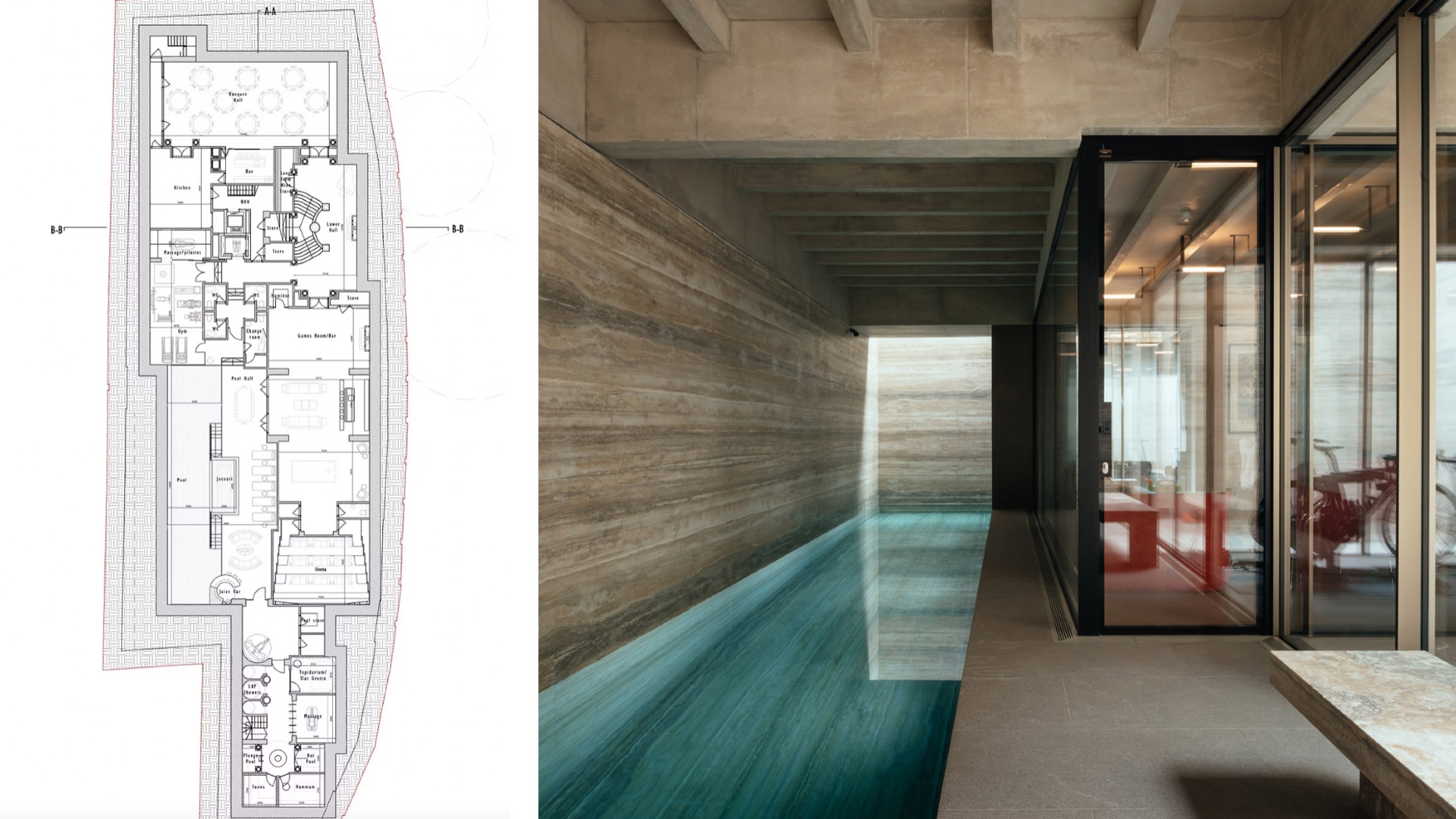
This article on underground development in London and the comments on Armouries needing work bumped synapses today.

I was just thinking about my first Armoury in Peterborough.
It sits on a block across George Street from City Hall.

It is at the back of the lot adjacent to PCVI high school. Between them and George Street is open ground with a parking lot for the Armouries and a cermonial gardens park around the Cenotaph.

That whole block could be redeveloped below grade and leave all the listed architecture standing and functional

 
Mewata in Calgary used to have a lot more space, but have the parking lot was given back to the city who turned it into a parking lot, theres a written agreement not to enforce payment on wednesday nights atleast. However DND had opportunity over the years to buy near by land before it was developed to increase operational space, parking etc. Instead anytime the brigade commander calls a town hall, half the brigade is risking a parking ticket, or walking 5 blocks or more to find parking, and paying for it.
 
Mewata in Calgary used to have a lot more space, but have the parking lot was given back to the city who turned it into a parking lot, theres a written agreement not to enforce payment on wednesday nights atleast. However DND had opportunity over the years to buy near by land before it was developed to increase operational space, parking etc. Instead anytime the brigade commander calls a town hall, half the brigade is risking a parking ticket, or walking 5 blocks or more to find parking, and paying for it.
If they are directed to travel to other than their usual location, then the CAF is rewsponsible for their parking costs.

Of course, the Army does from time to time treat entitlements as optional.
 
Back
Top