
and it is still standing. How many ball parks from 1920 can say the sameThe Colosseum was designed to entertain and distract the masses...

You are using an out of date browser. It may not display this or other websites correctly.
You should upgrade or use an alternative browser.
You should upgrade or use an alternative browser.
Canada moves to 2% GDP end of FY25/26 - PMMC
- Thread starter Maxman1
- Start date

- Reaction score
- 8,843
- Points
- 1,260
Fenway and Wrigley?and it is still standing. How many ball parks from 1920 can say the same
Touché Both in 1914 ouch. Should have stayed with my original thought. I was going to say parks from 1900>Fenway and Wrigley?
That's the pits. So there is no satisfaction for you at all after wiping out your front end in a pothole?I don't qualify for the first and I missed out on the second.
- Reaction score
- 8,843
- Points
- 1,260
My wife is from Boston and we lived there for a number of years. She's a rabid Red Sox fan. The Cubs are my National League team and we've been to see them play a number of times in Chicago. The fans in both parks take baseball dead serious and if you like baseball both locations are a joy to go and watch games at.Touché Both in 1914 ouch. Should have stayed with my original thought. I was going to say parks from 1900>
- Reaction score
- 8,843
- Points
- 1,260
LOL, for better or the worse I'm able to WFH 4 days out of 5 now and only have to schlep to Bay St once a week, so I'm able to miss the pothole, most of the time.That's the pits. So there is no satisfaction for you at all after wiping out your front end in a pothole?

- Reaction score
- 31,467
- Points
- 1,260
Or you forget about it, and it sneaks up on you.LOL, for better or the worse I'm able to WFH 4 days out of 5 now and only have to schlep to Bay St once a week, so I'm able to miss the pothole, most of the time.
In the town near me, the roads are awful and they just conducted a large median beautification project. I am constantly underwhelmed at what tax dollars are spent on

- Reaction score
- 13,924
- Points
- 1,160
try finding a competent repair person
Fair comment.
But can we get even timely replacements? A concrete pipline with plastic insertions perhaps? For example.
If you are using plastic, why the concrete? A steel grid sleeve would protect the plastic and is far easier to handle and installFair comment.
But can we get even timely replacements? A concrete pipline with plastic insertions perhaps? For example.
- Reaction score
- 13,924
- Points
- 1,160
If you are using plastic, why the concrete? A steel grid sleeve would protect the plastic and is far easier to handle and install
My point was many systems are maintained by mix and matching matrerials over the generations. Concrete, cast iron, steel, lead, plastic, stone and cedar staves, all in the same system.
Maybe great grandpa's axe gets a plastic handle when the hickory one breaks.
got itMy point was many systems are maintained by mix and matching matrerials over the generations. Concrete, cast iron, steel, lead, plastic, stone and cedar staves, all in the same system.
Maybe great grandpa's axe gets a plastic handle when the hickory one breaks.
- Reaction score
- 13,924
- Points
- 1,160
I dunno where you live. But here in Ontario, I have seen municipalities absolutely get addicted to development fees to the point that they somehow wreck housing affordability and still cause substantial sprawl. If those development charges were 100% banked in reserve funds, I'd buy that there's no subsidy. But nope, lots of it ends up in general revenue subsidizing current ratepayers. They are all avoiding substantial municipal tax increases through development charges.
As to your argument that the growth ponzi scheme is a myth, the fantastic thing is that we can look at the GTA and see it in action since the suburban 905 and more urban (relatively) 416 are not in the same municipal tax jurisdiction. 905 tax rates are skyrocketing. 416 tax rates are some of the lowest in the province. And the 416 delivers substantially better public services too. Toronto has the largest transit system, largest and most used library system and the largest parks and rec system, not just in the country. But competitive in North America. What Oakville give you in return for five figure property tax bills? That differential actually gets worse for the 905 every year. Especially in places like Mississauga which are running out of land to develop. When there's no cross-subsidy, those taxes go up real fast. This is from 2020:

As an Ottawa resident these days, inside the Greenbelt, I wish this city had never amalgamated. The services I get for what I pay in property taxes are poor value. I would agree with your point that suburbs can be low cost. That's if and only if suburban residents keep their service levels low. But that almost never happens. Especially not in Canada. Folks move to the suburbs and then insist they should have almost the same level of transit, rec services, snow clearing, etc they used to have in the city. That entitlement inevitably leads to subsidization. It's fantastic for 416 residents that their transit system doesn't have to cover the 905 or they'd have shitty services too.
As a one time resident of Aldergrove BC I can vouch that we never asked to become part of the Greater Vancouver Regional District. For our acquiescence we immediately got a bunch of new taxes, new regulations and one bus every hour until 11 pm that took us to the Skytrain terminal at Whalley.
Canada's version of General Atomics or Northrop Grumman.

 ca.finance.yahoo.com
I was curious to see how the DIS will drive industry.
MDA Space launches defence company with eye on 'multi-billion-dollar' contracts
'The highest priority is to deliver defence capabilities to the Canadian Armed Forces,' CEO says
ca.finance.yahoo.com
I was curious to see how the DIS will drive industry.
- Reaction score
- 8,843
- Points
- 1,260
They have a solid reputation for delivering high high quality products. They have name recognition and hopefully they’ll have the right political backing, across all parties, to grow into a reliable Canadian defence firmCanada's version of General Atomics or Northrop Grumman.
MDA Space launches defence company with eye on 'multi-billion-dollar' contracts
'The highest priority is to deliver defence capabilities to the Canadian Armed Forces,' CEO says
I was curious to see how the DIS will drive industry.
They have a solid reputation for delivering high high quality products.
As one of the end users of said products... Debatable.
I recognize that they are the only major Canadian company in that domain. So by default they will get a ton of cheddar. And I guess now they want to grow some adjacent sectors.
- Reaction score
- 13,924
- Points
- 1,160
A strange moment in time indeed.
Buying American weapons to satisfy Americans while supplying the means to defend against the Americans, among others.
A new twist on selling hanging rope.
Buying American weapons to satisfy Americans while supplying the means to defend against the Americans, among others.
A new twist on selling hanging rope.

MilEME09
Army.ca Fixture
- Reaction score
- 8,460
- Points
- 1,210
Made in canada griffin replacement?

 www.niagarafallsreview.ca
Airbus gets new Canadian market with H175 helicopter to be built in Fort Erie
Nationally headquartered in Fort Erie, Airbus Helicopters has been approved by the Transport Canada Civil Aviation authority for its H175 helicopter to enter the Canadian market.
www.niagarafallsreview.ca
instead of Bell in Mirabel? I could just imagine the screaming.Made in canada griffin replacement?
Airbus gets new Canadian market with H175 helicopter to be built in Fort Erie
Nationally headquartered in Fort Erie, Airbus Helicopters has been approved by the Transport Canada Civil Aviation authority for its H175 helicopter to enter the Canadian market.

- Reaction score
- 7,027
- Points
- 1,160
Well, if we could convince Bell to build the MV-75 in Mirabel I'd be happy to give them the business.instead of Bell in Mirabel? I could just imagine the screaming.

- Reaction score
- 1,997
- Points
- 1,160
Made in canada griffin replacement?
Airbus gets new Canadian market with H175 helicopter to be built in Fort Erie
Nationally headquartered in Fort Erie, Airbus Helicopters has been approved by the Transport Canada Civil Aviation authority for its H175 helicopter to enter the Canadian market.
I wonder how much work it would encompass to go from the civvie variant to the military variant?
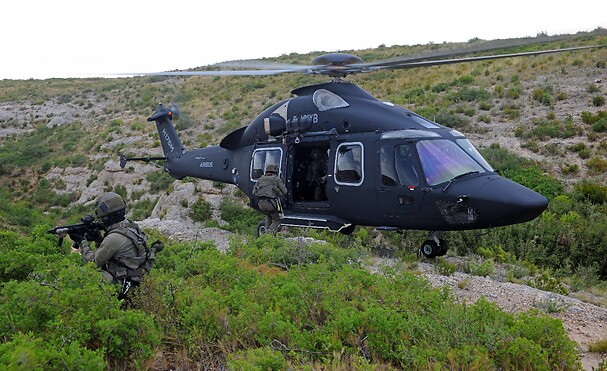
H175M
Based on its civil variant, the H175, the H175M offers battlefield transport and combat SAR with super-medium range.
 www.airbus.com
Similar threads

- Replies
- 3
- Views
- 141


- Replies
- 4
- Views
- 1K
- Replies
- 11
- Views
- 2K
