Link 16 is past its prime. But the problem is that only the Americans ever fund development of tech like this. So of course they get control.
If we want things to be a NATO standard, et need the alliance to work on developing them.
In large part this is the effect of Eisenhower's Military Industrial Complex in action. The same Eisenhower that, in 1951, said that if American troops were still in Europe in 1961, then NATO would have been a failure. In 1961 Eisenhower was replaced by Kennedy and the Berlin Wall was built.
Since then the Defence Industry has been a mainstay of US domestic economic policy, foreign policy and exports.
The US aspired to a Defence Monopoly. This discouraged competition which resulted in "allies" not bothering to try and the US skills to stagnate.
In my mind there is a reason why countries like Finland, Sweden, Israel, Turkey, Singapore and South Korea have become dominant innovators. They were outside the "alliance" and forced to take active measures to defend themselves against present dangers.
The problem for the Americans is that they have been selling yesterday's solutions long past their best before date.
...
We were complicit in this. It suited all of us Westerners to pretend that war is over and that we didn't have to worry because the US would always provide what we needed, if and when.
Meanwhile, Ukraine is demonstrating both that war is not over and that wars are fought with the technologies of the day that are available. And the technologies of today are not the technologies of the 1940s that formed the backdrop to the Cold War arsenal.
Which brings me to this article:
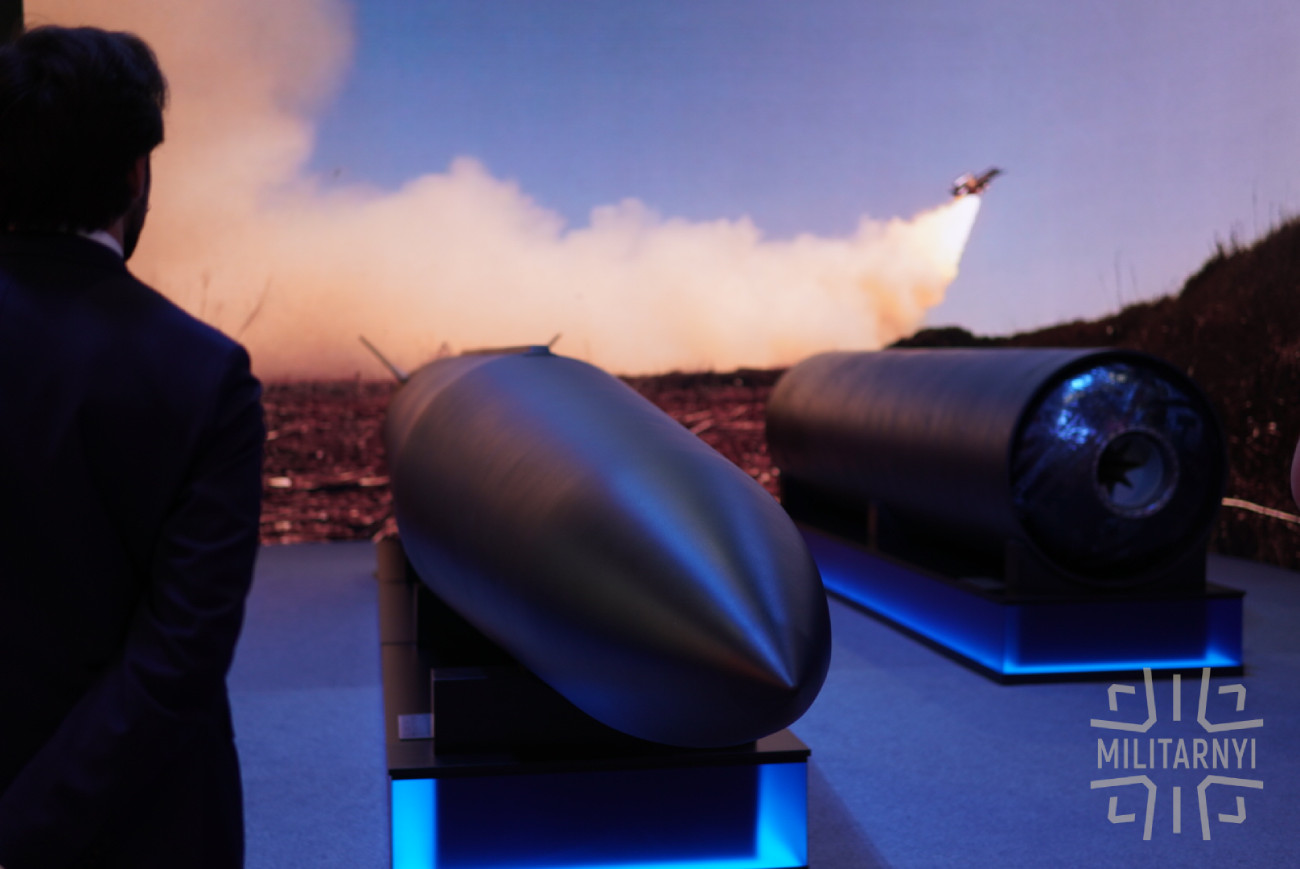
Fire Point unveiled its own machine tools for rocket engine production at the Eurosatory international defense exhibition in Paris.This was reported by Militarnyi’s correspondent at Eurosatory.According to Denis Shtilerman, the […]

militarnyi.com
In 1940 creating strong, lightweight tubes of 18m length and 2.5m diameter was a major technological effort involving smelting, forging, casting, welding and machining.
Now they can be wound.
And it is that capability, and those like it that are propelling the rapid rate of adaptation, that we need to be focusing on here in Canada.




 en.wikipedia.org