These interceptors desperately need to drop a zero on the price at least. Thats becoming abundantly clear with the proliferation of deep strike.
I posted this on the Artillery Modernization thread -- but it is germane to this as well.
-----------------------------------------------------------------------------------------------------------------------
All of which are frankly way way too expensive for C-UAS/C-RAM requirements.
We need to come to the understanding that 20-50mm cannon and energy systems are the only cost effective manner of C-UAS/C-RAM when align with the scope and scale they needs to be available at.
Some of the Mini and Micro Missile systems are expected to be affordable enough to use against Drone Swarms in the thousands - I am hopeful - but still view them as AN option, not THE option.
Air Defense against enemy aircraft and/or ballistic missiles can be conducted with expensive interceptors as those are both expensive and limited items for most foes, but the cost of not interdicting them is exceptionally high that the cost benefit falls in favor of using high end expensive munitions in the defense.
-----------------------------------------------------------------------------------------------------------------------
Most countries and their militaries are having trouble rationalizing the various threats, but it is important to do so. Range, Altitude, Payload, Density, Probability (and the list can go on)
Certain capabilities are always going to be expensive -- want long range and high altitude (including outside the atmosphere) impact kill interception capability? that is going to be expensive - as the rocket/missile needs fuel to get there at a speed that makes it viable as well as the navigation system and relays.
This is where HTK Interceptors live - things like THAAD, THAAD-ER and the Patriots.
The “cheap” PAC-2 is a 80,000ft ceiling 160km range interceptor, the range and height grows (as does cost) with the others.
These systems are designed to interdict WMD systems, where a pre fragmented blast warhead may not defeat the incoming threat - they are a hypersonic kamikaze protective system.
Using them on glide bombs, conventional cruise missiles, and various OWUAS/Loitering Munitions isn’t a practical usage of their capabilities.
----------
Next we have the Long Range SAM’s like the SM-6 (RIM-174) these use a explosive warhead to defeat enemy threats, 110,000ft ceiling and ~400km range -- these are also very expensive, as they use the dual mode seeker off the AMRAAM.
Practical for defending a ship against a significant threat, but not the ideal system to attempt to knock down Shahed type OWUAS attack drones.
Even short range (predominately designed as Air to Air) missile systems are expensive -
The only practical solution is multiple different systems in overlapping range bands networked together.
-------------
Lets go back and look at the threats in Ukraine and the Iran theatre.
The other thing is the term Shahed UAS nomenclature covers 20 models, as in Soviet fashion the name of factory is used as the prefix to the model number - these models vary significantly in size, speed, payload.
But one of the key aspects to Iranian/Russian OWUAS is that they are (at least for now) subsonic - and while payloads vary from 50kg to over 1500kg, the low speed allows for interception by a lot of lower end options.
Primarily for UAS the limiting factor of engagement options are 1) Detection 2) Altitude
MALE and HALE UAS are generally immune to direct fire when flying at their service ceilings, generally those are either ISR systems, and/or precision effect launchers, most practical engagement of these seem to be using aircraft internal cannon or naval gunfire.
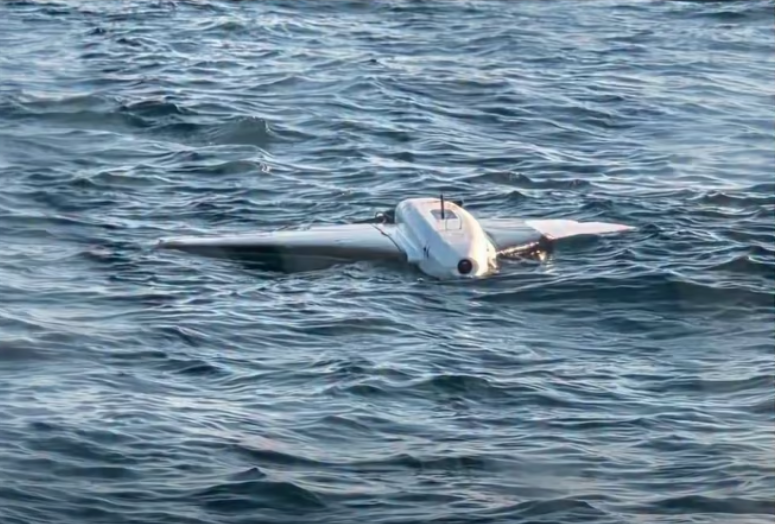
Using the Shahed 136 as an average threat for a OWUAS.
140km cruising speed
Max Service Ceiling of 4,000m (13k ft), average flight altitude 2,500m (~8k ft)
Payload up to 98kg (~200lbs)
It is easy to see why a 35mm-45mm cannon is pretty much optimal for a C-UAS system for these sorts of OWUAS -- the cost per round isn’t ridiculous, and one can reach out and touch them far enough away that the SUAS payload should be entirely burned out (some have incendiary payloads, but most are HE). Downsides are the need for a lot of systems to cover all the terrain needed - and a locating /targeting network.