Luckily, most patients that I handled back when I was "lifting and toting" usually were under a weight threshold that didn't require a NATO MLC marking painted on their ass. But there were two that I remember.
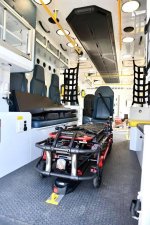
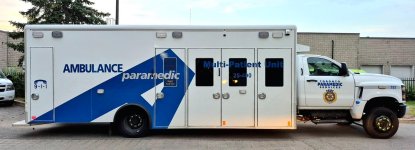
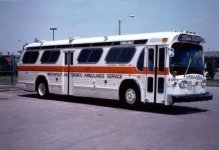
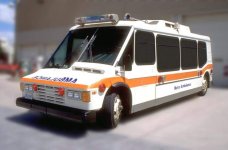
The first was in Edmonton during the Commonwealth Games in 1978, 1 Fd Amb's ambulances were up there providing ambulance coverage to the Games (instead of Smith's Ambulance, which still had the contract with City of Edmonton for EMS). Prior to the opening of the Games, my amb (my driver was an MSE Op) was covering outside one of the training venues (a gym at UofA) when we were called inside to attend to an individual who, as reported to us by a third party, had been hit in the head by weights he had tried to lift. The casualty was huge (Andre the Giant type huge - maybe bigger). He was conscious but incoherent. Even if we wanted to initiate c-spine protocol, I didn't think we had a collar that would fit around his neck. Though most Commonwealth athletes spoke English, we weren't sure if this guy did - that was the level of response we got. None of the other athletes, coaches or trainers knew who he was or how he got into the facility (which had a security guard rent-a-cop at the door) and he didn't have Games credentials with him. Eventually, during my survey I found a patient ID bracelet from University Hospital. By this time he was responding to our directions and was able to sit up. We finally got him into the box amb (he took up most of the space in the back) without having to use a stretcher and took him to the hospital. They knew him at Emerg and assured us that his affect was normal for him. He was a long-time in-patient in the psych ward, generally non-violent, but prone to wandering away - no one had noticed that he was missing.
The other was an in-patient at NDMC on 2 A&D (Cardiology, ENT and Ophthalmology). He was a pleasant gentleman not much taller than 5 feet. Though he had no connection to the military, he was there for eye surgery. The Chief of Ophthalmology, Col Forgie, besides seeing civilian patients at other facilities in Ottawa and across the river in Hull, would occasionally be referred unusual or complex cases. This, supposedly was one of them. The patient was from over in Quebec, spoke little English and was in his early 60s. As we were admitting him, specifically putting him on the weight scales, he was over the max weight that the scale had (IIRC, either 250 or 300 lbs - the population wasn't as generally obese as it is today). Because he would be undergoing anesthesia, having an accurate weight was important. In a stroke of inspiration, I called the Supply Section (my then spouse, a Sup Tech, worked there). I asked her if they had a scale that we could put a patient on and get an accurate measurement. They did, so I walked down there with the patient (he was ambulatory - well, it was more a waddling gait) and weighed him. He came in just under the max of Supply's scale. Though he was quite hefty, that was all well and good while he was getting around under his own power, but beside the concern of the anesthetist about putting him under, there was also problem of how do we move and position him during and after surgery. Once finished in the OR and post-op, he would be required (in the protocol of the early 1980s) to be maintained in a specific position with no movement of the head for several days following. He would have to be moved from the OR table to a stretcher (for recovery) and then moved from the stretcher to a bed without any assistance from him. It took most of our ward staff as well as enlisting the services of the biggest MedAs available on other wards to move him.