• Thanks for stopping by. Logging in to a registered account will remove all generic ads. Please reach out with any questions or concerns.

Bariatric emergencies

mariomike

Moderator
Staff member
Directing Staff
Subscriber
Mentor
Reaction score
2,493
Points
1,260
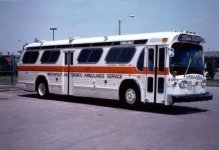
Toronto uses ambulance buses to transport bariatric emergencies.

The high floor is a steep lift from the curb.

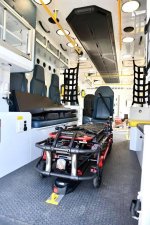
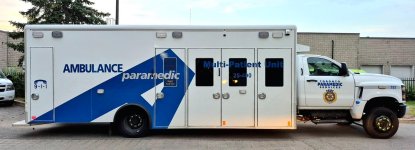
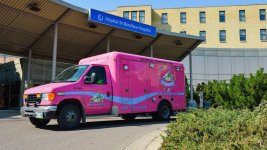
The City just added a custom built Bariatric ambulance to the fleet. Complete with a bariatric cot and a power lift tailgate.

This should help reduce WSIB claims.

ATTACH=full]102014[/ATTACH]
thumbnail (1).jpegthumbnail.jpeg
 
This should help reduce WSIB claims.

How many of those injuries are caused getting an already stretchered patient into the bus vice getting the fat b******d onto the cot and down the stairs, or later during transfer at destination?

. . . Forty-two (51.2%) of these injuries occurred when the provider was lifting, transferring, or carrying a patient, not involving a stretcher. . . .
 
How many of those injuries are caused getting an already stretchered patient into the bus vice getting the fat b******d onto the cot and down the stairs, or later during transfer at destination?

"What's took you so long?" 😀

 
Several years ago the City of Winnipeg bought an ambulance for really big people as the standard ones were not up to the task
 
Several years ago the City of Winnipeg bought an ambulance for really big people as the standard ones were not up to the task

Metro used to send this. A 34 inch lift from curb to deck.

images (8).jpeg
 
I remember watching a series a few years ago about EMS in the northern prairies/territories. A lot of patient transfers are by contract air carriers and it seems most don't have cargo doors. The one episode followed how they rigged up a roller system - like they use in warehouses - to get a very bariatric patient through the door then a tight turn into the cabin.

I guess at some point, dignity goes out the window.

We had to deal with a bariatric sudden death in an old, very remote old house in northern Ontario. He was on the second floor with a narrow, steep staircase that did not have a straight approach. There was a window that overlooked a shed-type roof as part of the ground floor. He, indeed, went out the window.
 
We had to deal with a bariatric sudden death in an old, very remote old house in northern Ontario. He was on the second floor with a narrow, steep staircase that did not have a straight approach. There was a window that overlooked a shed-type roof as part of the ground floor. He, indeed, went out the window.

A "Gilbert Grape" shut-in.

"It's going to take a crane to get her out."
 
Maybe I am missing something here, @mariomike : How is the barometric pressure increased for the patient? Is the whole interior of the ambulance pressurized?
Bariatric = Mr Creosote/disc popping...Barometric=ear popping
Several years ago the City of Winnipeg bought an ambulance for really big people as the standard ones were not up to the task
The pink "Technical Transport Unit" , so as not to advertise it's a bariatric patient. I thought when I first saw that rig it was the paediatric/neonatal critical care transport unit.
 
Don't see any lights and sirens on it, or any or any of their "Technical Transport " vehicles.

They don't appear to be part of The City of Winnipeg 9-1-1 system.

Looks like a private non-emergency transfer service, staffed by "Patient Transport Specialists".


680689473_10162601032961765_5537727885499910524_n.jpg
 
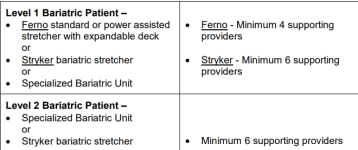
Alberta defines it as . . .

1. Patient Subset
1.1 A bariatric patient is any patient that weighs greater than 150 kg (330 lbs.) and is also broken down into two subsets.

a) Level 1 Bariatric Patient means patients weighing (actual or estimate) between 150 kg (330 lbs.) and 225 kg (500 lbs.) and or having an abdominal width greater than 68.58 cm (27 inches).

b) Level 2 Bariatric Patient means patients weighing (actual or estimate) greater than 225 kg (500 lbs.)

And how many it should take to move one . . .

4. Minimum Levels of Supporting Providers
4.1 High potential for injury to both patient and provider requires minimum levels for supporting providers based on the subset of bariatric patient and bariatric equipment used. Minimum supporting provider levels are clearly outlined in the supporting Provincial Bariatric Response for Ground and Air Ambulance Procedure.
1788281293920.png
 
One friend used six firefighters and a canvas tarp to move a 500+ lb patient out of a house. They used cooking oil to help move them through the doors one roll at a time. Another VSA patient had lived on a mattress on a raised concrete slab in the basement.

I was naive enough then to ask how you do CPR on a massive patient who is VSA - the answer is that you put on a show for the family knowing it's not doing anything.
 
Don't see any lights and sirens on it, or any or any of their "Technical Transport " vehicles.

They don't appear to be part of The City of Winnipeg 9-1-1 system.

Looks like a private non-emergency transfer service, staffed by "Patient Transport Specialists".


View attachment 102024
That they are...because of the difficulty transporting them emergently. If they're in need of ALS care or greater, an ALS paramedic or critical care RT goes as medical escort.
 
One friend used six firefighters and a canvas tarp to move a 500+ lb patient out of a house. They used cooking oil to help move them through the doors one roll at a time. Another VSA patient had lived on a mattress on a raised concrete slab in the basement.

I was naive enough then to ask how you do CPR on a massive patient who is VSA - the answer is that you put on a show for the family knowing it's not doing anything.
I remember helping transfer a patient from KGH to the airport when doing routine ride alongs with Kingston EMS - didn't have bariatric stretchers then (around 1999/2000 IIRC) and the security straps wouldn't stretch - I basically secured the patient to the airevac cot and ambulance stretcher with every triangular bandage we could find in our ambulance and the back up one that came with us. Patient was around 450lbs, stretcher was rated to 325. Was even harder getting them onto the aircraft, was almost like bringing a couch through a door - slicing the pie, scootch in a bit, slice it some more. We have a critical care transport plane now out of Winnipeg that has a wide cargo hatch and wide body to allow easier ingress/egress for patient as well being able to accommodate crew and equipment better.
 
Luckily, most patients that I handled back when I was "lifting and toting" usually were under a weight threshold that didn't require a NATO MLC marking painted on their ass. But there were two that I remember.

The first was in Edmonton during the Commonwealth Games in 1978, 1 Fd Amb's ambulances were up there providing ambulance coverage to the Games (instead of Smith's Ambulance, which still had the contract with City of Edmonton for EMS). Prior to the opening of the Games, my amb (my driver was an MSE Op) was covering outside one of the training venues (a gym at UofA) when we were called inside to attend to an individual who, as reported to us by a third party, had been hit in the head by weights he had tried to lift. The casualty was huge (Andre the Giant type huge - maybe bigger). He was conscious but incoherent. Even if we wanted to initiate c-spine protocol, I didn't think we had a collar that would fit around his neck. Though most Commonwealth athletes spoke English, we weren't sure if this guy did - that was the level of response we got. None of the other athletes, coaches or trainers knew who he was or how he got into the facility (which had a security guard rent-a-cop at the door) and he didn't have Games credentials with him. Eventually, during my survey I found a patient ID bracelet from University Hospital. By this time he was responding to our directions and was able to sit up. We finally got him into the box amb (he took up most of the space in the back) without having to use a stretcher and took him to the hospital. They knew him at Emerg and assured us that his affect was normal for him. He was a long-time in-patient in the psych ward, generally non-violent, but prone to wandering away - no one had noticed that he was missing.

The other was an in-patient at NDMC on 2 A&D (Cardiology, ENT and Ophthalmology). He was a pleasant gentleman not much taller than 5 feet. Though he had no connection to the military, he was there for eye surgery. The Chief of Ophthalmology, Col Forgie, besides seeing civilian patients at other facilities in Ottawa and across the river in Hull, would occasionally be referred unusual or complex cases. This, supposedly was one of them. The patient was from over in Quebec, spoke little English and was in his early 60s. As we were admitting him, specifically putting him on the weight scales, he was over the max weight that the scale had (IIRC, either 250 or 300 lbs - the population wasn't as generally obese as it is today). Because he would be undergoing anesthesia, having an accurate weight was important. In a stroke of inspiration, I called the Supply Section (my then spouse, a Sup Tech, worked there). I asked her if they had a scale that we could put a patient on and get an accurate measurement. They did, so I walked down there with the patient (he was ambulatory - well, it was more a waddling gait) and weighed him. He came in just under the max of Supply's scale. Though he was quite hefty, that was all well and good while he was getting around under his own power, but beside the concern of the anesthetist about putting him under, there was also problem of how do we move and position him during and after surgery. Once finished in the OR and post-op, he would be required (in the protocol of the early 1980s) to be maintained in a specific position with no movement of the head for several days following. He would have to be moved from the OR table to a stretcher (for recovery) and then moved from the stretcher to a bed without any assistance from him. It took most of our ward staff as well as enlisting the services of the biggest MedAs available on other wards to move him.

 
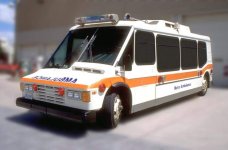
The Orion II was good for bariatric emergencies because the back door could be kneeled to street level.

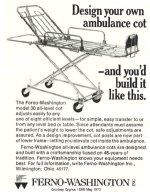
All we had were Ferno-Washington Model 30 stretchers. And tarps.

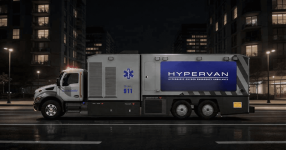
472335545_10170357611940317_3071702576998853203_n (1).jpgFerno-Washington-Model-30-450x575.jpg
 
Back
Top