- Reaction score
- 13,668
- Points
- 1,160
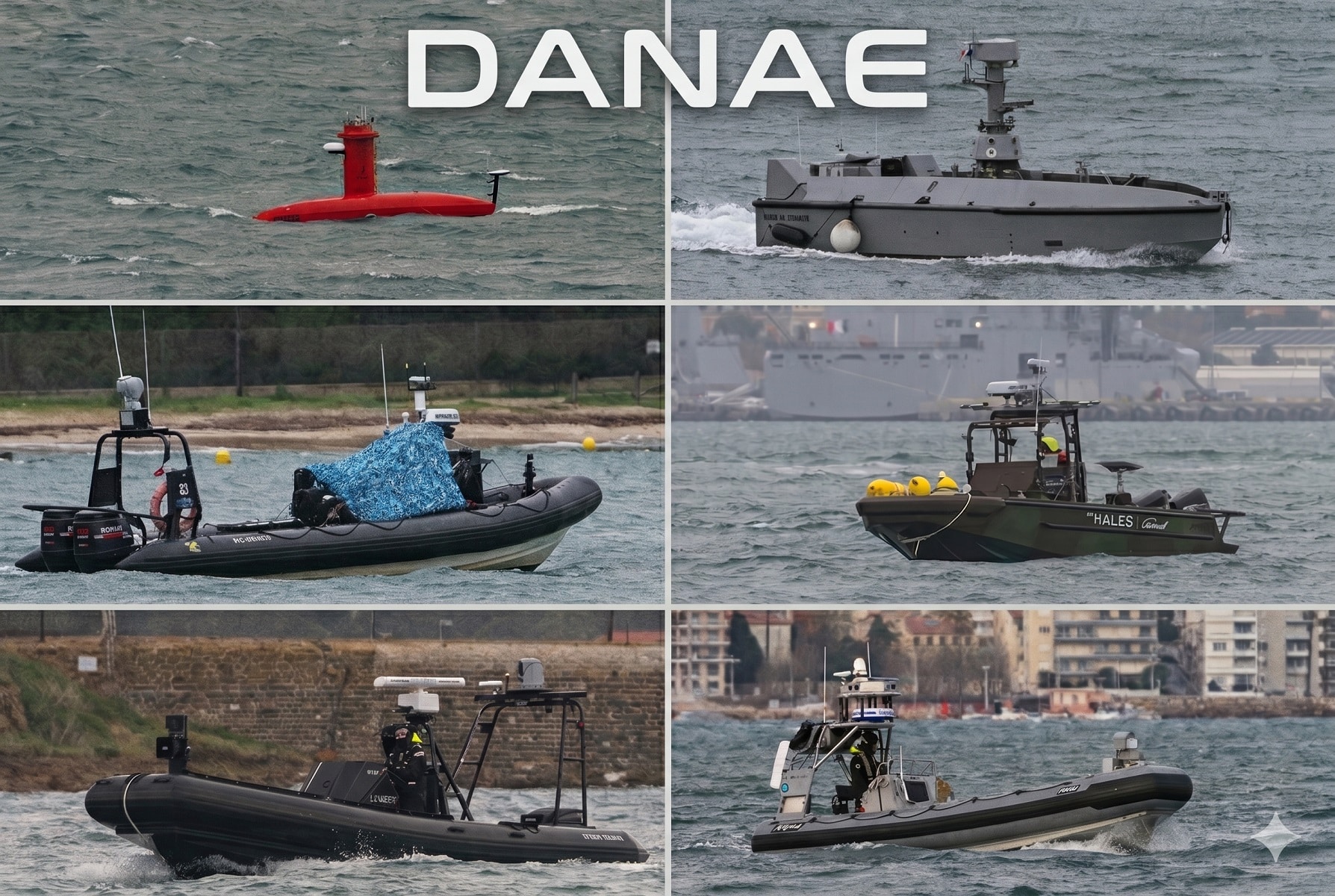
DANAE project: A fleet of Armed USV for the French Navy by 2027 - Naval News
The DANAE (for Drone Autonome Naval avec de l’Armement Embarqué or Autonomous Naval Drone with Onboard Armament) project aims to rapidly equip the French Navy with armed Unmanned Surface Vessels (USV)
 www.navalnews.com
French navy drone efforts.
Ukraine turned to drones because they had no ships.
The Brits are turning to drones because they don't have enough ships.
In neither case could new ships be brought on line quick enough,
Drones allowed the Ukrainians to reach out from their shores.
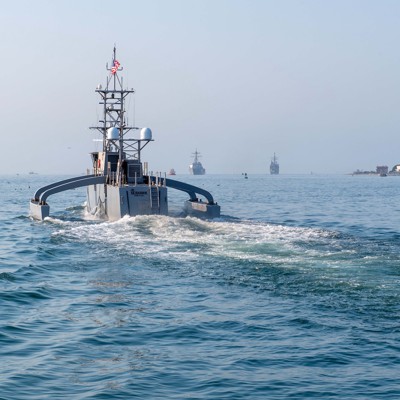
British drones are intended to let the available ships reach farther and cover more sea area.
They are not a replacement for ships.
They are a complement to the existing capabilities.
They can be deployed from the existing fleet. They can be controlled from the existing fleet and directly from shore or circling aircraft.
And these are a key part of the new ecosystem. They can sail for months with no attendance, transmit what they sea and hear above, on and under the water...... and critcally, they enable communications between aircraft, satellites and ships with submerged submarines and drones.

Wave Glider for Anti-Submarine Warfare | Liquid Robotics
Our Wave Glider platform has expanded detection capabilities for both littoral and deep-water environments to maximize anti-submarine warfare (ASW) budgets.
 www.liquid-robotics.com
Do wave gliders allow communications between aircraft and submarines +8
Yes, Wave Gliders act as a critical,, long-endurance communication gateway between submerged submarines (or underwater drones) and aircraft, satellites, or shore stations. They function as a "bridge" over the air-water interface to overcome the limitations of acoustic (underwater) and radio (air) communication systems
Key Aspects of Wave Glider Communication:
How it Works: Wave Gliders use a two-part system—a surface float and a submerged glider connected by a tether—to maintain communication via acoustic modems with submarines, then transmit that data via radio/satellite to aircraft or command centers.
Covert Operations: They enable submarines to receive information and send data without surfacing, which reduces the risk of detection.
Anti-Submarine Warfare (ASW): Wave Gliders are used to form mobile, distributed sensor networks to detect, track, and provide communication for manned and unmanned submarines.
Real-time Data Transfer: They offer a faster and cheaper method for transferring data from the seafloor or deep-sea vehicles to personnel in the air or on land.
While researchers at MIT have developed a, separate, specialized system called "translational acoustic-RF communication" (TARF) that allows aircraft to directly detect, ,underwater acoustic signals via surface ripples, the Wave Glider is the established industry-standard autonomous surface vehicle platform that actively acts as a, relay node between undersea and air assets.