• Thanks for stopping by. Logging in to a registered account will remove all generic ads. Please reach out with any questions or concerns.

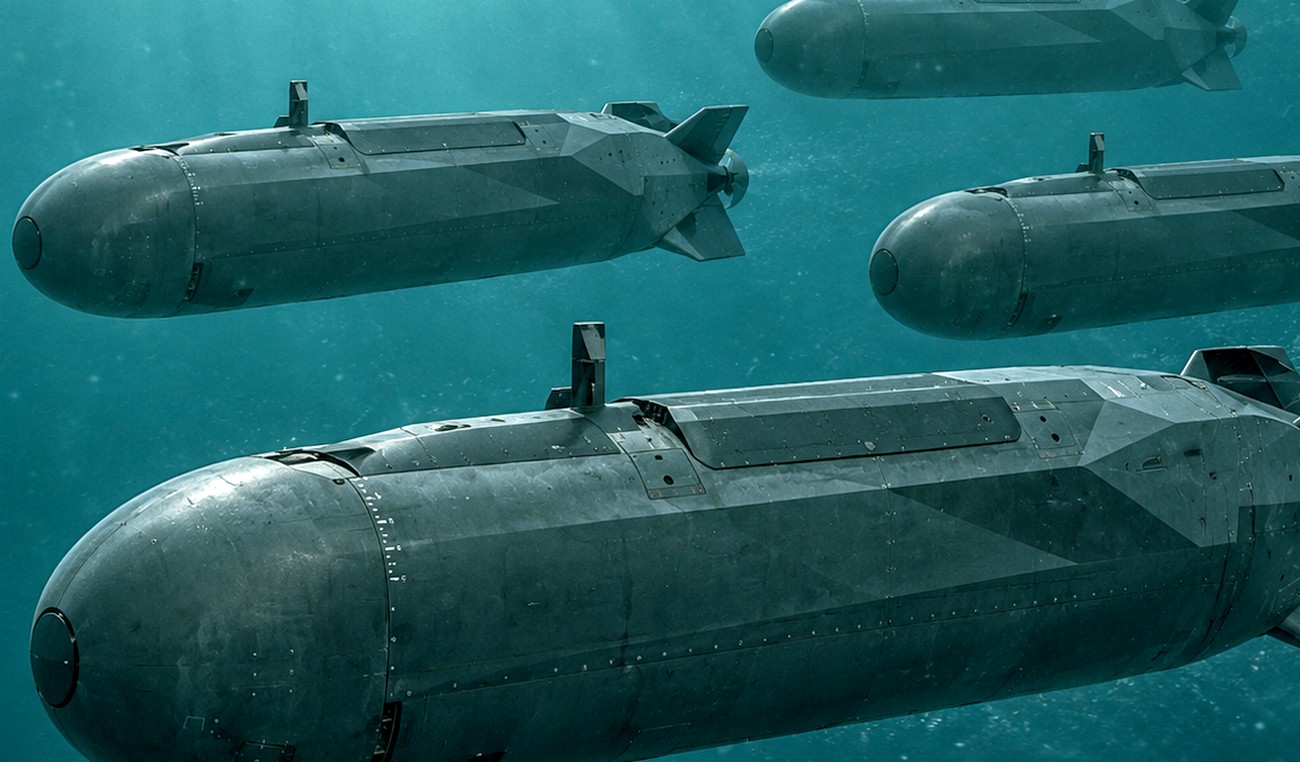
TKMS Type 212CD (Victoria class replacement megathread)

There are quite a few big AUV's in use today with the multibeam and other sensors. Most I suspect have not been adapted to look upwards. You need one that can scan 360degrees in the above, below and sideways , along with scanning in a cone forward and have enough AI to penetrate under the ice, map and then return to open water.
 
From what I can see, it will be years before these submarines are sent into the Arctic, let alone submerged through the Northwest Passage. Arctic operations will be introduced carefully and incrementally because there is very little margin for error given the conditions that can come within a very short period of time.


Given the conversations I've had, I doubt we will see dedicated submarine tenders anytime soon, if ever. The AOPVs are expected to carry the containerized SUBSAR payloads, while Canada will likely establish arrangements with allied navies for the specialized personnel and equipment required to conduct an actual rescue. IE Rescue submarine.


Before sustained under ice operations are considered, Canada must improve the availability and timeliness of its ice products, minimize gaps in satellite coverage because frankly there are, and ensure submarines can communicate with operational command when it needs to happen. Institutional access to satellite data is not the same thing as guaranteed coverage, timely processing and reliable delivery of ice products to a submerged submarine. Even deployed to the Arctic we sometimes had lags in getting ice products and often we found the product to be near useless and environmental conditions moved ice to areas where we thought there was none.


Far greater emphasis must also be placed on hydrographic survey work. We need dedicated hydrographic ships in the Arctic banging away with their multi beam echo sounder charting. Canada needs reliable, modern seabed mapping to identify safe submarine routes and avoid poorly charted underwater hazards. Those routes must provide adequate clearance beneath expected ice keels while accounting for narrow channels, shallow water and limited emergency surfacing options. Better satellite imagery can describe conditions at the surface, but it cannot replace accurate knowledge of the seabed or onboard sonar.


It would make sense that Initial operations will almost certainly concentrate on the ice edge, the marginal ice zone and short, carefully planned transits. Experience will be built progressively before anyone attempts more ambitious under ice operations. The submariners we had imbedded with Portugal was a great start, and we need to do more in that area.


As for mobile AIP reactant replenishment systems, deployed Arctic bases and the other “nice to haves,” those decisions should come later. Once Canada has selected a submarine, defined the operational concept and gathered solid evidence from trials and early operations with our enviromentals, we can make an informed decision about what infrastructure is actually required.


That is how a serious navy manages risk: crawl, walk, run. We should not design an entire Arctic support system around assumptions before the submarine has even been selected.

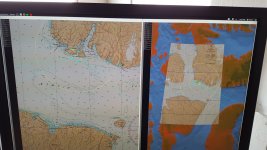
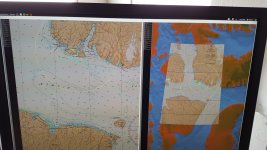
Through this pic up for interest from one of my deployments. The Arctic dispite the warming is still a unforgiving place.

View attachment 102088

I think a lot of what you note, need not wait for the first submarine (such as Hydrographic work and further study of ice conditions). It can start very soon. Learning about AIP replenishment can also start now. It need not wait. Your points are noted, ... but I will add to that, planning in advance is also another aspect that a serious navy uses to reduce risk.

In the Toronto Globe and Mail article ( New submarines will require extra gear after delivery to operate under ice, navy head says ) that I referenced, VAdmiral Topshee is approximately quoted having stated things more generally along the lines of what you noted, with inference to eventually having Arctic operations, presumably to be consistent with a number of top level political documents.

A minor note in the wording of your reply (I note this as it was hammered into me when I worked in NDHQ for a short while). I think it may be misleading for some to infer an 'Operational Concept' may not yet already written nor already in place. I think you meant 'doctrine' or an 'UPDATED operational concept', perhaps with emphasis on 'updated' ? Typically a Concept of Operations document come BEFORE a procurement. Often long before procurement. It would surprise me if there is no current "Concept of Operations" document re: the Canadian Patrol Submarine.

Of course that begs the question .. what does the current Concept of Operations say?

I think it would be unusual for an existing 'Concept of Operations' not matching what is being stated in top level meetings about the plan/concept of 'sustained submarine Arctic presence' and 'northern submarine patrols'. If not stated, it would be an unusual incongruity.

Perhaps the current 'Concept of Operations' has a gradual Arctic presence described? Perhaps more words than that and perhaps less words than that? I suspect like myself, most of us do not know precisely what is in the current Concept of Operations. We only have what is in higher level documents/briefs to go by. I have faith though, in the RCN, and I trust they are doing their best with the resources they have. If nothing at present in the current Concept of Operations document, then that document can always be updated. A mute point perhaps, ... but those who were never worked in NDHQ and/or military procurement of major equipment may not know that detail.

With regard to early operations, I believe the RCN should really try to avoid re-inventing the wheel. Having many many initial close to ice operations as you described, would in many respects, be re-inventing the wheel for such, as the USN, with diesel-electric boats, did early ice-edge exploration, much like you described. They explored the ice edge with conventional boats, prior to (and with) their first SSN.

The USN has the Arctic Submarine Laboratory (ASL), where if there are traditional US-Canada naval relations, and if no strategic objections, the US may be willing to support the RCN with the Arctic Operations Specialist (AOS) (commonly referred to as "ice pilots " ) , bringing their decades of experience. However clearly that is not assured given not only the current political "tariffs" situation, but also not assured given US views re: Arctic sovereignty. It would be unfortunate if the RCN has to re-invent the wheel here.

But if USN Arctic Submarine Laboratory (ASL) support can be provided, it would by far be the safest approach to utilize, so to make an RCN sustained Arctic presence safer and potentially viable. I think we both agree in the need to maximize safety.

In a different way, the same need to obtain aid from our NATO allies re: learning about AIP replenishment. Some of our NATO allies have been replenishing AIP reactant on their submarines for decades, and a lot can be learned by the RCN from that. RCN personnel and/or contractors could be sent to Europe (assuming allies agreement) soon, to monitor/participate in such, so to augment any TKMS conducted training. The intent being to maximize knowledge and training.

These things should be planned long in advance, and not left to a last minute post procurement scramble after the submarines are delivered. Last minute scramble activities are typically much more expensive, and typically are far less safe.

I fear though, the elephant in the room. The negative impact of the RCN personnel shortage should not be underestimated, and this shortage could make many different ideas, difficult to impossible to implement.

... by the way - GREAT HMCS Shawinigan image. Nice !!!
 
Last edited:
There are quite a few big AUV's in use today with the multibeam and other sensors. Most I suspect have not been adapted to look upwards. You need one that can scan 360degrees in the above, below and sideways , along with scanning in a cone forward and have enough AI to penetrate under the ice, map and then return to open water.
There are and some Canadian companies like Kraken could probably develop something along the lines of what we want. We should be investing in this company in that regard.
 
All this talking about the Arctic, ice and future submarines in the Arctic got me to thinking about my involvement in Northern Watch in 2015.

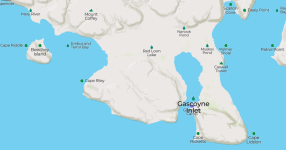
Northern Watch formally began in 2007 as a Defence Research and Development Canada technology (DRDC) demonstration project. Its objective was to develop and test a permanent, remotely operated surveillance system capable of monitoring aircraft, surface vessels and underwater activity at a strategic Arctic chokepoint much like what the Canadian Patrol Submarine will be monitoring. Gascoyne Inlet on Devon Island was selected because of its position overlooking Barrow Strait and the eastern Northwest Passage.

During the 2008–2013 period, DRDC established the camp and tested different sensors, communications systems and underwater equipment. Arctic conditions proved more difficult than originally anticipated, resulting in delays, redesign work and additional cost. By 2012, underwater acoustic experiments were being conducted in Barrow Strait, and Northern Watch activities continued at Gascoyne through 2012 and 2013.

The project culminated in its major 2015 system demonstration. Earlier that year, DRDC assembled and tested the complete Northern Watch surveillance system at the Canadian Forces Maritime Experimental and Test Ranges before moving it north. The final Arctic demonstration then ran from approximately late July through mid September 2015 at Gascoyne Inlet.

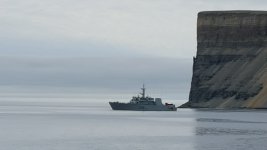
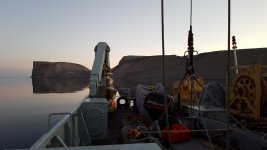
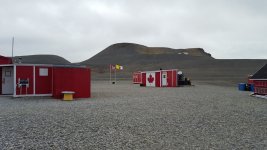
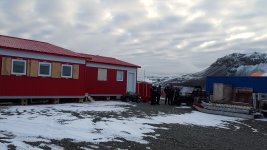
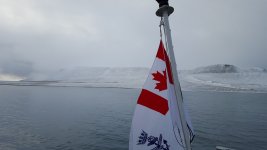
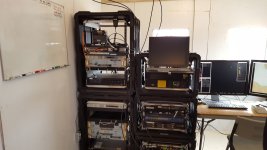
This was the period in which HMCS Shawinigan supported Northern Watch. I was Shawinigan's Chief Engineer during that deployment. Our involvement included transporting equipment and payloads to Gascoyne Inlet, returning equipment south, assisting with the deployment and recovery of sonar equipment from the seabed, and operating Shawinigan as a known target vessel against which the surveillance system could be evaluated. Our crew was also given tours and briefings on the research being conducted at the facility. Pretty interesting stuff.

The work continued after Northern Watch under follow on research programs. In 2017, DRDC conducted the Canadian Arctic Underwater Sentinel Experiment, or CAUSE, at the same Gascoyne Inlet facility from 24 July to 21 August 2017.

Gascoyne Inlet has remained an Arctic defence research site since then. The important distinction is that the original Northern Watch project ran from 2007 through its final demonstration in 2015, while the site, infrastructure, underwater-surveillance research and related Arctic defence work continued afterward under subsequent programs.

That experience is increasingly relevant to Canada's future submarines. A submarine capable of operating in the Canadian Arctic will be much more effective when integrated with fixed seabed sensors, remote surveillance sites, satellites, aircraft, surface ships and autonomous systems. Northern Watch was an early practical demonstration of exactly that kind of networked Arctic surveillance concept.

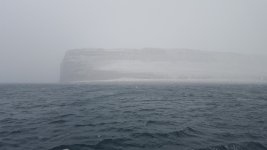
We were there several times during the deployment and got to go ashore and enjoy a banyan and their WiFi. Here's a few pictures. Notice the bleak conditions and the change of weather. We also got to go ashore at Beechy Island and pay or respects to the Franklin Expedition gravesites, a very cool experience.
gascoyne_inlet_nu (1).png20150823_134154.jpg20150831_003615_001.jpg20150823_124032.jpg20150912_204356.jpg20150913_140517.jpg20150911_111853.jpg20150823_125531.jpg
20150823_125531-jpg.102110
20150823_125337.jpg
 

Attachments

  • 20150823_125337.jpg
    20150823_125337.jpg
    335.8 KB · Views: 0
Back
Top