
- Reaction score
- 8,928
- Points
- 1,260
When Mark Rutte is no longer the Sec Gen of NATO, I truly hope that he writes a book about his tenure as Sec Gen as I look forward to reading it one day.



TitleWhen Mark Rutte is no longer the Sec Gen of NATO, I truly hope that he writes a book about his tenure as Sec Gen as I look forward to reading it one day.
Canada is also one of the world's non-nuclear countries with the easiest technical path to a nuclear weapon. And because of the particular design of its CANDU reactors, it would also be one of the countries best-positioned to produce weapons-grade fissile material without tripping international alerts — although such a move would carry huge geopolitical risks.
Light water reactors work by loading enriched uranium, sealing the reactor core and then running it for 18-24 months before shutting down, reopening the core and replacing fuel. This makes it relatively easy to keep track of how much fuel is going in, and what is happening to the spent fuel that comes out. It’s impossible to secretly swap fuel rods while the reactor is generating power.
The Canadian heavy water reactor doesn’t work that way.
All uranium-fuelled reactors produce plutonium. The issue with the CANDU is that it has online refuelling," explained Ed Lyman, director of nuclear safety for the Union of Concerned Scientists in Washington, D.C. "You're refuelling continuously, which makes it harder for the IAEA [International Atomic Energy Agency]."
Canada, which produces all of its own uranium, would be in a strong position to divert fissionable material undetected if so inclined, say the experts.
The plutonium produced in a heavy water reactor is also much easier to turn into a nuclear weapon, said Fetter.
"Of the countries that have made nuclear weapons with plutonium, many of them have used a heavy water reactor," he said.
That’s why India used a Canadian heavy water reactor to produce its first nuclear weapon in 1974, an all-plutonium implosion-type bomb. The "Smiling Buddha" test was the first to break the nuclear monopoly of the "Big Five" UN Security Council powers.
Fetter said the U.S. had heavy water reactors only for the purpose of producing plutonium and tritium. (Tritium, also produced in abundance by the CANDU reactor, is another critical component of a modern two-stage thermonuclear weapon that Canada has in abundance.)
Canada is also branching out into a new kind of technology that will require enriched uranium: the small modular reactor (SMR). Some of the proposed SMRs would use uranium enriched to a level as high as 20 per cent, known as high-assay low-enriched uranium (HALEU).
HALEU is already a proliferation concern in itself, said Lyman.
Anything below 20 per cent is considered low-enriched uranium and has a much lower level of oversight. The IAEA considers it indirect-use material you can't directly use in a bomb,” he explained. "But there's evidence, both historical and technical, that that's not true, and that the actual cutoff for weapon-usable uranium is below 20 per cent. Could be 15 per cent, could be 10 per cent.
"And so I worry about this push for advanced reactors, SMRs that use HALEU up near 20 per cent, like the ARC 100 in Canada, that the material itself is in the dangerous band. And if Canada were to pursue a whole fleet of SMRs using HALEU, and especially if they were to build their own enrichment plants to support that, that might give them a threshold capability for bombs, even if they never make highly enriched [over 20 per cent] uranium."
ARC Canada points out that its proposed reactor in New Brunswick, which would become the only commercial fast-breeder reactor in the world outside Russia, mitigates against proliferation risks by having a long fuel cycle with a core that stays sealed for 20 years.
But there’s another factor: The arrival of SMRs that consume enriched uranium has got the government of Canada thinking about enrichment.
Any country which has a complete fuel cycle is a latent nuclear weapons country, in the sense that it is not far from making a nuclear weapon," said former IAEA director and Nobel Peace Prize laureate Mohamed ElBaradei.

 www.the-independent.com
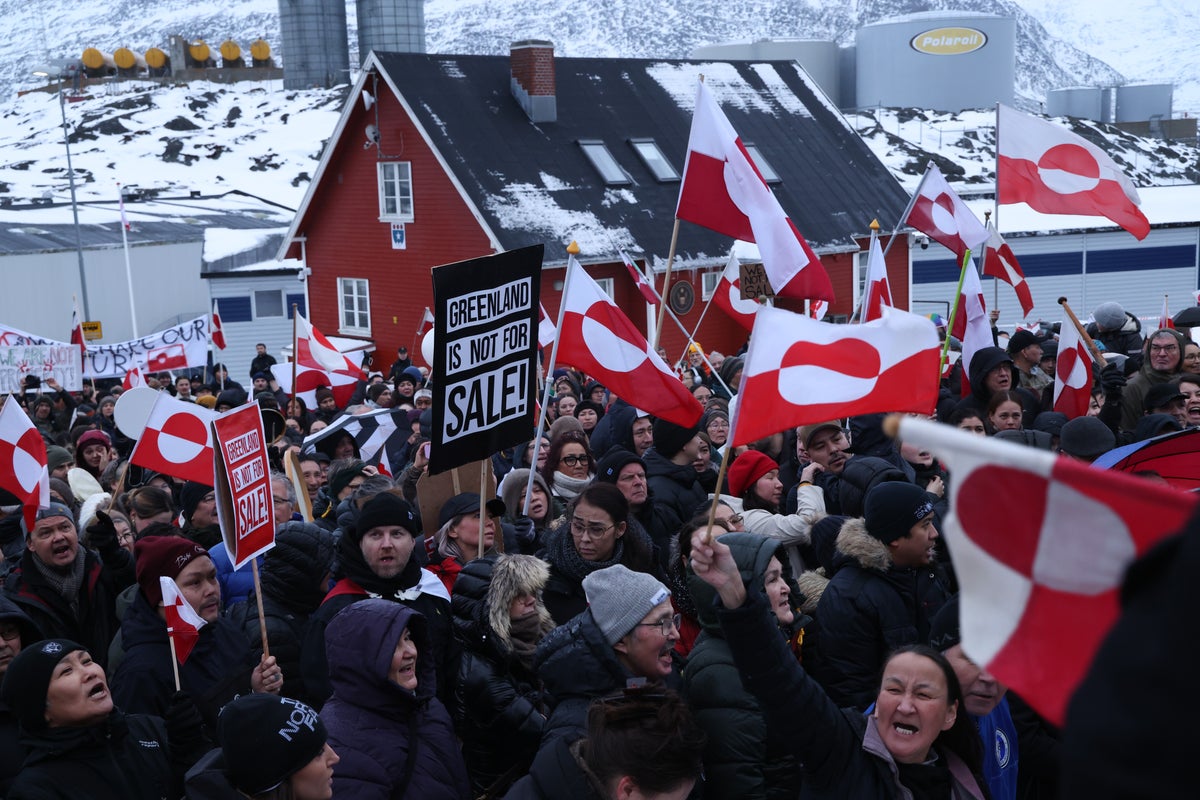
Just take Mitch’s hand and walk towards the light.And we're back again, now with a new claim.
Trump says Greenland will be under US control by the time he leaves office
President has claimed the US needs to acquire Greenland for national security purposes — a move that European allies see as a threat to the Arctic island’s sovereignty
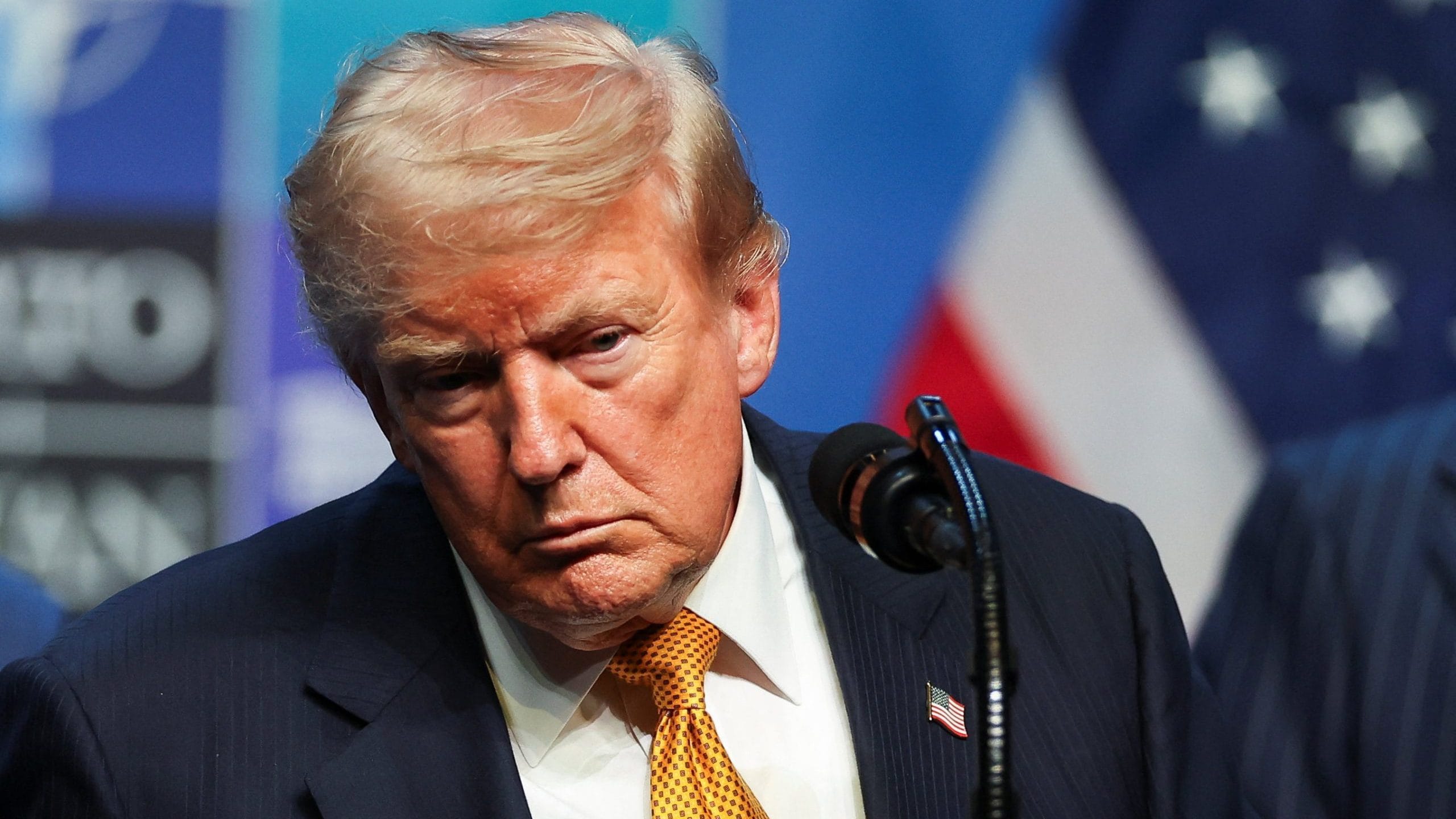
Is that 2029 or 2033?And we're back again, now with a new claim.
Trump says Greenland will be under US control by the time he leaves office
President has claimed the US needs to acquire Greenland for national security purposes — a move that European allies see as a threat to the Arctic island’s sovereignty

 theprint.in
Proving once again, Trump does not need to leave NATO officially to kill the alliance.The US wants to know how loyal each NATO ally is to Donald Trump’s policies before cutting military assets defending the alliance.
In a document recently sent to North Atlantic Treaty Organization members and seen by Bloomberg News, the US asks a series of questions that gauge support for the president’s approach. Has the country “been publicly supportive” of US foreign policy? What “restrictions” has the country placed on the US military using its bases?
The document also tries to assess whether countries are spending money with US defense contractors. And it asks whether they have “publicly opposed regulations” that “inhibit” contracts with US firms. Overall, it queries: “Has the country shown alignment with the US approach to ‘strong, clear, and quiet’?” — referencing a line from Defense Secretary Pete Hegseth.
Allies have balked at the move, seeing it as an attempt to strong-arm them into ideological alignment in exchange for US protection, according to people familiar with the matter who requested anonymity to discuss the private missive.
Linking America’s long-standing security commitments to such fealty would upend the post-World War II transatlantic relationship, which was built on US military guarantees that superseded many political disagreements. Already, Trump’s team has tried to boost right-wing forces in places like Germany and Hungary, while offering extra troops after a preferred candidate won the presidency in Poland.
The questionnaire arrives weeks into the Trump administration’s six-month review of its military presence in Europe, which is expected to conclude by December. The move has left NATO allies bracing for deep cuts to American support, including troops stationed in Europe and military assets the US would send during an attack.

That would be my response as well, but some nations don't want American troops to be pulled out.No. You just don't answer. And send back a diplomatic paper that says, in essence, "none of your business".

American troops offer two guarantees.That would be my response as well, but some nations don't want American troops to be pulled out.
Sure. All nice stuff.American troops offer two guarantees.
1) USD is spent in your country
2) Anyone wanting to harm you risks the wrath of the US Military*
*assuming that it isn’t the US military that is coming to harm you in the first point.

But he doesn't want basing rights.I keep wondering if anyone has bothered to tell Trump that he actually doesn't need to go through the trouble of seizing Greenland.
All he has to do is ask and the Danes are required by treaty to provide him with the land.
The treaty has been in effect since 1940-41.

US-favouring foreign policy and procurement aren't reasonable expectations. As for use, "Please spend a bunch of money establishing facilities in our country. We reserve the right to prevent you from using the facilities" is a difficult proposition to sell.Sure. All nice stuff.
But does hosting American troops mean you need to support US foreign policy, give unrestricted access to your bases to be used for whatever the Americans see fit to do, and buying American kit?
Absolutely unacceptable.US-favouring foreign policy and procurement aren't reasonable expectations.
Either NATO members are independent nations or puppet states of the USA. I side with the independent nations theory.As for use, "Please spend a bunch of money establishing facilities in our country. We reserve the right to prevent you from using the facilities" is a difficult proposition to sell.
Absolutely unacceptable that it's not reasonable for the US to expect others to fall in line with US foreign policy and buy American? Why?Absolutely unacceptable.

NATO isn't a do whatever the USA say club. It's a mutual defense club.Absolutely unacceptable that it's not reasonable for the US to expect others to fall in line with US foreign policy and buy American? Why?
I didn't propose those things. I shall restate what I wrote more explicitly, since implied bits may not have been obvious: "US-favouring foreign policy and procurement [on the part of others] aren't reasonable expectations [on the part of the US]".NATO isn't a do whatever the USA say club. It's a mutual defense club.
Joining NATO does not mean letting washignton set the foreign policy of every member of NATO. Nor does it mean buy American. That's how you kill the alliance, full stop.


