• Thanks for stopping by. Logging in to a registered account will remove all generic ads. Please reach out with any questions or concerns.

2026 US-Denmark Tensions/End of NATO

They don't make Churchills any more, they make Starmers and Mertzs.

Johnson might have made a good Churchill...

I hope we learn, I really do, but if we were learning, where are our 4-6 million FPVs a year? Why are we still thinking about driving tanks up to the frontline like they will survive waves of drones going after them?

Ukraine and Russia are giving the entire world a crash course in how war is going to be fought and we are sitting around twiddling our thumbs.

Ukraine beat up a NATO force in a exercise and it wasn't even close and all we get is a collective shrug.

I don't get it.
Might I ask what your occupation in the CAF was? Not trying to be glib, but you seem to be misunderstanding how our tanks fight and what we as the RCAC have been taking from this war. I think that youre partly expanding Russian tactics onto our maneouvre forces.
 
Might I ask what your occupation in the CAF was?
No.
Not trying to be glib, but you seem to be misunderstanding how our tanks fight and what we as the RCAC have been taking from this war.

Are Canadian tankers much more prepared than British tankers?


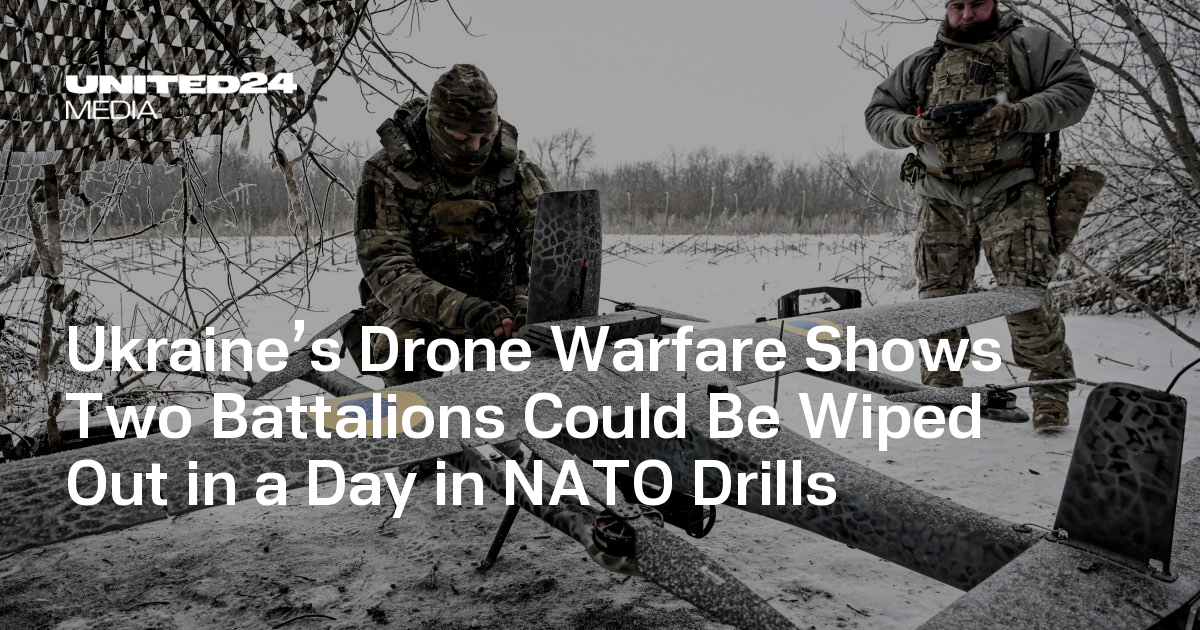
Russia’s war against Ukraine has already reshaped global military thinking, but the WSJ reported that a major NATO drill last May revealed how unprepared Western forces remain for high-intensity combat dominated by drones and real-time battlefield intelligence, according to a report by The Wall Street Journal on February 12.

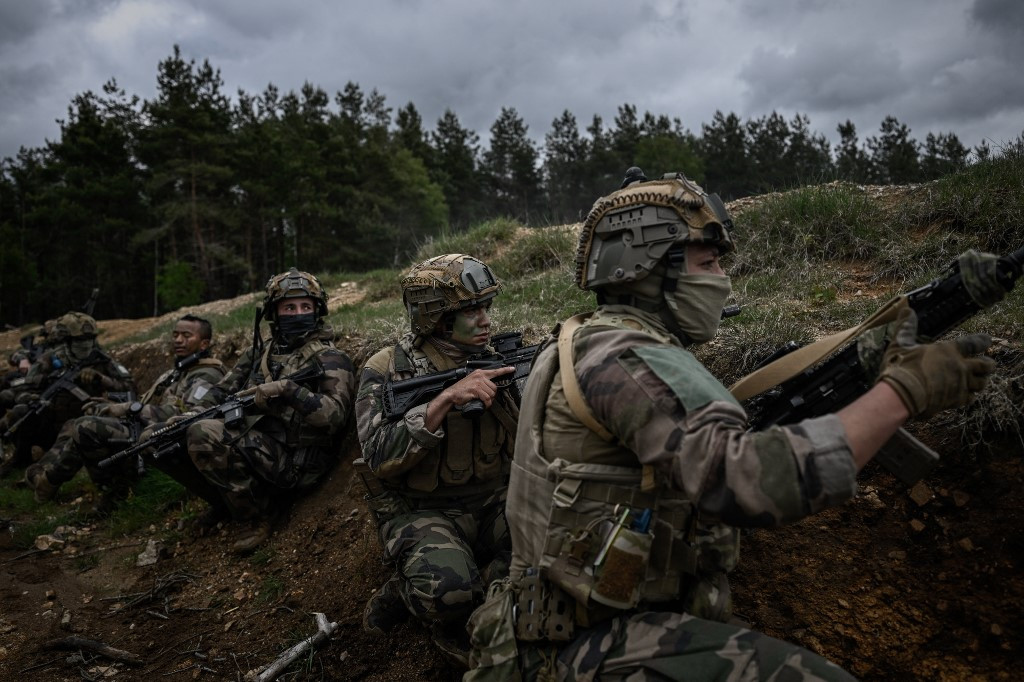
The exercise, called Hedgehog 2025, brought together more than 16,000 troops from 12 NATO countries alongside Ukrainian drone specialists, including personnel temporarily drawn from the front. The scenario simulated a “contested and congested” battlefield saturated with unmanned systems.

The overall outcome for NATO forces was “horrible,” he added, saying the opposing side was “able to eliminate two battalions in a day,” leaving units effectively unable to continue fighting.

“The aim was really to create friction, the stress for units, and the cognitive overload as soon as possible,” said Lt. Col. Arbo Probal of the Estonian Defence Forces, describing the intent to test how quickly soldiers could adapt under pressure.


According to the WSJ, one simulated offensive involving thousands of troops—including a British brigade and an Estonian division—quickly revealed a critical flaw. Advancing forces failed to account for the extreme visibility created by drones.

The NATO battle group was “just walking around, not using any kind of disguise, parking tents and armored vehicles,” one participant recalled. “It was all destroyed.”

Ukrainian teams relied on Delta, a battlefield-management system that gathers real-time intelligence, applies artificial intelligence to analyze data, identifies targets, and coordinates strikes across units. The system enables a rapid kill chain—spotting, sharing, and striking targets within minutes.

A small Ukrainian-led adversary group of roughly ten personnel carried out a counterattack that mock-destroyed 17 armored vehicles and conducted 30 simulated strikes in about half a day, the WSJ reported.

Another opposing unit led by Estonian unmanned-systems coordinator Aivar Hanniotti deployed more than 30 drones across an area smaller than four square miles. Even with fewer drones than typically seen on Ukraine’s real front lines, concealment proved nearly impossible.

or American tankers?


Ukrainian drone operators repeatedly “destroyed” a 3,500-strong US armored brigade during military exercises in Germany, exposing how quickly battlefield tactics have changed in the age of drones.

The clashes took place during the Combined Resolve exercises in April and May, where US troops faced Ukrainian forces from the 412th “Nemesis” Regiment of Ukraine’s Unmanned Systems Forces, The Wall Street Journal reported.

The American brigade was tasked with assaulting positions reinforced by Ukrainian troops. But its heavy armored personnel carriers quickly became easy targets.

The vehicles kicked up clouds of dust, making them highly visible to Ukrainian reconnaissance drones. Bomber and kamikaze drones then moved in.

The Ukrainian drones “destroyed” the American vehicles so quickly that White Force exercise officials had to repeatedly “regenerate” them and send them back into the fight so the exercise could continue, according to a US official familiar with the results.

During the exercise, a vehicle was considered destroyed when a drone hovered above it or flew close enough to strike.

The US brigade was not completely defenseless. The Texas-based unit had standard electronic warfare and counter-drone systems, according to a US Army representative.
So the Brits and Yanks are being eviscerated by Ukrainian drone teams, and you're here trying to tell me that Canadians will somehow do much better?

Get out of here with that.


I think that youre partly expanding Russian tactics onto our maneouvre forces.
No, I'm applying British and American tactics onto our maneouvre forces. And unless you mean to come here and tell me that Canadian tankers are leagues ahead of the Brits and the Yanks, hell, even the Ukrainians who have stopped using western supplied armour, then I think you may be the one out to lunch here.
 
No.

Are Canadian tankers much more prepared than British tankers?


or American tankers?


So the Brits and Yanks are being eviscerated by Ukrainian drone teams, and you're here trying to tell me that Canadians will somehow do much better?

Get out of here with that.
Actually - we did pretty good according to the Ukrainians...you can cut the hostility man, its bad for you to be constantly confrontational.
 
Im not going to elaborate any further other than they said we did pretty good.
Okay, on a whole, given the stuff you cannot talk about, I will summerize it this way,

The Brits got destroyed versus Ukrainian drone teams.

The Americans got destroyed against Ukrainian drone teams.

This is not me projecting Russian tactics on Western forces, this is me projecting Western tactics on western forces.

The Ukrainians were not even using the full amount of anti tank drones that are seen on a common Ukrainian front line and still Western tankers were facing severe losses.

And if Canadian tankers did particularly well, kudos to you, but we have 70-80 tanks. We last a week.

Nobody is ready for what is coming. If the Ukrainians cannot make use of western armor, and they have been able to make use of nearly everything we send them, I don't have high hopes for NATO tankers.
 
Okay, on a whole, given the stuff you cannot talk about, I will summerize it this way,

The Brits got destroyed versus Ukrainian drone teams.

The Americans got destroyed against Ukrainian drone teams.
Just so everyone is aware “destroyed” is a rather questionable term.
The exercise parameters of a vehicle being destroyed where to me exceptionally lopsided to the UAS.

This is not me projecting Russian tactics on Western forces, this is me projecting Western tactics on western forces.

The Ukrainians were not even using the full amount of anti tank drones that are seen on a common Ukrainian front line and still Western tankers were facing severe losses.
Part of the issue is when one looks at a Bde type exercise one is not able to bring some of the Divisional, Corps and higher level assets to bear.
Things NATO has that no other nations on earth have.

- Now don’t get me wrong, I think that there needs to be a lot more C-UAS systems, and integrated down at least to the Platoon level.

And if Canadian tankers did particularly well, kudos to you, but we have 70-80 tanks. We last a week.
Canadians generally have much better fieldcraft - sticking to track plans, camouflage etc. Probably from understanding that firepower alone its going to work for a CA entity.
Nobody is ready for what is coming. If the Ukrainians cannot make use of western armor, and they have been able to make use of nearly everything we send them, I don't have high hopes for NATO tankers.
Honestly if you look at the AT-UAS like the introduction of ATGM’s, it is simply another iteration of rock, paper, scissors.
We spend billions of dollars on C-RAM systems during GWOT - and apparently some seem to have forgotten those lessons.

The fact that all that C-RAM stuff wasn’t sent to Ukraine years ago is criminal, the fact that it was not then provided into the Gulf, makes one wonder if local losses was a desired result.

Most new AFV's are using APS system with the GAU-19, EO/IO and Acoustic sensors provide a detection dome that allow the APS to engage incoming threats.

The LM/UAS being used to strike tanks and other heavily armored vehicles are not little quadcopter systems -- they are primarily things like the Geran-5, which is basically a small cruise missile with a 90kg warhead.
The smaller FPVSUAS are primarily Anti-Personnel, and the FPVSUAS with AT warheads have a very low success rate.
 
Just so everyone is aware “destroyed” is a rather questionable term.
The exercise parameters of a vehicle being destroyed where to me exceptionally lopsided to the UAS.
The Ukrainians were also severely under manned compared to what a real front line armored force would be facing.
Part of the issue is when one looks at a Bde type exercise one is not able to bring some of the Divisional, Corps and higher level assets to bear.
Things NATO has that no other nations on earth have.
Yet, all things being equal, this is what, the 3rd or 4th exercise were under strength Ukrainian drone units have rendered NATO tankers ineffective?
- Now don’t get me wrong, I think that there needs to be a lot more C-UAS systems, and integrated down at least to the Platoon level.


Canadians generally have much better fieldcraft - sticking to track plans, camouflage etc. Probably from understanding that firepower alone its going to work for a CA entity.

Honestly if you look at the AT-UAS like the introduction of ATGM’s, it is simply another iteration of rock, paper, scissors.
We spend billions of dollars on C-RAM systems during GWOT - and apparently some seem to have forgotten those lessons.

The fact that all that C-RAM stuff wasn’t sent to Ukraine years ago is criminal, the fact that it was not then provided into the Gulf, makes one wonder if local losses was a desired result.

Most new AFV's are using APS system with the GAU-19, EO/IO and Acoustic sensors provide a detection dome that allow the APS to engage incoming threats.

The LM/UAS being used to strike tanks and other heavily armored vehicles are not little quadcopter systems -- they are primarily things like the Geran-5, which is basically a small cruise missile with a 90kg warhead.
The smaller FPVSUAS are primarily Anti-Personnel, and the FPVSUAS with AT warheads have a very low success rate.
All this is avoiding the fact that you don't need a huge success rate. Tanks are being swarmed with 10-15 drones per tank. And once a mobility kill is made, its more or less game over.

The saturation of these drones has been shown to be causing the death of armored formations operating in the open in the Ukraine war, and so far not a single NATO exercise versus the Ukrainians has filled me with any hope that we have figured out how to combat this.
 
The Ukrainians were also severely under manned compared to what a real front line armored force would be facing.
Again you are missing the fact that we do not do lone Bde operations - there are assets above.

Yet, all things being equal, this is what, the 3rd or 4th exercise were under strength Ukrainian drone units have rendered NATO tankers ineffective?

The issue is that just like a Section/Squad do not assault a Section/Squad, nor do you start assaulting until one has achieved fire superiority, this is not a realistic look at what would occur. The Bde doesn’t exist on it's own -- and it is a fallacy to try to interpolate anything without higher level assets being available.


All this is avoiding the fact that you don't need a huge success rate. Tanks are being swarmed with 10-15 drones per tank. And once a mobility kill is made, its more or less game over.
Lets says that most of those FPV systems have a 5% PMK (probability mobility kit) - you need a lot of them to affect a Armored Bde.
Lets say 66 vehicles from a Bde to make it Combat Ineffective - so you need 1,320 under roughly current Ukrainian conditions.

Now think about all of a sudden Blue Force has access to Red launch info and can start landing hits on the launch facilities and CC nodes.
The various collection methods available to paint a real time collaborative view of the battlefield do exist.
Blue Air and Fires exist beyond the Bde, as well a Air Defense.


The saturation of these drones has been shown to be causing the death of armored formations operating in the open in the Ukraine war,
There have been a lot of additional reasons for this, not just specific to UAS.
and so far not a single NATO exercise versus the Ukrainians has filled me with any hope that we have figured out how to combat this.
Part of the reason a bunch of exercise data is not OS.
 
Again you are missing the fact that we do not do lone Bde operations - there are assets above.
So you're assuming battlespace dominance in peer on peer fight?
The issue is that just like a Section/Squad do not assault a Section/Squad, nor do you start assaulting until one has achieved fire superiority, this is not a realistic look at what would occur. The Bde doesn’t exist on it's own -- and it is a fallacy to try to interpolate anything without higher level assets being available.
So you're saying fire superiority eliminates the drone threat?
Lets says that most of those FPV systems have a 5% PMK (probability mobility kit) - you need a lot of them to affect a Armored Bde.
Thats a ridiculously low rate. As of a year ago I was seeing anywhere from 20-40 percent PMK.
Lets say 66 vehicles from a Bde to make it Combat Ineffective - so you need 1,320 under roughly current Ukrainian conditions.
Based on a ridiculously low PMK, sure.
Now think about all of a sudden Blue Force has access to Red launch info and can start landing hits on the launch facilities and CC nodes.
The various collection methods available to paint a real time collaborative view of the battlefield do exist.
Blue Air and Fires exist beyond the Bde, as well a Air Defense.
Are we talking peer on peer here or versus some ragtag militia?
There have been a lot of additional reasons for this, not just specific to UAS.

Part of the reason a bunch of exercise data is not OS.
Yeah, I'm certain the good news is all being obfuscated.
 
So you're assuming battlespace dominance in peer on peer fight?
I forgot your the guy who wants Gripens so you can fight a Peer-Peer fight.

Yeah, I'm certain the good news is all being obfuscated.
Talking with you is fairly pointless as either you are being willingly obtuse, or you really just do not understand what occurs in a LSCO.
 
I forgot your the guy who wants Gripens so you can fight a Peer-Peer fight.
So you're not talking peer on peer, thanks.
Talking with you is fairly pointless as either you are being willingly obtuse, or you really just do not understand what occurs in a LSCO.
And talking to you is you quoting ridiculously low PMK rates and saying trust me bro.

Yet I put up with you.
 
So you're not talking peer on peer, thanks.
Where is a peer?
Russia is not a peer, neither is Iran, China is close (and getting uncomfortably closer).

And talking to you is you quoting ridiculously low PMK rates and saying trust me bro.
I don’t see them as ridiculously low.
Higher PK’s come from larger systems. Yes those are out there - but not in the same volumes.
Yet I put up with you.
Look at the issues Ukraine has a the Bn, Bde, and Div.
Unfortunately they lost some of their best and brightest NATO trained leaders early.
Dissecting the failed offensives it was clear that the Armored units count function much higher than a Bn - the lack of fire planning, poor recce’s, inadequate breaching, disjointed timings resulted in failure to break through Russian defensive positions.

Ukraine has air parity at best. Has very limited AD capability, and Fires which had been relying on US data for targeting in Real Time that 47 cutoff.

I am not trying to suggest that the UAS threat is inconsequential, but I am a believer that it is not as catastrophic as some portray, especially for armor. Fixed positions are much more susceptible to OWUAS/LM’s.
 
Where is a peer?
Russia is not a peer, neither is Iran, China is close (and getting uncomfortably closer).
Right....America has no peers. Got it.

I'll chalk this one up to american exceptionlism.
I don’t see them as ridiculously low.
Higher PK’s come from larger systems. Yes those are out there - but not in the same volumes.
Don't the Ukrainians have a large, and I mean, a LARGE, amount of baba yaga drones?

Look at the issues Ukraine has a the Bn, Bde, and Div.
Unfortunately they lost some of their best and brightest NATO trained leaders early.
Dissecting the failed offensives it was clear that the Armored units count function much higher than a Bn - the lack of fire planning, poor recce’s, inadequate breaching, disjointed timings resulted in failure to break through Russian defensive positions.

Ukraine has air parity at best. Has very limited AD capability, and Fires which had been relying on US data for targeting in Real Time that 47 cutoff.

I am not trying to suggest that the UAS threat is inconsequential, but I am a believer that it is not as catastrophic as some portray, especially for armor. Fixed positions are much more susceptible to OWUAS/LM’s.
Again, if you think America has no peer adversary, sure, just bomb everything away, crush the other side with ordinance. I'm certain NATO tankers will have a much easier time of things.

But on the off chance america does face a peer adversary who has enough drones to swarm NATO tanks, and the americans dont have battle space superiority or air superiority, tanks will not fare well.
 
Im not going to elaborate any further other than they said we did pretty good.
:unsure: If the Tanks are already broken before the Battle does it count if they get taken out during the battle, What if they never made it to the battle does that count as surviving?:confused::ROFLMAO:

I am sure Canada has done fairly well at adapting to the changing dynamics on the current training/ battle field. That is what makes us an actual formidable force to recon with. We just don't follow doctrine if we can make it work another way. (unless that crusty CO/ RSM disagrees). Surprising to anyone else, we can actually adapt on the fly to make things happen and happen quickly.

I do not see Canada as doing very well due to the lack of technical support on the front line so to speak, the lack of actual equipment. I do see us adapting extremely well to changing situations as they unfold on the ground. Thus making up for the actual frontline hardware. No matter what, it still takes a Soldier on the ground to make the decision to engage or disengage. Our men and women in uniform are very effective at making those decisions.
 
No-one has fought a battle with armoured formations supported by artillery formations supplied to the tune of 300 to 600 rounds per gun per day.

Much of this sounds like the pre and early stages of WW II when people had what turned out to be excessive fear of bombers and tanks. They had already had a chance to get over submarines in WW I, otherwise those would've been on the list too.

A game has rules; it can have a lot of rules, and it is still a game.
 
FPV drone operators operate from static positions. Movement by the operator makes maintaining an effective and continuous link with the directional antenna problematic and the movement also causes disorientation with the operator. Similarly drone operators moving in a vehicle become a highly visible target themselves.

Fiber optic drones are similarly operated from static positions because of the obvious issues of both ends of the cable moving in different directions and potentially being snagged on obstacles.

What happens when an attacking force has enough mass as well as EW and AD systems to make an initial breakthrough toward the dispersed defender with a heavy reliance on drones? The drone operators will have to move in order to reposition to be able to find a new, safe static position from which to operate which will make them vulnerable.

Drones are definitely a new and important tool in the toolbox but they are not some magical revolutionary thing that will make the other elements of the combined arms forces suddenly obsolete.
 
FPV drone operators operate from static positions. Movement by the operator makes maintaining an effective and continuous link with the directional antenna problematic and the movement also causes disorientation with the operator. Similarly drone operators moving in a vehicle become a highly visible target themselves.

Fiber optic drones are similarly operated from static positions because of the obvious issues of both ends of the cable moving in different directions and potentially being snagged on obstacles.

What happens when an attacking force has enough mass as well as EW and AD systems to make an initial breakthrough toward the dispersed defender with a heavy reliance on drones? The drone operators will have to move in order to reposition to be able to find a new, safe static position from which to operate which will make them vulnerable.

Drones are definitely a new and important tool in the toolbox but they are not some magical revolutionary thing that will make the other elements of the combined arms forces suddenly obsolete.
I could see this being mitigated by having various teams of drone operators in increasing depth; the range of fiber spool drones does lend itself to this. If defending against an attacking force, defending drone operators can afford to be farther back because they don’t need to necessarily extend as far into the enemy’s depth. This will also permit potential rapid reinforcement of a defending force with larger numbers of operators sitting farther back in more hasty positions.

I see attacking into a drone heavy defending formation as being like walking into really heavy mud.
 
I could see this being mitigated by having various teams of drone operators in increasing depth; the range of fiber spool drones does lend itself to this. If defending against an attacking force, defending drone operators can afford to be farther back because they don’t need to necessarily extend as far into the enemy’s depth. This will also permit potential rapid reinforcement of a defending force with larger numbers of operators sitting farther back in more hasty positions.

I see attacking into a drone heavy defending formation as being like walking into really heavy mud.
Again, not dismissing drones as I agree that they will play a significant role in any future conflict. However, as countermeasures are developed (both passive and kinetic) to protect vehicles from drones we may go from 15-20 FPV drones required to take out an armoured vehicle to maybe 50+ drones per vehicle?

So, with 2-3 troops average per FPV drone team that means you're dedicating 125 troops (a company) per target enemy vehicle. So perhaps a small battalion to take out a tank troop? And the further back from the front that you place your static FPV teams the longer it takes them to get to their (moving) targets. How much of the drone use in Ukraine is a result of a static front and limited amounts of other weapon systems? FPV drones are certainly cheap, expendable and quick to procure. But if they had other options available would they be preferred?

Now maybe when drone swarms come to maturity and a single fiber optic FPV operator can direct multiple semi-autonomous drones to a target things might be different, but even there I think the comms links between the operator's drone and the rest of the swarm would be the weak link. Full autonomy might be the solution to that but I'm not sure anyone is ready to fully take the human out of the targeting loop.
 
I could see this being mitigated by having various teams of drone operators in increasing depth; the range of fiber spool drones does lend itself to this. If defending against an attacking force, defending drone operators can afford to be farther back because they don’t need to necessarily extend as far into the enemy’s depth. This will also permit potential rapid reinforcement of a defending force with larger numbers of operators sitting farther back in more hasty positions.

I see attacking into a drone heavy defending formation as being like walking into really heavy mud.
At the end of the day, the side that can gather more information, process it quicker, and act on it faster, will be able to shape the battle.
 
Back
Top