Why Ukrainian drones are so cheap
Why does the Switchblade 300 cost $53,000 while Ukraine's Bulava costs ~$8,000? Compliance overhead, R&D amortisation, and component sourcing — not necessarily production scale.

www.thedroneoffice.com
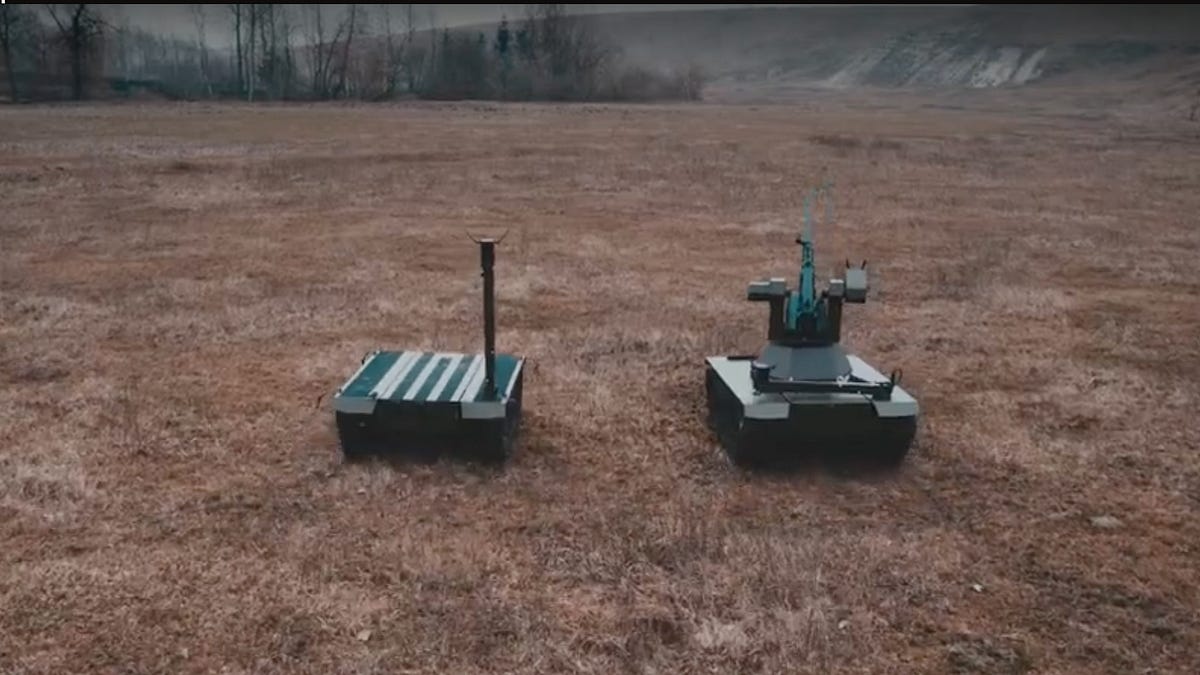
Ukrainian $30,000 UGV
Unmanned Ground Vehicle (ground drone) Murakha

ukrainesarmsmonitor.substack.com
Aussie equivalent carrying capacity at $400,000
The OzBot ATR is the toughest and most capable platform in its class, according to Deakin University’s Dr Mick Fielding, and could play a part in international efforts to establish an outpost on the moon and beyond.

bia5.com
why are ukrainian ugvs so cheap compared to western ones and what western ones compete on price +13
Ukrainian Unmanned Ground Vehicles (UGVs) are significantly cheaper than Western counterparts—often costing $10,000–$20,000 compared to hundreds of thousands for Western systems—due to a focus on attritable (disposable) design,, rapid prototyping, and utilizing commercial off-the-shelf (COTS) components rather than expensive, specialized military-grade hardware.
While Western systems prioritize longevity, high-end armor, and multifunctionality, Ukrainian UGVs are built for immediate, high-volume combat use.
Why Ukrainian UGVs are Cheaper
"Good Enough" Engineering: Ukrainian developers focus on rapid, functional designs rather than perfection, often producing new iterations in months.
COTS Components: Instead of bespoke, expensive sensors, they use commercially available Chinese or Western components, significantly lowering costs.
Attritable Design: Because UGV life expectancy on the front line is often only a week, low cost is prioritized over durability, notes Viktor Dolgopiatov of Burevii.
War-Driven Innovation & Scale: The Brave1 ecosystem enables rapid production, aiming for high-volume, low-cost solutions, rather than expensive, complex platforms.
Low Labor Costs: Manufacturing wages are significantly lower in Ukraine than in Western countries.
Cost Comparison:
Ukraine vs. WestUkrainian UGV (e.g., Zmiy): ~$20,000 for a demining platform.
Western UGV (e.g., Small Engineering Robot): ~$400,000 or more, notes a Ukrainian commander.
Long-Range Strike Drone: ~$200,000 in Ukraine vs. $5–10 million from Western contractors.
Western UGVs Competing on Price
While most Western systems are "exquisite wares" designed for longevity, a few companies are shifting toward more affordable or scalable solutions:
Milrem Robotics (Estonia) - THeMIS: Although more expensive than Ukrainian options, THeMIS is widely used by over 15 NATO nations and focuses on modularity, allowing it to be adapted for cheaper configurations.
Clearpath Robotics (Canada) - Husky/Jackal: These are popular in research and R&D but offer robust, smaller-scale platforms that are cheaper than large armored UGVs.
Roboteam (Israel/Canada) - Probot/PackBot: These are often smaller,, packable, or modular, providing lower-cost alternatives to larger, heavy-combat systems.
Textron Systems (USA) - Ripsaw 3: Following recent competition developments, the U.S. Army is emphasizing a more affordable "Robotic Combat Vehicle".
The main constraint for Western platforms is that they are "underwhelming" on the front line compared to cheaper, mass-produced drones that can be lost in high numbers without significant financial loss.



 www.businessinsider.com