What the Commander said was that he doesn't need 5th Gen fighters to defeat the primary threat today. He didn't say the primary threat was UAS at home. Nor did he say he needed A-10s. Nor did he speak about substantially longer horizons. He answered a specific question pertaining to buying more F-15E for continental defence.
The NORAD/Northcom Commander may not be concerned with a fifth Gen threat or even higher air threats. But that's one cocom among several that the USAF as a whole has to service. Or are you going to say that what the INDOPACOM, CENTCOM and EUCOM Commanders need are irrelevant?
If you're going to twist his logic and explanation, you're no better than the Gripen fans using his words to advocate for dumping the F-35 order. After all, fifth gen isn't needed right?
Your "twisted logic" is my "debating tactic". I learned that in High School.
In debate you get to line up your datum points (intentionally singular) to create the narrative you wish to support your argument.
I am no better than those Gripen fans, or those that are convinced of the appropriateness of the F35 solution or the value of resurrected big gun battleships.
A debate gets to examine both the data and the narrative. And sometimes you are seeking to convince the person opposite you and sometimes you seek to convince the audience. And sometimes you fail to convince either.
It has been very hard for me to find right answers. Sometimes I have followed the right answer to the wrong solution.
...
I say nothing about the needs of the other CoComs. I would point out that if fifth gen solutions are in short supply, and if one CoCom says he can adequately manage his tasks without fifth gen solutions then that leaves more fifth gen solutions in the hands of his peers.
As to the rising threat -
NORAD and USNORTHCOM Commander
General Gregory Guillot has expressed significant concern regarding the rapid rise in
drone threats (small unmanned aerial systems - sUAS) over North American military installations, highlighting a dramatic increase in incursions.
U.S. Department of War (.gov) +1
Core Concerns and Recent Data:
- Rapid Rise in Incidents: Guillot revealed that there were over 350 UAS detections at approximately 100 U.S. military installations last year.
- Border Threats: He has reported that drone incursions along the U.S.-Mexico border likely exceed 1,000 per month, noting their use by criminal gangs.
- Surveillance Risks: The primary concern is the use of drones for surveillance of sensitive military capabilities, including nuclear-capable bomber bases and submarine silos.
- Threat Expansion: Beyond the border, there is increasing fear that drones could be used in coordinated "swarms" to surveil or attack domestic military bases and critical infrastructure.
U.S. Department of War (.gov) +6
Action Taken and Future Needs:
- Request for Expanded Authority: Gen. Guillot is pushing for broader legal authority to destroy drones that are surveilling military bases, particularly at a greater range from the installations.
- Increased Defeat Capability: In early 2026, he noted that while a year prior almost no detected drones were defeated, recent improvements have allowed for the neutralization of roughly one-quarter of detected drones.
- Rapid Deployment of Counter-Drone Kits: Northcom has deployed "Fly-Away Kits" (FAKs) to participate in counter-drone activities, validating the ability to quickly deploy tools to detect and disable enemy drones, such as at Minot Air Force Base in Oct 2025.
DefenseScoop +4
The commander emphasized that while DOD has taken steps, "work remains to be done to ensure that there are resources there quickly".
AZPM News
.....
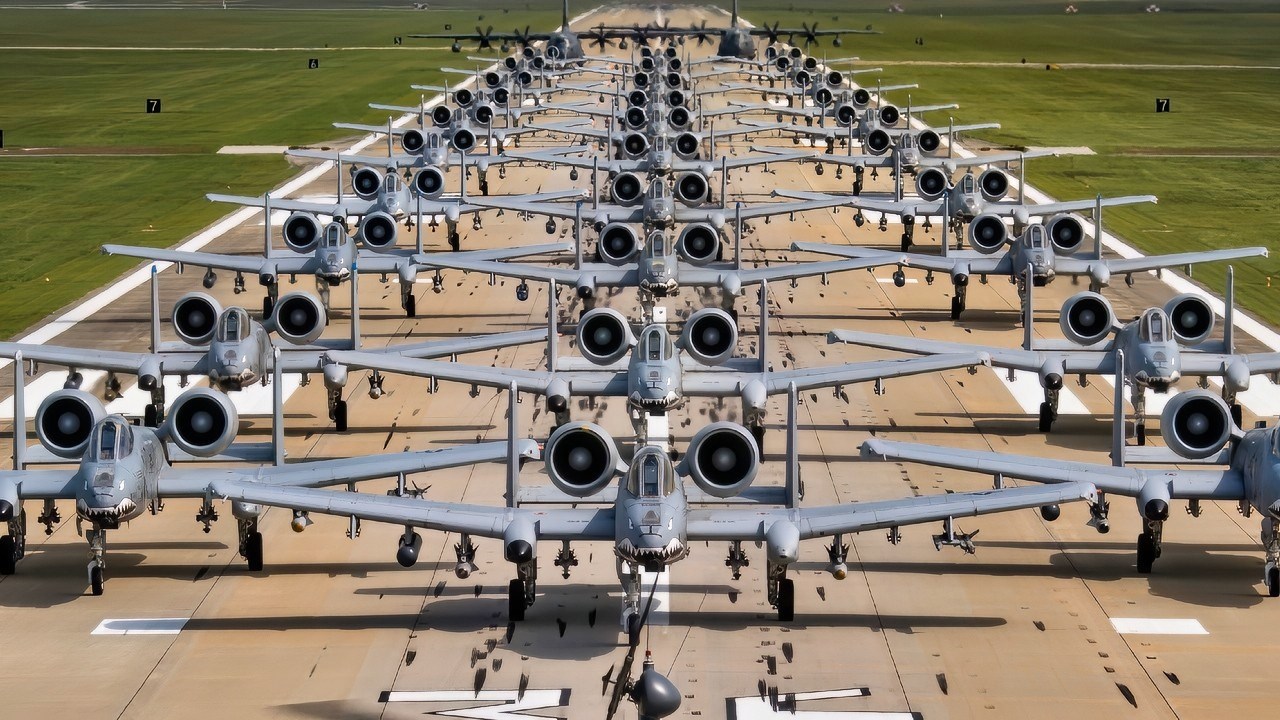
As to the utility of the A-10 in the role
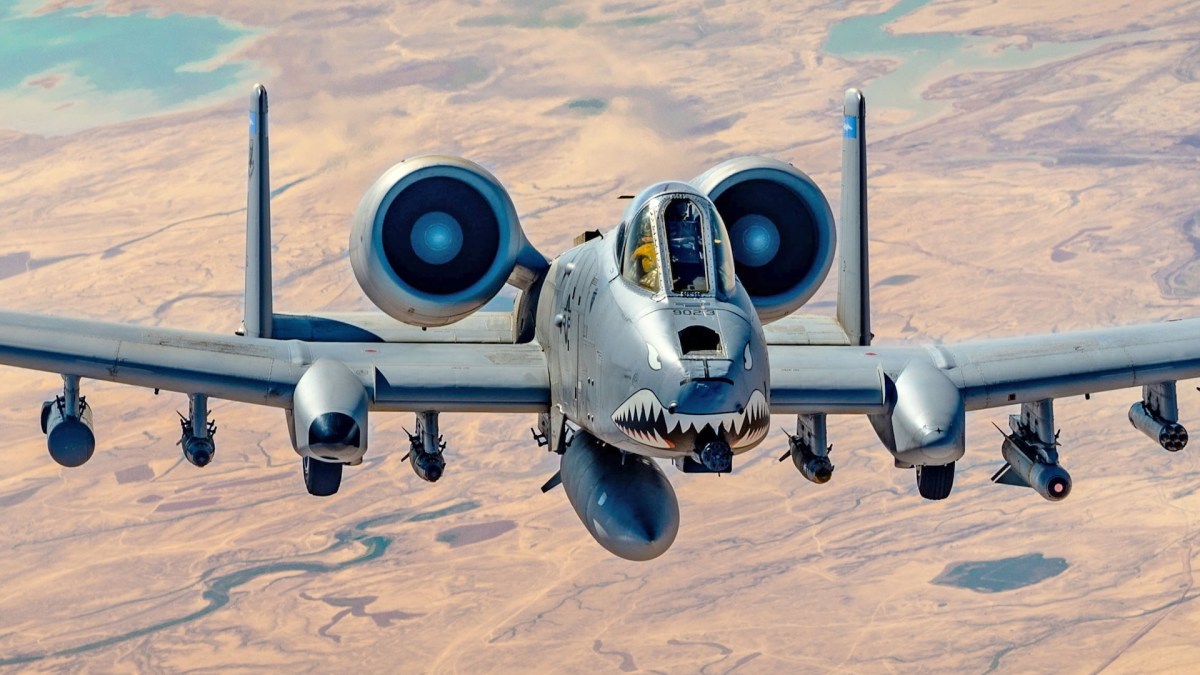
The A-10 Thunderbolt II ("Warthog") is actively evolving into a
Counter-Uncrewed Aircraft System (CUAS) platform, with recent deployments confirming its capability to engage small, slow-moving drones, signaling a new, specialized role within the U.S. Air Force.
- Drone Kill Markings (2025): The Idaho Air National Guard's A-10s returned from a CENTCOM deployment featuring kill markings for unmanned aerial vehicles (UAS), confirming successful engagements.
- Ideal Capabilities: The A-10's ability to loiter for extended periods at low speeds and low altitudes makes it a cost-effective choice for combating slow-moving threats, such as Shahed-type drones, compared to high-cost fighters like the F-15 or F-35.
- Weaponization for C-UAS: A-10s have been cleared for using the AGR-20F Advanced Precision Kill Weapon System II (APKWS II) to shoot down drones, allowing for high-precision, low-cost interceptions.
- Limitations: Despite its success, the A-10 lacks organic radar for long-range detection of drones, making it reliant on external targeting pods or ground control interception (GCI) to vector it to targets.
The War Zone +4
While primarily tested and employed in the CENTCOM theater, this adaptation of the A-10 represents a major shift in how the USAF plans to use the platform, potentially extending its life beyond 2030 by offering a dedicated drone-hunting role.
...
As to the willingness of the Air National Guard to continue flying the A-10
Despite the U.S. Air Force’s plan to retire all A-10 Thunderbolt II "Warthogs" by the end of fiscal year 2026, the Air National Guard (ANG) and Congress have sought to keep them flying due to their unparalleled Close Air Support (CAS) capabilities. While some units like the 175th Wing are transitioning, the aircraft remains in demand, with structural upgrades extending its life and new deployments proving combat readiness in 2026.
National Guard.mil +4
https://www.youtube.com/watch?v=mqCkUi9qUjQ&t=651
Key Points on A-10 National Guard Status:
- Retirement Deadline: The Air Force is executing a phased retirement of the entire A-10 fleet by 2026, aiming to focus on higher-end modernization.
- Congressional Intervention: Congress has previously blocked complete retirement, with the 2025 National Defense Appropriations Act ordering the Pentagon to maintain at least 103 Warthogs, pushing final phase-out toward 2029.
- Unit Transitions: The 175th Wing of the Maryland ANG, a long-time operator, retired its last A-10s in early 2025. Meanwhile, the 127th Wing in Michigan continues to operate them.
- Capabilities & Upgrades: The A-10 remains highly valued for its combat effectiveness, with newly installed reinforced wings extending the airframe's life until 2040.
- Replacing the Mission: The Air Force intends to replace A-10 units with more advanced fighters, including the F-35 and F-15EX.
Air & Space Forces Magazine +7
https://www.youtube.com/watch?v=ve5-vrNaZZk&t=59
....
The Air National Guard wants to continue flying them.
They are effective against a developing threat in addition to demonstrated effects againt their design targets and in the CoIn role.
They are available.
They are cheaper to fly.
The
A-10 Thunderbolt II is significantly cheaper to operate per flying hour than the
F-22 and
F-35, and it generally remains less expensive to fly than most
F-15 and
F-16 variants. While newer 5th-generation jets offer advanced stealth and sensor capabilities, the A-10's lower maintenance demands—largely due to its simpler technology and lack of advanced stealth coatings—make it a highly cost-effective platform for close air support.
WION +3
Operating Cost Per Hour Comparison (Approx. 2024-2026 Data)
Operating costs (Cost Per Flying Hour - CPFH) vary depending on whether they include only direct costs (fuel, parts) or full sustainment (maintenance, personnel, overhead).
Simple Flying +2
- A-10 Thunderbolt II: ~$20,000 - $22,000 per hour
- F-16 Fighting Falcon: ~$22,000 - $27,000 per hour
- F-15EX/E Eagle: ~$29,000 - $34,000 per hour
- F-35A Lightning II: ~$33,000 - $42,000 per hour
- F-22 Raptor: ~$60,000 - $85,000 per hour
Simple Flying +5