


- Reaction score
- 35
- Points
- 560
Allied Officers Concerned by Lack of Afghan Forces, NY Times
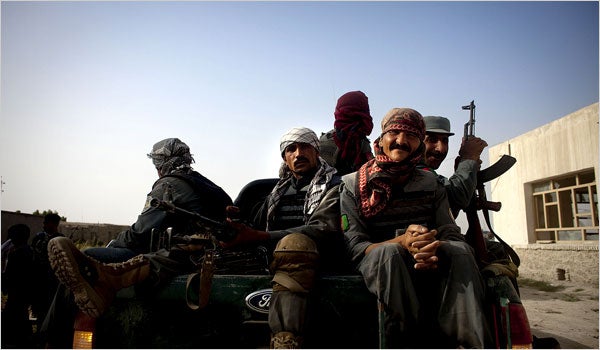
NAWA, Afghanistan — One week after several battalions of Marines swept
through the Helmand River valley, military commanders appear increasingly
concerned about a lack of Afghan forces in the field.
“What I need is more Afghans,” said Brig. Gen. Larry Nicholson, commander
of the Marine expeditionary brigade in Helmand Province. He accompanied
the top American commander in Afghanistan, Gen. Stanley A. McChrystal,
during a visit with troops at Patrol Base Jaker here on Monday.
General Nicholson and others say that the long-term success of the operation
hinges on the performance of the Afghan security forces, which will have to
take over eventually from the American troops. General Nicholson said the
American force of almost 4,000 had been joined by about 400 effective
Afghan soldiers. “The net increase in Afghan security forces is zero” since
the brigade arrived a few months ago, he said. The lack of Afghan forces
“is absolutely our Achilles’ heel,” added Capt. Brian Huysman, commander
of Company C of the First Battalion, Fifth Marines in Nawa.
Captain Huysman said the Afghan forces were critically important in
establishing trust and communication with citizens. “We can’t read these
people; we’re different,” he said. “They’re not going to tell us the truth.
We’ll never get to build and transition” — the last phase of the operation —
“unless we have the Afghans.” American military officials say they want at
least a full brigade of Afghan forces in Helmand, thousands more than are
here now.
NATO forces said Tuesday that three foreign soldiers, two Canadians and a
Briton, died in a helicopter crash in the southern province of Zabul on Monday,
already the deadliest day for American forces in Afghanistan in nearly a year.
Of seven United States soldiers killed Monday, said Capt. Jon Stock, an American
military spokesman, six died in bomb explosions and one in a firefight.
The Marine operation that began last week appeared to overwhelm the Taliban
fighters who have long dominated this region, which provides a large part of
the raw opium the Taliban use to finance operations throughout the country.
But commanders believe that the Taliban made a calculated decision to
retreat, leaving the Marines with little resistance so far.
For now, many Taliban are believed to have pulled back to more remote locations,
like Marjah, a village west of here, to regroup and try to figure out how to reassert
themselves in an area so crucial to financing their guerrilla campaign. “This is the
engine that drives the Taliban,” General Nicholson said, referring to the lush canal-
fed land along the Helmand River that produces much of Afghanistan’s opium poppy
crop.
At the meeting in Nawa, General McChrystal asked for input from the assembled
officers. A British Army officer, Maj. Rob Gallimore, who leads a team training
Afghan soldiers, responded bluntly: While the success of the weeklong operation
had been “staggering,” he said, he was worried what would happen if the
necessary complement of Afghan forces did not materialize. “To drop it by a lack
of men would be criminal,” he said.
General McChrystal emphasized that the operation needed to show the local people
quickly that they had more to gain from life without the Taliban than with them. The
military “got a lot of fanfare” during the initial push last week, the general said, and
now has to deliver on its promises. “Militarily, you can think you can control areas,
but sociologically if you don’t control them, you’re not going to be able to do what
we need to do here,” he said.
General Nicholson added that the operation had a “narrow window of opportunity.”
In a month, he said, the people will say you “came in and chased the Taliban away.”
“But how is my life better? How is your presence benefiting me and my family?”
Abdul Waheed Wafa and Muhibullah Habibi contributed reporting from Kabul,
Afghanistan.


