• Thanks for stopping by. Logging in to a registered account will remove all generic ads. Please reach out with any questions or concerns.

Army Reserve Restructuring

Gawd forbid the paysheets disappear ;)

1960S 60S Vintage GIF
Was chatting with a Brit, their platoon warrant does roll call at opening parade. Then goes onto a computer marks off who was there into the system and it automatically pays them. Seems like a pretty simple system, and they have quarter days! Gotta attend a single meet for an hour? Quarter days pay
 
Was chatting with a Brit, their platoon warrant does roll call at opening parade. Then goes onto a computer marks off who was there into the system and it automatically pays them. Seems like a pretty simple system, and they have quarter days! Gotta attend a single meet for an hour? Quarter days pay

There are organizations who have regularly managed (for decades) part-time/ casual workforces of thousands of people, on a daily basis, using swipe cards etc.

The fact that we can't make that work, this far into the Information Age, doesn't give me hope for our ability to exploit other emerging technology like drones and AI.
 
The issue for many of them is that when they swore in, they joined a particular regiment the same way anyone else would. When Brigade decided to consolidate them all in one location they essentially forced them to essentially switch units. The individual members are theoretically still in their units role, but the individual units have very limited control over them.

From their perspective this would be similar to telling an infantry soldier from a reserve unit that they now belong to a different infantry regiment. Something that is not possible without the soldiers consent in the current CAF.
What leads you to that conclusion? The last time I looked reservists were being enrolled in the primary reserve not the Baker Street Rifles. One can't be transferred a reservist to the regular force "component" without consent but to another unit . . . it could happen. Then again they could just stop showing up or taking a release like they do now . . . so why do it?

The issue with combat service support trades is a tough one because of the career profile and promotion opportunities is limited by the army reserve establishment. For the ARE the career chain stops at MCpl for the old RMS trade within any given unit, albeit the unit can rig the system up to WO if one misuses the Trg WO ATR position. And, of course there's that old - put them on Class B to take the place of that RegF Sgt that doesn't get posted in any more.

So please read what I was writing. My point was and remains that consolidation is largely unnecessary since the work can be done dispersed at multiple reserve units.

That's a problem in and of itself. We routinely post CSS pers between units to make sure everyone has enough clerks and Techs. We need to get more ruthless about making workable units.
It's a very challenging problem seeing as there are both situations where you have multiple units in a tight urban area and ones where you dispersed units and subunits and an administrative system that is not online friendly and needs lots of short, face-to-face interactions.

IMHO, the only real working solution is to have a much more computer-friendly admin system but with any job that needs full-time attention, which admin does, handled by full-timers. I think it's not hard to train on a part-time basis, but it's hard to administer a unit that way. I think admin needs running like a help desk where you have one easily trackable "user file" with full-timers working both at units and at online/phone line regional help desks. First though, one needs to simplify admin and finance.

Tough problem.

🍻
 
Well the reserves relying on physical pay sheets in 2025 is probably increasing the amount of paper work being done. A QR code scan for the CAF Pay and Benefits app would be a much quicker system.
That was being worked on pre pandemic. However, the very limited number of pers proficient in maintaining the pay systems have "keep it from collapsing completely" as a pri 1 task, and insufficient capacity to move to any pri 2 tasks.

The Military Pay Solution project is nearing Definition phase, and will be a COTS solution. Nobody wants the pay systems replacement more than DGCB, DMPAP and DPPD.
 
What leads you to that conclusion? The last time I looked reservists were being enrolled in the primary reserve not the Baker Street Rifles. One can't be transferred a reservist to the regular force "component" without consent but to another unit . . . it could happen. Then again they could just stop showing up or taking a release like they do now . . . so why do it?

The issue with combat service support trades is a tough one because of the career profile and promotion opportunities is limited by the army reserve establishment. For the ARE the career chain stops at MCpl for the old RMS trade within any given unit, albeit the unit can rig the system up to WO if one misuses the Trg WO ATR position. And, of course there's that old - put them on Class B to take the place of that RegF Sgt that doesn't get posted in any more.


It's a very challenging problem seeing as there are both situations where you have multiple units in a tight urban area and ones where you dispersed units and subunits and an administrative system that is not online friendly and needs lots of short, face-to-face interactions.

IMHO, the only real working solution is to have a much more computer-friendly admin system but with any job that needs full-time attention, which admin does, handled by full-timers. I think it's not hard to train on a part-time basis, but it's hard to administer a unit that way. I think admin needs running like a help desk where you have one easily trackable "user file" with full-timers working both at units and at online/phone line regional help desks. First though, one needs to simplify admin and finance.

Tough problem.

🍻


See below.

There are organizations who have regularly managed (for decades) part-time/ casual workforces of thousands of people, on a daily basis, using swipe cards etc.

The fact that we can't make that work, this far into the Information Age, doesn't give me hope for our ability to exploit other emerging technology like drones and AI.

Communicate with Starbucks and MacDonalds. Might start by asking some of those soldiers of yours that have worked for them.
 
Well the reserves relying on physical pay sheets in 2025 is probably increasing the amount of paper work being done. A QR code scan for the CAF Pay and Benefits app would be a much quicker system.
With this I agree.
It is the 21st century? or did I miss something.... ;)
 
One of my NCOs was a manager at Canada Post and could occasionally be enticed to let us know how screwed up we were in comparison ;)
I mean we quickly forgot the internal report plus a report from I think it was either the AG or the ombudsman that ripped us for our bad IT. This isn't a new issue, however its one that needs fixing

 
I mean we quickly forgot the internal report plus a report from I think it was either the AG or the ombudsman that ripped us for our bad IT. This isn't a new issue, however its one that needs fixing


Maybe things will change now that IT is a combat skill.....

Information Technology (IT) in the U.S. Infantry involves specialized roles (like 25B Information Technology Specialists) managing tactical networks, communications (radio, satellite, data), cybersecurity, and deploying advanced tech like drones (UAS) for intelligence and command, ensuring seamless digital operations on the battlefield, bridging infantry tasks with cutting-edge cyber capabilities for mission success.
Key Roles & Functions:
  • 25B - Information Technology Specialist: Maintains and troubleshoots military computer systems, networks, and operations, essential for secure communication and data flow in the field.
  • Cyber Corps: Focuses on cyber defense, network architecture (SD-WAN, cloud), and advanced technologies like AI/ML, creating new career paths for officers.
  • Signal Corps: The broader branch providing communication support, from basic radio to complex satellite and voice systems.
How IT Integrates with Infantry:
  • Command & Control (C2): IT systems provide mobile platforms (like DTOS) for quick command setup during emergencies.
  • Intelligence, Surveillance, Reconnaissance (ISR): Unmanned Aerial Systems (UAS) provide real-time intel, enhancing infantry's ability to identify threats.
  • Tactical Networks: Soldiers use specialized networks for data sharing, situational awareness, and coordinating maneuvers.
  • Cybersecurity: Protecting sensitive information and systems from enemy interference is crucial, even in frontline infantry units.
Modern Examples:
  • The integration of the Infantry Squad Vehicle (ISV) with UAS creates enhanced lethality and situational awareness for infantry units.
  • New career paths in AI/ML are emerging, showing IT's deep integration into future infantry operations.
In essence, modern infantry relies heavily on IT for everything from basic soldier communication to complex battlefield management, making IT specialists vital for mission success.
 
Maybe things will change now that IT is a combat skill.....

Information Technology (IT) in the U.S. Infantry involves specialized roles (like 25B Information Technology Specialists) managing tactical networks, communications (radio, satellite, data), cybersecurity, and deploying advanced tech like drones (UAS) for intelligence and command, ensuring seamless digital operations on the battlefield, bridging infantry tasks with cutting-edge cyber capabilities for mission success.
The MOS 25 in the US Army is the Signals Corps. It's not an infantry specialty which is the MOS 11 series. It operates across the whole US Army. Pretty much everyone relies on IT systems.

MOS 25B is just one of 11 specialties in the US Signals corps.

🍻
 
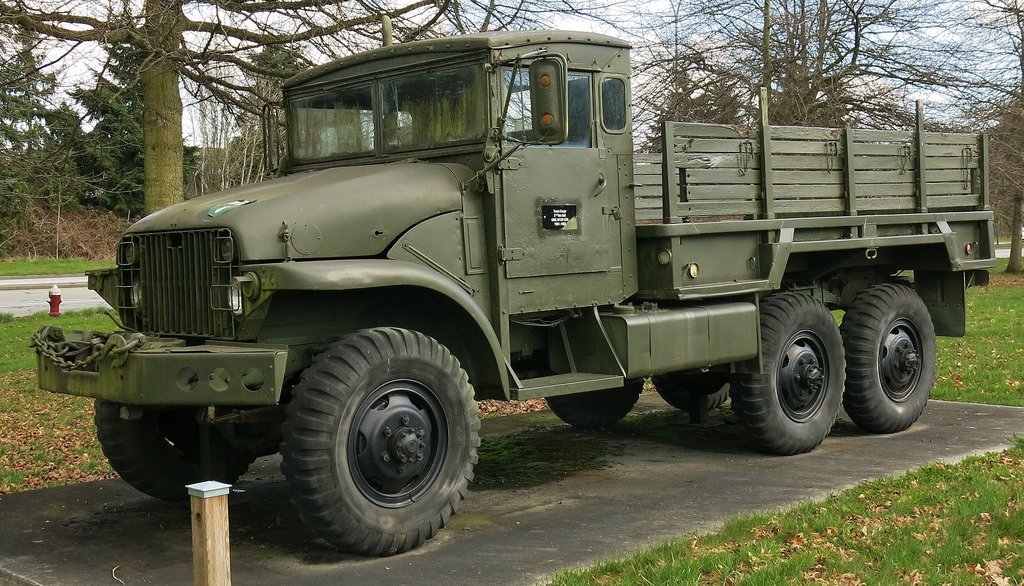
Nice that the one pictured has West Coast mirrors. The original exterior mirrors were the standard 5 inch round mirror on a post mount.
The one thing that I liked about the old deuces was that they perfectly matched both the cargo handling needs at the time and the personnel transport ones. That's a problem with the new pallet and container handling systems. They're next to useless for large personnel transport needs.

🍻
 
The one thing that I liked about the old deuces was that they perfectly matched both the cargo handling needs at the time and the personnel transport ones. That's a problem with the new pallet and container handling systems. They're next to useless for large personnel transport needs.

🍻
Isn't that what the "combat bus" is for. (Sarcasm)
 
The one thing that I liked about the old deuces was that they perfectly matched both the cargo handling needs at the time and the personnel transport ones. That's a problem with the new pallet and container handling systems. They're next to useless for large personnel transport needs.

🍻

Odd, I sure have spent a lot of time with 25 friends in the back of an MSVS.
 
The MOS 25 in the US Army is the Signals Corps. It's not an infantry specialty which is the MOS 11 series. It operates across the whole US Army. Pretty much everyone relies on IT systems.

MOS 25B is just one of 11 specialties in the US Signals corps.

🍻

I also wondered about @Kirkhill's reference to infantry in his post, but without any link to an attributable source I goggled the first phrase. Turns out to be AI generated nonsense courtesy of Google.
 
Odd, I sure have spent a lot of time with 25 friends in the back of an MSVS.
Yup. close to 40% or so of the SMP version - some 600 or so. Pretty close 100% of the deuce/MLVW fleet was troop carrying capable. There were some 2,700 MLVWs in the inventory and while I can't find the exact number of the 1950s M135 versions it was many more than that. Even when you count in the MilCOTS TCVs you're only half way to the MLVW numbers.

My point was that it's a large step down in troop carrying capacity. Don't get me wrong, it makes sense to be able to do pallets and containers in big numbers but a truck with drop down sides and removable seats like the FMTV.

At this point you should be ashamed of yourself for having sent me on a two-hour trip down a rabbit hole reading everything there is to know about why the MSVS SMP project took years and years to complete and went so far over budget. These are hours that I'll never get back. Serves me right for a flippant comment about deuces and the current medium truck line.

Incidentally can the MSVS be easily converted from a TCV to a cargo vehicle and back again with removable seats and drop down sides that stow on the vehicle itself? Damn handy if it could. The number of times they rewrote the RFP over the years they had to do it you would think they came up with that amongst the 1,500 pages and 500 specifications that it evolved into. (The FMTV had it in 2003 when DND was prepared to buy 1,500 of them FMV from the US for $300 million less than they were budgeted for but PWGSC said "Oh no! We have a process for that.")

🥱
 
Back
Top