• Thanks for stopping by. Logging in to a registered account will remove all generic ads. Please reach out with any questions or concerns.

Army Reserve Restructuring

Youre overreacting a bit Kevin. What kind of security do you expect a light coy to need that they dont already have? There are lockups, ORs, coy offices, classrooms, gyms, messes, quarters, etc. Depot whatever vehicles they get (LFE, etc) at the closest training base and what else do they need?

A crypto vault, a CSNI hook up, a proper gym, and a ratio of class rooms to bars that exceeds 1:3.
 
If new defence facilities are on the table, they could be more than just one-company armouries. Against that, too much "hey, this might be useful too" feature creep could bloat the costs beyond all reasonable limits.
 
A crypto vault
I wont pretend to know what is required for a crypto vault but if we can have crypto vaults on what are essentially open bases with cheap curtain wall (non-load bearing wall material, most metal-framed buildings) construction, I think we can manage that in two-three foot thick brick walls that are behind locked chain linked fences with MPs a building and/or vault alarm buzz away. I can think of crypto vaults at armouries Ive seen. If local infrastructure cant handle that, keep it at the local training establishment. Not that Ive ever seen a TKL or like device go out on a reserve ex, but thats a different issue.
a CSNI hook up,
Fair. I wont pretend to know what sort of data infrastructure is required for that. I know a bunch of armouries just had their drops upgraded, but Im not an IS Tech or a Sig Tech.
a proper gym
Support bases if nearby, if not - thats a unit/garrison command team problem, not a building one. We have a functional gym across two areas in our garrison.
and a ratio of class rooms to bars that exceeds 1:3.
Another local leadership problem.
 
I wont pretend to know what is required for a crypto vault but if we can have crypto vaults on what are essentially open bases with cheap curtain wall (non-load bearing wall material, most metal-framed buildings) construction, I think we can manage that in two-three foot thick brick walls that are behind locked chain linked fences with MPs a building and/or vault alarm buzz away. I can think of crypto vaults at armouries Ive seen. If local infrastructure cant handle that, keep it at the local training establishment.

Whats the response time for MPs to Thunderbay, St Johns, or Prince George? The "local training establishment" in Vancouver is Wainwright, for Newfoundland is likely Aldershot or Gagetown. Not getting guys able to use a radio like that.

Fair. I wont pretend to know what sort of data infrastructure is required for that. I know a bunch of armouries just had their drops upgraded, but Im not an IS Tech or a Sig Tech.

Support bases if nearby, if not - thats a unit/garrison command team problem, not a building one. We have a functional gym across two areas in our garrison.

Another local leadership problem.

A gym is absolutely a building construction problem. That should be dedicated space, and requires infrastructure. A squat rack and a treadmill in the corner doesnt cut it for a serious military.

Same with class rooms. "Local leadership" doesnt turn a JRs into a modern class room with a projector, desks, and dwan hook ups.

Simply put these buildings are built to teach rifle drill to 100 people on a thursday followed by socializing. The militia that built them in 1900 was as much a service club as anytbing else. The moder. Requirments are much different and what we have isnt fit for purpose.
 
Whats the response time for MPs to Thunderbay, St Johns, or Prince George?
What is requirement to keep one there as opposed to keeping crypto assets at their local support base? How does a new building for the Royal Newfoundland Regiment change those response times?
Same with class rooms. "Local leadership" doesnt turn a JRs into a modern class room with a projector, desks, and dwan hook ups.
Local leadership absolutely has a say. In my neck of the woods a room is getting gutted, over a dozen of drops added and a networked sim centre is being established. It just takes some actual effort of the part of the local commanders who are willing to do some staff work.
Simply put these buildings are built to teach rifle drill to 100 people on a thursday followed by socializing. The militia that built them in 1900 was as much a service club as anytbing else. The moder. Requirments are much different and what we have isnt fit for purpose.
Youre not wrong. Im not saying we dont need new infrastructure. Im saying (upthread) Id rather see it directed where its really needed first, CSS and CS. The Timbuktu Light Rifles can have an old stone armoury get some retrofits and be reasonably adequate for what they need. The same cant be for XX Service Bn, who will need a massive build-out to meet the new requirements from CAMO. There are limited MO infra bucks, Id rather see 90% go to the supporters who cannot support, rather than to the operators who can still reasonably operate.
 
What is requirement to keep one there as opposed to keeping crypto assets at their local support base? How does a new building for the Royal Newfoundland Regiment change those response times?

Distance to a support base can be a full days drive. Do you expect people to be trained on equipme they can't access?

My comment about the MPs was more in response to "an alarm away," which i took as a dismissal of security concerns. We need purpose built crypto storage.

Local leadership absolutely has a say. In my neck of the woods a room is getting gutted, over a dozen of drops added and a networked sim centre is being established. It just takes some actual effort of the part of the local commanders who are willing to do some staff work.

And I can tell you an example of that not working. That it works in your armoury doesnt mean that its going to work in others. My old unit for example the JRs could never be repurposed and there simply arent extra rooms built. So yes there needs to be a lot of money spent on the existing armouries to make them usable.

Youre not wrong. Im not saying we dont need new infrastructure. Im saying (upthread) Id rather see it directed where its really needed first, CSS and CS. The Timbuktu Light Rifles can have an old stone armoury get some retrofits and be reasonably adequate for what they need. The same cant be for XX Service Bn, who will need a massive build-out to meet the new requirements from CAMO. There are limited MO infra bucks, Id rather see 90% go to the supporters who cannot support, rather than to the operators who can still reasonably operate.

While I share your concern about reserve maintenance facilities thats a bridge to cross once we figure out how to actually attract reservist maintainers. Id be happy with, where distance permits, those guys fall in on existing base infrastructure as the night shift.
 
We have reached a generational shift where there is a lot of money in the system. So much so, that many of us that have been in for a while can't really wrap our head around it. We have been cultured to do with less and do without for so long that it is our default. We need to open our eyes and realize that isn't the case anymore.

Keeping Reserve units (and Reg force units on some bases) in shitty falling apart buildings that are not fit for purpose isn't acceptable. We did so for so long because we did not have a choice. Now that we do have a choice why constrain ourselves? We will be stuck with ever solution we push for the next 50 plus years. Instead of "upgrading" old armouries or trying to shoe horn units into converted civilian buildings and accepting the compromises that existing infrastructure would force on us, would it not make more sense to design and build what we need? Not just what we need now, but what we think we will need for the next generation of soldier.

It is super expensive to retrofit crypto vaults and CSNI into buildings that aren't designed to have them. Both are going to be necessary. There are a lot of dumb reasons that the Res Force doesn't have dismounted radios, the Army has failed you. One of those reasons is you can't store them properly. When the mounted radios get replaced, you will have the same problem. If we build you new buildings we can put all the necessary stuff in them from day one, it is a lot cheaper to add those things to the design rather than try to retrofit them later.

What we should be doing is designing a standard armoury. What does every unit need (classrooms/weapons vault/OR/storage cages/mess/etc)? Pay to design that building once (or at least design it with "building blocks" so it can scale from one unit to multiple units). Then have the other half of the building specialized for the unit type (Armoured units get a giant room with power/networks for vehicle sims/Infantry get a premade kill house/Svc Bn get a big tool crib and floor space with over head cranes/etc). The amount of money we would save on engineering studies to retrofit a bunch of old, crumbling, buildings would not pay for itself but would go a long way.
 
We have reached a generational shift where there is a lot of money in the system. So much so, that many of us that have been in for a while can't really wrap our head around it. We have been cultured to do with less and do without for so long that it is our default. We need to open our eyes and realize that isn't the case anymore.

Keeping Reserve units (and Reg force units on some bases) in shitty falling apart buildings that are not fit for purpose isn't acceptable. We did so for so long because we did not have a choice. Now that we do have a choice why constrain ourselves? We will be stuck with ever solution we push for the next 50 plus years. Instead of "upgrading" old armouries or trying to shoe horn units into converted civilian buildings and accepting the compromises that existing infrastructure would force on us, would it not make more sense to design and build what we need? Not just what we need now, but what we think we will need for the next generation of soldier.

It is super expensive to retrofit crypto vaults and CSNI into buildings that aren't designed to have them. Both are going to be necessary. There are a lot of dumb reasons that the Res Force doesn't have dismounted radios, the Army has failed you. One of those reasons is you can't store them properly. When the mounted radios get replaced, you will have the same problem. If we build you new buildings we can put all the necessary stuff in them from day one, it is a lot cheaper to add those things to the design rather than try to retrofit them later.

What we should be doing is designing a standard armoury. What does every unit need (classrooms/weapons vault/OR/storage cages/mess/etc)? Pay to design that building once (or at least design it with "building blocks" so it can scale from one unit to multiple units). Then have the other half of the building specialized for the unit type (Armoured units get a giant room with power/networks for vehicle sims/Infantry get a premade kill house/Svc Bn get a big tool crib and floor space with over head cranes/etc). The amount of money we would save on engineering studies to retrofit a bunch of old, crumbling, buildings would not pay for itself but would go a long way.
I just dont see it happening. This sort of buildout needs to come from the top and its obvious 2 Div is de-prioritized. I hope Im just being cynical but in the meantime Ill expect to continue to operate in our 120ish year old building.
 
I just dont see it happening. This sort of buildout needs to come from the top and its obvious 2 Div is de-prioritized. I hope Im just being cynical but in the meantime Ill expect to continue to operate in our 120ish year old building.
Quit whining, don't you know black mold builds character.
 
I just dont see it happening. This sort of buildout needs to come from the top and its obvious 2 Div is de-prioritized. I hope Im just being cynical but in the meantime Ill expect to continue to operate in our 120ish year old building.

But wait, there is method in the madness. Viz:

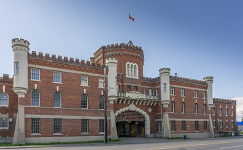
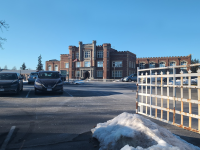
Bay Street Armoury (home of the CScotR and 5 Fd Regt RA) vs. Wilkinson Rd. Correctional Centre (a local provincial lockup).

Coincidence? I think not. ;)

1789488498835.png1789488569337.png
 
I just dont see it happening. This sort of buildout needs to come from the top and its obvious 2 Div is de-prioritized. I hope Im just being cynical but in the meantime Ill expect to continue to operate in our 120ish year old building.
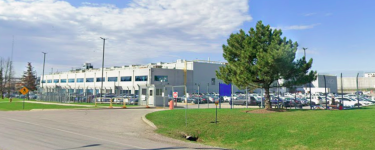
Not sure what data center building rates are near you - but that type of building and footprint is about ideal for a smaller sized unit.

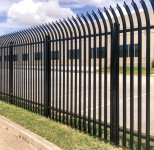
Exterior perimeter fencing, with secure gates entry. External Camera coverage, and secure building access control.
Stand off from the street and parking for POMV. As well could be a fairly non descript building should the CAF want to keep a lower profile in some areas.

One could have multiple floors, as well as oversized roller doors to facilitate indoor vehicle storage (mind you I believe in PRes Armored Vehicles being at a central regional training facility). But LUVW, ISV, MSV type vehicles should be able to be stored locally.

Sub unit QM facilities should have access control, and there are some good ways to be able to lockup equipment (STANO/VAS, COMMS, Wpns’s and other controlled items that do not take a lot of floor space.

The key is to determine what size of unit one wants to house in the facility, and also how to scale the setup, and what level of modularity is desired/required.
@ytz had posted some concepts in another thread. I think his concept has an exceptional amount of merit.


I also believe that this sort of expenditure is an easy no brainer for the current government.

 
Before proceeding to design new armouries, it'd be worth first fixing in place how the Res F is going to be trained. If more stuff is moved to long blocks of time (eg. mandatory annual concentrations at which all the individual and collective BTS stuff is rehearsed and tested), the need for a place to hang hats and occupy minds for two or three lesson periods a night, one night a week, diminishes.
 
Before proceeding to design new armouries, it'd be worth first fixing in place how the Res F is going to be trained. If more stuff is moved to long blocks of time (eg. mandatory annual concentrations at which all the individual and collective BTS stuff is rehearsed and tested), the need for a place to hang hats and occupy minds for two or three lesson periods a night, one night a week, diminishes.
I tend to agree albeit to a large extent armouries will need to be configurable to be able to convert to things we haven't even thought of today.

But. We're working out of many buildings over 100 years old now. The folks that built those built them to the best design for the army we have and they've outlived their usefulness because of the architecture and engineering that created them.

Future building will need to be a bit more flexible - many things from the way the building is wired and can be rewired, to potential sleeping accommodations and washrooms, to reconfigurable equipment holding areas for maintenance and training (infantry today, air defence or CSS or loitering munitions unit tomorrow), to multipurpose classroom/mess (both eating and entertaining), and yes - a parade square/gym large enough for the size of unit/subunit envisioned.

🍻
 
Before proceeding to design new armouries, it'd be worth first fixing in place how the Res F is going to be trained. If more stuff is moved to long blocks of time (eg. mandatory annual concentrations at which all the individual and collective BTS stuff is rehearsed and tested), the need for a place to hang hats and occupy minds for two or three lesson periods a night, one night a week, diminishes.

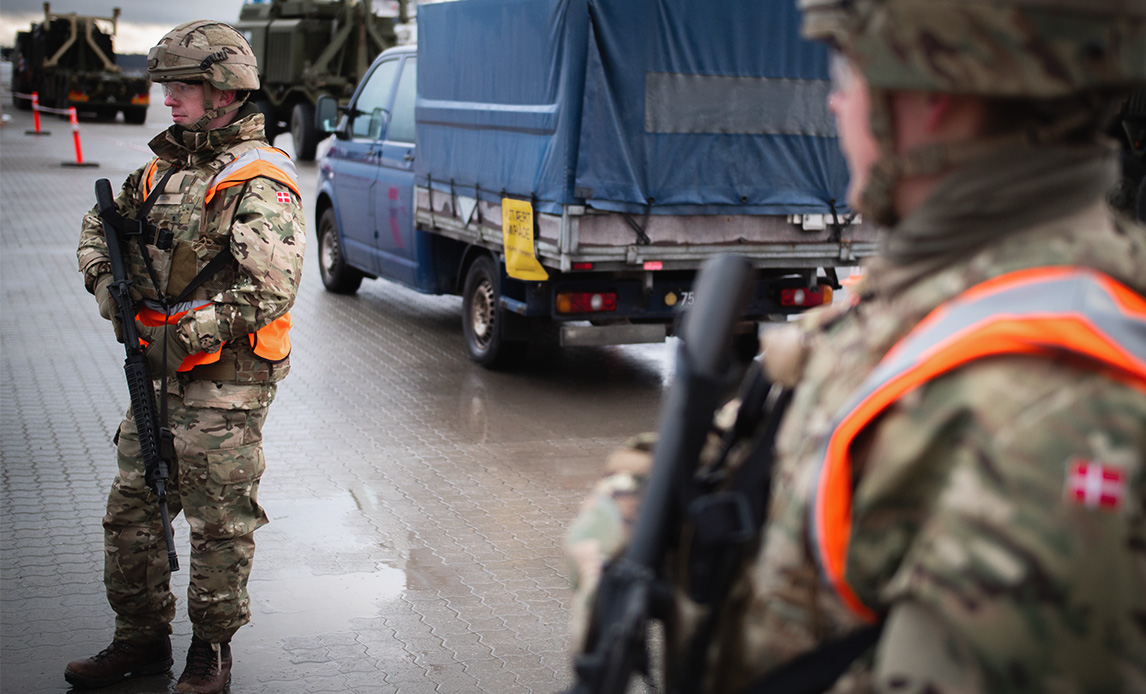
Back to my Danish buddies - Most training is conducted at the local community halls - open facilities.

Training​

Step 1 – Introduction to the Home Guard's basic training
At stage 1, the new soldier is introduced to the Home Guard and what it means to be an active member of the organization. The course takes place in the sub-department. Here, the International Law of War, the use of hjv.dk, Basic Military Safety and much more are taught.

Step 2 – Basic training
The Home Guard Basic Training (HGU) takes place at the Home Guard School. Here, the soldier learns about drill, first aid, shooting and other relevant military skills.

Step 3 – Riflemanship Training
At stage 3, the soldier undergoes rifle marksmanship training. Here, the soldier learns how to carry out guard duties and limited combat tasks in a crisis and war environment, either individually or in groups.

Step 4 – GUARDEX
In the final part of the mandatory training, the soldier must complete GUARDEX. GUARDEX is an exercise where the soldier is tested and assessed on the competencies the soldier has acquired in the other 3 stages.

Once the soldier has completed the exercise satisfactorily, the soldier is ready to perform operational tasks as part of the Danish Army Home Guard.

Further education
After passing basic training, the soldier is ready to become specialized through further training.

The Home Guard offers over 300 education and courses that provide opportunities for continuous development for the individual soldier.


....

Danish Home Guard (Hjemmeværnet) training requires new volunteers without prior military service to complete approximately 250 hours of instruction during their first three years. [1, 2]

Basic Training
    • Primary School: Recruits attend basic modules in their free time covering fundamental skills like first aid, basic shooting, and protection against chemical and biological threats.
    • Flexibility: Training sessions are designed to fit around civilian jobs, taking place mostly during evenings and weekends.
    • Location: Instruction and exercises often take place at designated military facilities such as Camp Nymindegab. [1, 2, 3]

Specialized Tracks
    • Drone Training: Advanced pilot training programs prepare volunteers for aerial reconnaissance and tactical support missions.
    • Police and Civil Support: Specialized courses train members to handle traffic control, crime scene guarding, and disaster relief.
    • Tactical and Patrol: Demanding infantry and patrol units involve rigorous physical conditioning and winter warfare courses. [1, 2]

Ongoing Commitment
    • Annual Hours: After completing initial recruit training, active members must complete at least 24 hours of training each year.
    • Compensation: While standard volunteer hours are unpaid, members receive financial compensation for lost civilian earnings during active operational tasks
 
Local units of the Danish Home Guard frequently use local municipal spaces, clubhouses, and assembly rooms for evening meetings, briefings, and theoretical instruction. [1, 2]

How Local Training Works
    • Hjemmeværnsgård (Home Guard Stations): Many local districts have dedicated small local stations or clubhouses where volunteers gather for weekly or monthly planning and classes. [1, 2]
    • Community Facilities: When dedicated military or Home Guard facilities are unavailable locally, units coordinate with municipalities to use local community rooms or civic halls for information evenings and basic instruction.
    • Practical Exercises: While theory and meetings happen locally, tactical, shooting, and field training take place at designated military barracks, ranges, or outdoor exercise areas. [1]
 
Not sure what data center building rates are near you - but that type of building and footprint is about ideal for a smaller sized unit.

Exterior perimeter fencing, with secure gates entry. External Camera coverage, and secure building access control.
Stand off from the street and parking for POMV. As well could be a fairly non descript building should the CAF want to keep a lower profile in some areas.

One could have multiple floors, as well as oversized roller doors to facilitate indoor vehicle storage (mind you I believe in PRes Armored Vehicles being at a central regional training facility). But LUVW, ISV, MSV type vehicles should be able to be stored locally.

Sub unit QM facilities should have access control, and there are some good ways to be able to lockup equipment (STANO/VAS, COMMS, Wpns’s and other controlled items that do not take a lot of floor space.

The key is to determine what size of unit one wants to house in the facility, and also how to scale the setup, and what level of modularity is desired/required.
@ytz had posted some concepts in another thread. I think his concept has an exceptional amount of merit.


I also believe that this sort of expenditure is an easy no brainer for the current government.

What you seem to be describing is your everyday, run of the mill, Ontario pot plant. Non-descript. Secure. Lots of parking. Basic footprint offers lots of flexibility for internal design.
1789509726493.png
 
Back
Top