• Thanks for stopping by. Logging in to a registered account will remove all generic ads. Please reach out with any questions or concerns.

Army Reserve Restructuring

Hmmm... interesting comparison ;)
Where was this from?
The table is missing the new Army Training Centre (the formation) which will own the Army Training Centres (former div TCs) and (I believe) also the reserve battle schools.
 
The same or more headquarters isnt necessarily a bad thing - it depends on deliverables. Like if the new fires brigade works out in the divisional fight context, thats a win. A sustainment brigade is absolutely a win long-term. We plan on growing the Army substantially so this will buff as we grow.
 
Hmmm... interesting comparison ;)
Where was this from?
Yeah. Where is this from?

As a long time advocate for reducing admin overhead in the past, I tend to reject the argument made in that paper. In fact, my position now is that we have too few headquarters at the unit to div level.

My change of opinion comes almost exclusively from the change in the world in the last decade. I used to think two divisions was adequate; now I believe that five aren't enough. Mind you my view of the size of a division is significantly smaller than the army's current view.

In short we need more units and formation headquarters trained and equipped to mobilize and deploy. The current CBGs are entirely inadequate as is our basic training structure which has a limited production pipeline. I can't see any other solution that does not include more full-time headquarters at that level even when the bulk of the troops are part-time. OTOH, I think there are a lot of efficiencies that could be gained at the national level to reduce admin overhead.

🍻
 
And the post-secondary sector is gasping for cash right now...

How Canadian Universities Can Help Build a Stronger Army Reserve​


Every summer, Canada’s universities and the Canadian Army Reserve confront opposite versions of the same problem. Thousands of young citizens make themselves available for military service just as universities enter the most flexible part of their operating year. The Army must find places in which to house, feed, and teach them, while residences, classrooms, and dining facilities on many campuses operate below their regular academic-year demand. Canada has treated one as a military problem and the other as a matter of campus scheduling, although together they suggest a practical answer to a pressing defence need.

The deeper case, however, rests with the citizens who have already stepped forward. Canada cannot reasonably ask young people to arrange their studies, civilian work, and family lives around military service while the country’s other institutions remain politely uninvolved. Universities need not become military institutions in order to accept a practical share of responsibility for the society that sustains them. They need only offer, on clear terms and at full cost, the ordinary things they already know how to provide, while allowing the Army to do what only the Army can do.

Beds, meals, and classrooms may seem too prosaic to belong in a discussion of national preparedness, yet durable national capacity is usually built from ordinary things made dependable before they are urgently needed. Young Canadians are already volunteering to serve. Canada’s universities should be ready to serve beside them.

 
The Army must find places in which to house, feed, and teach them, while residences, classrooms, and dining facilities on many campuses operate below their regular academic-year demand.
I get that. And in a few cases it might be of value.

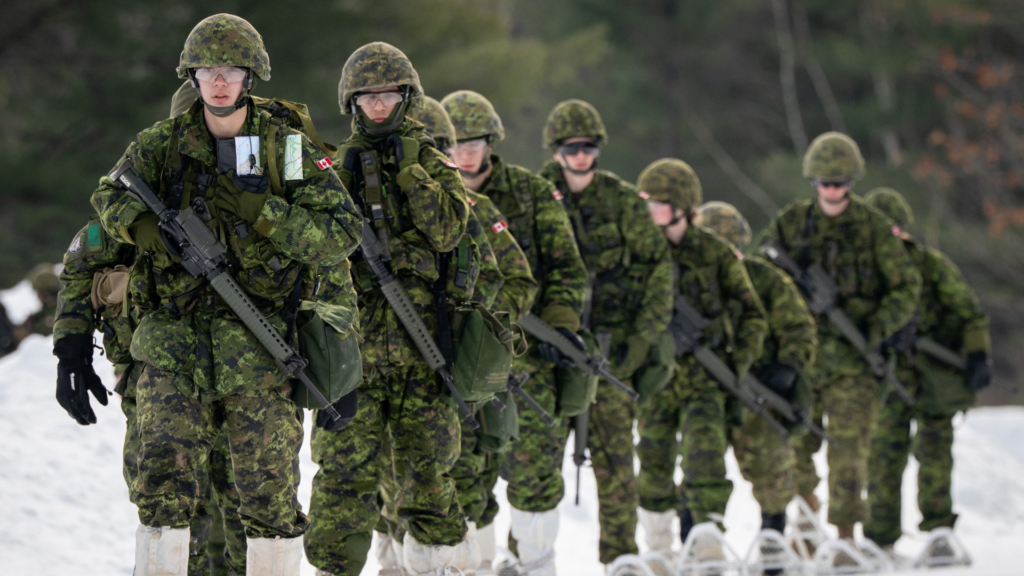
BUT. IMHO we're heading in the wrong direction with that. The largest demand that we have is to run folks in the army through DP1 - effectively recruit and basic trades training which should be almost 100% in the field. What we need are facilities where folks are set up to live and learn in austere field conditions - modular tents - accommodation and classroom, ablution facilities including washing and drying facilities, field kitchens, ranges and field training areas within an hour's drive. Training should be immersive and run at least six days a week from dawn to dusk. - and yes I know: "what about the instructors?" - that to needs to be addressed and staffed properly.

This does several things. First and foremost it inculcates the trainees with an understanding of what army is. Second, and almost important, it gets the army back into thinking and doing what is necessary in order to rapidly pipeline large numbers of people through a training program. We've lost that art.

IMHO, again, every summer's recruit training program, across the country, should be treated as a mobilization exercise from the first contact that the individual makes with a recruiter to kitting them out (field gear only) delivering them to their training unit all the way to the graduation parade and assignment to a unit.

$0.02 🍻
 
But, FJAG, would you be against universities running University Training Divisions type of training during the fall/winter semesters, with summer indoc and DP1 training at army /naval / air bases in the summer and having them join militia/ reserve units after commissioning only, as was done in the 60's?
 
But, FJAG, would you be against universities running University Training Divisions type of training during the fall/winter semesters, with summer indoc and DP1 training at army /naval / air bases in the summer and having them join militia/ reserve units after commissioning only, as was done in the 60's?
That regime doesnt really carry forward into the 21st century. That was predicated on a large pool of largely rural youth to fill out the ranks with systems like this to train junior officers. We need all ranks.
 
But it lets the militia /reserve units concentrate on the recruiting and training of the soldiers and sailors, not the officers. And the Universities divisions provided officers for both the reserves and the regulars, with the advantage that they had trained together to commission.
 
But it lets the militia /reserve units concentrate on the recruiting and training of the soldiers and sailors, not the officers. And the Universities divisions provided officers for both the reserves and the regulars, with the advantage that they had trained together to commission.
Not sure about the Navy but at least in the Army where it seems we're hurting the most the "missing middle" - high-range MCpls to WO. I cant speak for supporter trades but at least in operator trades it seems we have no shortage of officers and an increasing supply of troops but its the NCO corps that seems to be languishing the most. Maybe thats me extrapolating local conditions but thats where I think we really need to focus for the next few years, especially since the growth plan for the Army and the CAF writ large will hinge on the Sergeants and Petty Officers, not on Captains and Lieutentant(N)s.
 
I get that. And in a few cases it might be of value.

BUT. IMHO we're heading in the wrong direction with that. The largest demand that we have is to run folks in the army through DP1 - effectively recruit and basic trades training which should be almost 100% in the field. What we need are facilities where folks are set up to live and learn in austere field conditions - modular tents - accommodation and classroom, ablution facilities including washing and drying facilities, field kitchens, ranges and field training areas within an hour's drive. Training should be immersive and run at least six days a week from dawn to dusk. - and yes I know: "what about the instructors?" - that to needs to be addressed and staffed properly.

This does several things. First and foremost it inculcates the trainees with an understanding of what army is. Second, and almost important, it gets the army back into thinking and doing what is necessary in order to rapidly pipeline large numbers of people through a training program. We've lost that art.

IMHO, again, every summer's recruit training program, across the country, should be treated as a mobilization exercise from the first contact that the individual makes with a recruiter to kitting them out (field gear only) delivering them to their training unit all the way to the graduation parade and assignment to a unit.

$0.02 🍻

There are alot of colleges located near training areas in Canada...
 
Back
Top