Stumbled across this article from Britain that tries to contain the legalistic rule by lawyers we in the West now confront.
A historian and an international lawyer arguing against allowing "international law" to trump national interest.
I put this here because UNDRIP.
The Government’s maximalist interpretation of public international law leaves Britain unprepared for the emerging world

www.telegraph.co.uk
"Our concern starts from the way that the idea of a rules-based order is treated as an almost theological abstraction, as a God-given gift from which dissent cannot be contemplated. By this argument, the answer to our current discontent is to make fidelity to international law the organising goal of our foreign policy and the premise of every decision we take. This risks creating an imbalance in our foreign policy in a world where ever-fewer states share this approach.
"Importantly, it is an approach that goes way beyond the astute
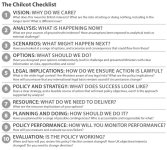
Chilcot checklist in which international law is treated as one of 10 critical points to consider in the making of national security decisions. Yet those who may question this prioritisation – international law crowding out all other considerations – have been accused of being followers of the Nazi theorist Carl Schmitt, as somehow willing to give up on international law in favour of might over right.
"The danger is that we end up as curators of an old system rather than active participants in a new world in which power is being more nakedly asserted."
....
"The heritage of British foreign policy that we seek to invoke, one could call it Churchillian or Bevinite. It is definitely not an argument for might rather than right – an absurd and tendentious proposition designed to shut down debate – but a recognition that what is right does not transpire in international affairs simply by appeals to universal principles and laws."
...
"the tradition we invoke is fully in keeping with the ideas of the founding father of international law, Hugo Grotius. It was Grotius who made the case for a law of nations in a Europe divided by wars of religion. That project could only succeed, however, if it did not rest on universal theories or grand abstractions, but it remained attentive to the practice of statecraft, and fully conscious of the tension between moral aspiration and political reality.
"The real story of the order built in 1945 reflects that more practical tradition, including direct invocation of the Grotian spirit."
"The 1945 order was, in essence, a rules-based order alongside a power-based order. The legal framework helped protect the sovereignty of medium and small powers, but the burden of maintaining collective security – and of acting pre-emptively against threats to international peace and security when required – fell upon the great powers."
....
International Law is not at the apex.
International Law is but one of 10 things a sovereign state should consider when deciding what is in its "National" interest.
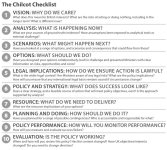
As the Prime Minister considers sending UK troops to Ukraine, assessing his options with the Chilcot checklist suggests the mission must not go ahead.

www.rusi.org
Chilcot reviewed Blair's intervention in Iraq.
We pay people to make decisions. Especially decisions in our national interest.
We don't pay them to have lawyers debate interminably.




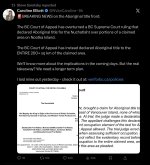
 www.baytoday.ca