
Halifax Tar
Army.ca Legend
- Reaction score
- 20,799
- Points
- 1,260
It will be better than we are doing but it will still only be 2 days of supply per month in Ukraine.
I am on a LOGFAS course right now and consumption rates are a hot topic.


It will be better than we are doing but it will still only be 2 days of supply per month in Ukraine.

I am on a LOGFAS course right now and consumption rates are a hot topic.
 www.airandspaceforces.com
I’ve seen quite a bit of video this evening of Iranian ballistic missile attacks with cluster warheads into Israeli. Israeli ambulance services have confirmed two dead today at one scene. Iran seems to certainly still have some dry powder… They’re not out of the fight yet.
I’ve not seen much today about strikes elsewhere in the Gulf; some of the Gulf states have been leaning in pretty hard on censorship of information about strikes, but maybe there just haven’t been many?
Not sure if you guys saw this but (yesterday?) an Iranian aligned militia flew an FOV drone seemingly unhindered through the U.S. embassy compound in Baghdad. The embassy has taken one or more additional hits since… It’s C-RAM system is definitely getting a workout. I fear that if they can fly FPV drones right into the compound low and slow, those higher end defensive systems may be pretty vulnerable to getting picked off once the FPVs are laden with explosives.
FPV recce of the embassy:
C-RAM fails to stop an incoming drone:
Iran appears to be exercising traffic control over the Strait, with some permitted vessels taking a routing through that brings them in close through Iranian waters.
While WTI and Brent Crude are holding steady around $100 a barrel, many Asian markets are seeing major spikes in prices for actual oil delivery; they get much of theirs from the conflict zone. It’s having real economic impacts. Most of the oil commodity prices we see quoted reflect paper trading such as futures. Actual physical delivery costs of Omani crude as one example are now north of $150/bbl.
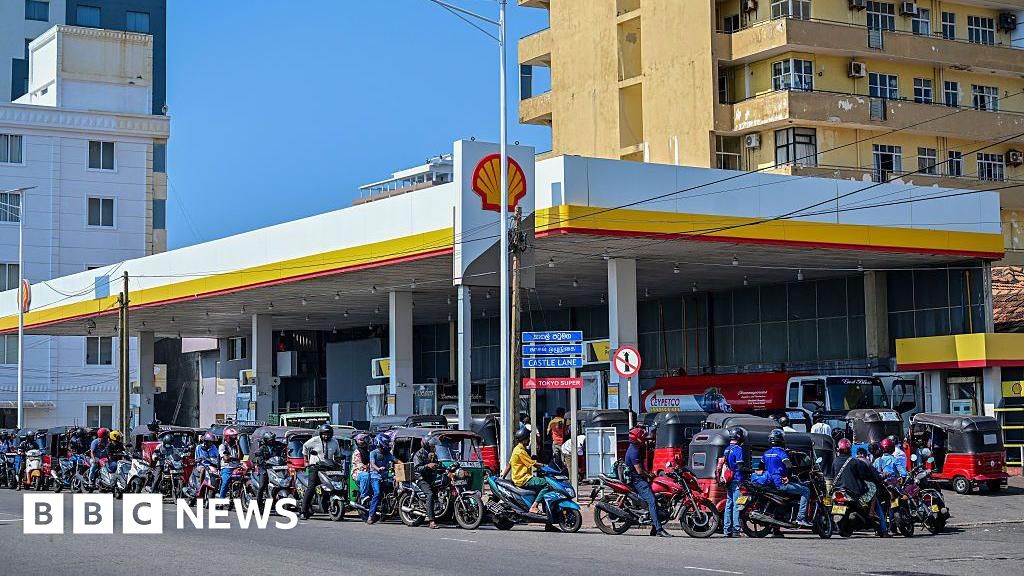
Sri Lanka declares all Wednesdays off to conserve energy
This is the latest in a series of measures undertaken by Asian countries which rely on oil from the Gulf.www.bbc.com

Oman crude makes history, crosses $150 for first time
Muscat: The Oman crude for delivery in the coming month of May traded at $152 .58 on Tuesday, an increase of $4.79 from the last trading on Monday. On...www.omanobserver.om
There are lots of other economic sectors getting hit hard by this, only a few of which I’ve had time or brain cells to read up on. Apparently fertilizer is one to watch; a significant portion of the world’s urea apparently flows through the strait. A jump in fertilizer costs will be a real ‘oh shit’ for many.

Iran’s Hormuz blockade leaves fertilizer stranded
The closure of the Strait of Hormuz — now entering its third week following US-Israeli strikes on Iran.www.foodingredientsfirst.com
So, various stuff that’s caught my eye today as I’ve had moments to read…

 defence-blog.com

100% it is also supposed to be just to maintain capabilities not really be expanding it (though in our case it is due to how underfunded we have been for so long).2% is not a random goal. Its a spending level that we agreed to years ago.

Maybe arbitrary is a better word, vice random, as terms of GDP not being a fixed level and doesn't relate to any kind of capability required, but that's something left up to the countries to figure out.2% is not a random goal. Its a spending level that we agreed to years ago.
 www.slashgear.com
 www.navalnews.com

 www.forbes.com
I am on a LOGFAS course right now and consumption rates are a hot topic.
 defensescoop.com
Interim solutions abound
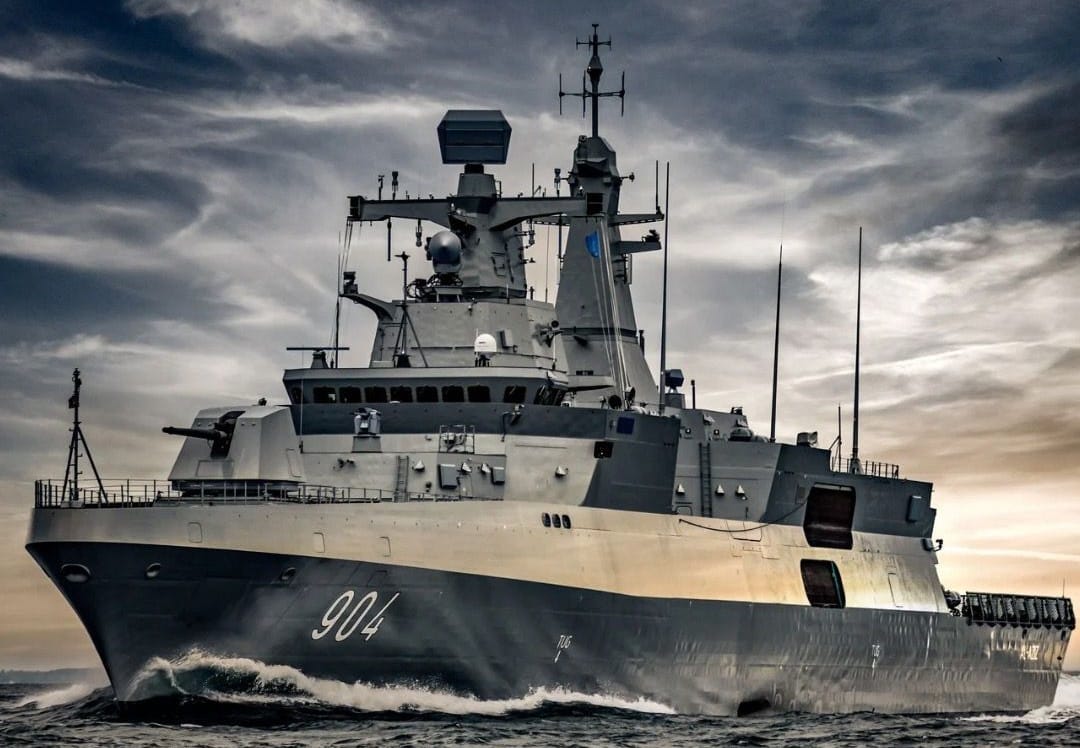
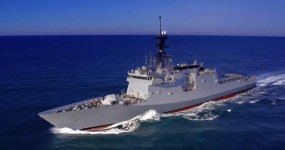
German MoD plans to purchase four MEKO A-200 class frigates - Naval News
The German Federal Ministry of Defence plans to purchase four MEKO A-200 class frigates as an interim solution until the potential delivery of the F126 class frigates.
The German Federal Ministry of Defence (BMVg) plans to purchase four MEKO A-200 class frigates as an interim solution until the potential delivery of the F126 class frigates.
View attachment 99090
This is another expedient, if not interim, solution.
View attachment 99091
The Navy’s New Frigate: An Obsolete Blast From The 90’s That May Work
The Navy's new frigate will be obsolete from the start. It's not great, but it is what we have, and if many can be built a low price point, it may be what the U.S. needs.
....
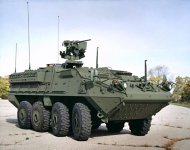
I am reminded that this was an interim solution, the Interim Armoured Vehicle, 25 years and multiple non-wars ago.
View attachment 99092
I mean we have Haida and Sackville kicking around...


65K seems like a low number.
Wasn't the whole CAF supposed to switch to C8s? Isn't that why we theoretically switched to doing carbine drill?Covers most of the caf, im sure well still have RCAF / RCN using C8s for a while. Which is fine frankly.
C8A4 was to be an interim fix, CMAR was pushed up from its original date of 2032, CAMR is a brand new rifle and carbine. Both are short barrels so carbine drill will still apply. GS is about 12.5" barrel, and the FS is a 16" IIRC. CMAR designated C25, is a modern full modular rifle platform that brings us up to modern NATO standards for a service rifle. While at its core it still looks like an AR, the internals, and design have been drastically changed over the C7, the FS varient for the infantry will have a stronger optic, option for a suppressor and an optional TWSWasn't the whole CAF supposed to switch to C8s? Isn't that why we theoretically switched to doing carbine drill?

So the new faculty will eventually produce 12,000/month, that would be in addition to whatever it’s currently producing. So we are possibly producing 16-18,000/month in 3-4yrs?It will be better than we are doing but it will still only be 2 days of supply per month in Ukraine.
And no fuzes. Apparently.
Noah's take

Minister Mcguinty announces new $1.4 billion Investment in Canada’s 155mm munition production
Noah Notewww.truenorthstrategicreview.ca

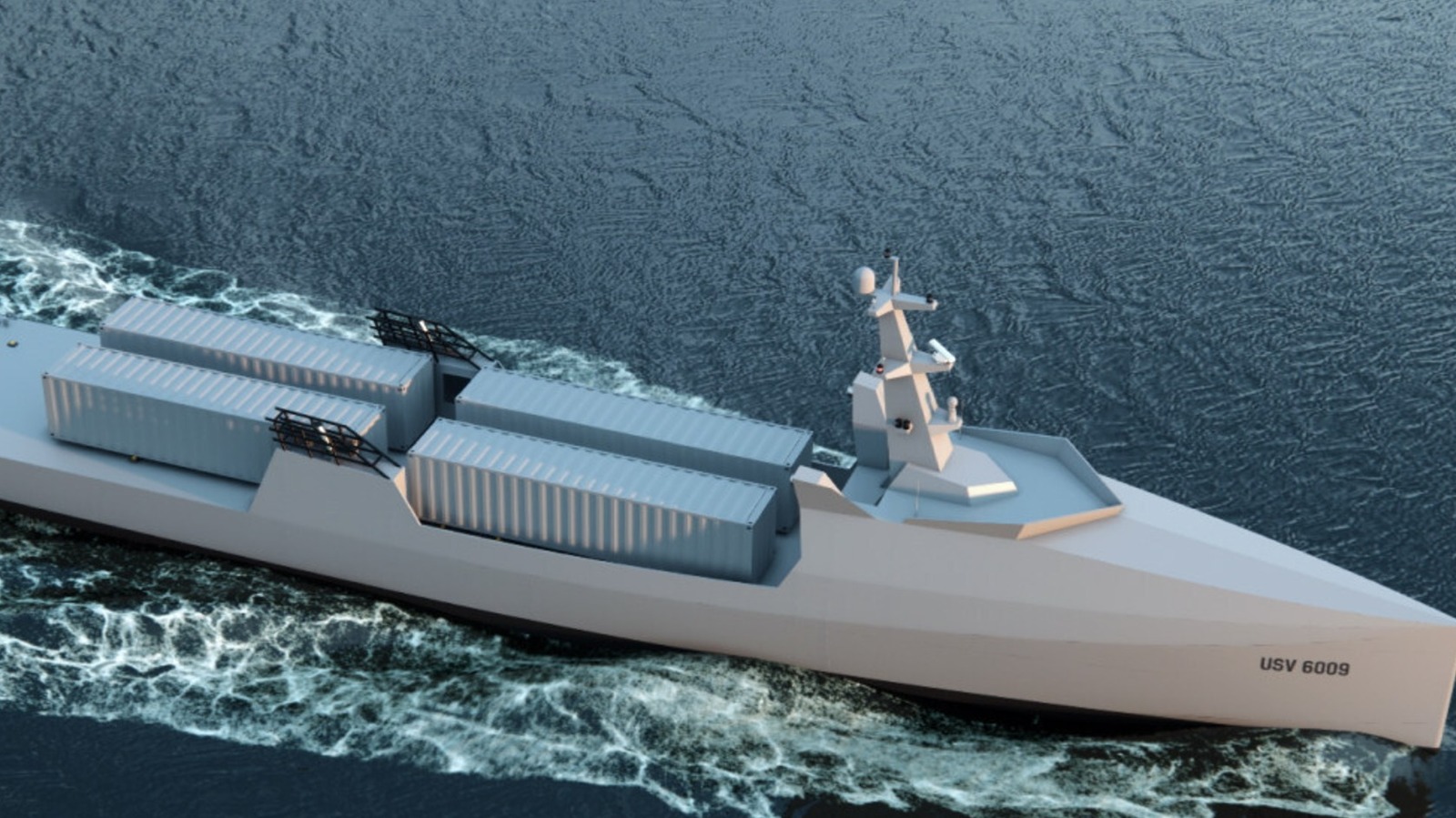
I think the claims of the builders not based in reality. Some amount of heating and cooling is going to be needed and the deferred maintenance is going to hit them every time they come into port/depot ship.One of the contenders for the USN's MASC program (Modular Autonomous Surface Craft)
Zero crew. 90 sea days. 11,500 trans-Pacific miles. 29 mph.
190 ft by 30 ft. 850 tons displacement. 165 tons cargo. 4x 40 foot ISO containers.
10-20 ships per year from one robotic production line.
US Navy's New Autonomous Ships Are Designed To Be Built At Rapid Speed - SlashGear
A new class of ship may be entering service for the U.S. Navy soon, and it has some distinct differences from previous ships. Here's what we know.
View attachment 99083
"Blue Water developed the Liberty Class using the Damen Stan Patrol 6009 hull as its template, featuring an axe bow design. This improves stability in rough seas, which is vital for autonomous operation. Each vessel measures 190 feet in length with a beam of 30 feet, displacing around 850 tons. They have a maximum speed of 29 mph and can sail for 11,500 miles while carrying four standard 40-foot cargo containers. These allow a Liberty Class ship to carry up to 165 tons.
"The ships are designed without any need for heating, ventilation, or air conditioning, as they aren't meant to house personnel. Without crewed spaces, the internal layout requires far less installation of unneeded devices. Without a single human onboard, a Liberty Class ship can operate for 90 days."
....
"Because Blue Water licensed the Stan Patrol 6009 hull, it can be produced far faster than it would through standard naval procurement and production processes. This removes the need for further hull development while allowing for easily installable off-the-shelf components. Blue Water is constructing its Liberty Class ships at Conrad Shipyard in Morgan City, Louisiana, where the production line employs robotic assembly systems and can build these ships at a rate of between 10 and 20 per year. Construction of the first vessel in the product line began in March 2026, and if it works as advertised, it's likely that we'll soon see Liberty Class vessels operating around the world."
....
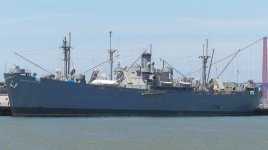
I found this factoid fascinating
"The Liberty Ship that holds the record for being the fastest from the laying of its keel to completion is the SS Robert E. Peary. From start to finish, the Perry took exactly 4 days, 15 hours, and 29 minutes to construct."
From Wiki
"Eighteen American shipyards built 2,710 Liberty ships between 1941 and 1945 (an average of three ships every two days),"
3 ships
2 days
1.5 ships per day
1.5 ships per day
18 yards
0.5 ships per day
6 yards
1 ship per day
12 yards
12 days per ship per yard.
134 m LOA
14,000 tonnes displacement.
View attachment 99086
...
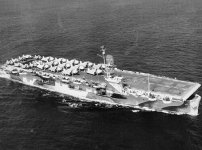
Kaiser at Vancouver, WA built 50 11,000 tonne Escort Carriers in a year (July 1943 to July 1944) by putting a flat deck on a standard cargo hull (Type C3)
5 were sunk between Novenber 1943 and February 1945.
View attachment 99088
I think the claims of the builders not based in reality. Some amount of heating and cooling is going to be needed and the deferred maintenance is going to hit them every time they come into port/depot ship.


