• Thanks for stopping by. Logging in to a registered account will remove all generic ads. Please reach out with any questions or concerns.

Containerized Weapons Systems

Kirkhill

Puggled and Wabbit Scot.
Subscriber
Donor
Reaction score
13,363
Points
1,160
Another tool in @Kirkhill's favourite toolbox...


Seeing as how...


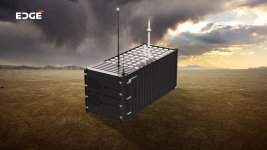
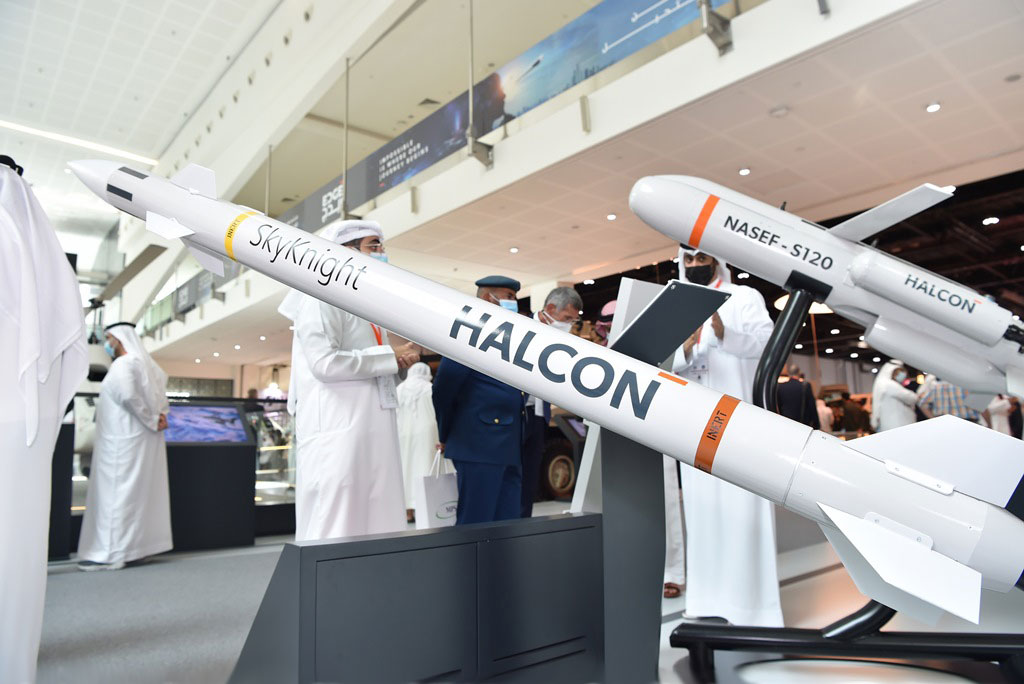
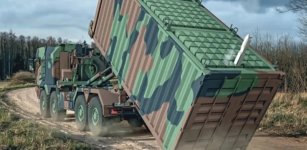
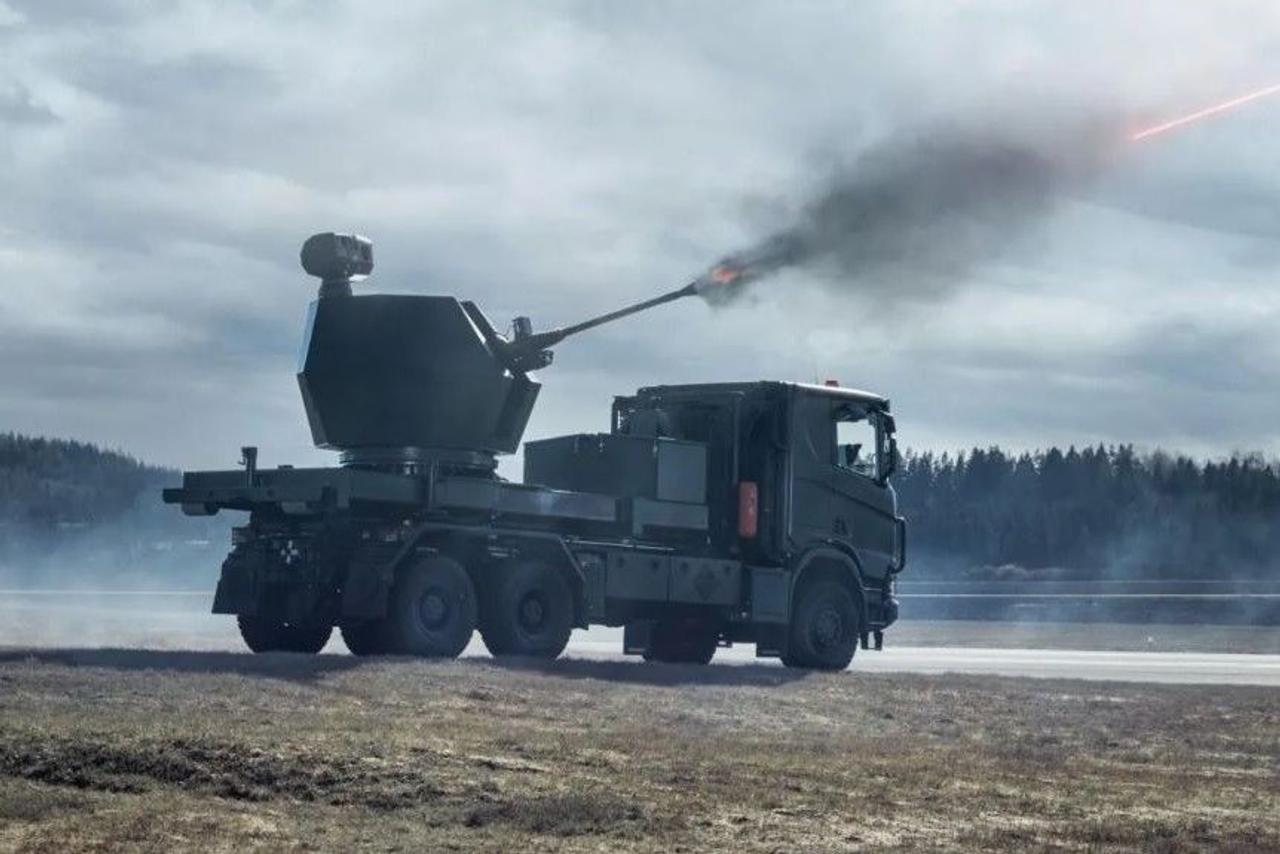
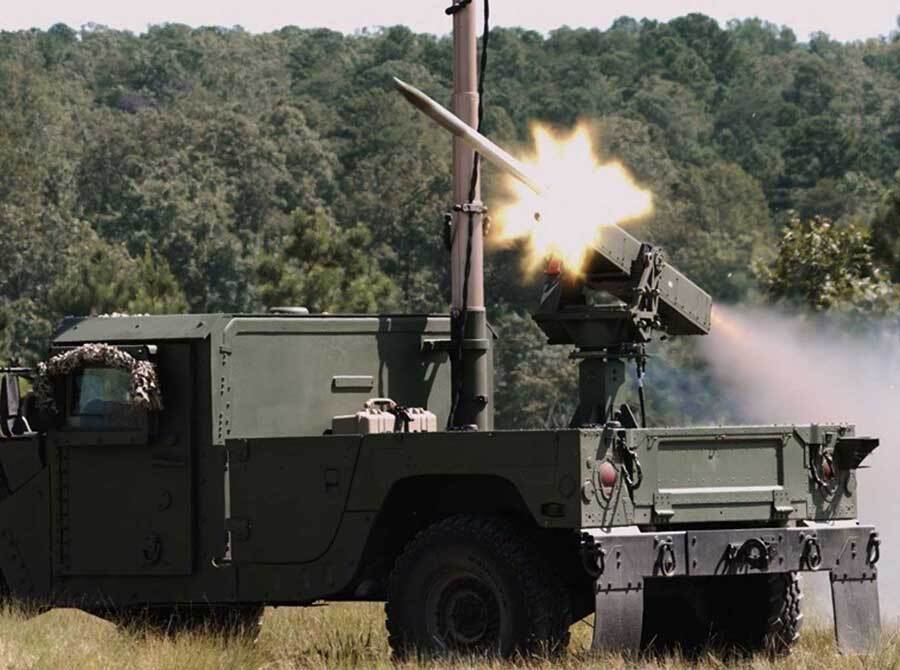
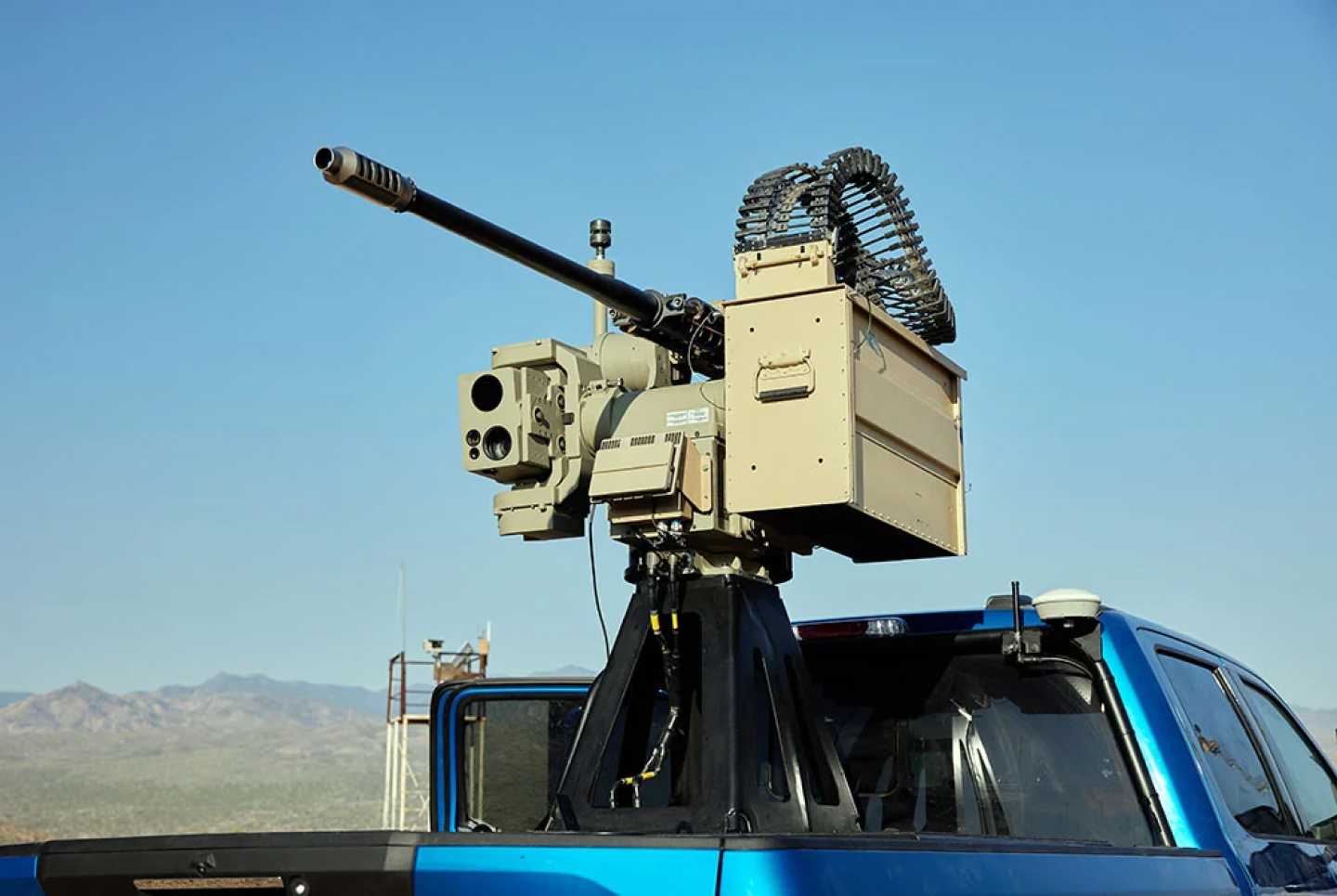
What are the options out there? Feel free to add on any others you find.
1774367353360.jpeg

1774367437427.jpeg


1774367497489.jpeg

1774367642857.jpeg

1774368174852.jpeg
1774368258668.jpeg
1774368457105.png
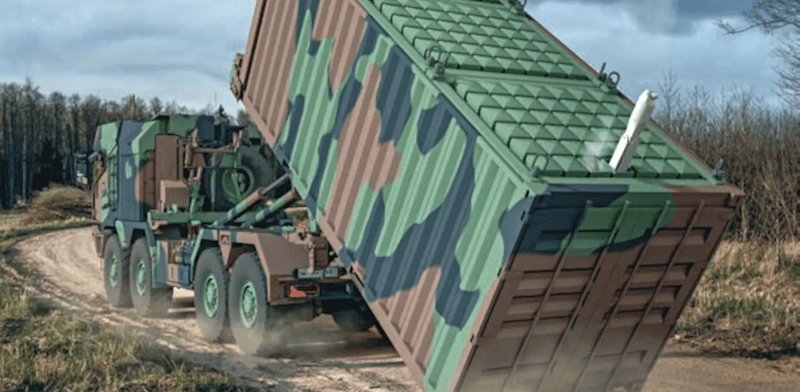
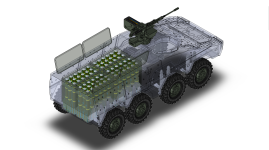
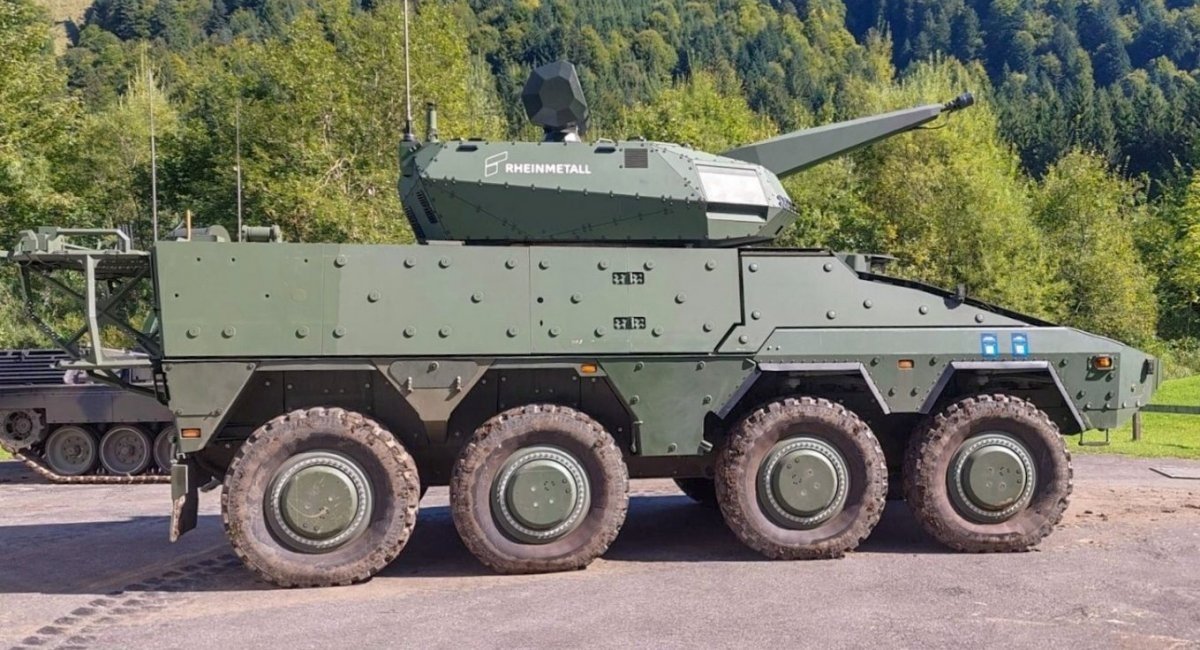
Another way of stowing kills - JAGM/Hellfire/Brimstone Vertical Launch from the back of a Boxer - 72 stowed kills
But, at 250,000 USD each = 18 MUSD in ammunition in that one pickup truck
And 3600 kg.
I guess that kind of highlights the drive for cheaper missiles and drones.


And missiles and drones aren't the only options
1774369239911.jpeg

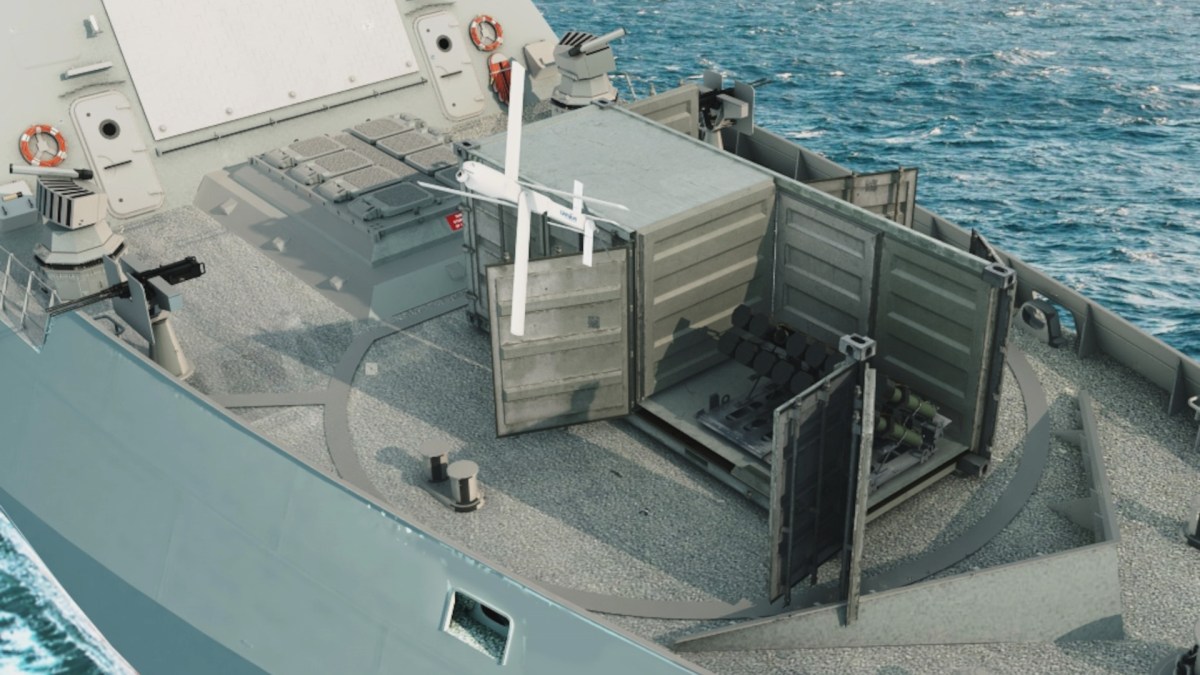
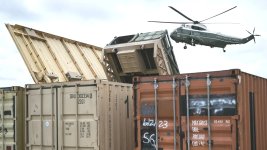
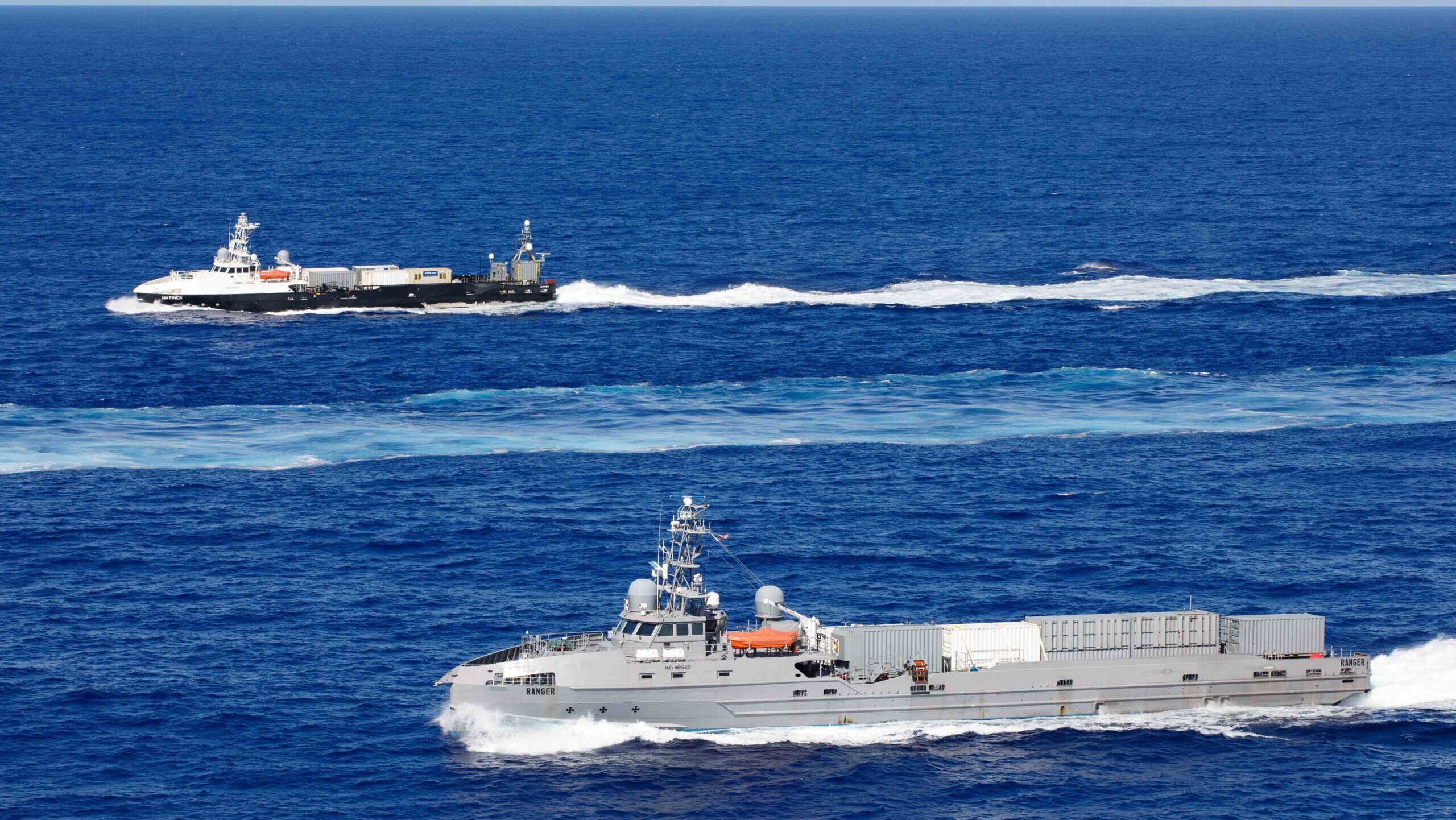
PDS application on the back of an LCS. Therefore applicable to an ship with a helideck or other flat spot.


I am not sure why they would completely block the helipad when they might just as easily have positioned 2 or 4 of those containers outboard and left the pad free for flight operations.

Comme celui ci.
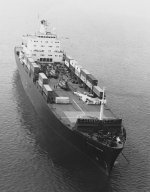
1774366766816.jpeg


And we might have some catching up to do
 
Last edited:
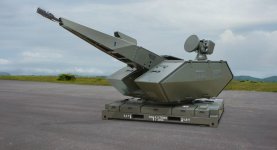
And if you add in the palletized options you get this stuff.

1774369540695.jpeg

1774369590487.jpeg

1774369883970.jpeg


1774369634835.jpeg


1774370318215.jpeg

1774370426676.jpeg


1774370534982.jpeg


And of course, there are these...

1774370675780.jpeg


Couple those with that Chinese contraption in the post above. They cost in the 1000 to 3000 dollar range.
Ukraine has produced about 100,000 of them at a rate of 1000 to 2000 a day.
 

Attachments

  • 1774369811260.jpeg
    1774369811260.jpeg
    51 KB · Views: 0
A different palletization

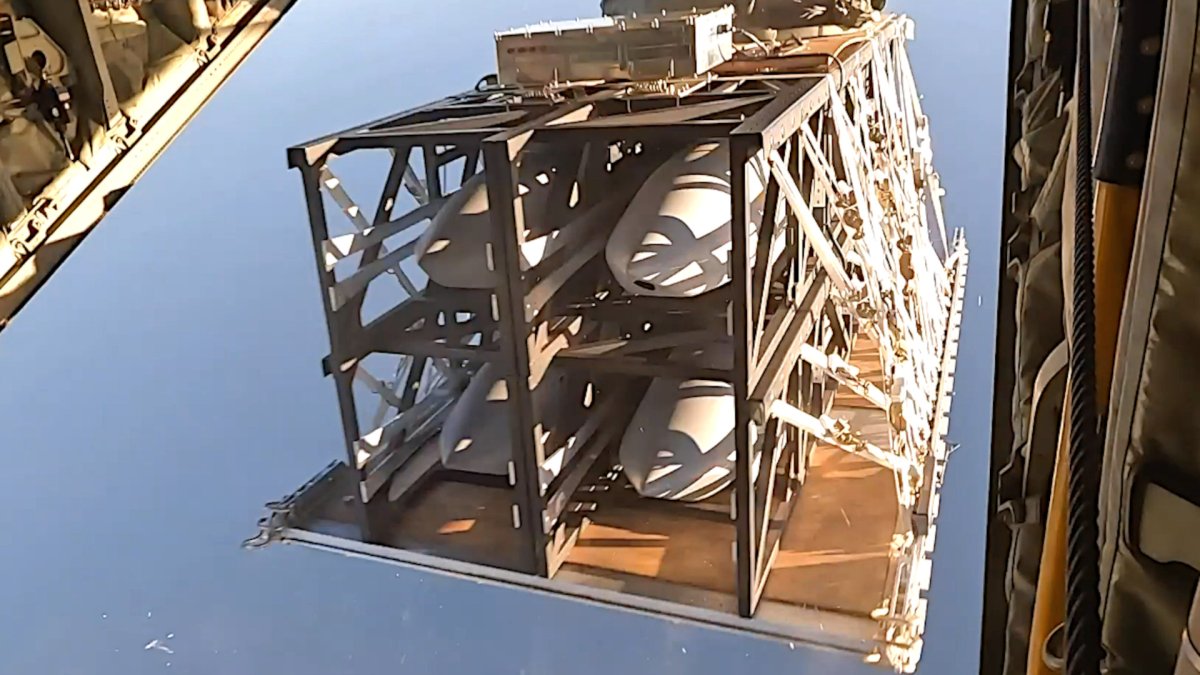
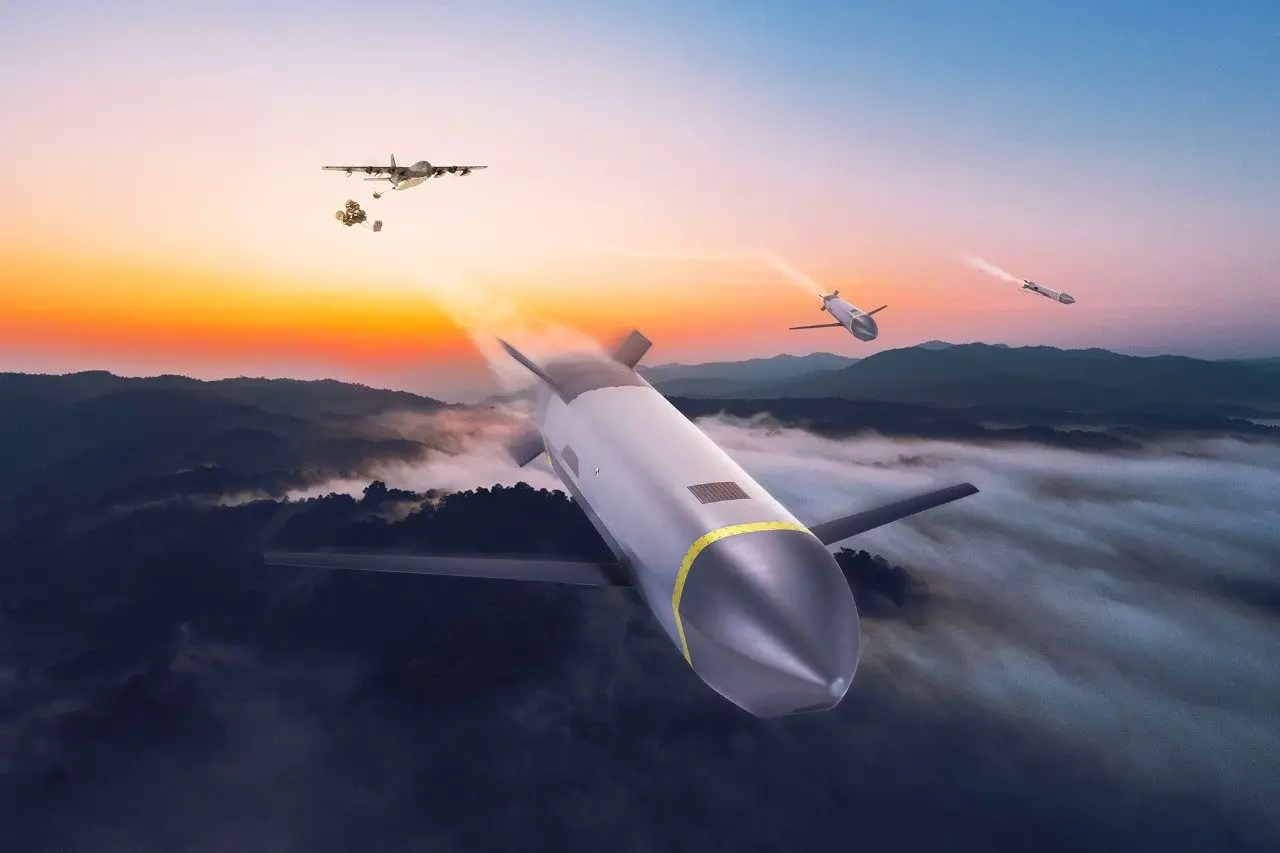
Pallets of cruise missiles dropped from C130s and C17s.


Too bad they are Yankee missiles dropped from a Yankee system deployed from a Yankee plane. A plane that we happen to own.
 
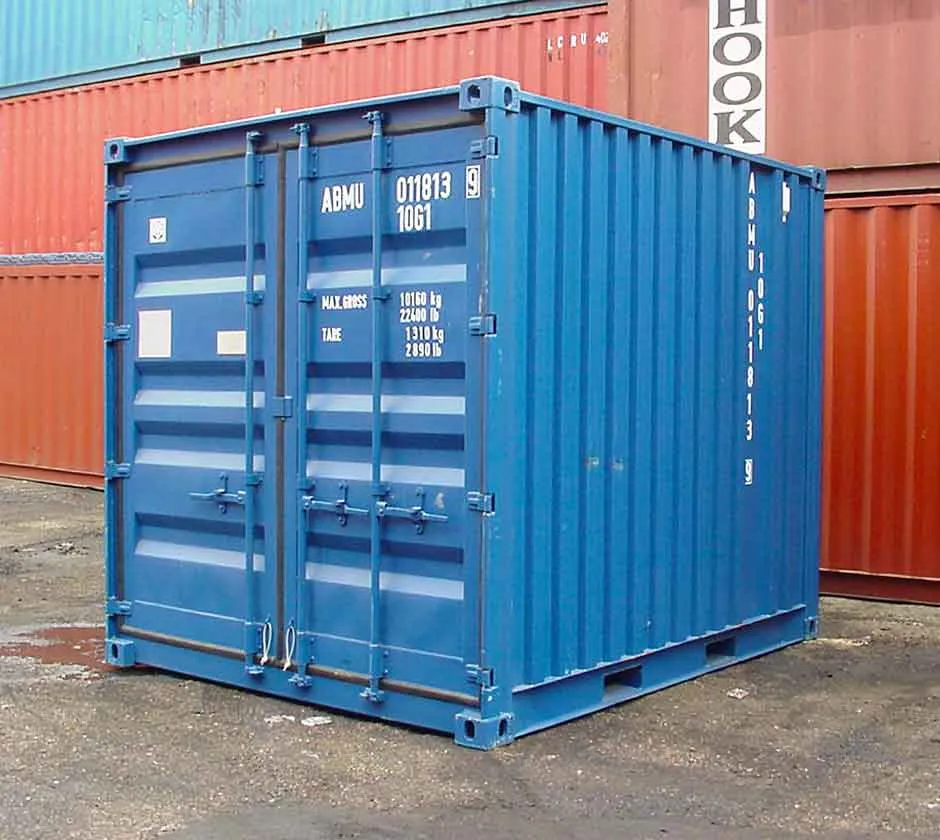
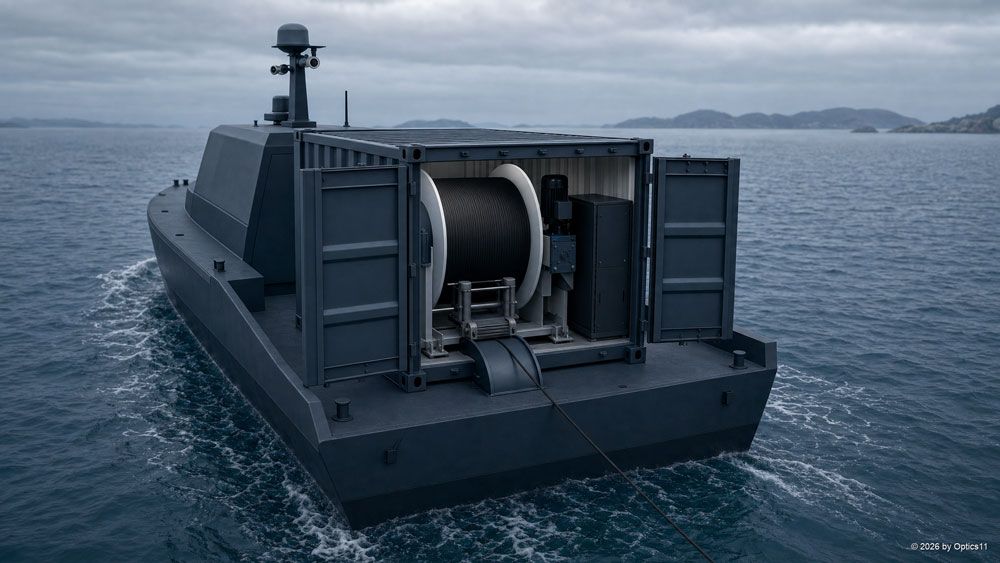
What can you hide/transport/install in a container?


When I started in my industry we used to cut every pipe and weld every joint on site and hang them from walls. Then we, the vendors, discovered the advantages of building modules in our factories. Then we discovered the benefits of modules we could ship in seacans. Then we discovered the benefits of operating the modules in the seacans.

There is nothing under the sun that can't be containerized.
 
100 battery-powered mini-Mosquitoes launched from a single Seacan.

www.twz.com/news-features/blitzbox-packs-100-weaponized-drones-into-an-unassuming-container

In U.S. military parlance, Group 2 drones have maximum total weights between 21 and 55 pounds, can fly up to an altitude of 3,500 feet, and have top speeds of 250 knots or less. Group 1 covers everything below Group 2, capability-wise, including Blitz and the even smaller multi-rotor drones, Toler mentioned.

The Blitz drone itself is a small, highly modular fixed-wing design. It is propelled via a pair of electrically powered propellers, one in each wing. It can cruise at speeds between 40 and 75 Knots Equivalent Air Speed (KEAS).

...

Once the pilot is removed from the equation (and the passengers) why isn't the tailsitter the preferred design for drones?

Copters suffer from the inefficiecy of the rotors in forwards flight. Tiltrotors and complications and weight for limited speed and range because they need to keep the people inside upright. Runways largely exist for the same reason.

Take the people out of the craft and it can lift of vertically, or inclined, with or without a boost, and immediately transition to wing supported flight with dynamic lift, extending range.

If hovering is required then the craft can sacrifice range by giving up dynamic lift and hanging on its prop. That seems to bee the ratioale behind all these cheap interceptor drones.

They are taking their inspiration from this:

Tail-sitter - Wikipedia

If you can launch 100 drones from a sea can how many tailsitting jet drones can you launch from a Halifax?

 
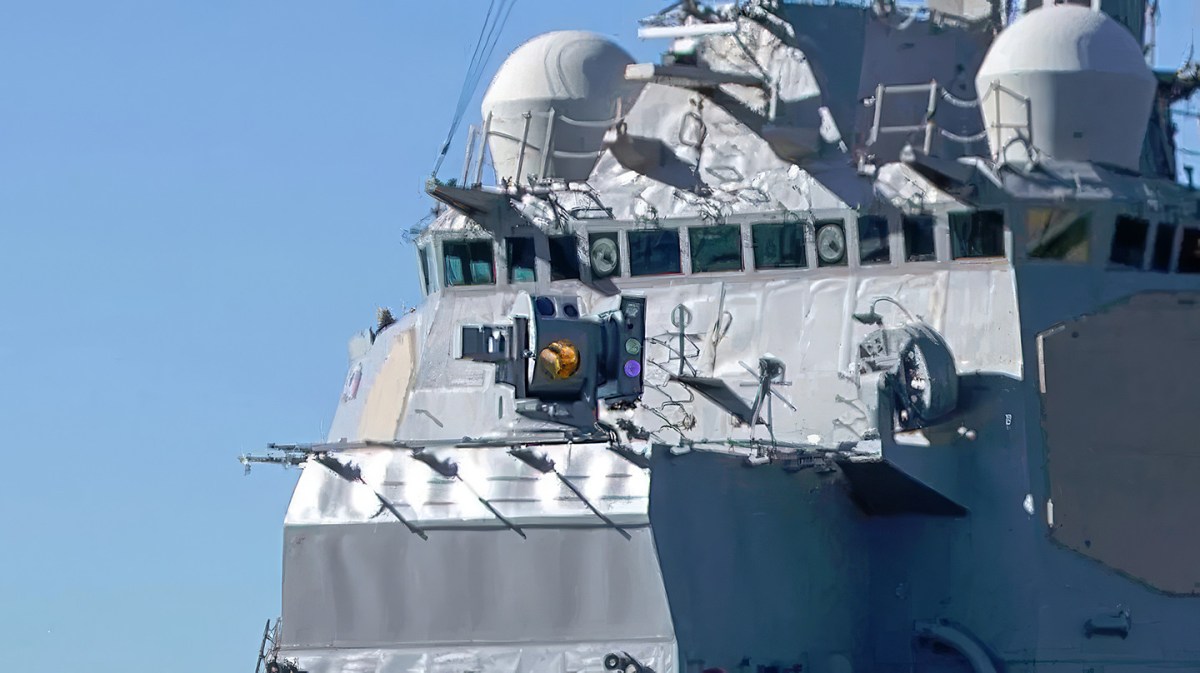
US Congress sufficiently impressed with the Laser promise that it wants to develop the containerized Helios system.
Advancing from 60 kW to 150 kW and onwards.

A snap-on for any vessel or base.
Something for the new RCAF security force perhaps?

 
Containerized engines?


Revolutionary Composite Enclosure Technology

The LM2500 aboard USNS Don Walsh will be encased in GE Aerospace’s revolutionary lightweight composite enclosure, first introduced to the U.S. Navy fleet on USS Santa Barbara (LCS 32) in March 2023. Fully certified by the U.S. Navy with MIL-S-901D Grade A shock qualification, the composite enclosure delivers transformative operational advantages critical for acoustic surveillance missions:

50% weight reduction: 2,500 kg (5,500 lbs) lighter than steel predecessors, providing ship designers critical flexibility for increased payload, fuel capacity, or mission systems.

60% quieter operation: Dramatically reduced engine room noise compared to original steel enclosures—essential for acoustic surveillance missions.

Cooler engine room temperatures: Reduced wall temperatures by 25°F to 50°F, with less heat rejected into the engine room and improving crew comfort.

Enhanced durability: Corrosion-resistant single-piece carbon fiber construction requires less maintenance.

Ease of engine removal/reinstallation: The gas turbines can be removed and reinstalled through the intake path.

Better access to the engine: Enhanced crew access to engine inlet and lightweight main door for easy handling; engines can be removed and reinstalled through the inlet path.
 
Containerized Data Centres


"Situational awareness experiments were also conducted aboard Cooperstown, such as using flying drones to collect targeting data. These were underpinned by a “deployable data center” transported from Mayport, Florida, set up in Norfolk, Virginia, and ultimately put aboard the littoral combat ship. The data center, provided by Armada, was equipped with AI and machine-learning tech, including computer vision and tested maritime domain awareness technologies. It was the first time the company’s product was tested at sea."


...


"the littoral combat ship Cooperstown launched four unmanned aerial vehicles and one unmanned surface vessel against the former USS Simpson, a Perry-class guided missile frigate"

"The robot formation executed three kinetic strikes against the Simpson as part of live-fire attacks that put the hull on the bottom and capped the weekslong, multinational UNITAS 2026 (SINKEX) exercise."

....

"The drone attack was largely coordinated by personnel ashore, not aboard the relatively lightly crewed Cooperstown, a Fourth Fleet spokesperson said.

"“The exercise was primarily commanded from the Maritime Operations Center, MOC, ashore, with some senior staff elements afloat. The Robotics Operations Coordinator was part of the element ashore at the MOC, monitoring the status of each [automated unmanned system] and event serials in which they participated,” the spokesperson said via email. “We also conducted coordinated anti-submarine warfare against a diesel submarine using long-dwell USVs with acoustic capability.” "
 
All of these containinerization developments, to my mind, seem to lead into the prospect of higher readiness rates and less time alongside for repairs and maintenance.
 
All of these containinerization developments, to my mind, seem to lead into the prospect of higher readiness rates and less time alongside for repairs and maintenance.
I'm starting to warm to the idea of the Boxer module system which limits the manufacture of the body to a single standard chassis (albeit I'm not sure if the power supply works that way or needs tweaking for certain modules.)

I could see the same for containers/pallets if there were two further standards - a 10' length module as well as a half-height module for each of the 10', 20' and 40' modules. IMHO, while the 8' height is perfectly useful for many applications, various tactical uses would benefit from modules only 4' high (such as loitering munitions launchers). In addition a 10' length standard could be incorporated into smaller trucks such as the F 550 line - again a lighter, more versatile system that is easier to hide and deploy in small numbers yet has the flexibility to convert from a cargo vehicle to a weapons platform via SEV containers to palletized gun and missile systems etc. One could also "gang" two 10' modules to a 20' base chassis (such as a 10' CP module with a 10' radar module or a 10' AD gun module with a 10' AD missile module. While on the one hand it assists readiness by switching a module from a broken chassis to a serviceable one, I also see it leading to a simplified manufacturing process allowing for a wider range of SEV module manufacturers conforming to the base standards.

While 10' containers and half height ones aren't commercial standards, they could be a military standard to work in conjunction with the chassis fleet.

🍻


We aim to please. 😄
 
I'm starting to warm to the idea of the Boxer module system which limits the manufacture of the body to a single standard chassis (albeit I'm not sure if the power supply works that way or needs tweaking for certain modules.)

I could see the same for containers/pallets if there were two further standards - a 10' length module as well as a half-height module for each of the 10', 20' and 40' modules. IMHO, while the 8' height is perfectly useful for many applications, various tactical uses would benefit from modules only 4' high (such as loitering munitions launchers). In addition a 10' length standard could be incorporated into smaller trucks such as the F 550 line - again a lighter, more versatile system that is easier to hide and deploy in small numbers yet has the flexibility to convert from a cargo vehicle to a weapons platform via SEV containers to palletized gun and missile systems etc. One could also "gang" two 10' modules to a 20' base chassis (such as a 10' CP module with a 10' radar module or a 10' AD gun module with a 10' AD missile module. While on the one hand it assists readiness by switching a module from a broken chassis to a serviceable one, I also see it leading to a simplified manufacturing process allowing for a wider range of SEV module manufacturers conforming to the base standards.

While 10' containers and half height ones aren't commercial standards, they could be a military standard to work in conjunction with the chassis fleet.

🍻
The US military already has standardized containers that it uses


EDSS Containers: Tricon, Quadcon, and Bicon

The Equipment Deployment Storage System (EDSS) is the military’s modular container family. Each type subdivides one TEU into smaller, independently transportable sections that reassemble into a standard 20-foot footprint. EDSS containers are the backbone of rapid-deployment logistics.

Tricon: Three Sections, One TEU

The tricon container military designation covers the most widely used EDSS type. Three sections, each measuring 8 feet long x 8 feet wide x 6 feet 3 inches tall, connect to form a single 20-foot equivalent. The tricon is the default choice for rapid deployment of supplies, equipment, and ammunition.

What makes the tricon dominant is its transport flexibility. Each section can move independently by helicopter sling load, flatbed truck, or light tactical vehicle. A CH-47 Chinook lifts a single tricon section into a forward operating base that has no road access. Once all three sections arrive, they lock together using standard ISO twist-lock fittings and handle as one unit for ship or rail transport.

Quadcon: Four Sections, One TEU

The quadcon container splits a TEU into four sections, each measuring 6 feet 10 inches long x 8 feet wide x 4 feet 9 inches tall. Shorter than tricon sections, quadcons sit lower and more stable when linked on a chassis or ship deck.

Quadcons handle smaller, mission-specific loads. Each section is light enough for a single light tactical vehicle to transport, making them practical for units operating with limited lift assets. Door options mirror the tricon: single-door, multi-door, and side-loading.

The quadcon container sees heavy use in expeditionary medical units, signal battalions, and any operation where load segregation matters more than volume per section.

Bicon: Two Sections, One TEU

Bicons split a TEU into two halves, each approximately 8 feet 6 inches long x 8 feet wide x 9 feet 9 inches tall. They fill the gap between full-size 20-foot containers and smaller EDSS types. When a load is too bulky for tricon sections but the unit still needs modularity, bicons are the answer.
 
Interesting (although the dimensions in the main text [see above] for the Tricon and Quadcon don't add up to a TEU - (In the FAQ they do - Tricon length is 6'10" and Quadcon is 4'9".)

I'm not so sure from the article as to whether these are US military standard sizes or merely this manufacturer's product using MILSPEC standards for the container construction and the dimensions of a TEU to work within. I kind of wonder how you secure these to a chassis frame built for a TEU. The chassis would have to have a variety of twistlock receptacles (beyond the four TEU ones) to accommodate and secure the smaller modules.

:unsure:
 
Tricon dimensions vary slightly depending on the manufacturer, but the standard measurements are as follows:

Specification

External Dimensions

2.44m L × 1.97m W × 2.44m H

8′ L × 6′ 5.5″ W × 8′ H

3x 6' 5.5' = 19' 4.5" vs a TEU length of 19' 10.5"
 
Back
Top