No. They are not talking about 5 or 6 ships. They are talking about the majority of the platforms in the North Atlantic as being remote/autonomous.
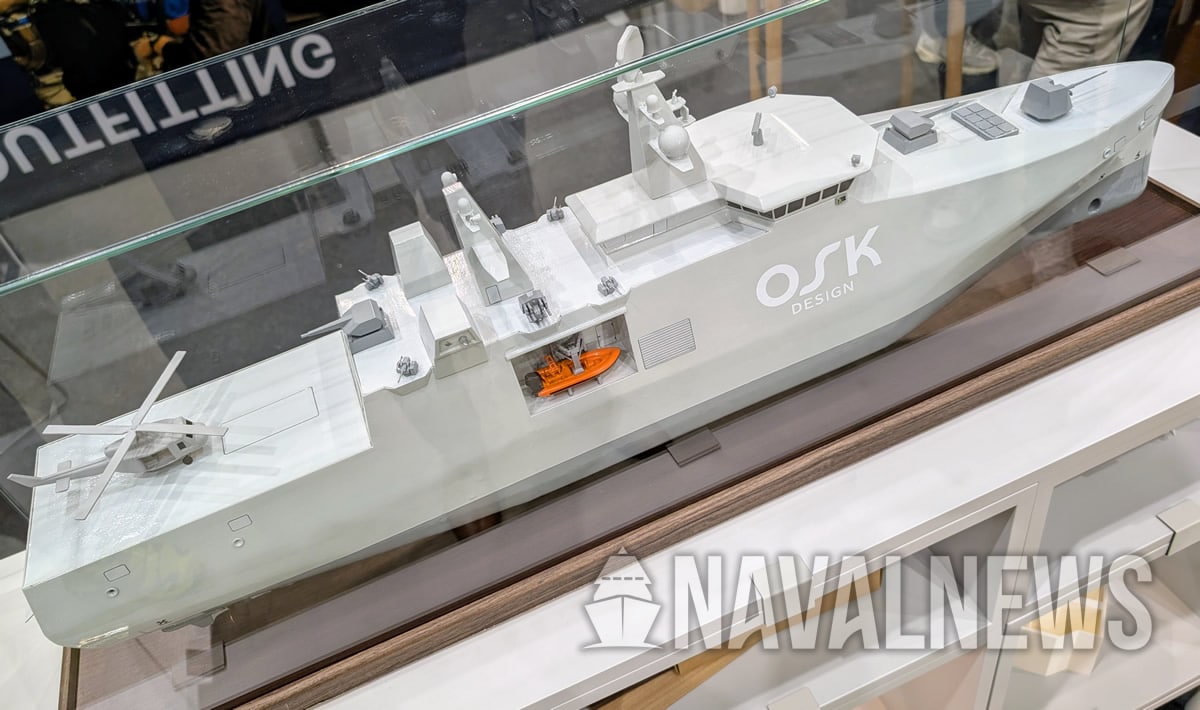
The 5 or 6 OSVs are motherships to support the XLUUVs and the Rattler USVs. Most of the sensors defining the maritime picture are to be supplied by civilian companies.
"Phase 1 – ATLANTIC NET
Delivering
“ASW as a service” through a Contractor Owned, Contractor Operated, Naval Oversight (COCONO) model.
“Lean crewed, remotely operated or autonomous uncrewed systems, delivered by an industry mission partner,” will gather
“acoustic data, triaged by AI/ML algorithms,” then transmit it to a
“secure Remote Operations Centre (ROC) for analysis by RN staff.” This setup aims to
“significantly increase mass and persistence at sea whilst releasing traditional RN platforms for other tasking.”"
This is the 2029 stuff. To work with what is already available. Our AOPSs can easily slot into that role. The Danes are buying another 4 or 5 similarly roled vessels.
Type 83 - an outgrowth of the Type 26 to replace the Type 45s, a manned C2/AAW ship of 10,000 tonnes
Type 91 - an autonomous/semi-autonomous "missile barge" similar in concept to the Dutch barges which displace 500 tonnes
- up to 6 Type 91s for each Type 83, with crews of 6 to 12 normally and 32 strike length missiles plus sensors.
- 2 year build time in any commercial yard.
The Dutch are supposed to be launching their optionally/minimally manned missile barges this year to accompany their AAW ships.
Type 92 - an autonomous ASW "sloop" that takes its inspiration from the Flowers, another simple to construct civilian hull that can be built in many small yards
- it will also act as a comms link with the Type 93s
Type 93 - an autonomous XLUUV similar in concept to the Ghost Sharks being supplied to the RAN and USN by Anduril from a new factory that will be procured in their dozens.
- they will carry, tow and deploy sensors as well as mines and torpedos.
In addition the RN is deploying the Rattler USVs, autonomous 7m RIBs for both domestic coastal work and expeditionary work. They will be controlled from both motherships and from land. 10 million UKP is to buy 20 of them initially for operational development. Domestically they can be used to shadow vessels transiting UK waters.
The Royal Navy has launched market engagement for Project Beehive, a fleet of 20 uncrewed surface vessels intended to advance its hybrid force by supporting tactics and warfare development while serving as an experimental platform for autonomous systems.
ukdefencejournal.org.uk
The Royal Navy recently tested shadowing warships with a swarm of unmanned surface and underwater vessels in a bid to transform the service into a hybrid navy. The Royal Navy conducted a 72-hour proof of concept exercise for its autonomous Rattler unmanned surface vessels (USVs). The exercise...
news.usni.org
....
That is the RN
The USN
"On 28th July, the US Navy issued an urgent requirement to industry for a new class of modular, medium to large-sized Uncrewed Surface Vessels. This is not another experimental project but a funded, credible and determined drive to add mass and lethality to an over-stretched fleet."
...
"The new request for proposals to industry was issued this week by US government outlines a plan to field prototype ‘mass producible’ USVs within a dramatically compressed timeline.
"Rather than spending years refining bespoke ship concepts, the Navy wants platforms that prioritise rapid delivery, commercial adaptability and modularity. The vessels must be able to operate without crews, carry significant payloads in standardised container form, and perform military missions in demanding open-ocean conditions. In short, the Navy is no longer experimenting, it’s buying.
"The MASC programme represents a significant departure from business as usual for the USN, aiming to avoid the ‘exquisite platform’ mindset, heavily engineered ships developed over a 10-15 period at high cost and often tied to fragile specialist supply chains. These vessels are still the vital core of the fleet but in the two decades, the USN has struggled to design and deliver conventional warships, with the Zumwalt-class destroyers, Littoral Combat Ships and Constellation-class frigate programme all having serious issues. Instead, the new USVs will be developed under Other Transaction Authority (OTA), a mechanism that allows for rapid, flexible contracting outside traditional acquisition processes.
"This model is designed to attract non-traditional suppliers, encourage creative prototyping, and deliver usable platforms quickly. The programme is being viewed as a test case not just for uncrewed systems, but for broader reform across the US defence procurement. Importantly, the Navy is not asking for a demonstrator but a scalable, production-ready prototype that can lead directly into quantity procurement. The emphasis is on repeatable manufacturing, not one-off custom builds."
BlackSea Technologies introduces a modular unmanned surface vessel family that is mission driven production ready and built to scale with the U.S. Navy.
www.blacksea.tech
www.austal.com
MUSV / LUSV and Conversion Transforming Proven Designs into Cutting-Edge Unmanned Solutions Conversion Methodology FSV Configurations & Mother Ship Design Navy Strategy Enablers Medium to Large USV: Engineering, New Build, and Conversion Swiftships is a leading company in the construction and...
swiftships.com
- The Navy’s program of record LUSV. The Navy envisions these LUSVs as being 200 feet to 300 feet in length and having full load displacements of 1,000 tons to 2,000 tons, which would make them the size of a corvette.
- Unmanned Surface Vessel Division One (USVDIV-1) has stewardship for two surrogates for LUSVs, the Ranger and Mariner, as well as two MUSV prototypes, Sea Hunter and Seahawk. The Navy was sufficiently confident in the operation of its LUSV and MUSV prototypes to deploy them to the international Rim of the Pacific (RIMPAC) 2022 exercise.
The U. S. Navy stands at the precipice of a new era of technology advancement. In an address at a military-industry conference, the U.S. Chief of Naval Operations, Admiral Michael Gilday, revealed the Navy’s goal to grow to 500 ships, to include 350 crewed ships and 150 uncrewed maritime...
centerformaritimestrategy.org
....
Unmanned technology packets are being deployed. Without security. A lot of the technology is being provided by commercial suppliers because the open market has better technology and is faster to adapt to changes. And it is available to anybody.
AESA was a big selling point with the F35. it was the first that many of us had heard about the technology. It was novel.
When Jean Chretien signed up for the JSF project.
In 1996.
30 years ago.
AESA panels are now being mass produced and stuck on ground vehicles ranging from Razors to tanks, as well as UGVs. They are also being mounted on RWS systems like the Aussie Slinger from EOS.
As for weaponry, everybody and her brother is building new flying bombs these days.
Anything that actually makes it to the water is likely to be obsolete by the time it gets there in any case.
....
Final thought - old oil tankers are acting as motherships for drones. How many drones could be supervised from a single workstation in a Halifax CIC? An AOPS?