I gather that the First Sea Lord's position is that he feels he is out of time and, as in 1939, he is looking around for the bleeding edge of technology and wondering what he can do with what is available, even if there is a considerable risk.
@Baz, you talk about expendable sonobuoys. The FSL talks about hiring oceanography companies to deploy a fleet of sensor vessels to light up the darkness.
"According to MoD, 26 companies from the UK and Europe have submitted sensor concepts, while 20 firms have proposed prototype developments.
"In the coming weeks, selected companies will advance their development work from concept to operational use, with capabilities expected to be deployed at sea next year."
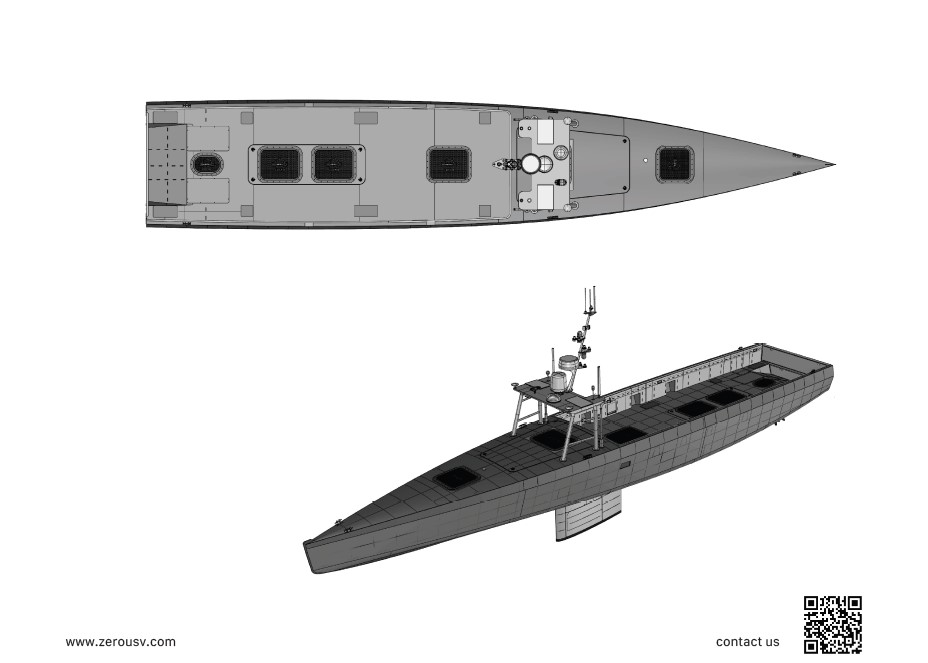
The Oceanus 12 is representative of some of the USV platforms under consideration for immediate deployment.
The RN's autonomous escort is expected in the water next year.
The Proteus Rotary Wing UAS, which builds on the Fire Scout deployments in the US, is entering service.
The XV Excalibur XLUUV, which looks a lot like the Anduril Ghost Shark adopted by the RAN and the USN and is in production, is being integrated into the Shield part of Bastion.
....
I posted the MTB video because I wanted to back up the concept of autonomous torpedo boats drifting on the currents in the North Atlantic.
That same video describes how the MTBs were ideas generated outside the chain of command and developed by civilians. They were promoted by enthusiasts and adopted in extremis by the Admiralty out of necessity. They were made, like the Mosquito, from non-strategic materials, (mahogany and plywood), by under-employed tradesmen (carpenters, joiners, cabinet and piano makers) in any available space (they only displaced 75 tons all up). They were minimally manned (crew of seven) with minimally trained reservists (yachtsmen and fishermen).
But they could carry four heavy torpedoes and working in "swarms" destroy a lot of tonnage, including what might be classified as corvettes.
These days, I believe, we could float dozens, if not hundreds of uninhabited, self-righting MTBs in the Noth Atlantic and arm each one with 2 to 4 heavy torpedos like the ADCAP and Stingray instead of the lighter Mk 54 carried by helicopters and ASROC. They then become a field of self-propelled off-route mines that can be relocated and attack deep or surface targets on command. They can be laid and tended by AOPS, or CG vessels or any vessel with a flexdeck.
These types of innovations, forced on us because we have wasted decades debating how best to face this day, are changing the operating environment for subs, deepwater ships and coastal ships.
PS the Ghost Bat XXLUUV can carry the equivalent of two TEUs in free flooded chambers. They Aussies are publicly declaring thenm as mine layers. How many heavy torpedos can be carried in a 20 ft seacan?
...
Canada always seem to strive to pack as much as possible into the small number of platforms it is allowed to buy. I believe that this prematurely terminates a lot of projects because it raises complexity, often well beyond the competency of our industry, and raises costs concurrently.
Why don't we try going the other way for a change and try building a lot of small, simple platforms that are wiithin the capabilities of our industry and then plan on using them in concert in task forces?





 dronelife.com
 www.royalnavy.mod.uk


 thedefensepost.com
 euro-sd.com


