
Since the WARP (central waterjet) is not a good option for an Arctic vessel, I would add two electric motors (about 2.0 to 2.5 MW each) for electric propulsion up to 15-16 knots. Obviously, the diesel generators should be dimensioned (rated) accordingly.

You are using an out of date browser. It may not display this or other websites correctly.
You should upgrade or use an alternative browser.
You should upgrade or use an alternative browser.
Continental Defence Corvette
- Thread starter Underway
- Start date

- Reaction score
- 9,816
- Points
- 1,210
A100 is CODAD MW PDE. So no need for the WARP if one were to go that particular engineering route.Since the WARP (central waterjet) is not a good option for an Arctic vessel, I would add two electric motors (about 2.0 to 2.5 MW each) for electric propulsion up to 15-16 knots. Obviously, the diesel generators should be dimensioned (rated) accordingly.
But there is also something to be said for having a simple ship, that isn't overly complicated.

Oldgateboatdriver
Army.ca Fixture
- Reaction score
- 5,985
- Points
- 1,040
But there is also something to be said for having a simple ship, that isn't overly complicated.
That! 100%
Especially if you want to build something where production can be ramped up quickly in times of need.
Fully agree, I don't consider electric propulsion as complex. Both the MCDVs and AOPS have It.
The only issue is how to reach 25 knots.
a) with two or four diesel engines (added)
b) with one gas turbine (could be the LM2500+)
c) a combined (but more complex) solution like two diesels (for Cruise at about 20 knots), combined diesel-electric and diesel, plus the gas turbine.
Regarding WARP, I was rather thinking of the new Meko
 en.wikipedia.org
The only issue is how to reach 25 knots.
a) with two or four diesel engines (added)
b) with one gas turbine (could be the LM2500+)
c) a combined (but more complex) solution like two diesels (for Cruise at about 20 knots), combined diesel-electric and diesel, plus the gas turbine.
Regarding WARP, I was rather thinking of the new Meko
MEKO A-200 DEU-class frigate - Wikipedia
Oldgateboatdriver
Army.ca Fixture
- Reaction score
- 5,985
- Points
- 1,040
Electric propulsion is only complex in the number of things that you have to watch for compared to straight diesels with shafts and Variable pitch propellers, but from a design point of view, I agree that it is not complex.
This said, the Absalon class and the Brits type 31 are four diesel to two shafts with VP. Simple, straightforward, redundant and giving you 25 + knots.
This said, the Absalon class and the Brits type 31 are four diesel to two shafts with VP. Simple, straightforward, redundant and giving you 25 + knots.

- Reaction score
- 13,968
- Points
- 1,160
Electric propulsion is only complex in the number of things that you have to watch for compared to straight diesels with shafts and Variable pitch propellers, but from a design point of view, I agree that it is not complex.
This said, the Absalon class and the Brits type 31 are four diesel to two shafts with VP. Simple, straightforward, redundant and giving you 25 + knots.
This is a tour of the Iver Huitfeldt class engine room, in the engine room, by the Danish Captain responsible for the design.
His comments about cost containment were interesting.
Civilian yards with civilian standards and methods where possible and military where necessary.
Weapons and sensors reclaimed from other vessels using the STANFLEX principles.
The more interesting point was that the Danish Government (Logistics Organization or the Navy itself) took on the Prime role as Integrator.
On the plus side money was saved.
On the minus side those three ships have been de-rated from their Air Defence roles to Long Range Patrol Vessels. This is in large part due to software integration issues apparently.
But back on the plus side, for 325 MUSD (2010 dollars) each, the Danish Navy has three heavily armed Patrol Vessels in its fleet joining their two older siblings, the Absalons. The Absalons have gone the other way. They have gone from armed ferries to ASW platforms.
....
Couple of interesting observations.
Absalon had a high mission bay under the flight deck that raised the height of the flight deck, hangar and missile deck.
The Huitfeldts scavenged that mission bay for space which they used to make the engine rooms more friendly. They still managed to lower the superstructure height.
Power
Runs on 1, 2 or 4 diesels.
1 diesel gets you 18 knots and 9600 NM.
2 diesels get you 25 knots
4 diesels get you 29 knots
PS - The Absalons with the same hull form and displacement only have 2 diesels. One ran on one diesel on local ops in the Baltic for a while because it damaged its gearing which had to be removed, repaired on shore and reinstalled some months later.
Most cruising is at 12 to 14 knots.
4 diesels on line in 1 to 2 minutes.
Power packs (cylinders) can be pulled and replaced at sea with the engines running using overhead cranes and monorails.
The engine room is airconditioned.
Last edited:
- Reaction score
- 13,968
- Points
- 1,160
These two pages on discussion on design of the Huitfeldt and the Absalon might also be informative.

- Reaction score
- 31,517
- Points
- 1,260
Why?Since the WARP (central waterjet) is not a good option for an Arctic vessel.
Oldgateboatdriver
Army.ca Fixture
- Reaction score
- 5,985
- Points
- 1,040
Why?
Because if you suck ice chunks or ice slush in the jet intake, it breaks the impellers or gums up the work and you stall. For a good example: Ask anyone who has had to clear slushy snow, almost water saturated snow, from their driveway with a snow blower.
Why?
Because ice may block the inlet of the duct and also the propeller inside the duct.
Additionally electric propulsion is preferred in ice because electric protections would trip if the propeller gets blocked. A diesel engine may get damaged in that case.
This said, the Absalon class and the Brits type 31 are four diesel to two shafts with VP. Simple, straightforward, redundant and giving you 25 + knots.
Both of them are way above 5,000 tonnes. French FDI also features four diesels and still above 4500.
Mogamis use a gas turbine, and within Mekos some use four diesels and some two diesels plus a GT.
IMHO electric drives are a no-brainer for a PC6/7. The dilemma, I would say, is mainly decide between four diesel engines or one GT to reach 25/26 kts.
DEs are more simple, less maintenance, much cheaper through their life-time. On the other hand GT requires less space and adds much less weight to the ship.

Halifax Tar
Army.ca Legend
- Reaction score
- 20,763
- Points
- 1,260
Because if you suck ice chunks or ice slush in the jet intake, it breaks the impellers or gums up the work and you stall. For a good example: Ask anyone who has had to clear slushy snow, almost water saturated snow, from their driveway with a snow blower.
I have never blown a shear pin in my snow blower...
I know I probably shouldn't have said that...

FSTO
Army.ca Fixture
- Reaction score
- 7,758
- Points
- 1,210
My advice is for you to go buy a package of shear pins.I have never blown a shear pin in my snow blower...
I know I probably shouldn't have said that...
Halifax Tar
Army.ca Legend
- Reaction score
- 20,763
- Points
- 1,260
My advice is for you to go buy a package of shear pins.
I am sure I just jinxed myself lol
- Reaction score
- 9,816
- Points
- 1,210
Yah you did. Get a package of pins, since you spent the money that should cancel out the problems.I am sure I just jinxed myself
- Reaction score
- 31,517
- Points
- 1,260
Because if you suck ice chunks or ice slush in the jet intake, it breaks the impellers or gums up the work and you stall. For a good example: Ask anyone who has had to clear slushy snow, almost water saturated snow, from their driveway with a snow blower.
Yeah, in VA pretty much guaranteed if we get enough snow the use the snowblower, by the time I am using the snowblower it will be slushy at the bottom.
I am curious as the ice breaking videos and simulations tend to show the slushy mess it at the surface and while chunky stuff can go below it isn’t the slushy mess.
If the grating for the impeller was done enough that no significant chunks could get in, would that be enough mitigation?
I would assume that any load issue would trip some safeties and ensure that an engine wasn’t running away or otherwise damaged, that should be true regardless of energy generation method. I would certain hope that any system designed for use in a maritime combat system has multiple safety features, and doesn’t turn shaft into pretzel or burn down an engine would hopefully be decently high on the list.Additionally electric propulsion is preferred in ice because electric protections would trip if the propeller gets blocked. A diesel engine may get damaged in that case.

- Reaction score
- 19,169
- Points
- 1,160
And put them somewhere "safe" where you can't find them when your pin Shears and you end up using a nail.My advice is for you to go buy a package of shear pins.
- Reaction score
- 31,517
- Points
- 1,260
Do not put them in your office on a shelf behind a binder.And put them somewhere "safe" where you can't find them when your pin Shears and you end up using a nail.
You will find them several years later.
tape one to the handleDo not put them in your office on a shelf behind a binder.
You will find them several years later.
My issue this winter wasn't being able to find them. It was gathering up the remnants in my lawn and garden once the snow melted. Went through at least two packs from Canadian Tire. Mind you, my machine is getting on in years.tape one to the handle
Hmm. Interesting. I wonder what "North American Naval Project" this is aimed at? If it's CDC, it would appear this project has "grown" substantially.
Note the radar in the picture looks like SPY-7... Also note the reference to CMS 330.
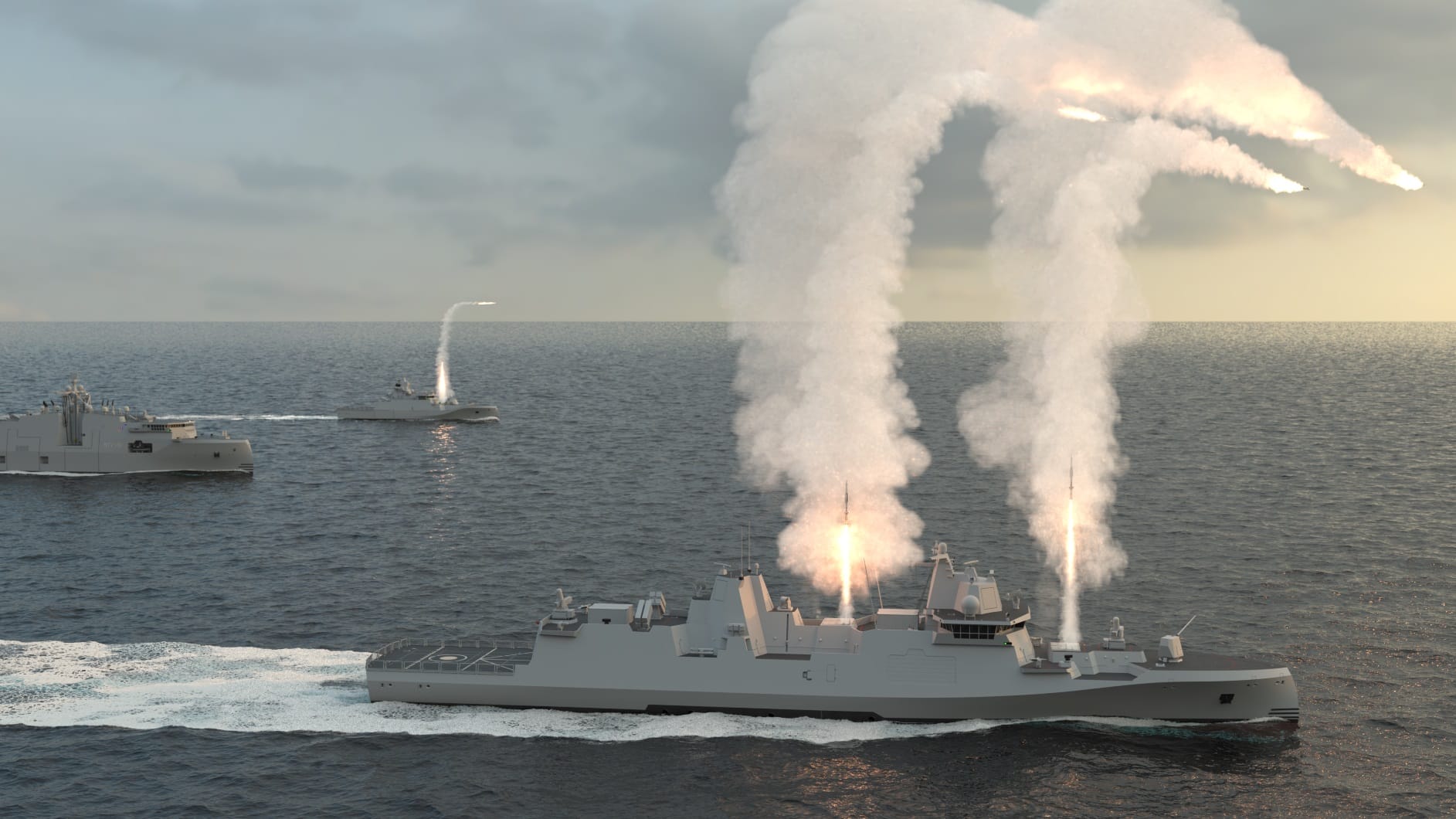
 www.navalnews.com
Note the radar in the picture looks like SPY-7... Also note the reference to CMS 330.
Rheinmetall Unveils GMF140 Next-Gen 6,000-Tonne Frigate for North America - Naval News
Rheinmetall unveils the GMF140, a next-gen 6,000-tonne frigate featuring AEGIS, 64 VLS cells, and advanced ASW, targeting North American naval projects.
www.navalnews.com


