• Thanks for stopping by. Logging in to a registered account will remove all generic ads. Please reach out with any questions or concerns.

Drones and Naval Culture

Kirkhill

Puggled and Wabbit Scot.
Subscriber
Donor
Reaction score
13,284
Points
1,160
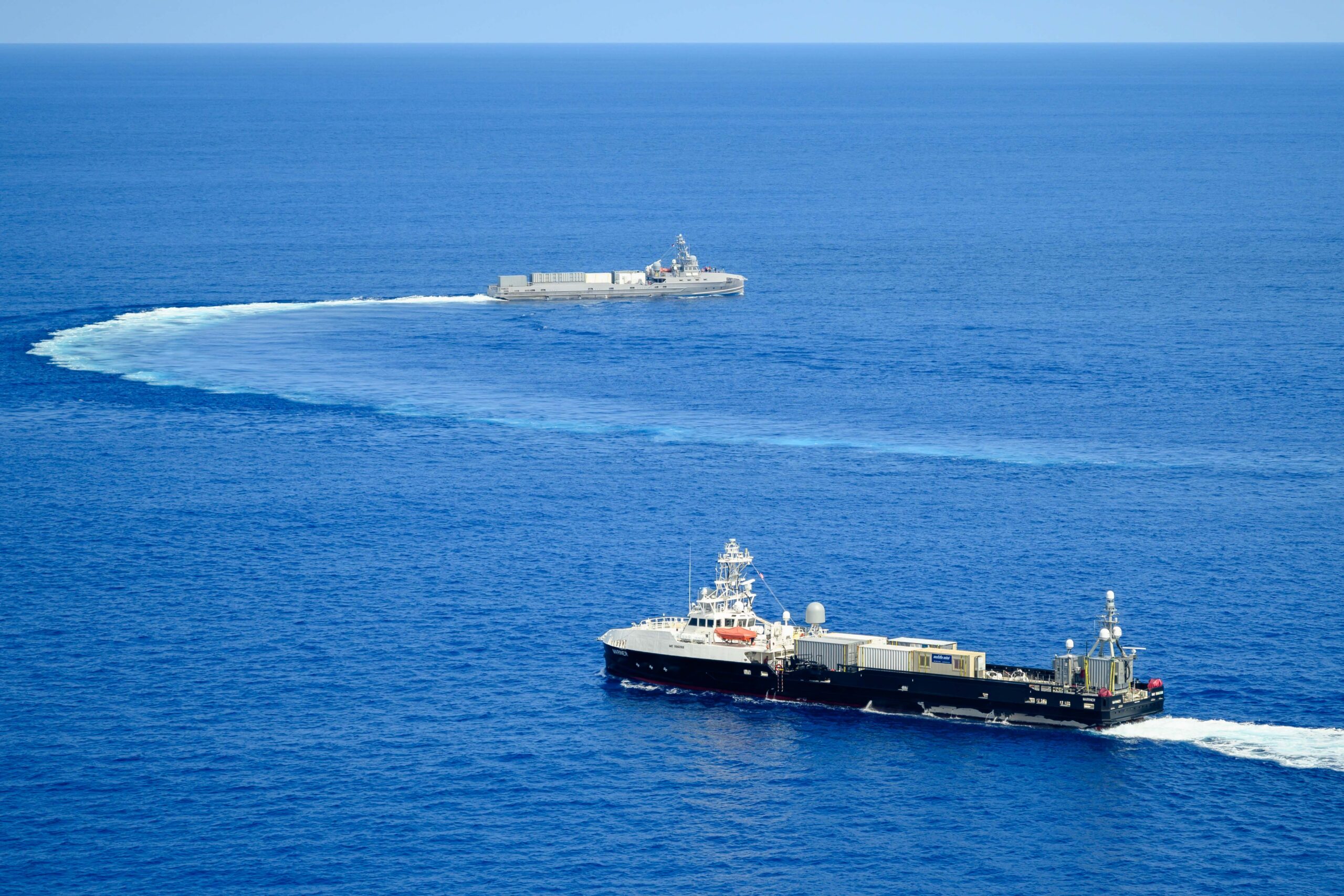
Drone controllers ashore and seamanship, command responsibility over software, disposable hulls, maintenance and damage control.

 
Drone controllers ashore and seamanship, command responsibility over software, disposable hulls, maintenance and damage control.


M'father often told me, when I was just a lad,
A sailor's life was very hard, the food was always bad,
But now I've joined the navy, I'm on board a man-o-war,
And now I find a sailor ain't a sailor any more!

Don't haul on the rope, don't climb up the mast,
If you see a sailing-ship it might be your last,
Get your 'civvies ready for another run-ashore,
A sailor ain't a sailor, ain't a sailor any more!

The 'killick' of our mess, he says we've had it soft,
It wasn't like this in his day, when he was up aloft,
We like our bunks and sleeping-bags but what's a hammock for?
Swinging from the deckhead or lying on the floor?

They gave us an engine that first went up and down,
Then with more technology the engine went around,
We're good with steam and diesel but what's a mainyard for?
A stoker ain't a stoker with a shovel any more!

They gave us an Aldiss Lamp, we can do it right,
They gave us a radio, we signal day and night,
We know our codes and ciphers but what's a 'sema' for?
A 'bunting-tosser' doesn't toss the bunting any more!

They gave us a radar set to pierce the fog and gloom,
So now the lookout's sitting in a tiny darkened room,
Loran does navigation the Sonar says how deep,
The Jimmy's 3 sheets to the wind, the Skipper's fast asleep.

Two cans of beer a day, that's your bleeding lot!
But now we gets an extra two because they stopped The Tot,
So, we'll put on our civvy-clothes and find a pub ashore,
A sailor's still a sailor, just like he was before!


 
Drone controllers ashore and seamanship, command responsibility over software, disposable hulls, maintenance and damage control.

The issue is it doesn't scale up or is easily deployable at any real distance. A few semi-autonomous small drones running near your home port, or something like MCM drones off a mothership? Sure. But you can't forward deploy it without a home base to come back to like you can with a crewed ship, and anything remotely sophisticated will be a target for stealing it.

For whatever reason people want to skip over adding it to the toolbox to making it the whole ass toolbox, which makes no real sense. Usually it's the operators that like to just see upsides, ignore things like logistic support, repairs etc, and somehow expect it to have the same combat recoverability as a fully crewed ship.

You can't have it all; a fully capable warship is a weapons system that includes a trained crew, and if you want all the full capabilities it brings without the people you'll spend more on a lot of expensive planes, drones, long range missiles etc that has it's own support tail and requirements for trained people.

If we get to the point where robots can cover the jobs people can now, including repairing themselves, probably all a moot point as they'll just skynet our inefficient and wasteful asses.
 
The issue is it doesn't scale up or is easily deployable at any real distance. A few semi-autonomous small drones running near your home port, or something like MCM drones off a mothership? Sure. But you can't forward deploy it without a home base to come back to like you can with a crewed ship, and anything remotely sophisticated will be a target for stealing it.

For whatever reason people want to skip over adding it to the toolbox to making it the whole ass toolbox, which makes no real sense. Usually it's the operators that like to just see upsides, ignore things like logistic support, repairs etc, and somehow expect it to have the same combat recoverability as a fully crewed ship.

You can't have it all; a fully capable warship is a weapons system that includes a trained crew, and if you want all the full capabilities it brings without the people you'll spend more on a lot of expensive planes, drones, long range missiles etc that has it's own support tail and requirements for trained people.

If we get to the point where robots can cover the jobs people can now, including repairing themselves, probably all a moot point as they'll just skynet our inefficient and wasteful asses.

Would you repair a torpedo? Or a sonobuoy?

Some of this stuff, much of this stuff, is designed to be lost.

As to the question of this being the best course of action I think that some people are coming to a sense that time is running out and they are looking to what can be done with what is available today. Taking a leaf from Ukraine's book.

On the range front some of the Public Private Partnership solutions are employing platforms with endurance measured in months. Those, and the smaller USVs and XLUSVs are being procured in the dozens if not the hundreds.

Command and control, signals relays, support can be done from Great Britain, Ireland, Norway, Svalbard, Faroes, Shetlands, Orkneys, Iceland, Greenland, Newfoundland, aerial assets and space assets.....as well as subs.

And if a more flexible support base is required the Brits also have a couple of floating islands.

....

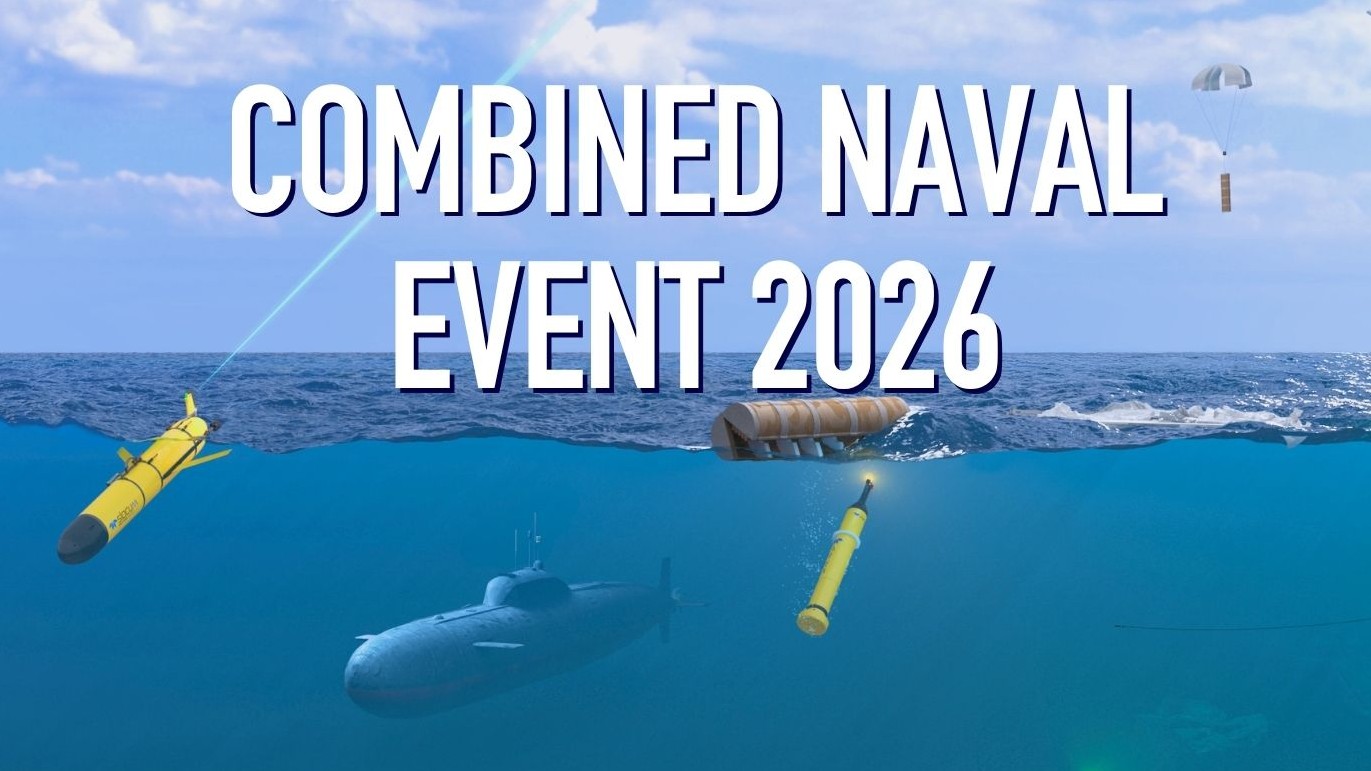
The Bastion plan seems to be one of turning the North Atlantic into a minefield filled with intelligent, self-propelled mines.
 
Would you repair a torpedo? Or a sonobuoy?

Some of this stuff, much of this stuff, is designed to be lost.

As to the question of this being the best course of action I think that some people are coming to a sense that time is running out and they are looking to what can be done with what is available today. Taking a leaf from Ukraine's book.

On the range front some of the Public Private Partnership solutions are employing platforms with endurance measured in months. Those, and the smaller USVs and XLUSVs are being procured in the dozens if not the hundreds.

Command and control, signals relays, support can be done from Great Britain, Ireland, Norway, Svalbard, Faroes, Shetlands, Orkneys, Iceland, Greenland, Newfoundland, aerial assets and space assets.....as well as subs.

And if a more flexible support base is required the Brits also have a couple of floating islands.

....

The Bastion plan seems to be one of turning the North Atlantic into a minefield filled with intelligent, self-propelled mines.
No, but that's the expectation when you have a ship worth several hundred million dollars, and the autonomous ships very quickly become 'optionally crewed' with sailors always on them. Similarly as soon as high tech sensor arrays, weapon systems and crypto are onboard they expect physical security presence with people, which then means a lot more systems onboard, then eventually actual operators and maintainers.

Drone swarms, mobile sensor arrays, intelligent munitions all make sense, it's the independently operated large ships that don't make much sense. Simple things like coming alongside to refuel doesn't work without people (and a pilot from the harbour authority), RAS needs people onboard the receiving ship, etc.

There are some commercial examples of remotely controlled/monitored cargo ships, but those essentially are doing a dedicated route, with protocols in place onboard to get people on for routine alongside, capability to board mid sail during an emergency etc and is basically just running an autopilot inbetween. The crew savings are minimal, as you now have a full watch at sea, with a lot more monitoring etc, as well as more downtime for maintenance as it's not being done concurrently to sailing, and hasn't been more widely adopted because people are actually cheaper, allow more time at sea and give a lot more flexibility.
 
No, but that's the expectation when you have a ship worth several hundred million dollars, and the autonomous ships very quickly become 'optionally crewed' with sailors always on them. Similarly as soon as high tech sensor arrays, weapon systems and crypto are onboard they expect physical security presence with people, which then means a lot more systems onboard, then eventually actual operators and maintainers.

Drone swarms, mobile sensor arrays, intelligent munitions all make sense, it's the independently operated large ships that don't make much sense. Simple things like coming alongside to refuel doesn't work without people (and a pilot from the harbour authority), RAS needs people onboard the receiving ship, etc.

There are some commercial examples of remotely controlled/monitored cargo ships, but those essentially are doing a dedicated route, with protocols in place onboard to get people on for routine alongside, capability to board mid sail during an emergency etc and is basically just running an autopilot inbetween. The crew savings are minimal, as you now have a full watch at sea, with a lot more monitoring etc, as well as more downtime for maintenance as it's not being done concurrently to sailing, and hasn't been more widely adopted because people are actually cheaper, allow more time at sea and give a lot more flexibility.

I agree with you on the large ships.

My gut says that the OSV class of vessel of the type delivered by Swiftships is probably the optimum size. (Nomad is 59m and displaces 673 tonnes).


Send one Halifax to sea with three OSVs, one with 4 Mk70s and 64 ESSMs and two with a total of 48 (potentially) Mark 48 armed torpedo boats.

And the whole ocean covered with autonomous sensors.
 
Drone swarms, mobile sensor arrays, intelligent munitions all make sense, it's the independently operated large ships that don't make much sense. Simple things like coming alongside to refuel doesn't work without people (and a pilot from the harbour authority), RAS needs people onboard the receiving ship, etc.
I think its the right approach, as we can't really afford to take risks on large ships, and you point out the challenges excellently.

RCN is taking a very cautious approach to independent ships and likely going hard into attritable drones/sensors, Its not like we haven't been using sonobuoys or ammo for decades. There are discussions for some things looking at 100's of thousands of these sorts of sensors or effectors.

Also short endurance (relative) UXV's that will help a ship that is already on station. UUV that patrols an area with the ship for example or UAV's like Schiebel.
 
No, but that's the expectation when you have a ship worth several hundred million dollars, and the autonomous ships very quickly become 'optionally crewed' with sailors always on them. Similarly as soon as high tech sensor arrays, weapon systems and crypto are onboard they expect physical security presence with people, which then means a lot more systems onboard, then eventually actual operators and maintainers.

Drone swarms, mobile sensor arrays, intelligent munitions all make sense, it's the independently operated large ships that don't make much sense. Simple things like coming alongside to refuel doesn't work without people (and a pilot from the harbour authority), RAS needs people onboard the receiving ship, etc.

There are some commercial examples of remotely controlled/monitored cargo ships, but those essentially are doing a dedicated route, with protocols in place onboard to get people on for routine alongside, capability to board mid sail during an emergency etc and is basically just running an autopilot inbetween. The crew savings are minimal, as you now have a full watch at sea, with a lot more monitoring etc, as well as more downtime for maintenance as it's not being done concurrently to sailing, and hasn't been more widely adopted because people are actually cheaper, allow more time at sea and give a lot more flexibility.
Particularly when cargo ownership and destinations can change enroute. Ship owners are historical cheap, they will try the autonomous route, lay off their crews, forgo maintenance at the dock and then watch as their ship sinks, collides with another ship or some other disaster and insurance rates for autonomous ships skyrocket, then it becomes cheaper to man them again.
 
I did not see a consolidated list in this thread as to potential use of the Halifax class planned Schiebel CAMCOPTER® S-100 drones. So if I may speculate, I note:
.
Believed officially stated by RCN functions for the Schiebel CAMCOPTER® S-100 drones (I could be wrong here):
  • Long Range Surveillance & Targeting: Extends situational awareness and threat detection out to 100 nautical miles. (Maritime Radar)
  • Real-Time Threat Monitoring: Delivers persistent day/night tactical imagery of potential maritime threats. (EO/IR Sensors)
  • Vessel Identification Tracking: Collects and identifies transmitting surface traffic signatures. (AIS Technology)
  • Friendly Air/Naval Traffic Safety: Transmits secure identification data to friendly units to prevent blue-on-blue incidents. (IFF Transponder)

Unannounced potential functions for the Schiebel CAMCOPTER® S-100 drones (ie technical capabilities not described in unclassified press as being an RCN requirement for the Schiebel CAMCOPTER® S-100 drones)
  • Kinetic Strike: Target engagement via precision weapons. (Hardpoints / Thales Martlet Missiles) <<< speculation by me
  • Submarine Tracking & Deployment: Deploying acoustic sensors and relaying sonar data back to the ship. (Sonobuoy Dispenser Pod / VHF Data Link)
  • Passive Electronic Reconnaissance (ESM-R & SIGINT): Passively detecting, identifying, and geo-locating enemy radar and communication emitters. (Digital ESM / SIGINT Pods)
  • Active Electronic Attack: Executing directional radar jamming or disruption of threat sensors. (Active Jamming Pods) < this is very speculative by me as one need decent power to jam.
  • Light Utility Cargo Transport: Shipping small components or medicine between vessels. (Under-slung Cargo Hook)
  • Airborne Mine Countermeasures: Scanning the water's surface to map naval mines. (LIDAR / Hyperspectral Sensors)

Obviously, a fair amount of speculation (by me) in the above.
 
One area of interest, albeit not for Canada (as Canada is not in the drone carrier (nor aircraft carrier) business), is that there is development work going on in regards to AEW drones. One example is the Mojave (STOL demonstrator for the MQ-9B drone).

First I note this drone can operate off of moderate aircraft carriers:

The Mojave (STOL demonstrator for the MQ-9B) launched and landed from HMS Prince of Wales in November 2023.
- Reference: GA-ASI Redefines Maritime Operations with Mojave

Another example is the ROK Navy tested Mojave drone aboard the ROKS Dokdo.
- Reference: ROK Navy tests Mojave drone aboard ROKS Dokdo - Naval News

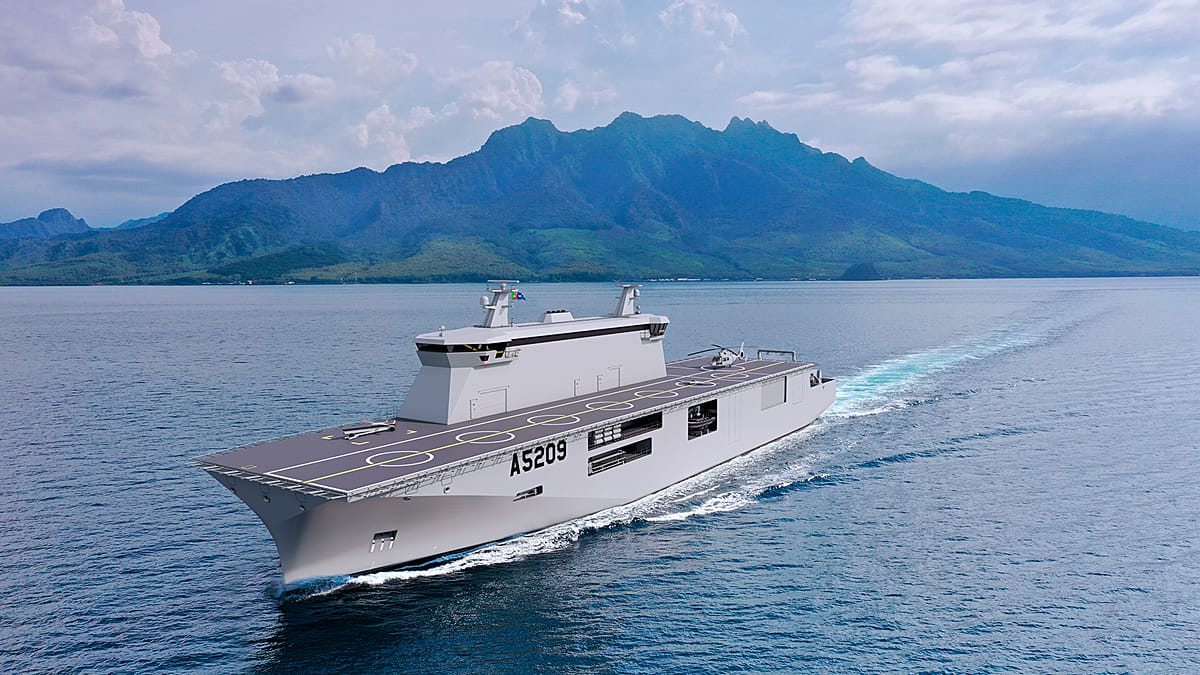
Both of those ships are relatively large.

I read (from unofficial and possibly inaccurate documents) that the Mojave (STOL demonstrator) achieved takeoffs in 586 ft and potentially landings in as little as 335 ft.

I then asked myself is there an AEW package forthe MQ-9B? I note that GA-ASI plan to add Saab Airborne Early Warning Capability to the MQ-9B

Then I asked myself, what other naval ships (other than ships from USA, Russia, China, and India) hypothetically might be able to operate a hypothetical MQ-9B AEW variant?

My list of capable ships other than USA, Russia, China, and India warships, that could potentially operate such an AEW configured drone follows, although I also note its is not likely many navies would go for this drone (and further some may not be allowed to procure such due to foreign export licences):
  • Spain: Spanish Juan Carlos I (1 ship)
  • France: Mistral, Tonnerre, Dixmude (3 ships)
  • Italy: ITS Trieste (LHD), ITS Cavour (carrier) (2 ships)
  • Japan: JS Izumo, JS Kaga (2 ships)
  • Turkey: TCG Anadolu (1 ship)
  • Australia: HMAS Canberra, HMAS Adelaide (2 ships)
  • UK: HMS Queen Elizabeth, HMS Princeof Wales (2 ships)
  • South Korea: ROKS Dokdo, ROKS Marado (2 ships)
  • Egypt: ENS Gamal Abdel Nasser, ENS Anwar El Sadat (2 ships)
  • Brazil: NAM Atlântico (1 ship)

It goes to support the view of many, that a lot is going on in the world today in regards to naval applications of drones.
 
Back
Top