
- Reaction score
- 28,544
- Points
- 1,360
Looking forward to strong and independent Europe that does not revert to spheres of influence of France and Germany.
Interesting. How do you see that developing of not France and Germany materially involved?


Looking forward to strong and independent Europe that does not revert to spheres of influence of France and Germany.
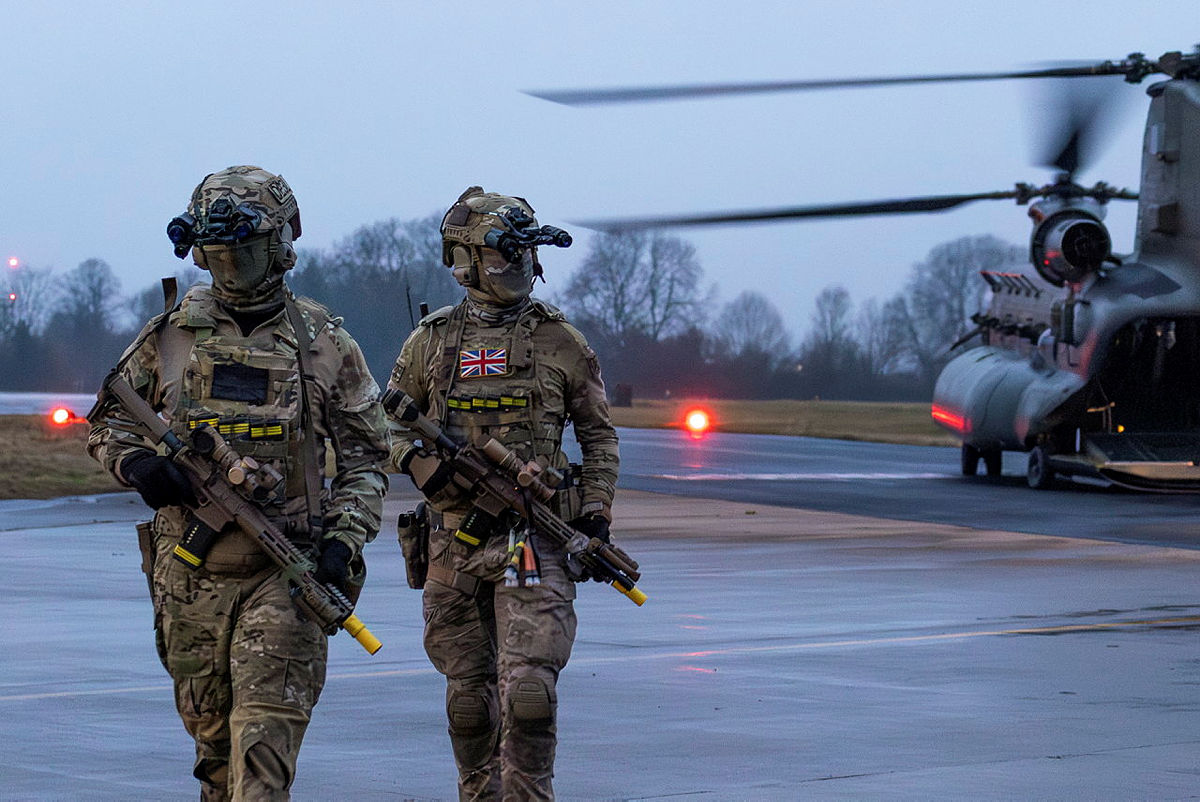
UK is trying hard, but nuclear deterrence is nowhere in their wheelhouse.The UK has to make some hard choices about whether they want to realign with Europe or potentially find themselves a wallflower.
 ukdefencejournal.org.uk

I too hope The Vikings put the band back together. As long as they don’t start touring.Europe finally wakes up from its self-indulgent 30+ year post cold war snooze on the lido deck.
Looking forward to strong and independent Europe that does not revert to spheres of influence of France and Germany.

There's always a possibility that Europe backslides. All that's needed is dissatisfaction among the peasants and a ruling class mostly interested in perpetuating its privileges and powers. Right now it's obvious that some European countries are disinclined to satisfy their median voters.Interesting. How do you see that developing of not France and Germany materially involved?
I wasn’t talking about a backslide, I was looking for your thoughts on ‘if not France and Germany, where do you see the root(s) of a “strong and independent” Europe?’There's always a possibility that Europe backslides. All that's needed is dissatisfaction among the peasants and a ruling class mostly interested in perpetuating its privileges and powers. Right now it's obvious that some European countries are disinclined to satisfy their median voters.
I don't see a strong and independent Europe any more than a strong and independent NA, SA, Africa, Asia, or any of the usual subdivisions of the above (eg. south Asia, or southeast Asia). Europe is fundamentally splintered and fractious. The only way I see for it to become less so is by formation of the smaller pieces into larger ones - including some potentially new ones - and that would be messy given the recent tendency of Europe to form more smaller pieces.I wasn’t talking about a backslide, I was looking for your thoughts on ‘if not France and Germany, where do you see the root(s) of a “strong and independent” Europe?’

There's always a possibility that Europe backslides. All that's needed is dissatisfaction among the peasants and a ruling class mostly interested in perpetuating its privileges and powers. Right now it's obvious that some European countries are disinclined to satisfy their median voters.
I think the opposite. He has used the threat to keep all the rest of the world in line. To lapse into my childhood for a moment: "Open this door or I will huff and I will puff and I will blow your house up". Almost the perfect weapon.In a world of precision and autonomy is nuclear weaponry necessary? Especially when even Vlad has found so little utility in his arsenal.
I think the opposite. He has used the threat to keep all the rest of the world in line. To lapse into my childhood for a moment: "Open this door or I will huff and I will puff and I will blow your house up". Almost the perfect weapon.
If you can convince people without actually having it you would sure save a pile of money but someone in the know would get bought off so your advantage wouldn't last long. What is needed is to be able to convince people that you will use it. Jimmy Carter would never have done so regardless of the threat. Ronald Reagan was to my mind the ultimate in Walk Softly but carry a big stick. Putin wouldn't hesitate or at least he has convinced me.Fair.
But under those circumstances does anybody actually need a working weapon? Or is a Schroedinger simulacrum sufficient?
Do you just have to cknvince peiple that you have the means to destroy the world?
....
On the practical side I just asked how big a hole that new printed Aussie missile would make on its own. No payload, just the vehicle on its own.
Mach 7
300 kg
Dry soil
8 to 10 meter diameter and 2 m deep
Rock
6 meter diameter


 www.independent.co.uk

When they are talking about it publicly, then “early stages” are a dot in the rear view mirror.France is not going to like this... moochers and meddlers are never welcome
From umbrella to uncertainty: Europe and Canada's nuclear deterrence anxiety
Several allies are apparently elbowing each other to shelter under France's arsenal
Normally, it's considered a good thing when the world beats a path to your door.
Maybe not so much when we're talking about nuclear deterrence.
At the very least, it is an ominous sign of the times.
Although little has been said publicly, several Western allies are now apparently elbowing each other to shelter under France's nuclear arsenal.
While the sentiment is more prominent in Europe, it's clear Canada cannot be excluded from the slow-burning crisis of confidence among allies about whether the United States can still be relied upon to live up to its long-standing formal guarantees — through NATO — of nuclear protection.
There is no authoritative official count showing the specific countries that have formally requested a direct nuclear deterrence guarantee from France's nuclear arsenal.
What we do know is Poland and now Germany have quietly acknowledged they're talking with France on nuclear deterrence co-operation.
In a statement on Jan. 29, German Chancellor Friedrich Merz acknowledged Berlin was in talks with Paris to explore deeper co-operation on deterrence, including the role of French nuclear forces in protecting European allies.
"These talks are in their very early stages," Merz said in Berlin in response to a question on the matter. "We know that we have to make some strategic and military-political decisions here, but again, the time is not yet ripe for that. We are holding strategic talks on this issue with the countries involved."

If Rubio and his team are high-fiving great success on their way home from Munich, they are likely to find reason in the months to come to think, “Ahhhh, those belligerent Europeans. How dare they…”
Interesting indeed. A family member living in the UK uses another British leaders name when referring to Starmer and it’s not Churchill…still begins with Ch….Wesley Wark has an interesting piece on UK PM Starmer's speech during the Munich Security Conference and how it contrasts to Carney's Davos speech.
THE TRUMP ADMINISTRATION’S two representatives at the Munich Security Conference, Secretary of State Marco Rubio and Under Secretary of Defense Elbridge Colby, gave very different remarks, but the underlying substance was the same: This administration does not understand, does not value, and will not invest in America’s European alliances. Although the two men struck different tones and used different words, the unified message was conveyed as much by what they said as by who they were and what they didn’t say. Those in the room likely understood what they were being told in the subtle language of diplomacy, but for the rest of us, it’s worth translating into plain English.
The Munich Security Conference is not a traditional diplomatic summit. It produces no communiqués or treaties, and few concrete decisions. Instead, it’s more like a diplomatic trade show—an annual gathering where heads of state, ministers, military leaders, intelligence officials, industry executives, and civil society voices confront the world’s (and especially Europe’s) most pressing security challenges.
For more than a decade, the conference’s former chairman, Amb. Wolfgang Ischinger, curated an agenda designed to provoke candid, sometimes uncomfortable exchanges. He once explained to me that his aim was never consensus for its own sake, but clarity: to expose differences, test assumptions, and force participants to hear how allies and adversaries interpret risk, resolve, and commitment. In Munich, words are not mere rhetoric; they are signals parsed in capitals around the world.
The conference itself has long been a reflection of the transatlantic alliance. When I commanded U.S. Army Europe, our forces—alongside our German hosts and other allied militaries—provided aviation, logistics, communications, and security support, long before the first speakers took the stage at the packed conference room of the Bayerischer Hof, all to ensure that delegations could meet safely. It’s an unglamorous mission, largely invisible to the public, but emblematic of how alliances function: shared burdens, mutual trust, and capabilities woven together in ways no nation could replicate alone.
The last conference I attended as the commander of U.S. Army Europe was in 2012, and the American delegation reflected the bipartisan weight the United States once brought to the table. Sen. John McCain was there with other senators and representatives from both parties, as were then-Secretary of State Hillary Clinton, then-Secretary of Defense Leon Panetta, and senior national security leaders from across the administration. Their messages differed in emphasis but were unified in tone: The United States viewed NATO not as a burden to be managed but as a strategic advantage to be strengthened...[more at article link above]


