
daftandbarmy
Army.ca Fossil
- Reaction score
- 48,610
- Points
- 1,160


When I was working as a medic for AHS, we had fights in the back of ambulances all the timeUh… If the perceived risk is assault to paramedics, then no, the appropriate partner service is going to be police, not, generally, a community based mental health provider.

- unless patients in Toronto are just exceptionally better behaved than patients in Edmonton...

Sounds like a good postingProbably not. May depend on where one was stationed.
I had the good fortune to be stationed in Chinatown.
I liked it there. Noisy, crowded streets with open front shops full of everything. Hanging red and gold signs I couldn't read, conversations I could not understand, and the unfamiliar music.
Just a streetcar ride from home, but it felt like far, far away.

Sounds like a good posting
In Edmonton we were all over the city.
In theory, the city was broken down into districts. And each district was broken down into zones. And in theory, we were supposed to stay within our assigned zone.
In reality, our dispatch system (CADS) had us all over the bloody city. It was supposed to factor in the number of calls each unit had done in that shift, to spread the work out somewhat evenly when possible - but it rarely was the case
It wasn't unusual at all for crews working out of a station in the SW to be responding to calls in the NE, and vice versa, just based on who was available at the time.
And if you drift too close to downtown, you end up stuck there due to call volume & CADS just assigning whoever is closest.
...
Your Chinatown sounds leaps & bounds better than ours.
Ours is the most dangerous part of the city - not because of the Chinese, but because Chinatown happens to be right next door to our homeless shelters.
I don't think our Chinatown is anything like your Chinatown even on a good summer day.
(All 4 of our shelters are kitty corner to each other. It more or less isolates most of the homeless people to that part of town, but calls for service are damn near constant)
Our policy was return to station to restock & clean the unit, but the ambulance bays at the hospitals ended up being where we would do that for the most partOur station only had one car. When you cleared the hospital, you returned to station.
Now, there is East Chinatown, as well as Scarborough and North York.
The absolute best station, if you enjoy peace and quiet, is Toronto Islands.
 Been to Afghanistan. Been to Africa. Can't say I've been to Toronto minus driving thru it on the 401...)
ur policy was return to station to restock & clean the unit, but the ambulance bays at the hospitals ended up being where we would do that for the most part
Restock any meds & IV lines used. Clean the unit. (Usually one medic would do that while the other medic had to stay with the patient until admitted, which wasn't always immediately)
By the time the medic came back out, the other medic would have the unit tidied up, wiped down, and restocked. And we would usually just bring ourselves back online with dispatch, and head to the next call.
It wasn't uncommon to only return to station at end of shift.
...
We called our ambulances busses or trucks, or units. Unit tended to be the term used if specifying between a BLS unit & ALS unit. I think calling them cars might be an Ontario thing?
We also used the term CFS - call for service - quite frequently. But I've gathered that seems to be an Edmonton thing, because even in Calgary medics would give us funny looks when we said it.
(I didn't even know Toronto had islands...holy goodness gracious I need to travel more lol

The way wait times are at some hospitals now, the partner could probably do an engine rebuild.By the time the medic came back out, the other medic would have the unit tidied up, wiped down, and restocked. And we would usually just bring ourselves back online with dispatch, and head to the next call.
I notice a lot of Ontario coppers are calling ambulances 'buses' - probably picked up from US TV shows. Plain language radio protocol is a good thing but it can't start sounding like social media chat.We called our ambulances busses or trucks, or units. Unit tended to be the term used if specifying between a BLS unit & ALS unit. I think calling them cars might be an Ontario thing?
I notice a lot of Ontario coppers are calling ambulances 'buses' - probably picked up from US TV shows. Plain language radio protocol is a good thing but it can't start sounding like social media chat.
That's what I meant. 'NYPD Blue', et al.NYC calls them buses.
Your Chinatown sounds leaps & bounds better than ours.
Ours is the most dangerous part of the city - not because of the Chinese, but because Chinatown happens to be right next door to our homeless shelters.
I don't think our Chinatown is anything like your Chinatown even on a good summer day.
(All 4 of our shelters are kitty corner to each other. It more or less isolates most of the homeless people to that part of town, but calls for service are damn near constant)
I have so many questions... Eyes going wide and jaw hanging open in amazement...When we cleared the hospital, we returned to station.
Nothing ever really changed. Same schedule. Same station. Same partner.
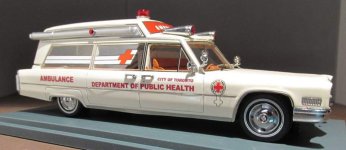
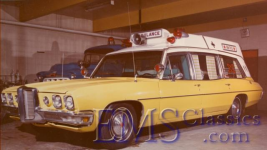
The ambulance fleet was Cadillac ( pictured ), so we called them cars.
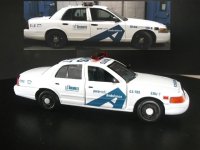
Later, we operated Crown Victoria cars. ( pictured. )
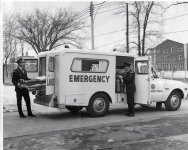
Even after the Caddies switched to "coffee wagons", ( pictured ) everyone called them cars. As in, "What's the Car Count?"
When I transferred to ESU Division, we operated 40' buses.
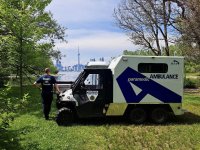
The Islands station uses a six-wheeler. ( pictured).


I've only ever heard them called trucks or units. Never cars.NYC calls them buses.
I only heard them referred to as cars. It was always the Car Count.
Edmonton ran a pilot project a few years ago that had an EMT or higher set up shop in emergency rooms across the city.The way wait times are at some hospitals now, the partner could probably do an engine rebuild.
That's not what the Sentinel program is intended for. Sentinels are meant to be people others approach who can direct them to the right supports.Like CAF units sending 'Sentinels' with their 4 or 7 hours training to deal with MH and suicidal soldiers.

I have so many questions... Eyes going wide and jaw hanging open in amazement...
You guys actually had Ghostbuster cars!!?? As ambulances!?? Holy shit that's cool!!
Like DAMN COOL. I still can't believe my eyes right now
And then wait...your paramedics also drove crown vics!?? They must've had emergency lighting on them & a siren?? Still red & white??
I've only ever heard them called trucks or units. Never cars.

Agreed.That's not what the Sentinel program is intended for. Sentinels are meant to be people others approach who can direct them to the right supports.

Sounds like a good posting
In Edmonton we were all over the city.
In theory, the city was broken down into districts. And each district was broken down into zones. And in theory, we were supposed to stay within our assigned zone.
In reality, our dispatch system (CADS) had us all over the bloody city. It was supposed to factor in the number of calls each unit had done in that shift, to spread the work out somewhat evenly when possible - but it rarely was the case
It wasn't unusual at all for crews working out of a station in the SW to be responding to calls in the NE, and vice versa, just based on who was available at the time.

I have so many questions... Eyes going wide and jaw hanging open in amazement...
You guys actually had Ghostbuster cars!!?? As ambulances!?? Holy shit that's cool!!
Like DAMN COOL. I still can't believe my eyes right now
And then wait...your paramedics also drove crown vics!?? They must've had emergency lighting on them & a siren?? Still red & white??
I've only ever heard them called trucks or units. Never cars.
I know!! Believe me, it makes absolutely zero sense to us either!!Your whole ruddy city is in the NW quadrant!!!
Don't blame the poor programmer that had to deal with the idiot who decided it made sense to centre your city at 100 ST and 100 AVE NW.
You only have one quadrant.

I read this last line as TCCC and was just like "Well that seems like a pretty big leap there...what happened!?"As I said, I think TCCS will be a welcome relief for our department.


