FJAG
Army.ca Myth
- Reaction score
- 21,133
- Points
- 1,160
That's slow."Ukrainian crews typically require around six minutes from receiving target coordinates to firing the first round.
Not with a four man crew and bagged charges.While the system is capable of firing up to six rounds per minute,
Intervals between adjusting rounds are based on range and therefore time of flight. It is fairly easy to maintain accuracy/consistency between rounds.operators prioritize accuracy, usually maintaining a rate of one to two rounds per minute with continuous drone-based corrections.
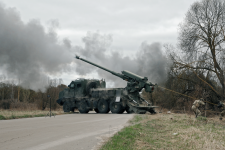
That's a point because the 152 system this replaces used metallic casings."The howitzer is operated by a four-person crew and uses bagged propellant charges instead of metallic cartridges.
Absolutely. This is is why we use Met detachments. Computers easily take non standard conditions into account if the data is obtained and entered.Unit personnel note that environmental factors such as air and propellant temperature directly affect firing accuracy,
This is a bit weird. Yes. barrel heat can be a factor when a high number of rounds are fired in a short period, but one rarely leaves a gun loaded long enough to be effected by that. The outside temperature is a very minor factor in this. It makes me wonder about the steel of the barrel but . . .with overheating occurring after five to seven rounds in warm conditions, while colder weather allows for up to ten accurate shots."
A 155, even towed, is not a small target. It makes a bold statement every time it fires which will immediately make its presence known. If found it is as susceptible to a hit as much as a wheeled or tracked carriage unless its well dug in and has an anti-drone cage. But then the method of engaging it is with artillery which is drone cage agnostic. The Russian problem is they are firing clapped out guns with crappy ammo so unless they have a terminally guided round available, accuracy is a problem.So, a small target, hard to hit,
It has the same susceptibility to damage as the Bohdana SP albeit the motor carriage is an added issue. Effectively it's the same gun above the carriage regardless. The towed gun also has a vehicle that can be put out of action. The only advantage is that the gun tractor is easier to replace than taking the SP's gun and transferring it to another carriage.little to damage, easy to repair.
You've never been on a gun position. There's ammo everywhere (especially for bagged propellant) and, even if dug in as susceptible to secondaries as well.No onboard secondaries.
There's no magic bullet for artillery regardless of whether it is towed or SP. The real problem with towed guns is their lack of mobility, Stay in one place after you fire and you will be found by radars and/or sound ranging followed by drones. Mobility and organic anti-drone defences coupled with multiple, well protected rearming hides to spoke out from to distributed gun platforms is currently the safest system. Efficient air defence between the front line and the gun platforms also matters.
One thing to remember as well is that the Ukraine battlefield is currently mostly static. Towed guns become problematic in keeping up with mobile forces.
Let me throw one thing out there. Drones are a paradigm shift in warfare. There are numerous responses to them but nothing half as effective as proper air defence. NATO has sat on its asses on that topic beyond developing very sophisticated and expensive missile systems against fast air and attack helicopters. Drones, in their various types and masses need a whole new response.
Every time I hear someone boasting that a gun only needs four people to operate it I ask, "who is doing ammo and who is doing air defence?" People have been able to operate guns with four men, or less, for centuries . . . its the ancillary people and equipment to sustain those four guys that really matter.