• Thanks for stopping by. Logging in to a registered account will remove all generic ads. Please reach out with any questions or concerns.

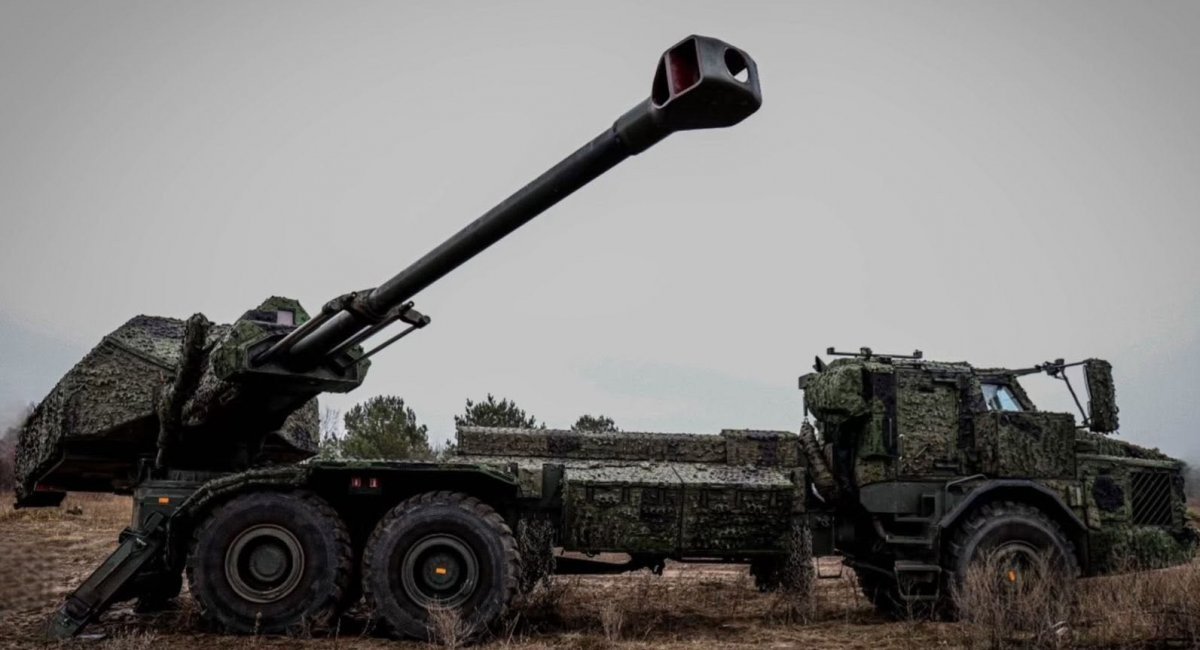
Indirect Fires Modernization Project - C3/M777 Replacement

You know just while we are working on how to divest all the Stryker units, we continue on the path to buy a howitzer for them.
:unsure: US Army thank you for wasting my tax dollars (again).

The M109A8 ECP is stuck in engineering hell -- and hey its go work on a gun to support a formation off something we want to get rid of...

I mean if I was BAE, I would offer it as a zero dollar ECP to the USG, as you are going to recoup on all the resultant sales anyway.
Watching 4th and 7th Div taking shape, my guess is that the Strykers will be around for a while. And a new longer range gun would fit the bill.

:unsure:
 
Last edited:
An alternate US supplier of the Hydra 70mm rockets that form the core of the APKWS II Prox CUAS missiles.

If we need/want 70mm rockets then this is certainly something we should build domestically.

🍻
 
Indirect fire suport for the infantry


The thing is, that looks a lot like an earlier Aussie invention that was used by the Brits and the USMC.


The form factor also serves as a submunition

 
Need new barrels? Ukraine is selling.


Further to.....

The Ukrainians have spare capacity because their government has stopped ordering guns.

"155-mm Bohdana howitzers, which account for 70% of Ukraine's total artillery arsenal. However, production of these systems is at risk of being halted."

"In total, more than 1,000 systems from the Bohdana family have already been manufactured, accounting for as much as 70% of Ukraine's entire artillery fleet. However, KZVV has not received a government order for nine months, which is expected to lead to a halt in production. Moreover, production will remain suspended for several months even if an order is received now, as the company needs six months to prepare components for a new contract."

"it is important to note that this does not mean that all of the military's needs are met and that production is no longer necessary. Artillery remains relevant on the battlefield despite the dominance of drones, providing high firepower and strike capabilities. To enhance its survivability, the focus is now shifting toward procuring longer-range 155-mm ammunition."

"the CAESAR Mk2—which is conceptually similar to the Bohdana—costs approximately $3.2 million per unit under its contract with France, but with a full export package, it could be significantly more expensive."

"the self-propelled Bohdana costs $2.5 million, while the towed Bohdana-BG, mounted on a Soviet chassis, costs $1.6 million."

"A Ukrainian-produced gun carriage has also already been developed and will cost several hundred thousand dollars, bringing the total cost of the finished system to $1.8 million."

.....

FYI - HIMARS comparison.

  • U.S. Domestic Price: A single launcher costs around $4.9 million based on recent U.S. Army budgets. Newer production lots can reach up to $7.8 million per unit. [1, 2]
  • Foreign Export Price: International sales often cost $19 million to $20 million per launcher. These higher prices cover the truck chassis, communication gear, and extra support equipment. [1, 2]
 
Cheaper precision in GPS denied environments

 
Cheaper precision in GPS denied environments


The same solutions can be screwed on to cheap ballistic rockets


....

I am guessing the same trend applies to everything that flies.
 

The Europeans starting to pay attention to Canadian sales possibilities?
"Baltic Defence Review" has apparently launched "Dominion Defence Review" as a new enterprise.

The big problem I see is that the cost of a NEMO turret on an armoured 8x8 is apparently broadly comparable to the price at which South Korea is selling the 155 mm K9s.

I am not sure that I see the advantage of NEMO over the K9 in a LCSO scenario.
 
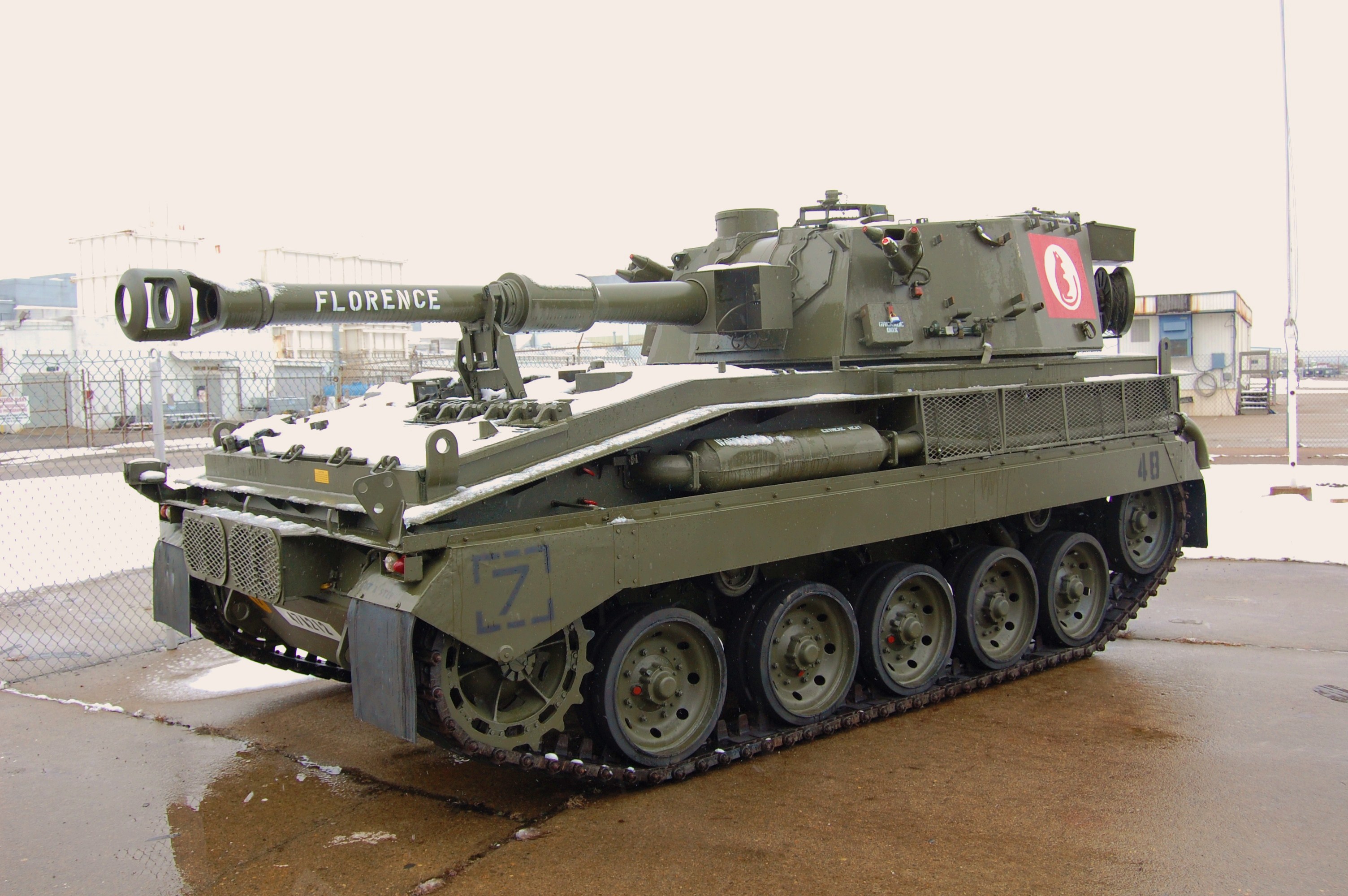
Maybe restart the Abbot SPG, but built around a 120mm breachloading mortar.

abbot.jpg
 
Maybe restart the Abbot SPG, but built around a 120mm breachloading mortar.

abbot.jpg

16.56 t
5.8m long
2.6m wide
2.5m high

CC-130 Maxes

21.183 t
16.76m long
3.02m wide
2.74 high

If you mean a vehicle that will deliver self-propelled indirect fire support and fit inside a CC-130 so that it can accompany light forces, regardless of weapon or calibre, then we agree.

But if that is the intent then how about this?


Of course that would also suggest retreating from the ACSV to the Bison and reducing the weight to supply support for light forces.
 

The Europeans starting to pay attention to Canadian sales possibilities?
"Baltic Defence Review" has apparently launched "Dominion Defence Review" as a new enterprise.

The big problem I see is that the cost of a NEMO turret on an armoured 8x8 is apparently broadly comparable to the price at which South Korea is selling the 155 mm K9s.

I am not sure that I see the advantage of NEMO over the K9 in a LCSO scenario.
The 120mm mortar requirement is separate from the SP Howitzer requirement. Different roles so it's not a one or the other scenario.
 

The Europeans starting to pay attention to Canadian sales possibilities?
"Baltic Defence Review" has apparently launched "Dominion Defence Review" as a new enterprise.

The big problem I see is that the cost of a NEMO turret on an armoured 8x8 is apparently broadly comparable to the price at which South Korea is selling the 155 mm K9s.

GR66 addressed that -


I am not sure that I see the advantage of NEMO over the K9 in a LCSO scenario.
Mortars belong to the Battalion Commander -- the Arty does not.
The Guns can be tasked away -- the Mortars cannot (well I guess technically the Bde Comd could detach them from the BN - but that is splitting hairs and is extremely unlikely if the BN is in contact or expected to be.
 
GR66 addressed that -


Mortars belong to the Battalion Commander -- the Arty does not.
The Guns can be tasked away -- the Mortars cannot (well I guess technically the Bde Comd could detach them from the BN - but that is splitting hairs and is extremely unlikely if the BN is in contact or expected to be.

Kevin stop quoting dogma at me.

Mortars have only gone to the Battalion in the Commonwealth (and its Junior Student) since 1916.

Weapon allocation is a variable.
 
Kevin stop quoting dogma at me.
If you wish to avoid it come up with an alternative. I quote it simply because it comes from articulated needs.

Mortars have only gone to the Battalion in the Commonwealth (and its Junior Student) since 1916.
Because it was determine to be the best method.
Mortars got smaller and portable to make sense to allocate to the Infantry.
- We can quibble about if LAV based firepower is still Infantry. I won’t argue with using Cavalry ;)
Weapon allocation is a variable.
I’d say 110years isn’t much of a variable.

The Infantry need a ranged* Integral Indirect Fire Capability Area Neutralization system at the BN level.
*beyond range of their Direct Fire assets

Mortar bombs are a fairly cheap all weather option. While mortars aren’t ideal to engage Armor with they can make the ride unpleasant and degrade the enemy SA while other effectors can be brought to bear.
 
The big problem I see is that the cost of a NEMO turret on an armoured 8x8 is apparently broadly comparable to the price at which South Korea is selling the 155 mm K9s.

I am not sure that I see the advantage of NEMO over the K9 in a LCSO scenario.

Look, if you dont want "dogma" quoted at you, you need to be able to explain your view in tactics. Can you summarize for me, simple terms, how far from the FLOT wed like our MMAs / AMAs in the the offensive and defensive and why that matters?
 
Look, if you dont want "dogma" quoted at you, you need to be able to explain your view in tactics. Can you summarize for me, simple terms, how far from the FLOT wed like our MMAs / AMAs in the the offensive and defensive and why that matters?

Very fair question.

It may be the coward in me. I am not a fan of the close fight. I figure that evens up the odds too much and brings it down to my muscle versus his.

Personally I would prefer to stand well out of his range while killing as many of his buddies as possible and him.

....

The 1917 battles were decided by the rifle bullet and the killing zone was measured in hundreds of meters. The bullets were supplemented by grenades. When those grenades were punted by mortars they could cover the extreme ranges of the rifles and macine guns. That battle was fought by the battalion commander.

The guns operated outside of that close zone. They were sited behind that close zone to fire into and over it. The typical ranges for field guns and howitzers of that era were 5 to 11 km. And lack of accuracy demanded mass of shells on the target. Lack of permanent effect demanded that the guns always be on call to react to targets when they presented themselves.

My contention is that those weapons, and the battlefield conditions they created, continue to this day.

Modern material science has generated marginal increases in range but the underlying assumptions are unchanged.

...

Two systems were developed to break out of that close killing zone. One was the armoured field gun, known as the tank, and the other was the aircraft. Both, although highly effective were also highly expensive. And both were only effective until a better tank or plane came along.

The tank vs tank battle eventually came down to the size of the engine: the bigger the engine the more armour, the bigger the gun and the more ammunition the tank could carry. Generally speaking the bigger gun won because the bigger guns had longer ranges. They could effectively engage their targets before their targets could engage them.

But those engagements were still measured in hundreds of meters.

...

Aicraft also benefited from engine technology which also increased payload and range. Aircraft could launch from behind their own guns, cross the close battle and attack behind the enemy guns.

And those engagements are now measured in thousands of kilometers and are powered by jets and rockets as well as gas and batteries.

...

Two concurrent developments:

1 - the shaped charge grenade that rendered effect separate from gun size
2 - the ability to fly a projectile in a non-ballistic trajectory to precisely hit a target.

Thses two developments have been in the works for 100 years and today they have reached a stage that they have rendered the rifle battle irrelevant. Rifles are still critical for crowd control but militarily they are only useful as personal defence weapons.

....


When the call is for containers of missiles, 60 or more per container, costing 5 to 10,000 USD apiece, that can be deployed by road, rail, ship and air, that can loiter on the ground and in flight, that have ranges in the 10 to 50 km range, and that can be commanded remotely by two men and a coffee pot then I suggest that the old assumptions about the 1917 close battle need to be questioned.

...

How far from the FLOT should support be? As far as the technology permits them to be while remaining effective. And that technology is changing daily.

Battalion commanders are no longer dealing in hundreds of meters. They are dealing with tens of kilometers. Company and platoon commanders, mounted and foot-borne, are dealing with weapons under their command that reach out 5 to 20 km. The 81mm mortar is now more of a company weapon than a battalion weapon. The battalion commader is going to have more targets better served by the range of the 155s.

And rockets and UAVs will serve the needs beyond those.

....

Another example

WW1 two battalion machine guns required a platoon under an officer with a wagon. The Lewis gun required a section. The Bren had a team. Now everybody and his brother has a machine gun.

The same reductionist tendendecy applies to all weapons systems. Greater effects at greater ranges by fewer people for less money.

 
Back
Top