• Thanks for stopping by. Logging in to a registered account will remove all generic ads. Please reach out with any questions or concerns.

Infantry Vehicles

Realistically Canadian IAMD is NORAD.
BMD is the largest part.


Everything designed for Expeditionary can be used Domestically.
The opposite isn’t necessarily true.

It is one reason why I am a fan of designing for Expeditionary Operations.

Some things that have value on expeditionary ops have little to no value against the threats likely to be encountered in domestic ops.
Buying those things deprives domestic ops of useful resources.

I have no problem with buying systems that have utility on both domestic and expeditionary ops. That is why I am a big fan of well equipped and trained light forces and artillery.

Heavy forces are well down my "must have" list. In the Canadian context I consider them discretionary or specialist equipment to be purchased in limited quantities for occasional use.
 
Some things that have value on expeditionary ops have little to no value against the threats likely to be encountered in domestic ops.
Buying those things deprives domestic ops of useful resources.
I'd like to have 31 and 32 CBGs equipped as heavy brigades in time for the second battle of Stoney Creek.

:cool:
 
Some things that have value on expeditionary ops have little to no value against the threats likely to be encountered in domestic ops.
It all depends on if you believe that orientation of the expeditionary force should only a specific theatre.

Buying those things deprives domestic ops of useful resources.
I’d say that the soldier, sailor, aircrew person is the most valuable resource.

I have no problem with buying systems that have utility on both domestic and expeditionary ops. That is why I am a big fan of well equipped and trained light forces and artillery.
I’d suggest that Artillery has pretty zero use domestically. If you need Artillery domestically you probably need Heavy Armor.

I’m a huge fan of light forces, but if you are laying out a force structure, you probably only want dedicated light forces as 10-15% of your force.
1 Division in 7-10.

Heavy forces are well down my "must have" list. In the Canadian context I consider them discretionary or specialist equipment to be purchased in limited quantities for occasional use.

Nearly all my PRes would be Heavy
Because if you need them — odds are stuff got real.
Plus domestically they can do a lot more in greater types of Canadian territory.

For Light forces, you basically have the Rockies, or hiding in subterranean Montreal.


Again I believe in a ARNG type model for the CA PRes.
 
It all depends on if you believe that orientation of the expeditionary force should only a specific theatre.


I’d say that the soldier, sailor, aircrew person is the most valuable resource.


I’d suggest that Artillery has pretty zero use domestically. If you need Artillery domestically you probably need Heavy Armor.

I’m a huge fan of light forces, but if you are laying out a force structure, you probably only want dedicated light forces as 10-15% of your force.
1 Division in 7-10.


Nearly all my PRes would be Heavy
Because if you need them — odds are stuff got real.
Plus domestically they can do a lot more in greater types of Canadian territory.

For Light forces, you basically have the Rockies, or hiding in subterranean Montreal.


Again I believe in a ARNG type model for the CA PRes.

If we need an air force and a navy we need modern artillery.

We are not talking about 11 km C1s anymore.

We are talking about 1000 km LRASMs and THAADs.

Artillery.

And I would add 5600 km UAV/CCA.

Artillery.
 
Again I believe in a ARNG type model for the CA PRes.

I recently met a nurse in the ARNG from Iowa, now retired. She deployed during GW1, and did a bunch of other deployments during her 'Active' time.

I desperately tried to explain to her how the Canadian Reserve system works.

It was clear to me that she was being polite but felt that, in comparison to the US model, it was a smoke and mirrors operation depending largely on alot of good will and luck. ;)
 
The ARNG definitely isn’t perfect. GW1 made it clear that a lot of changes where necessary.
GWOT reinforced that more changes needed to be made.

But you have a force that can deploy multiple FORMED Brigades.
So clearly something is working.


The PRes to me is setup poorly to do much more than individual or Pl sized augmentation.
It’s a Canadian culture failure more than anything.
 
Have the Ukrainians managed to net in their AD effectors to their web of passive sensors?

I understand that web to include microphones posted around the country (like the Chicago Shot Spotter system but tuned to UAS engines - originally just cell phones) and even using human observers calling in reports to a central mapping system.


How are the Ukrainians managing their data transfer?

Fighting in your own backyard gives you access to all of the existing network/power infrastructure to build your network onto. If you are a expeditionary force you won't have that advantage.
 
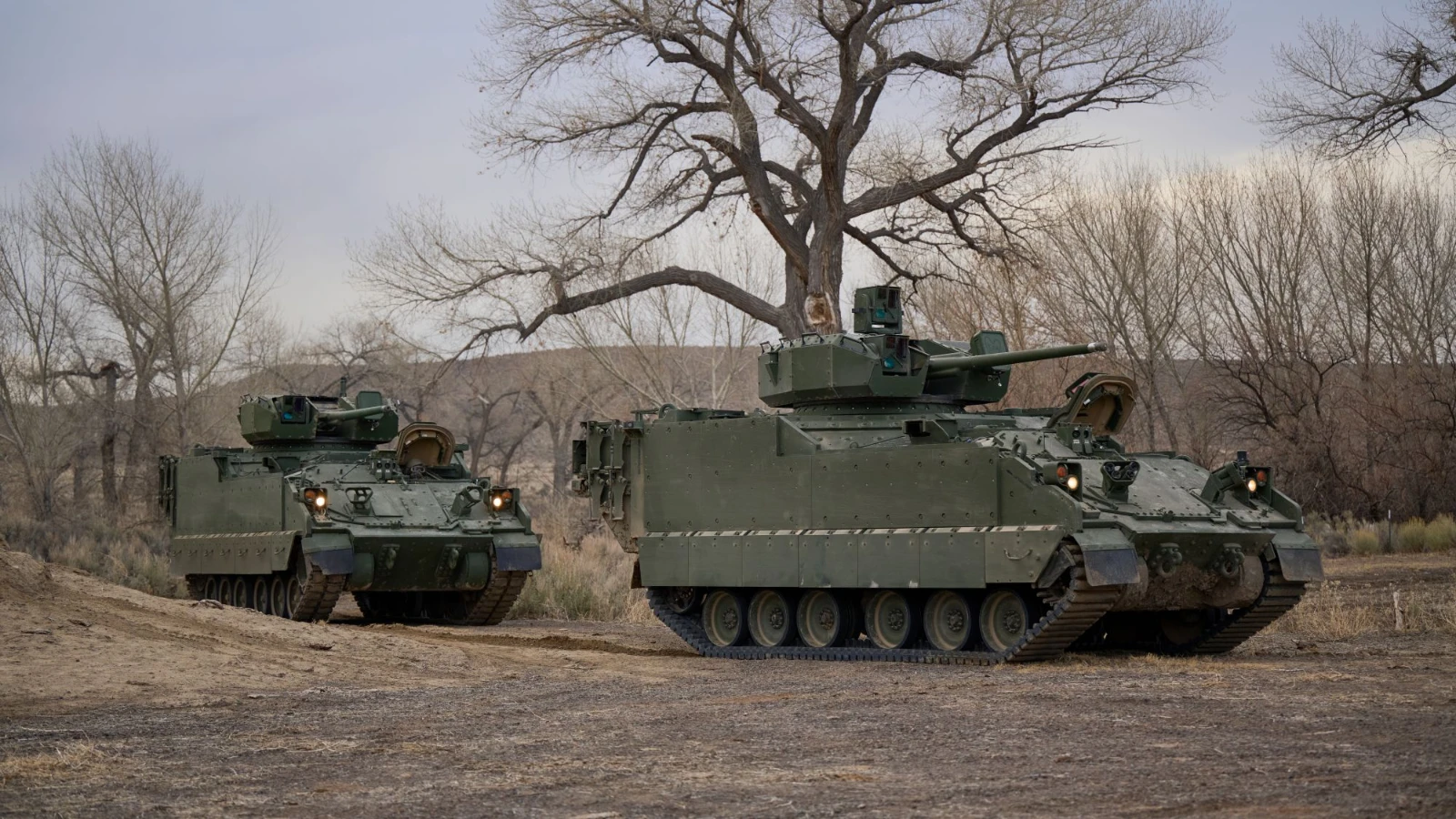
More on the AMPV 30s supplied to the US Army by BAE on their own nickel.

It sounds as if BAE has supplied a total of 8 such vehicles for the US Army to play with.


"The two 30mm vehicles bring the number of turreted AMPV prototypes funded by BAE Systems over the past two years to eight, as the company explores different configurations for future US Army requirements."

"The current 30mm prototypes are being used to examine how additional firepower, drone defence, networking and improved situational awareness can be introduced onto the platform without developing an entirely new vehicle."

"Both vehicles use a common top plate fitted with the Kongsberg Medium Caliber Turret, a remotely operated system already in production for the US Marine Corps’ Amphibious Combat Vehicle. BAE Systems said the AMPV 30 design also incorporates counter-uncrewed aircraft system equipment, a target hand-off system allowing information to be shared between vehicles and a 360-degree camera arrangement intended to give crews external visibility while remaining under armour."

....

This is particularly interesting -

"a target hand-off system allowing information to be shared between vehicles and a 360-degree camera arrangement intended to give crews external visibility while remaining under armour.""

It sounds to me as if, in a 4 vehicle troop/platoon, that one crew member in one of the vehicles could manage the CUAS fight in all four vehicles, while somebody else managed the long-range anti-armour fight, possibly based on loitering munitions, allowing the Troop Leader and 2iC to focus on delivering the GIBs to the objective. So one combined unit of 4 vehicles rather than 4 individual vehicles co-operating independently.

 
Back
Top