

You are using an out of date browser. It may not display this or other websites correctly.
You should upgrade or use an alternative browser.
You should upgrade or use an alternative browser.
Iran Super Thread- Merged
- Thread starter JasonH
- Start date
Trump is supposed to travel to China for a bilateral summit in two weeks. He’s now saying that may be on hold unless China agrees to help reopen the Strait of Hormuz.

Trump signals possible delay to Beijing summit as U.S. pressures China to help reopen Strait of Hormuz
The remarks came as Treasury Secretary Scott Bessent met his Chinese counterpart He Lifeng in Paris, paving the way for the summit scheduled for late March.www.cnbc.com
Some Chinese oil is getting through and they have a substantial reserve. They are also willing to take Russian oil. Why would they sever their ties with Iran? And I suspect he doesn't want to go there and be embarrassed by them laughing off his threats.
… “the war-planning process was not as robust as normal, said one senior US official. The White House sharply downsized its National Security Council over the last year, undercutting the coordinating role that it’s typically played in gathering input from across the government and ensuring any key concerns or considerations don’t fall through the cracks.
“The NSC used to be the final synthesizer before going to deputy or principal meetings for approvals,” the senior US official said of the administration’s internal processes. “Without a real interagency process led by the NSC, the planning falls apart.”
That kinda genius thinking comes from this kind of d*ck riding:
Don't confuse my observations about hardball politics with "don't understand". There are people who worship "interagency" concensus on various matters, and people who figure elections have consequences. The latter are running the administration.
"I know more than the generals."
Last edited:
Oil will be at $120 by week's end and possibly $150 in 2-3 weeks. They might have to add global economic crisis to the Iran War on the To-Do List.
At this point I see no options but spin up more MEUs and an airborne division, seize a bunch of island and hope to force sea control while negotiating. Otherwise, Khomeini can see the flop sweat from there. He knows he can keep the pressure up and Trump will leave. That will make the Gulf States bow to Iran. And have to consider a nuclear armed Iran ramping up proxies.

- Reaction score
- 7,047
- Points
- 1,160
Iran has stated that they are only targeting ships that are related the US/Israel and those nations supporting their attacks. China is not part of that, so their ships will not be targeted. So, if the tankers going to China can safely transit the Straights then why would they need to deploy ships to support the Americans?Chinese Oil Imports Through the Strait of Hormuz
Importance of the Strait of Hormuz
The Strait of Hormuz is a critical waterway for global oil shipments, handling about 20% of the world's oil supply. It is particularly vital for Asian countries, including China, which relies heavily on this route for its energy needs.
China's Oil Dependence
Given the above, I would think they'd look pretty seriously at the offer.
- China imports approximately 40% to 50% of its seaborne oil through the Strait of Hormuz.
- The strait is essential for China's energy security, as it accounts for a significant portion of its total oil consumption
Another choice would be to have all their tankers sanctioned so they would be out the 50% that comes through SoH.
And they may decide to wait it out. They've got a $1.2 million barrels in their Strategic Oil Reserve. Just a matter of how low they want to deplete that reserve.
[edited for clarity]
- Reaction score
- 7,047
- Points
- 1,160
So Trump is suggesting that the future of the US in NATO is dependent on European NATO members cleaning up the mess he's created in Iran.
From CNN:
It's blatantly obvious that the US is not at all interested in alliances. It's only interested in vassal states to do its military bidding.
From CNN:
So the US initiates a war in the Middle East that will have strategic repercussions in Europe without engaging his allies in Europe in advance. He mocks the British for offering to send ships to the area as being too late to be any help and then when the war doesn't go a he planned he now threatens that if NATO doesn't come and help him out of the situation they can't rely on the US to fulfill their treaty obligations.President Donald Trump on Sunday warned that NATO faces a “very bad” future if US allies fail to assist in securing the Strait of Hormuz, sending a harsh message to European nations over the strategic waterway.
“It’s only appropriate that people who are the beneficiaries of the strait will help to make sure that nothing bad happens there,” Trump told the Financial Times in a phone interview, adding that “if there’s no response or if it’s a negative response, I think it will be very bad for the future of NATO.”
The president touted the US’ assistance to Ukraine in its war against Russia, saying, “We didn’t have to help them with Ukraine. … Now we’ll see if they help us. Because I’ve long said that we’ll be there for them but they won’t be there for us.”
Asked what type of assistance he is seeking, the president said, “whatever it takes,” including minesweepers.
NATO is a European and North American defense alliance set up to promote peace and stability and to safeguard the security of its members. It is not meant to aid a nation when a member state starts a war.
“We’re always there for NATO,” Trump later reiterated while returning to the White House from Florida aboard Air Force One. “It’d be interesting to see what country wouldn’t help us with a very small endeavor, which is just keeping the strait open.”
Trump also suggested in the Financial Times interview that allies could help address threats coming from the Iranian coastline. He said he wants “people who are going to knock out some bad actors that are along the shore,” referring to Iranian forces that have used drones and naval mines in the Gulf.
The president repeated his frustration with British Prime Minister Keir Starmer, over his lack of immediate support for the US-Israeli strikes on Iran.
“The UK might be considered the No. 1 ally, the longest serving, etc., and when I asked for them to come, they didn’t want to come,” he said, noting he discussed the issue with Starmer in a call earlier Sunday.
“And as soon as we basically wiped out the danger capacity from Iran, they said, ‘Oh, well we’ll send two ships,’ and I said, ‘We need these ships before we win, not after we win.’ I’ve long said that NATO is a one-way street.”
It's blatantly obvious that the US is not at all interested in alliances. It's only interested in vassal states to do its military bidding.
Nah, while Iran has major command and control issues right now, China is tight with them and knows they can leverage the situation for continued preferential rates. Why would China fight Iran when they can simply deal with them? This war has driven Iran significantly father into China’s pocket and I suspect the Chinese government are loving that, even at the cost of short to mid term turbulence. As a prt of 50-100 year strategy this is great for them. It also further weakens the U.S. both individually and as a western leader of coalitions.Chinese Oil Imports Through the Strait of Hormuz
Importance of the Strait of Hormuz
The Strait of Hormuz is a critical waterway for global oil shipments, handling about 20% of the world's oil supply. It is particularly vital for Asian countries, including China, which relies heavily on this route for its energy needs.
China's Oil Dependence
Given the above, I would think they'd look pretty seriously at the offer.
- China imports approximately 40% to 50% of its seaborne oil through the Strait of Hormuz.
- The strait is essential for China's energy security, as it accounts for a significant portion of its total oil consumption
Another choice would be to have all their tankers sanctioned so they would be out the 50% that comes through SoH.
And they may decide to wait it out. They've got a $1.2 million barrels in their Strategic Oil Reserve. Just a matter of how low they want to deplete that reserve.
The U.S. wouldn’t be stupid enough to try to blockade oil destined for China. The Chinese can cause them far more pain than could possibly be worth it if they did. China has also continued to diversify its energy supplies. While this certainly hurts them in the short term, they can weather it. They can simply let Trump keep making mistakes… They don’t need to join in.
and the Bay of Pigs comes to mind....The challenge is going to be getting arms and armed Iranians into the country. It easy to say "go back and fight" But if going back means your arrested at the airport, then shot, you not achieved much.
But form a Iranian legion and use them to start taking and holding the islands would be a start.
and he ridicules the one country that has current practical skills in confronting the drone attacks and who actually volunteered albeit with caveats to help. GeniusSo Trump is suggesting that the future of the US in NATO is dependent on European NATO members cleaning up the mess he's created in Iran.
From CNN:
So the US initiates a war in the Middle East that will have strategic repercussions in Europe without engaging his allies in Europe in advance. He mocks the British for offering to send ships to the area as being too late to be any help and then when the war doesn't go a he planned he now threatens that if NATO doesn't come and help him out of the situation they can't rely on the US to fulfill their treaty obligations.
It's blatantly obvious that the US is not at all interested in alliances. It's only interested in vassal states to do its military bidding.

- Reaction score
- 7,436
- Points
- 1,160
China could protect the strait with just its 'fishing fleet'.Trump is supposed to travel to China for a bilateral summit in two weeks. He’s now saying that may be on hold unless China agrees to help reopen the Strait of Hormuz.
Trump signals possible delay to Beijing summit as U.S. pressures China to help reopen Strait of Hormuz
The remarks came as Treasury Secretary Scott Bessent met his Chinese counterpart He Lifeng in Paris, paving the way for the summit scheduled for late March.

- Reaction score
- 8,672
- Points
- 1,360
Russia owes him - maybe they’d be happy to show their appreciation this way?Will be an interesting list of countries in this coalition.
Which do you think outside of the gulf is getting ready to risk their ships on this?
EDIT: Canada, UK, Australia, and Japan have already been ruled out.
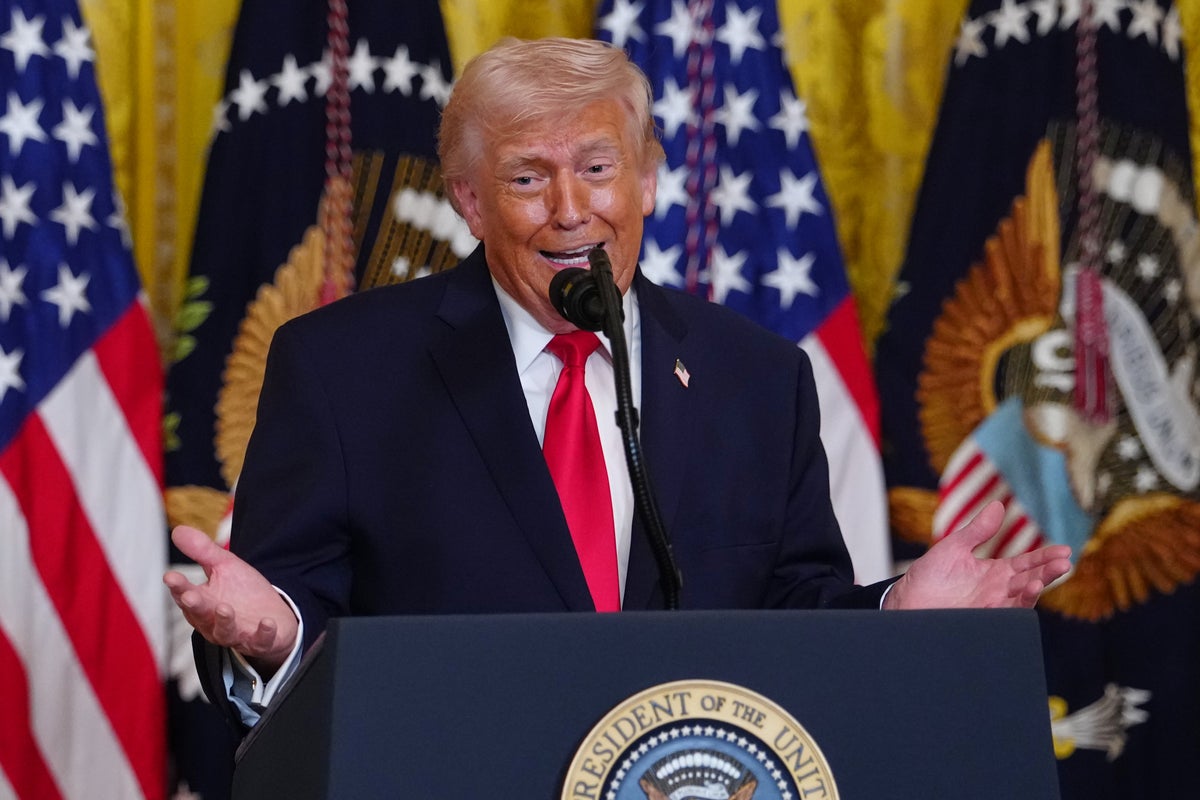
Trump to announce Strait of Hormuz escorts this week, officials say
President’s team spent much of last week vowing that U.S. would reopen key waterway and oil shipping routewww.independent.co.uk
At what cost to the US, though? Because we know the Chinese are good at “helping” with pretty strict terms of (not always voluntary) reciprocity.… China's Oil Dependence
Given the above, I would think they'd look pretty seriously at the offer …
- China imports approximately 40% to 50% of its seaborne oil through the Strait of Hormuz.
- The strait is essential for China's energy security, as it accounts for a significant portion of its total oil consumption

- Reaction score
- 12,276
- Points
- 1,040
Is that, and the statement preceding the quoted bit, aimed at me personally, or the people running the administration about whom I made my observations?"I know more than the generals."
I stand by my observation. The administration is being run by people who do not defer to the "experts" readily, have their own ideas about domestic and foreign policy, and are executing those ideas because they won the presidency.
- Reaction score
- 12,276
- Points
- 1,040
Trump wants everyone to do his bidding, whatever it happens to be at the moment. Since some of it is self-contradictory, there's not much hope of fulfilling it if someone wanted to. No point trying. No point worrying about it.It's blatantly obvious that the US is not at all interested in alliances. It's only interested in vassal states to do its military bidding.
What can be done is to ensure people who might be thrown off-balance by their emotional responses to Trump are removed from decisions. In that respect, even Carney's detractors ought to appreciate that switching him in for either Trudeau or Poilievre was a stroke of fortune for Canada.

- Reaction score
- 8,928
- Points
- 1,260
…..’and are completely clueless and borderline incompetent when it comes to understanding how the rest of the world works….’ - there, fixed it for you.Is that, and the statement preceding the quoted bit, aimed at me personally, or the people running the administration about whom I made my observations?
I stand by my observation. The administration is being run by people who do not defer to the "experts" readily, have their own ideas about domestic and foreign policy, and are executing those ideas because they won the presidency.

- Reaction score
- 28,522
- Points
- 1,360
I think he’s pulling his classic move where he makes an announcement as if some thing is already a thing, when he’s really hoping he can wish it into existence.
He’s just spent over a year shitting all over America’s diplomatic relations, and thinking ‘soft power’ is a thing you wipe your ass with. The chickens are coming home to roost as he finds he has led America into a predicament nobody wants to join them in.
Germany is pretty clear: he said he didn’t need us, he didn’t talk with use…consequences…
That’s ’Murkin for “Xi told Trump to un-phuque the Iran thing or we won’t even start talking about a deal…”Trump is supposed to travel to China for a bilateral summit in two weeks. He’s now saying that may be on hold unless China agrees to help reopen the Strait of Hormuz.
Trump signals possible delay to Beijing summit as U.S. pressures China to help reopen Strait of Hormuz
The remarks came as Treasury Secretary Scott Bessent met his Chinese counterpart He Lifeng in Paris, paving the way for the summit scheduled for late March.
- Reaction score
- 12,276
- Points
- 1,040
"Don't understand" is one explanation. "Don't care" is another.…..’and are completely clueless and borderline incompetent when it comes to understanding how the rest of the world works….’ - there, fixed it for you.
People who really believe Trump's administration is an adversary ought to act accordingly. "Know the enemy" includes understanding them on their terms. The same advice applies to anyone who believes the administration is merely a difficult ally.
There exist people who are critical of the international order (consider the opinions some people hold about the UN) and are dissatisfied with the results (eg. Iran being a state sponsor of terrorism and no-one seeming able to do much about it at the source). Some have thought about what they'd do if they had a chance. They've put those thoughts down in writing (eg. articles published by think tanks), so the motivations are not impenetrable mysteries. A few of them have been given an opportunity to act, in the form of the Trump administration.
- Reaction score
- 8,928
- Points
- 1,260
And how’s that ‘acting’ working out for them and this administration so far?"Don't understand" is one explanation. "Don't care" is another.
People who really believe Trump's administration is an adversary ought to act accordingly. "Know the enemy" includes understanding them on their terms. The same advice applies to anyone who believes the administration is merely a difficult ally.
There exist people who are critical of the international order (consider the opinions some people hold about the UN) and are dissatisfied with the results (eg. Iran being a state sponsor of terrorism and no-one seeming able to do much about it at the source). Some have thought about what they'd do if they had a chance. They've put those thoughts down in writing (eg. articles published by think tanks), so the motivations are not impenetrable mysteries. A few of them have been given an opportunity to act, in the form of the Trump administration.
From ignoring NATO and their Allies before acting on Iran to now begging/threatening to participate in opening up the straits.
It’s an interesting dilemma to be in right now - hope that the US fails so that they get taken down a few pegs and there’s some serious egg on Trumps face, or, hope they take out Iran from being a serious threat to their neighbours and from getting any sort of nuclear devices, coupled with greater freedom and tolerance within the country. Sadly them ‘winning’ in Iran will only service to embolden the incompetent donkeys running the place and God knows what occurs next.
God knows what occurs next.
Cuba is next. And when they inevitably cause a refugee crisis into Florida and probably end up killing refugees on boats, he'll be yelling at Mexico to help. Or even possibly asking us.

Halifax Tar
Army.ca Legend
- Reaction score
- 20,763
- Points
- 1,260
And how’s that ‘acting’ working out for them and this administration so far?
From ignoring NATO and their Allies before acting on Iran to now begging/threatening to participate in opening up the straits.
It’s an interesting dilemma to be in right now - hope that the US fails so that they get taken down a few pegs and there’s some serious egg on Trumps face, or, hope they take out Iran from being a serious threat to their neighbours and from getting any sort of nuclear devices, coupled with greater freedom and tolerance within the country. Sadly them ‘winning’ in Iran will only service to embolden the incompetent donkeys running the place and God knows what occurs next.
I understand people have an extreme dislike for DJT but wishing for his failure in this probably means the death of many American service people, and an extreme negative effect on the global SCs and economy, which will negatively effect us too.
Be careful what you wish for.
I understand people have an extreme dislike for DJT but wishing for his failure in this probably means the death of many American service people, and an extreme negative effect on the global SCs and economy, which will negatively effect us too.
Be careful what you wish for.
The US is already failing strategically in Iran. And casualties are light all things considered. I don't think them failing will mean more American casualties. There will be strategic consequences though. Iran gains influence in the Middle East. Everybody is force to cut deals with them. And maybe even consider nukes in the future if future Presidents aren't willing to mow the grass.
The global economy is probably screwed for this year. It'll take months to return global oil and gas flows back to normal if a peace deal was signed today. But it's not just oil and gas. Read about the fertilizer and helium shortages and what those implications are. And of course, every day this continues the deficit of those commodities build. Inflation was just coming under control. That hope is gone for 2026 at least. And all of that is before he does more crazy shit with global trade.
Similar threads


- Replies
- 22
- Views
- 4K


- Replies
- 0
- Views
- 1K


