• Thanks for stopping by. Logging in to a registered account will remove all generic ads. Please reach out with any questions or concerns.

Iran Super Thread- Merged

No it won’t come down because the corn to ethanol process creates some of the highest concentration of distilled protein that is used in animal feed. All kinds of other livestock also depend on that protein.

Edit: I’ll tell you what’s unwinding here (potentially). The whole modern industrial scale system of agriculture and food production that relies on energy mining outputs to create inputs to produce feed and crops for 8 billion people is at some level of risk that’s far above zero, but just below catastrophic.
 
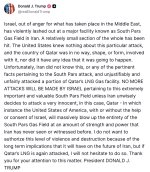
The Iranian response to the Pars strike.


Ras Laffan, located 80 km north of Doha, is an energy-industry hub and hosts several international companies.

Qatar's foreign ministry told Iran's security and military attaches to leave the country within 24 hours and declared them "persona non grata".
In a statement, the ministry condemned the attack as a "direct threat" to its national security and accused Iran of ‌taking ⁠an "irresponsible approach."

Saul Kavonic, head of research at Australia's MST Marquee, said attacks on Ras Laffan "could cause a lasting global gas shortage, but this wont pressure the Trump administration because the U.S. benefits economically from high global gas prices"

More incentive for Canada to get going on more pipes.
 
No it won’t come down because the corn to ethanol process creates some of the highest concentration of distilled protein that is used in animal feed. All kinds of other livestock also depend on that protein.

Edit: I’ll tell you what’s unwinding here (potentially). The whole modern industrial scale system of agriculture and food production that relies on energy mining outputs to create inputs to produce feed and crops for 8 billion people is at some level of risk that’s far above zero, but just below catastrophic.
theres no point in planting corn without nitrogen thought and if nitrogen costs reduce the benefits of planting? Corn prices going up?
 
Not to distract from the Iran situation, but just how dependent are Canadian farmers on fertilizers coming from that part of the world?


You'd think one pillar of domestic food security would be our ability to produce our own high quality fertilizers - to protect North American agriculture and food production from global 'events' such as this.
 
Not to distract from the Iran situation, but just how dependent are Canadian farmers on fertilizers coming from that part of the world?


You'd think one pillar of domestic food security would be our ability to produce our own high quality fertilizers - to protect North American agriculture and food production from global 'events' such as this.
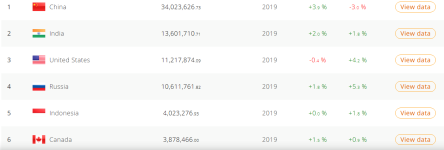
1773875612372.png

AI says we produce more than we use, but if the price goes up
 
Not to distract from the Iran situation, but just how dependent are Canadian farmers on fertilizers coming from that part of the world?


You'd think one pillar of domestic food security would be our ability to produce our own high quality fertilizers - to protect North American agriculture and food production from global 'events' such as this.
This article breaks it down.


Our imports come from the US and Algeria. The issue it seems isn’t supply for us. It’s cost linked to the global market.
 
Not to distract from the Iran situation, but just how dependent are Canadian farmers on fertilizers coming from that part of the world?


You'd think one pillar of domestic food security would be our ability to produce our own high quality fertilizers - to protect North American agriculture and food production from global 'events' such as this.
We’re not dependent, but our suppliers sell to the highest bidder in our trading circles. That’s what drives up the costs. If the price is too high we can’t buy it.
We also sell our ag to the highest bidder. There’s no walking back or insulating the price shock.

Larger operations will need help.
 
Not to distract from the Iran situation, but just how dependent are Canadian farmers on fertilizers coming from that part of the world?


You'd think one pillar of domestic food security would be our ability to produce our own high quality fertilizers - to protect North American agriculture and food production from global 'events' such as this.
When fertilizer can be readily sold elsewhere and price dictates, our farmers will still to an extent be at the mercy of that. If a Canadian fertilizer company can sell to a suddenly desperate Asian agricultural buyer for double the usual price, then a Canadian farmer will have to match that price adjusted for shipping and transaction costs. It would otherwise cost the Canadian fertilizer producers lost profit to sell below market domestically. The Canadian farmer could sit in the same grid square as a co-op, a fertilizer plant, and a potash mine, and will still have to compete as a buyer with the Asian or African or Middle Eastern agricultural supplier that’s willing to pay what the market will bear.

We’re now into supply shock territory with the whole supply curve shifting for at least a while.
 
This article breaks it down.


Our imports come from the US and Algeria. The issue it seems isn’t supply for us. It’s cost linked to the global market.
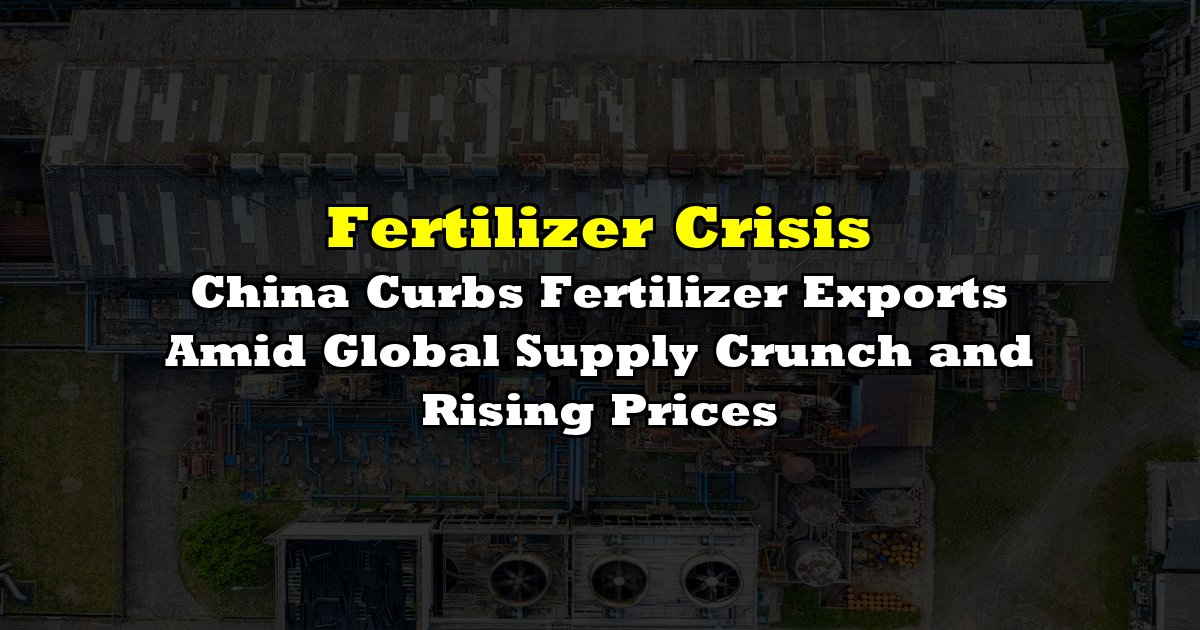
Any imports from China are pretty much done now. This article written two days ago, but word tonight is they have halted all fertilizer exports.

There is a golden opportunity for Canada to gain a lot if ground in this space as well.


No it won’t come down because the corn to ethanol process creates some of the highest concentration of distilled protein that is used in animal feed. All kinds of other livestock also depend on that protein.

Edit: I’ll tell you what’s unwinding here (potentially). The whole modern industrial scale system of agriculture and food production that relies on energy mining outputs to create inputs to produce feed and crops for 8 billion people is at some level of risk that’s far above zero, but just below catastrophic.
The Fritz-Haber process which relies on petro-chemicals has created 55% of all nitrogen in humans at the moment. A 10% reduction in that is hundreds of millions starving, mainly in the third world where they cant produce their own inputs and rely on imports. This could.get hairy.
 
Not to distract from the Iran situation, but just how dependent are Canadian farmers on fertilizers coming from that part of the world?


You'd think one pillar of domestic food security would be our ability to produce our own high quality fertilizers - to protect North American agriculture and food production from global 'events' such as this.

People say the same thing about oil, gas, lumber, etc. Why does everybody forget we don't have a closed market and pay global prices? Exactly for dairy apparently.....
 
People say the same thing about oil, gas, lumber, etc. Why does everybody forget we don't have a closed market and pay global prices? Exactly for dairy apparently.....
were good on production for potassium and nitrogen. The phosphate I know of come from Florida.
We just complain about global markets when it seems like it hurts us. Depends on what side of the industry youre in I guess
 
When do Canadian farmers tend to buy most of their fertilizer? I’m trying to get a few for how this syncs with agricultural seasons.

With regards to Canada’s potential to be an alternate supplier for currently threatened commodities, we need to remember that companies won’t make major additions to supply based on short term supply disruptions that are expected to resolve. Any business cases will be made using numbers little different from a few months ago, unless there are confirmed long term disruptions to Mideast origin supply, and we could get more up and running in the short term.

If some of our suppliers can scale up what already is there without major capital expenditure - run an additional shift to produce more with existing facilities, say; or open up taps on currently closed wells - that’s an obvious shift up our existing supply curve in response to price. But anything that involves building major longer projects can’t be predicated on assumptions of long term price spikes much above where they were before.

Now if Qatar comes back and says they’ll be six or seven years replacing a smashed LNG plant, OK.

All that said we should aggressively approve and advance major projects that were already economically viable within existing pricing and assumptions. Clearly Canada can capitalize on our much lower geopolitical risk here, and we should have started doing so a decade ago. I want us to be responsive to industry if they’re ready to pony up money to produce and export more potash, LNG, oil etc.
 
We’re not dependent, but our suppliers sell to the highest bidder in our trading circles. That’s what drives up the costs. If the price is too high we can’t buy it.
We also sell our ag to the highest bidder. There’s no walking back or insulating the price shock.

Larger operations will need help.
touch of irony: back a few years we were actually ordering potash mined in Sask delivered from Bismarck to Melfort for less than we could get the same product from Yorkton direct.
 
Now if Qatar comes back and says they’ll be six or seven years replacing a smashed LNG plant, OK.

You were close! 3-5 years to fix the damage that knocked out 17% of their capacity.

 
Back
Top