
The answer to that will tell us all whether we have a leader or simply another liberal power freak. One thing Canada doesn't need right now is having its government take a month off for an unnecessary election. There are too many decisions to make that will affect Canada's wellbeing that need to be taken now. Issues from pipelines to harbours to submarines to fighters etc. etc. For all intents and purposes Carney has his majority for as long as he wishes to govern. I cannot imagine any possible combination of opposition voters that will put him down.

You are using an out of date browser. It may not display this or other websites correctly.
You should upgrade or use an alternative browser.
You should upgrade or use an alternative browser.
Liberal Minority Government 2025 - ???
- Thread starter Altair
- Start date

HavokFour
Army.ca Veteran
- Reaction score
- 3,050
- Points
- 1,040
The answer to that will tell us all whether we have a leader or simply another liberal power freak. One thing Canada doesn't need right now is having its government take a month off for an unnecessary election. There are too many decisions to make that will affect Canada's wellbeing that need to be taken now. Issues from pipelines to harbours to submarines to fighters etc. etc. For all intents and purposes Carney has his majority for as long as he wishes to govern. I cannot imagine any possible combination of opposition voters that will put him down.
With how few seats they are away from a majority, an election now would make little sense. There's a much higher chance of them ending up much farther away regardless of how well they poll, knowing how well Canadians respond to early elections historically.


MilEME09
Army.ca Fixture
- Reaction score
- 7,431
- Points
- 1,210
Unlikely unless we see them surge in the polls. Carney wouldn't likely gamble on a slight chance for a 1 or 2 seat majority

- Reaction score
- 9,776
- Points
- 1,140
Making noise most likely, but I wouldn't rule anything out.
MilEME09
Army.ca Fixture
- Reaction score
- 7,431
- Points
- 1,210

ArmyRick
Army.ca Veteran
- Reaction score
- 3,737
- Points
- 1,040
Reminder. Martin beat Harper the FIRST time but didn't do so well second time.The best time for him to call an election is before PP is replaced as CPC leader. The LPC have already defeated him before.
Will history repeat itself?

MilEME09
Army.ca Fixture
- Reaction score
- 7,431
- Points
- 1,210
Exactly, more to lose then gainAlthough the PM has a substantial polling lead over Poilievre, the Tories and Liberals are in a virtual dead heat. Will the PM risk a poorer outcome when he has a virtual majority now? I doubt it.
Can't say I agree with you on a few things here...Canada's exposure to risk from China is extraordinarily limited compared to the US: we're not culturally-similar neighbours with all the resultant fractally complex relationships and hazards. Does that mean we should be blind to both structural risks as far as trade (non)diversification or soft-through-medium power moves and games of silly buggers? Not at all. Wouldn't hurt to do a review of US influence activities, political support, and "branch office" arrangements with the same lens as would be used to review Chinese activities and counteract both as vigorously as possible.
As an example, if a Chinese police office on Canadian soil is objectionable, then anything equivalent in function, including partnerships we may have actively sought in the past, involving the US needs to end at the same time.
Given the current situation in the US, including both their vicious internal law enforcement approach and their threats to Canadian sovereignty, there's no baseline, on principle alone, reason for Canada to preserve the US, especially its government or military, from threats or harm. Anything, and I mean anything, that won't cause blowback for Canada just isn't our business.
Regardless of whether people like Trump or not, and regardless of what he says - the United States is still our next door neighbour. They are still our biggest trading partner. And they are still a critical defense partner, re NORAD
Trump will be gone in 3 years, but the United States will still be a superpower and they will still be our next door neighbour.
Maintaining the best relations possible is in both of our best interests, and I have no doubt our relations will improve dramatically when Trump's term ends
...
Maintaining information & intelligence sharing with American law enforcement is critical to the domestic security within North America.
With Canadians and Americans mostly able to cross the border without any issues, it's important that law enforcement be able to view someone's criminal history or relevant notes made from previous police encounters.
(Maybe someone doesn't have a criminal record, but has had multiple interactions with police due to a mental health condition, re schizophrenia, dementia. Maybe their listed associates matter. This is important for officers dealing with an individual to know, if possible.)
Again, there is no real benefit to having the two countries stop sharing criminal intelligence.
...
- Do I like the way ICE operates? No, I think it's beyond stupid & irresponsible.
There are too many videos of ICE officers escalating situations, approaching people hyper aggressively, using excessive force, and seemingly creating problems where there didn't necessarily have to be one.
I think their tactics cause a real fear in the communities they operate in, because they don't seem to give a shit about what local courts rule in regards to their conduct. Or local mayors.
ICE is going to do their thing, and they have the federal government behind them regardless of what local courts say...
(Police officers that ignore the rules or advice of the local courts on advice from their leadership is scary. Can you imagine a Court of King's Bench judge ruling against aggressive police action up here, and am entire agency saying "Meeeehhhhh, fuck it...we're gonna keep doing this anyway..." Not a good look, and again creates problems that don't need to exist)
Covering their faces while wearing body armour over civilian clothes & then swarming an individual has got to be terrifying for that person, and will lead to unnecessary violence going both ways.
How does someone know if it is ICE officers or a gang of some sort?? To be honest it's hard to visually tell the difference sometimes, same goes with their apparent conduct.
...
All of that being said, we need to remember that we are seeing this because that's what the media is showing us. They want us to see this, and have this be our impression of current American law enforcement.
The truth is, there are tens of thousands of municipal police officers across the country that aren't participating in hyper-aggressive targeted policing.
Tens of thousands of Sheriff's deputies that are still serving their counties & regions very professionally and respectfully. Locally elected Sheriff's that are keeping their citizens safe the best they can.
Same applies to state law enforcement, and many other federal agencies.
The media shows us a small, small sliver of what's happening down south - usually with a negative narration. They'll even show the same 30 seconds of the same situation on repeat, while narrating that an isolated incident is reflective of a national trend that doesn't exist.
(We've seen the mainstream media pull the same garbage up here, re RCMP in Cold Lake, re dealing with a native man attempting to drive drunk.)
...
They come across Canadians somewhat regularly, and should have the same officer safety notes we do. And we come across Americans somewhat regularly also, and knowing any criminal intelligence/officer safety notes is handy for us also.
(Although as far as my agency goes, we don't have access to NCIC...don't think anybody else does either?)
The only result that would happen if we stopped sharing intelligence would be police officers on either side of the border may be injured or killed by something that may be preventable, and organized crime would be given a real advantage if cross border investigations stopped being a thing.
...
A few years ago, a young girl here in Edmonton was kidnapped outside of her school by a man who she had chatted with online, from the US
EPS was on it 24/7 and was actively collecting and feeding information in real time to the FBI, who was able to quickly identify the POI & his address.
FBI HRT rescued the girl within a day or two of them crossing the border & was able to get her back to her parents alive
That would not have been possible in the timeframe that it happened if we didn't have the information sharing mechanisms in place that we do
Last edited:
We do, through a check box on CPIC query screen. I don’t know if everyone does but I expect it’s pretty standard. CBSA secondary does.(Although as far as my agency goes, we don't have access to NCIC...don't think anybody else does either?)

- Reaction score
- 6,508
- Points
- 1,160
NCIC has been available via CPIC since the 1980s via the Automated Canada-US Police Information Exchange System (ACUPIES).We do, through a check box on CPIC query screen. I don’t know if everyone does but I expect it’s pretty standard. CBSA secondary does.
Today I finally learned WTF ACUPIES is. Thanks for that!NCIC has been available via CPIC since the 1980s via the Automated Canada-US Police Information Exchange System (ACUPIES).

QV
Army.ca Veteran
- Reaction score
- 5,051
- Points
- 1,040
Smart people have varying opinions on PMMC’s efforts:
Carney’s proposed “strategic partnership” with China represents a fundamental misreading of the current security environment. This isn’t about trade protectionism; it’s about recognising asymmetric competition that’s been underway for decades.
At Davos, Carney framed this as a trade diversification issue without acknowledging that China has been the primary revisionist actor actively eroding the liberal international order (LIO) That omission is telling….
Carney’s proposed “strategic partnership” with China represents a fundamental misreading of the current security environment. This isn’t about trade protectionism; it’s about recognising asymmetric competition that’s been underway for decades.
At Davos, Carney framed this as a trade diversification issue without acknowledging that China has been the primary revisionist actor actively eroding the liberal international order (LIO) That omission is telling….
Nobody yet seems to be able to articulate what precisely this “strategic partnership” is, nor any actual concrete details they object to.Smart people have varying opinions on PMMC’s efforts:
Carney’s proposed “strategic partnership” with China represents a fundamental misreading of the current security environment. This isn’t about trade protectionism; it’s about recognising asymmetric competition that’s been underway for decades.
At Davos, Carney framed this as a trade diversification issue without acknowledging that China has been the primary revisionist actor actively eroding the liberal international order (LIO) That omission is telling….
Didn't Hong Kong enter into a strategic partnership with China not so long ago? together yet separate?Nobody yet seems to be able to articulate what precisely this “strategic partnership” is, nor any actual concrete details they object to.
QV
Army.ca Veteran
- Reaction score
- 5,051
- Points
- 1,040
Nobody yet seems to be able to articulate what precisely this “strategic partnership” is, nor any actual concrete details they object to.
It seems that the US, both parties, have had concerns about Canada’s relations with the CCP. From 2024:
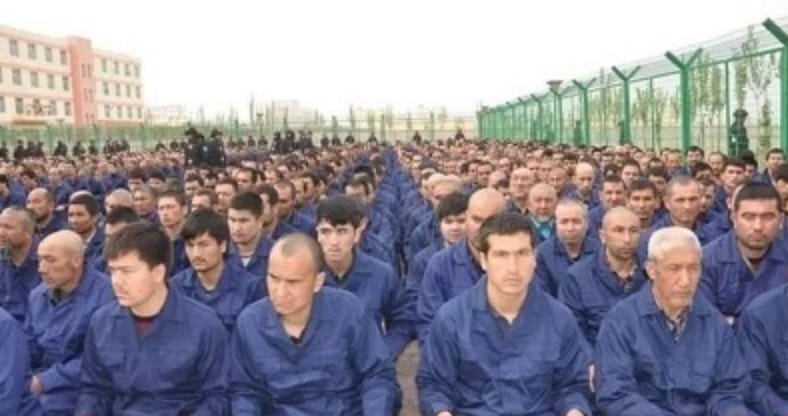
U.S. Lawmakers Target Canada’s Role in Forced Uyghur Labor Imports
Congressional leaders question Liberal Minister Mary Ng over Chinese contraband blocked by U.S. and rerouted through Canada
 www.thebureau.news
Canada should have been reading the signals.
That’s nice, but America’s utterly shameless hypocrisy regarding trade relationships with China makes it hard for me to care what they’re whining about. We absolutely must exercise significant caution in our trade with China, for our own purposes, however the U.S. has no leg to stand on criticizing our sovereign trade relationships there.It seems that the US, both parties, have had concerns about Canada’s relations with the CCP. From 2024:
U.S. Lawmakers Target Canada’s Role in Forced Uyghur Labor Imports
Congressional leaders question Liberal Minister Mary Ng over Chinese contraband blocked by U.S. and rerouted through Canada
Canada should have been reading the signals.

- Reaction score
- 6,587
- Points
- 1,160
The reflexive anti-Carney/Liberal crowd seems to view this "strategic partnership" as an indication that Canada is totally abandoning our existing relationship with the US and leaping into bed with the CCP instead.Nobody yet seems to be able to articulate what precisely this “strategic partnership” is, nor any actual concrete details they object to.
I personally see it as Canada strategically entering trade relationships with a variety of countries on an issue by issue basis where it serves Canada's needs. I take this view from things PM Carney said in his Davos speech.
And pragmatic in recognizing that progress is often incremental, that interests diverge, that not every partner will share our values. So we're engaging broadly, strategically, with open eyes. We actively take on the world as it is, not wait around for a world we wish to be.
And we are rapidly diversifying abroad. We've agreed a comprehensive strategic partnership with the EU, including joining SAFE, the European defence procurement arrangements.
We have signed 12 other trade and security deals on four continents in six months.
In the past few days, we have concluded new strategic partnerships with China and Qatar.
We're negotiating free trade pacts with India, ASEAN, Thailand, Philippines and Mercosur.
In fact the PM has specifically stated that there is no intention of seeking a free trade deal with China
Similar threads


- Replies
- 262
- Views
- 22K


- Replies
- 48
- Views
- 4K


- Replies
- 26
- Views
- 2K
