• Thanks for stopping by. Logging in to a registered account will remove all generic ads. Please reach out with any questions or concerns.

Littoral Operations

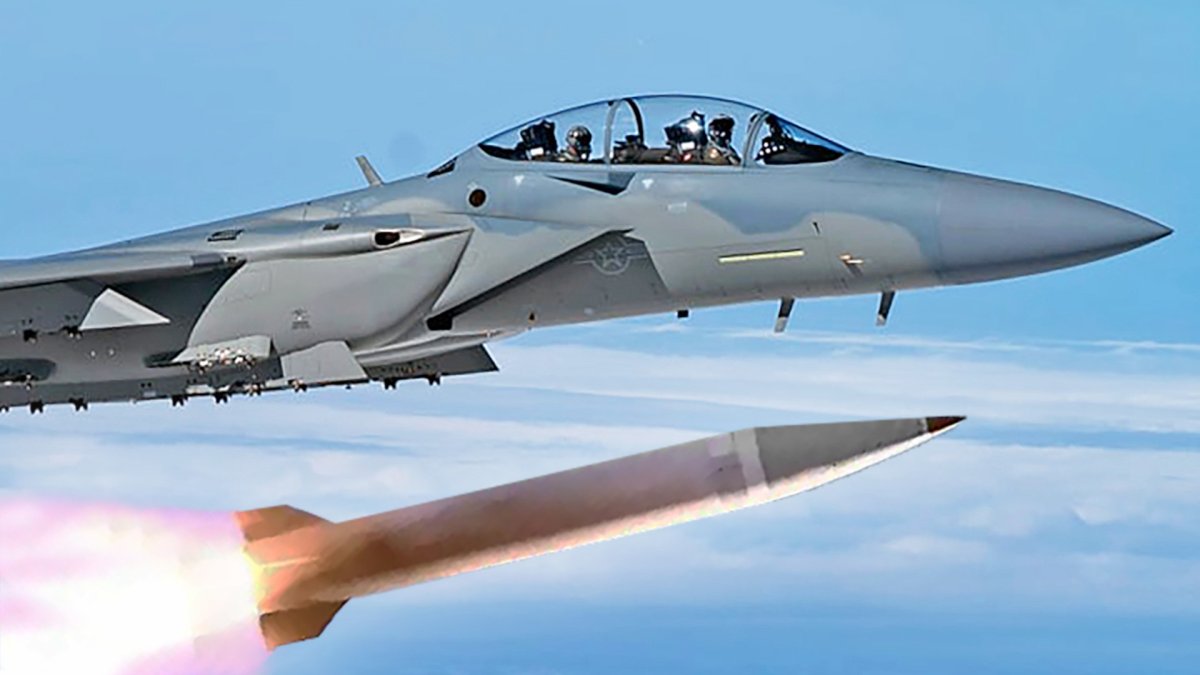
One more point about the PrSM.

It flies at over Mach 3, or 3700 km/h.

It covers 500 km in less than 8 minutes, 1000 in about 15 minutes, The Spy 7 will likely track the missile from point of launch but how many VLS cells does an RCD have? 24? And how many of those are likely to be loaded with SM6s or SM3s?

A 4 truck troop can launch 8 missiles simultaneously and reload. It can sustain a continuing barrage providing the politicians bought enough missiles.

As Underway has pointed out before, they slow down in terminal, so they can acquire and correct. I would likely not waste a SM3 or SM6 on those. That's what we have all those lovely ESSM's in quad packs for. All that is after electronic effects has been expanded, and you still have oft kill after that.

You also have to have politicians with the Kahuna to kill a surface ship way out on the high seas. You'd better be at war first, and know which country's warship that is.
 
As Underway has pointed out before, they slow down in terminal, so they can acquire and correct. I would likely not waste a SM3 or SM6 on those. That's what we have all those lovely ESSM's in quad packs for. All that is after electronic effects has been expanded, and you still have oft kill after that.

You also have to have politicians with the Kahuna to kill a surface ship way out on the high seas. You'd better be at war first, and know which country's warship that is.

Perhaps there are alternate opinions on the utility of the ESSM in the ABM mode?

would essm be an effective counter to an incoming ballistic missile +4

The Evolved SeaSparrow Missile (ESSM) is generally not considered an effective or primary counter against incoming ballistic missiles, particularly high-speed or long-range threats, as it is designed for point-defense against sea-skimming cruise missiles and aircraft.

While the ESSM Block 2 possesses high maneuverability and speed (over Mach 4), it has significant limitations regarding ballistic missile defense (BMD):

Designed Role: ESSM is a medium-range, ship-launched missile tailored for fast, low-altitude maneuvering targets, such as anti-ship cruise missiles (ASCM).Limitation vs. Ballistic Targets: It is not designed to defeat hypersonic or ballistic missiles, which have different, often much higher, trajectories and kinetic energies.

Specialized Interceptors Required: Ballistic missile defense, specifically in the terminal phase, typically requires specialized, higher-velocity interceptors such as the SM-3 or SM-6

Exceptions and Nuance:

Terminal Defense: In a scenario where a lower-tier ballistic missile is already in its final, terminal descent, some observers debate the theoretical possibility of a lucky intercept, but it is not its intended mission.

Block 2 Upgrades: The ESSM Block 2 features active radar homing, increasing its agility and capability against complex, high-speed targets compared to Block 1, but it is still limited by its small warhead and range compared to SM-series missiles.

In the US Navy and allied fleets, ESSM operates as a, layered defense backup, complementing the long-range capabilities of the SM-2 and SM-6.
 
I know the Americans have/had HEMTTs with a modified bed to hold pods, and a trailer as well. Each could carry 8 pods so I was mistaken there.

The only reason I know this is a National Guard/Reserve unit showed up in Gagetown and they had just converted to 155 from MLRS and still had the MLRS HEMTT. Pain in the ass to load 155 material when you had tie down points sticking up in odd places on the truck bed
 
Further to the notion of the PrSM or any ballistic missile slowing down prior to impact:

"Ballistic missiles, in general, reach high-supersonic, if not hypersonic speeds (above Mach 5) in the terminal phase of flight. That speed increases the capacity of these weapons to burrow down into hardened targets and also reduces their overall flight time, making them particularly well-suited to striking hardened and/or time-sensitive threats. Fast-flying ballistic missiles are also very challenging to intercept and otherwise give opponents limited time to react in any way."


does the prsm, either the land target or the maritime target version, slow down prior to impact

Based on available information about the Precision Strike Missile (PrSM) development through 2026, the missile does not intentionally slow down to hit targets; instead, it maintains very high, high-supersonic to hypersonic speeds during the terminal phase.

Terminal Speed: PrSM is designed for high-speed, precision impacts (high-supersonic/hypersonic) to penetrate hardened targets and reduce reaction time for defenders.

Maneuvering vs. Speed: Even when maneuvering sharply during the terminal phase to align with a target, the missile retains its speed.

Maritime vs. Land Version: Both versions (Increment 1 for land, Increment 2/4 for maritime/moving targets) are built to strike with high velocity, with the maritime variant designed to engage rapidly to avoid target movement.

Short-Range Test: In tests designed to challenge the seeker (where a slower speed might be expected), PrSM demonstrated high-speed, high-maneuverability to make impact, rather than slowing down.

In essence, PrSM's design philosophy—unlike traditional cruise missiles—is to use velocity as a primary means of penetrating defenses.
 
Further to the hazards associated with the deep water littoral:


"LIG Defense & Aerospace (D&A), Magellan Aerospace Corporation (Magellan), and Hanwha Ocean have signed a Memorandum of Understanding to seek collaboration under the Canadian Patrol Submarine Project (CPSP), with a focus on strengthening Canada-based capabilities across underwater weapon systems and their lifecycle support."

"LIG D&A has played a central role in advancing South Korea’s indigenous undersea defence capabilities, beginning with the successful development and deployment of the country’s first domestically produced Heavy Weight Torpedo, Baeksang-eo. Building on this foundation, LIG has continued to innovate, developing next-generation systems such as the Tiger Shark Heavy Weight Torpedo, featuring fiber-optic guided control and advanced wake-homing capabilities, which has been fully integrated into the latest KSS-III submarines."

The Tiger Shark Heavy Weight Torpedo is a 1619 kg, 21" torpedo that covers 50 km at a speed of 55 knots. It carries a 260 kg warhead. It operates in depths of 2 to 600 m.


Does it require a submarine to get it into position?

....

The BAE Herne is an XLUUV/XLAUV based on a Canadian platform designed and built by Cellula Robotics


could a bae herne carry and launch 21" torpedos +6

Yes, the BAE Systems Herne Extra-Large Unmanned Underwater Vehicle (XLUUV) is designed to carry and launch weapons, including 21-inch torpedoes.

Here are the key details based on 2025–2026 developments:

Weapon Capability: Herne is designed to deploy torpedoes—such as the Sting Ray—for anti-submarine warfare, with specialized payload bays for this purpose.

Modular Payload Bay: The XLAUV features a flexible, modular design that allows for different configurations, including a 5,000-litre capacity module capable of holding weapons.

Launch Mechanism: Rather than traditional horizontal tubes, the Herne is designed to launch weapons vertically through the underside of its hull, allowing for covert attacks without having to surface.

Development Status: While initially focused on Intelligence, Surveillance, and Reconnaissance (ISR) and seabed warfare, integrating torpedoes is part of its planned evolution to a fully capable autonomous combat vessel.

The system is intended to provide a cost-effective, long-endurance autonomous platform that can operate in high-risk areas without risking a human crew.

"Reports suggest that more than 50 Herne units could be purchased for the price of a single Astute-class attack submarine."

If 50:1 and the Astute is 1.6 BUKP per boat then the Herne is expected to cost in the 40 to 50 MUSD range
The Tiger Sharks are in the 2-3 MUSD apiece range.

....

And do you need more than a surf board with a radio?


The Wave Glider, powered by wave motion and solar power, costs in the region of $250,000 plus whatever sensors and weapons you wish to attach.

Two Tiger Sharks at 2-3 MUSD apiece and a floating station at under 1 MUSD and you have a deployable, and enduring, two kill package for something in the 5 to 10 MUSD range.

....

Consider them as floating off route mines with a 50 km radius.

....

Unit cost of the KS III is about 1000 MUSD apparently.
1 sub or
20 to 25 XLUUVs or
100 to 200 floating off route mines.

 
Unit cost of the KS III is about 1000 MUSD apparently.
1 sub or
20 to 25 XLUUVs or
100 to 200 floating off route mines.

Each of those things has a different role. It's like saying that it would be more efficient to ship stuff across Canada in Hyundai Accents because per pound shipped you can buy more of them than you can buy semi-trucks. Ignore that loads need to be loaded and unloaded efficiently, and some things just don't fit in an Accent, regardless of how you pivot them.
 
Each of those things has a different role. It's like saying that it would be more efficient to ship stuff across Canada in Hyundai Accents because per pound shipped you can buy more of them than you can buy semi-trucks. Ignore that loads need to be loaded and unloaded efficiently, and some things just don't fit in an Accent, regardless of how you pivot them.
Besides, you don't buy warships to defend your coastline, you buy warships to project power and influence.
 
Besides, you don't buy warships to defend your coastline, you buy warships to project power and influence.
100%

I think part of the problem is that most people don't understand what a warship brings to the table. The Government and RCN are both pretty bad at letting people know what a ship brings to the table. It is more than just a weapons platform, and more than just a space to host cocktail parties.
 
Each of those things has a different role. It's like saying that it would be more efficient to ship stuff across Canada in Hyundai Accents because per pound shipped you can buy more of them than you can buy semi-trucks. Ignore that loads need to be loaded and unloaded efficiently, and some things just don't fit in an Accent, regardless of how you pivot them.

I agree.

Where are you going to choose to spend your money?

Will you buy 12 patrol subs or will you choose to limit yourself to 10 and choose to buy 50 XLUUVs and 200 Wave Gliders?

Your 10 Subs will keep you supplied with 2 subs on patrol indefinitely.

Your 50 XLUUVs and 200 Wave Gliders will maintain an enduring presence shaping the patrol area, and the tasks required, of the subs.
 
I agree.

Where are you going to choose to spend your money?

Will you buy 12 patrol subs or will you choose to limit yourself to 10 and choose to buy 50 XLUUVs and 200 Wave Gliders?
You buy 12 subs, because those 12 boats provide a lot more utility than the other options.

Your 10 Subs will keep you supplied with 2 subs on patrol indefinitely.
With little ability to surge or send a boat away on an overseas mission in support of our allies/trade partners. That's a plan for a small, unimportant Canada. We are rich enough to not be small or unimportant.

Your 50 XLUUVs and 200 Wave Gliders will maintain an enduring presence shaping the patrol area, and the tasks required, of the subs.
How enduring, and with what other ships necessary to support them? Anything in the ocean needs maintenance, and maintaining 200 of something is a massive burden, even if the individual fixes are simple. Now add in the support ship/ships that need a crew and their own maintenance, and how much have you actually saved?

If we want to trial autonomous systems, don't do it at the cost of proven systems, because without fail there will be unexpected complications or compromises with any new technology. While the systems may have been around for many years as limited trial devices, they aren't yet proven at scale and over time.
 
Besides, you don't buy warships to defend your coastline, you buy warships to project power and influence.
But where I think UXV's could be really useful for Canada would be as widely distributed sensor nodes to detect any ship/subs approaching our coast so that aircraft can take care of them. The bonus would be that UXV's designed as sensor nodes are a lot cheaper than UXVs designed to be multi-role replacements for crewed systems.
 
You buy 12 subs, because those 12 boats provide a lot more utility than the other options.


With little ability to surge or send a boat away on an overseas mission in support of our allies/trade partners. That's a plan for a small, unimportant Canada. We are rich enough to not be small or unimportant.


How enduring, and with what other ships necessary to support them? Anything in the ocean needs maintenance, and maintaining 200 of something is a massive burden, even if the individual fixes are simple. Now add in the support ship/ships that need a crew and their own maintenance, and how much have you actually saved?

If we want to trial autonomous systems, don't do it at the cost of proven systems, because without fail there will be unexpected complications or compromises with any new technology. While the systems may have been around for many years as limited trial devices, they aren't yet proven at scale and over time.

We don't own proven systems. And we won't for a decade or two.

What can we do in the meantime?
 
Besides, you don't buy warships to defend your coastline, you buy warships to project power and influence.

And if defending our coastline isn't the Navy's job who do we call?
 
Back
Top