• Thanks for stopping by. Logging in to a registered account will remove all generic ads. Please reach out with any questions or concerns.

Mine Warfare

Kirkhill

Puggled and Wabbit Scot.
Subscriber
Donor
Reaction score
12,892
Points
1,160
I thought this deserved a thread of its own.

Do we really need an MCM capability?

Are we worried about mines in our waters? Not really, and if there are mines in our waters, they will be few in numbers; send the CLDs.
Are we worried about heavy mining in other peoples waters? Possibly. Either stay outside the mine field and launch Tomahawks and/or long range NSMs, or, tell the country we're there to help it's their responsibility to make the Q-routes and/or clear the harbour entrance.

I just can't envision a scenario where we really need a highly capable MCM capability. Right now, IMO, our MCM capability serves nothing more than a diplomatic purpose. We send MCM units to our NATO partners to show we are "helping, friendly, and committed". But if a war actually broke out and the "enemy" established a significant threat, we're not sending an AOPS to clear the mines; it would just get blown up by a long range ASCMs the second it showed up near the minefield.

Sure, ask industry to develop a mine clearing capability that can be strapped onto the CDC; BUT, do not sacrifice a single ounce of core warfighting capability to "make it work".

End rant.

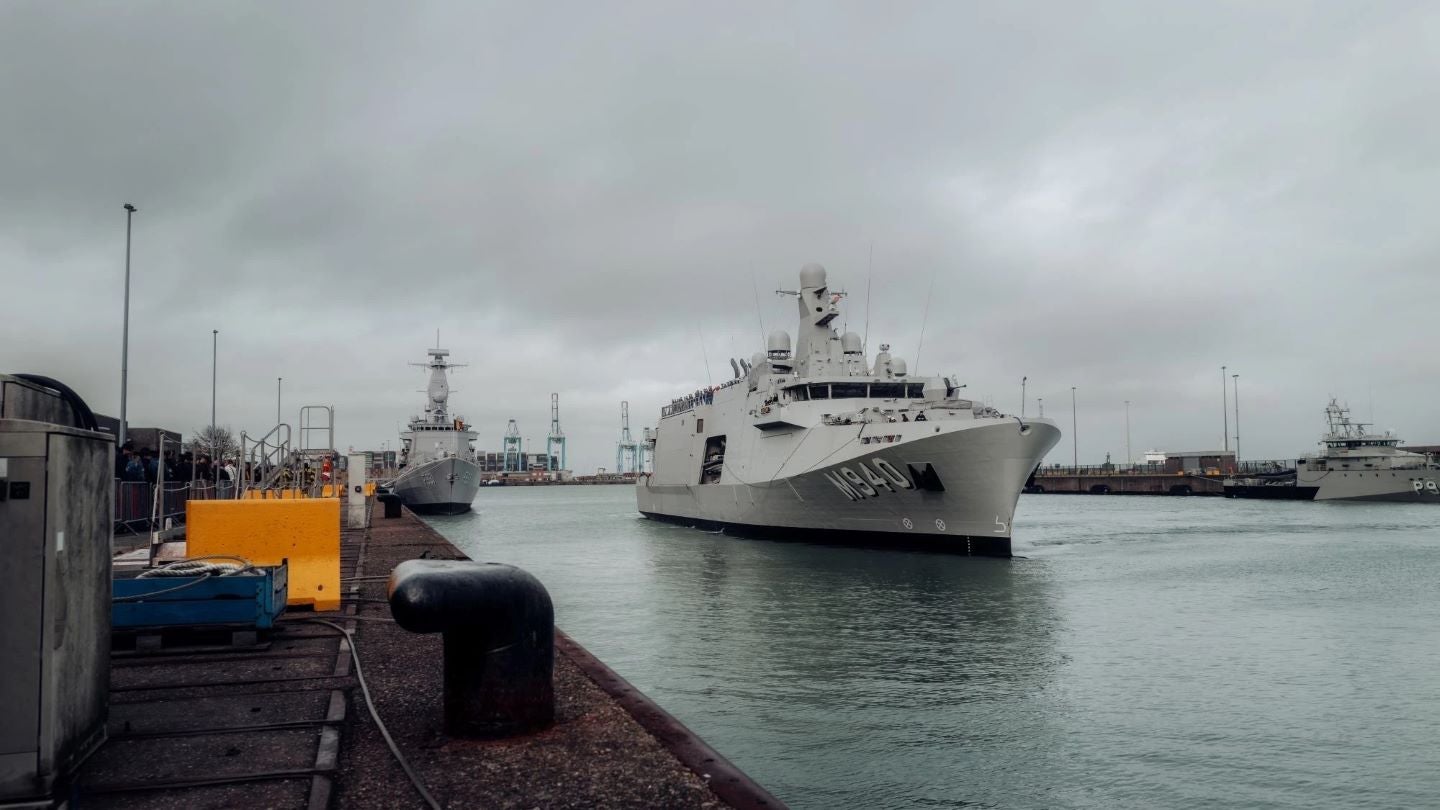
Yes a HDW can do what the KIN Class does for MCM. Eventually a HDW will be used as a flagship for Op Reassurance supporting the remaining KIN Class and I suppose eventually alone. Been looking at what that will look like engineering wise as part of my day job. As said lots of space. A couple of things though, one KIN Class can embark the dive POD, decompression chamber and the REMUS, its been done to give each Kingston Class the same capability. The second point is that HDW doesn't have degaussing, a minor point I suppose these days and how their utilized but a legitimate one. The final thing is do we want to send a 6600 tonne billion dollar ship with a gigantic magnetic signature to do a job where the whole point of MCM is to use small, cheap, disposable ships? I would say the same thing for any other vessel as well at least for now.

As one of the few around here that's been on MCM missions as part of the NATO group yes what your saying is probably correct and very well may go that way. For the time being and in the immediate future no.

HDW can carry more mine removal gear and pers than the MCDV's could. They have already trialed the ship with the decompression chamber, Dive gear and UAV gear all loaded on a single ship (normally that was two or three MCDV's together). The only disadvantage is that its a long way to the water from the ship for the divers. But if they use the ships boats its much easier.

But I get your point. I do have some concerns about mine warfare, but from how I've seen the Clearance divers work they don't need very fancy ships to do their jobs

I'm not sure "small, cheap and disposable ships" are as relevant in the evolving world of mine countermeasures. Many of the old, smaller fibreglass/metal hulled physical minesweepers are still around however, navies have already moved away or are in the process of moving towards an unmanned, standoff strategy from increasingly larger vessels.

You are correct that an AOPS would not be used in a real MCM scenario and frankly, I hope it never is, because it shouldn’t be but that's part of our answer for the lost of capability of the Kingston with not direct backup. That observation, however, actually reinforces the case for a dedicated and credible MCM capability rather than weakening it.

In your rant you make a lot of assumptions here. Before a single MCM vessel sails on Op REASSURANCE, we already exercise scenarios where Canadian ports are mined, Halifax, Esquimalt, approaches, choke points, anchorages. We do this because the threat is credible, cheap for an adversary, and disproportionately disruptive. Sea mines remain one of the most cost effective naval weapons ever devised, and no serious navy assumes “there won’t be many” or that CLDs alone solve the problem particularly against influence mines, buried mines, or deliberately complex denial fields. The risk will even escalate in the future with the introduction of AI in the new generation of smart mines.

MCM is not about having lightly armed ships into missile envelopes. It is about access, assurance, tempo, and freedom of manoeuvre, clearing approaches, opening Q routes, and enabling follow on forces and logistics. That capability is also perishable. The planning, classification, disposal skills, and command and control expertise cannot be surged once a crisis starts. This is exactly why NATO maintains standing MCM groups and why sailors in those formations remain deeply committed to the mission they understand that if you let the skill weaken, you don’t suddenly regenerate it when ports suddenly need to be opened.

Reducing MCM to “just diplomacy” also misses the point. Yes, deployments reassure allies and it helps meet our NATO commitments, but they also ensure Canada can operate in mined environments alongside NATO, rather than relying on others to clear the very harbours and sea lanes we intend to use. Telling a partner nation “it’s your responsibility to clear the harbour” while we sit offshore launching long range weapons assumes a lot. It assumes permissive access, unlimited standoff options, and zero political constraints none of which are guaranteed.

Finally, framing MCM as something that competes with “core warfighting capability” is not really valid. Access is warfighting. Sustainment is warfighting. Modular MCM solutions on future platforms make sense but only if they are built on an existing, practiced MCM culture and that comes with a dedicated MCM capability. Without that foundation, you are not fielding a capability; you are bolting equipment onto a hull and hoping the skill appears when needed and hope for the best.

I think its safe to say that we all hope we never have to do serious MCM at home or abroad. But hope is not a plan and mines remain cheap, effective, and likely. Ignoring that reality is how navies relearn old lessons the hard way.
 

If you know how many mines, and the types of mines, and presumably the location of the mines, how much of a threat are the mines?


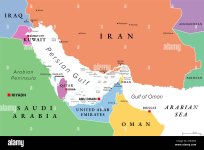
Task Force 59 (TF 59) is a specialized unit within the U.S. Naval Forces Central Command (NAVCENT) and the U.S. Fifth Fleet, established in September 2021 to rapidly integrate unmanned systems and artificial intelligence (AI) into maritime operations in the Middle East. Its primary focus is increasing maritime domain awareness in critical choke points, particularly the Strait of Hormuz, the Gulf of Oman, and the Red Sea.
www.navy.mil +1
Key Aspects of Task Force 59 in the Strait of Hormuz:
  • Mission: To deter malicious actions, enhance surveillance over 5,000 miles of coastline, and provide real-time data to command centers by utilizing unmanned surface vessels (USVs) and aerial vehicles (UAVs).
  • Operational Capability: The task force reached full operational capability by March 2023,, accumulating over 30,000 operational hours in the region, with goals to integrate over 100 unmanned systems.
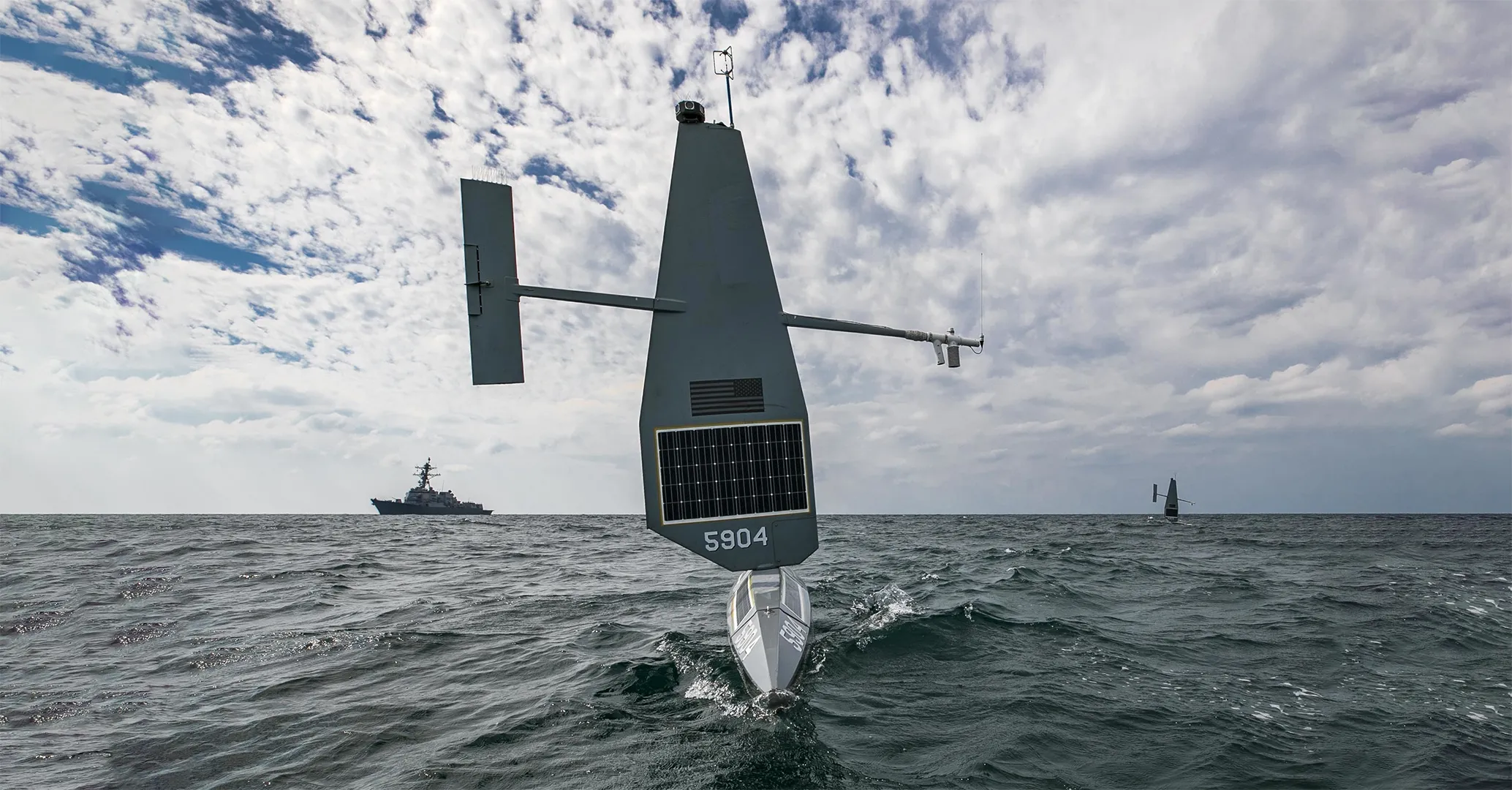
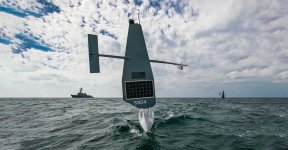
  • Technological Integration: TF 59, which includes the specialized "Task Group 59.1," partners with regional allies, such as Bahrain and the UAE, to operate USVs (like the Mantas T-12 and Saildrone Explorer) and UAVs (like the Aerovel Flexrotor).
  • Significance of the Strait: The area is a vital choke point where 20% of the world's oil supply flows, making it a high-tension area for maritime security.
  • Operational Successes: The task force has successfully conducted patrols in the Persian Gulf and transited the Strait of Hormuz with unmanned surface vessels supported by U.S. Coast Guard cutters.
    Fleet Forces Command (.mil) +4
As of March 2026, the region faces renewed tensions, with reports of Iran, in conflict with the US/Israel, causing interruptions in the Strait of Hormuz, making the surveillance capabilities of Task Force 59 critical for maintaining maritime awareness.

Key Technologies and Operations
  • Unmanned Systems: TF 59 has worked with over 23 different unmanned systems (aerial and surface).
  • Task Group 59.1: Established in January 2024, this group ("The Pioneers") specifically focuses on the operational deployment of unmanned systems and AI to bolster security, including anti-submarine and mine-related tasks.
....


July 21, The Canberra recently moored at Qatari Emiri Naval Forces Base in Hamad Port, near Mesaieed, for a scheduled visit.

August 9, The Rotational LCS Crew 22? (Gold) assumed command of the Canberra during a crew exchange ceremony in the ship's pilot house at Mina Salman Port.

January 22, 2026 USS Canberra transited the Strait of Hormuz soutbound, escorting the Heavy Load Carrier Seaway Hawk with four decommissioned Avenger-class mine countermeasures ships on board.


Key Mine Clearance UUVs and Systems

The U.S. Navy uses the Atlas Elektronik SeaFox as an expendable, fiber-optic guided unmanned underwater vehicle (UUV) for mine identification and neutralization, often designated as the AN/SLQ-60 system. It is a "one-shot" system that carries a shaped charge to destroy mines, providing a safe, rapid, and efficient method to clear underwater ordnance.
Naval Technology +4
Key Aspects of USN SeaFox Operations
  • Purpose: Primarily used for identifying and neutralizing moored, ground, and floating mines in "one-shot" operations.
  • System Components: The system includes a SeaFox I (identification) variant for inspection and the SeaFox C (combat) variant for destruction.
  • Deployment Platforms: SeaFox is versatile and can be deployed from surface combatants, mine countermeasure vessels, Rigid Hull Inflatable Boats (RHIBs), and unmanned vessels.
  • Performance: It can reach speeds of 6 knots and has a range of 1 km, guided via a thin fiber-optic cable for real-time video feedback.
    vanguardcanada.com +1
The SeaFox is in operation with several navies worldwide, including the U.S. Navy, to provide effective mine countermeasure capabilities.
Naval Technology +1


....

Task Force 59, UxV specialists, stationed at Manama, Bahrain
Task Group 59.1, focused on minewarfare
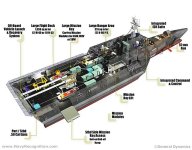
LCS-30 - USS Canberra - potential MCM package been hanging around Manama since July of last year, transited the Strait of Hormuz southbound in January with the retiring conventional Avenger MCMs hitching a ride on a large carrier.
Capable of deploying the Knifefish UUV (16 hr endurance to detect and identify mines)
Capable of deploying autonomous RIBs (GARCs - 40 kts, 700 NM)
Capable of deploying Sea Fox UUVs - single shot mine disposal device (1 km, 4 kts)


....

Meanwhile:


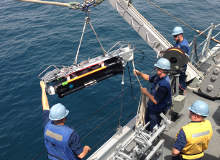
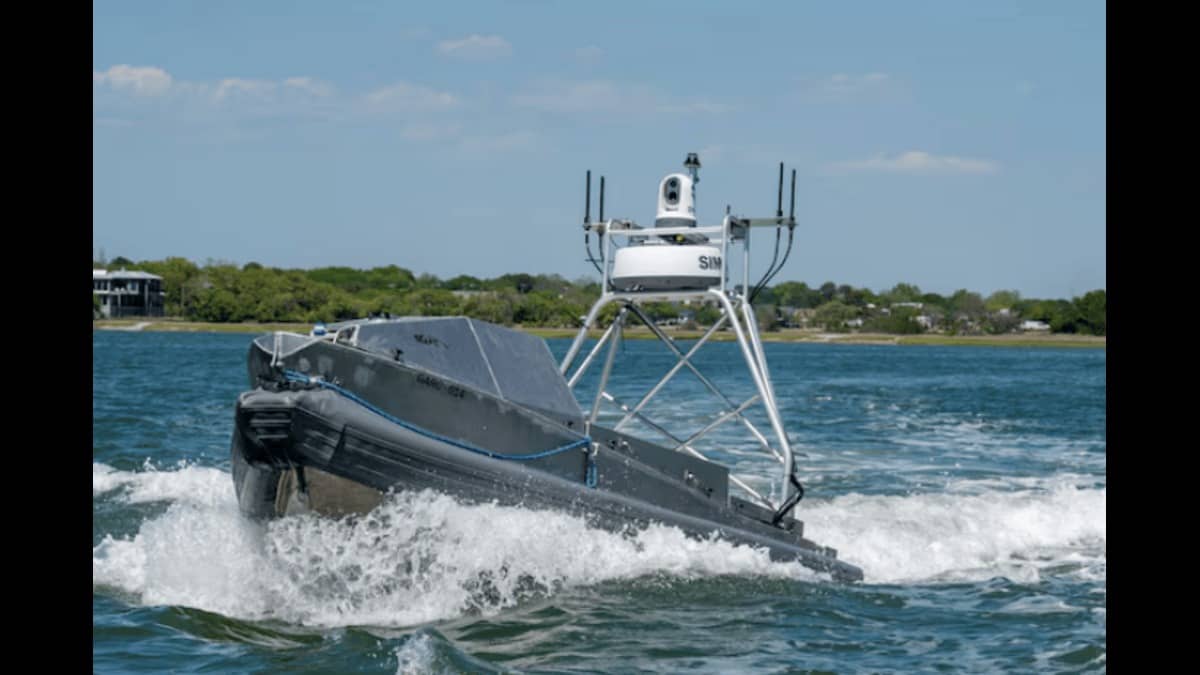
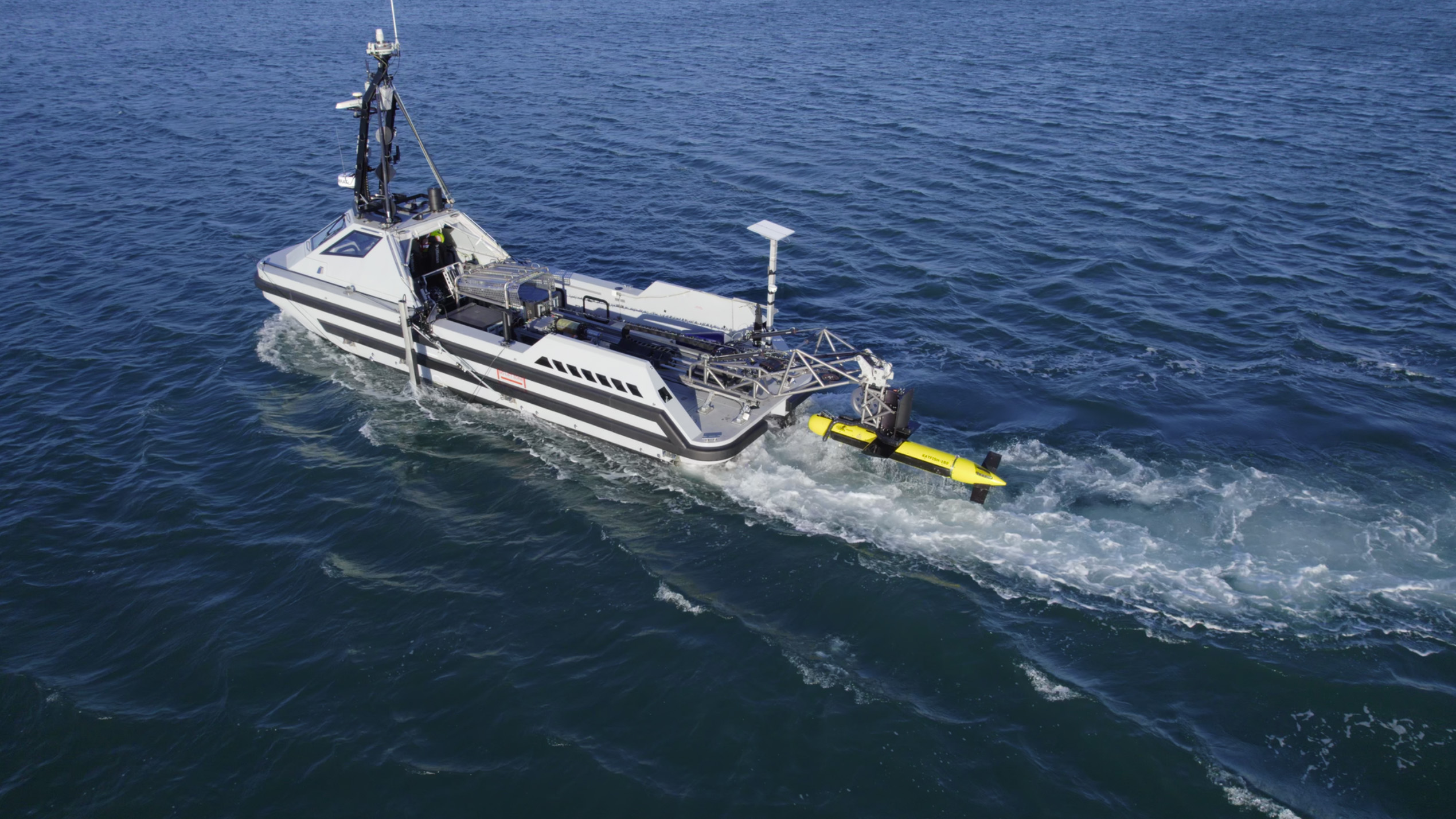
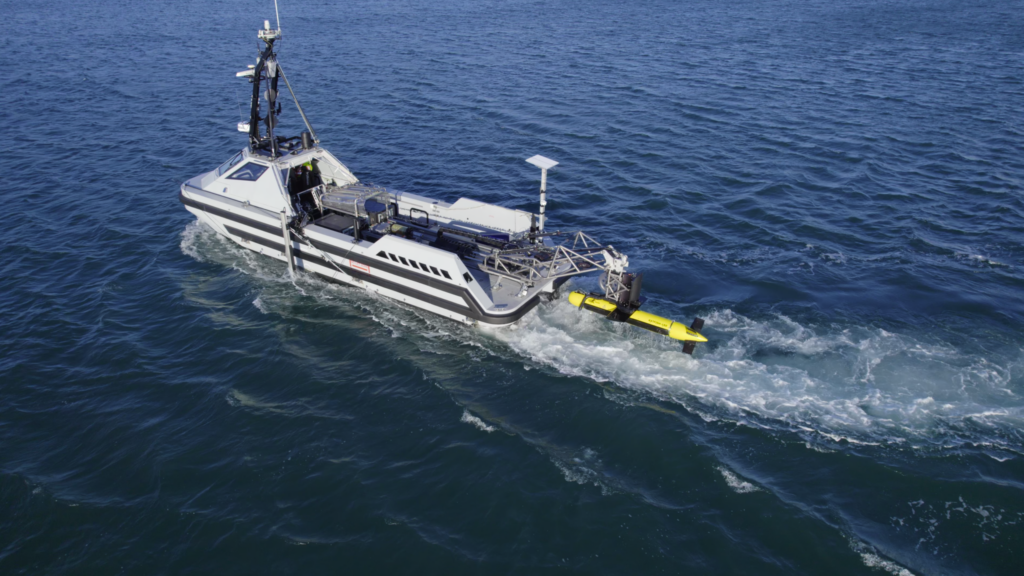
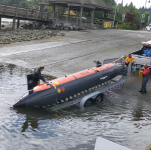
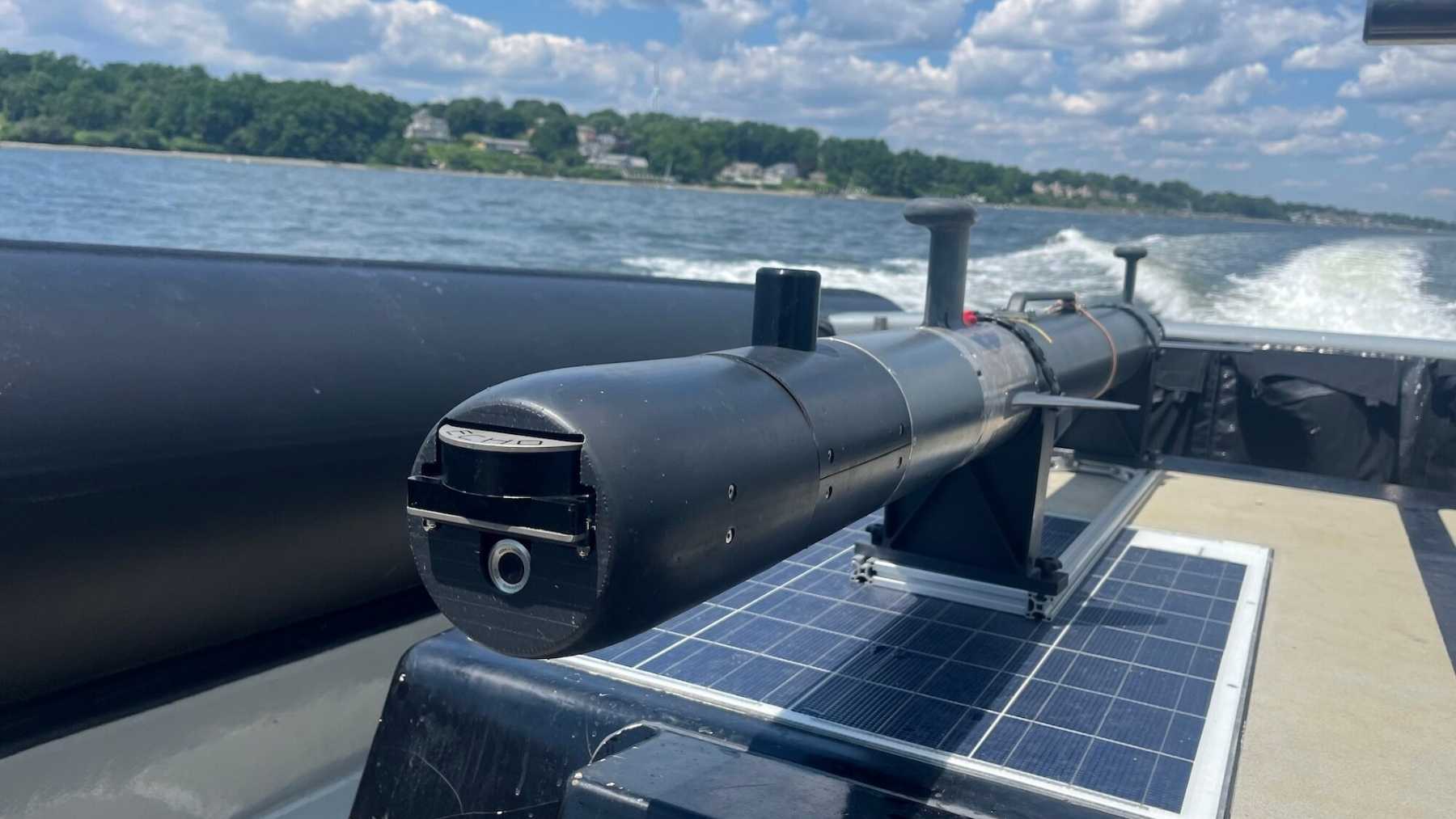
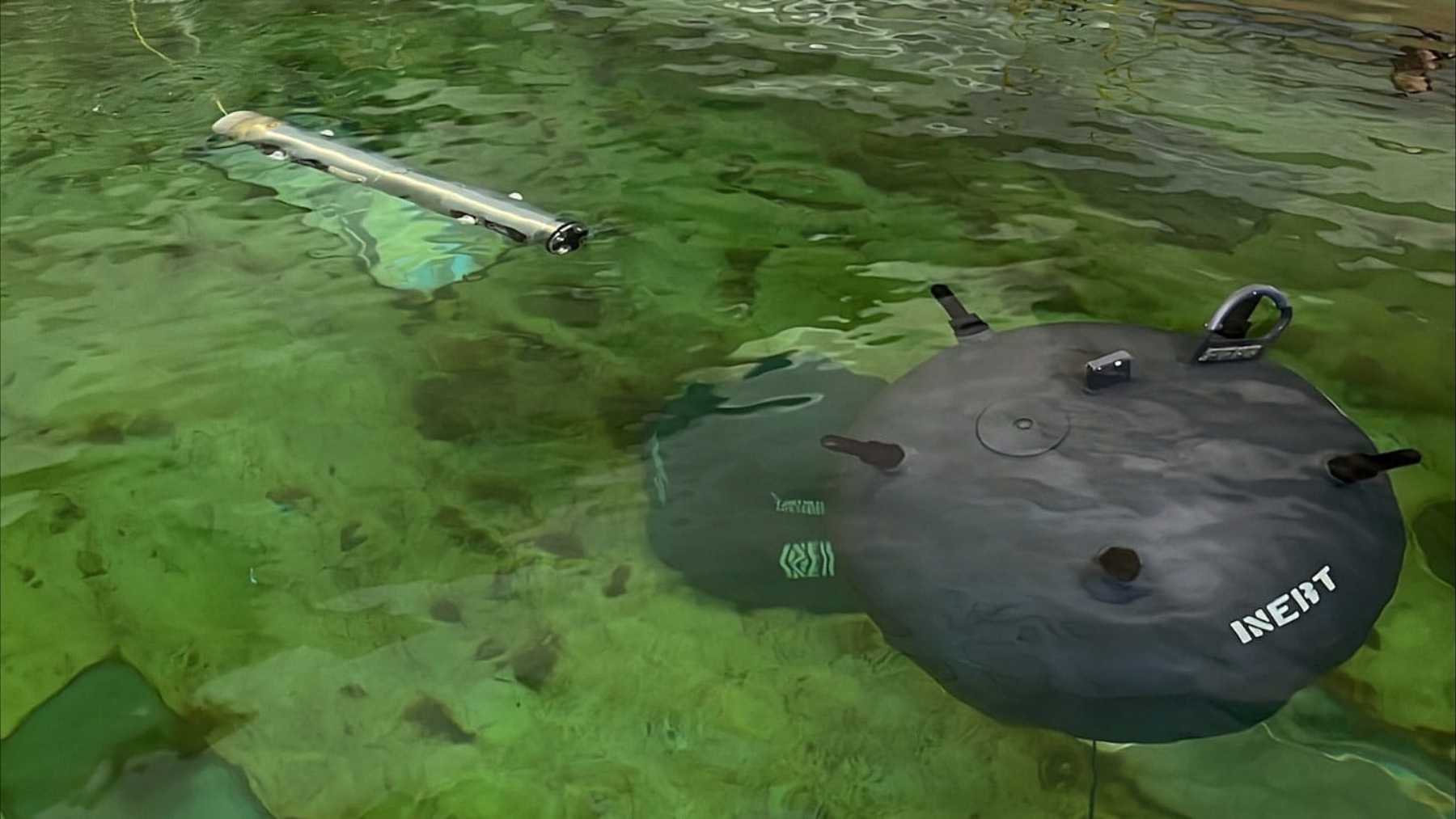
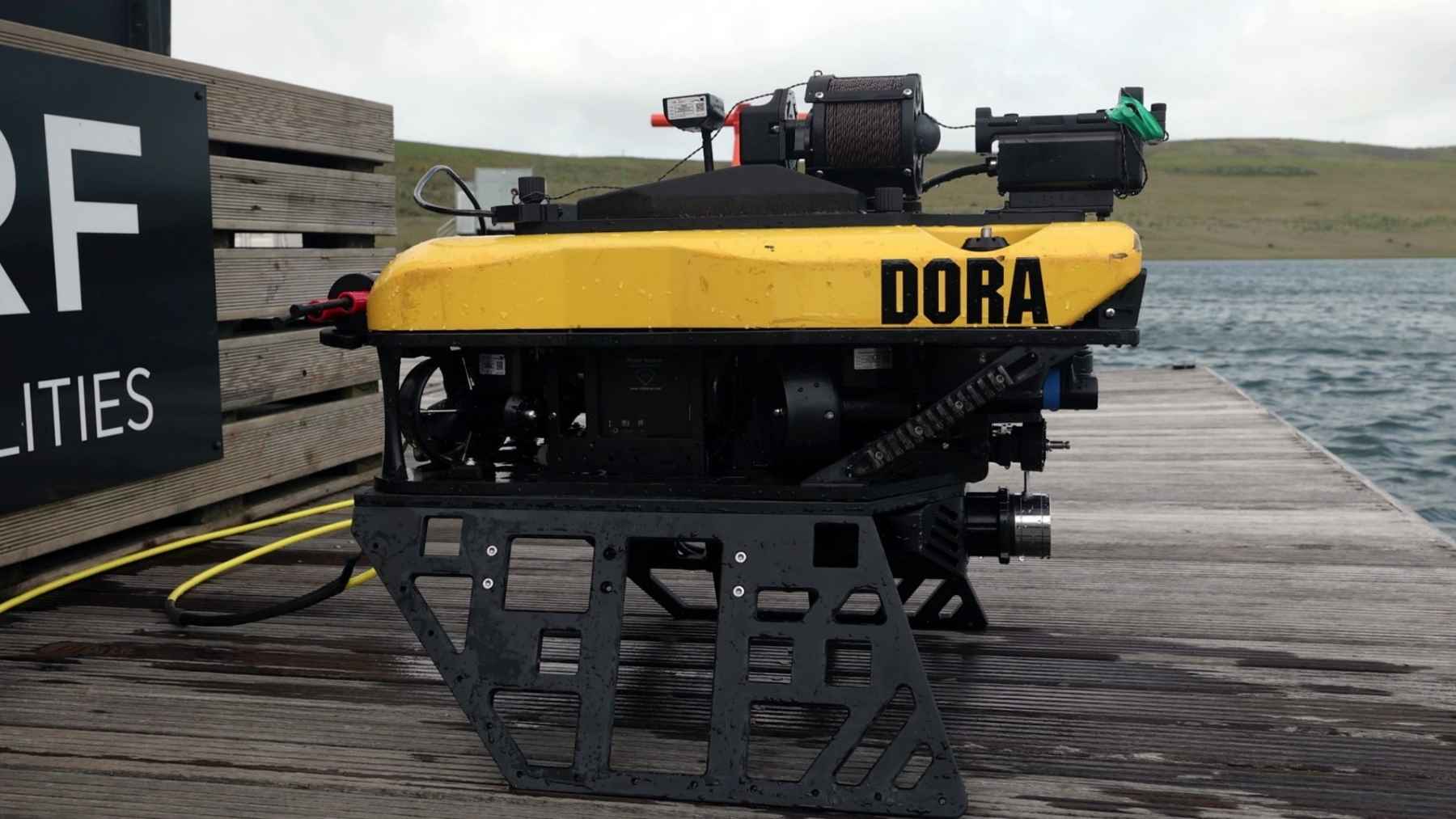
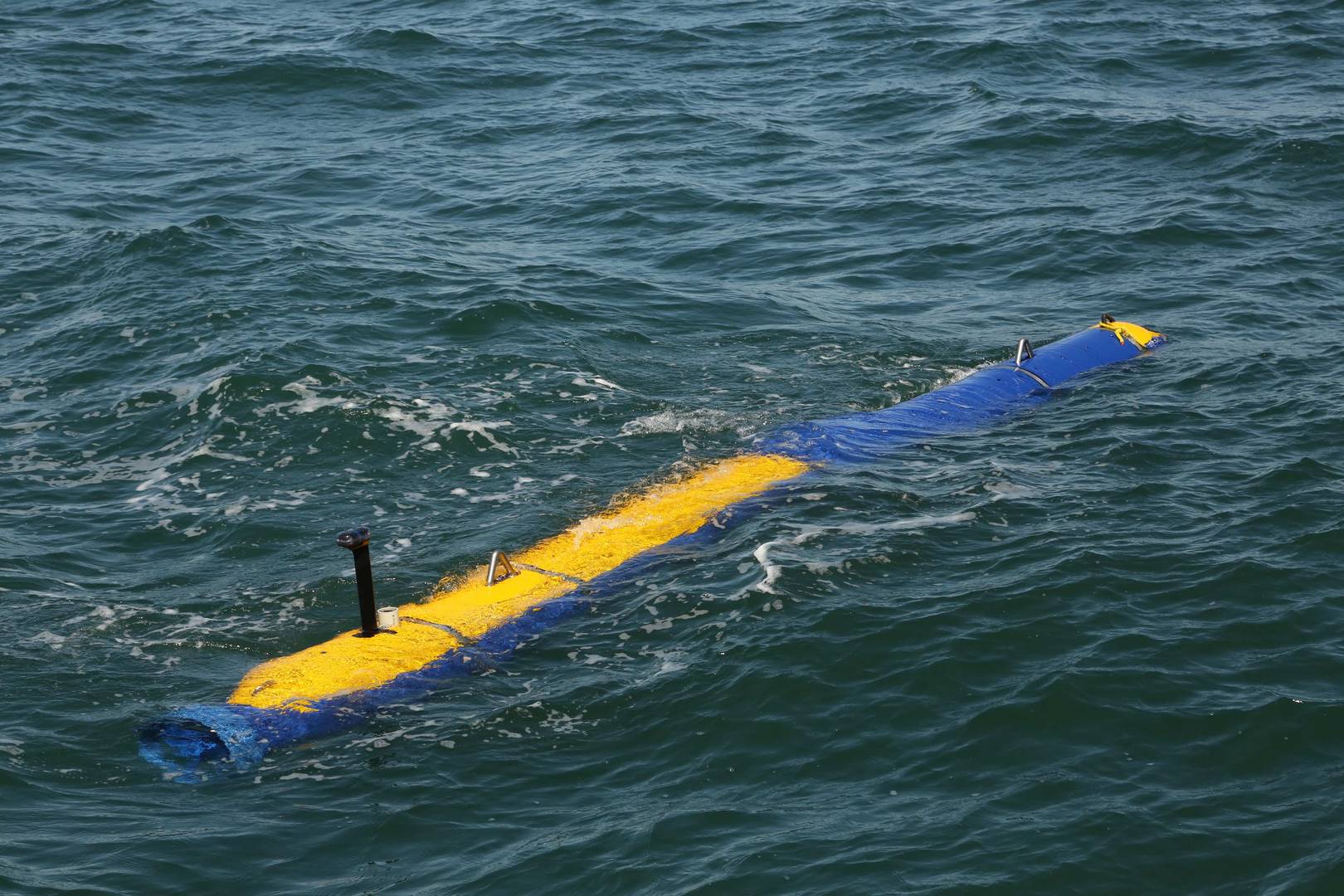
One of the RN's handful of minehunting drones.

View attachment 99328

View attachment 99329

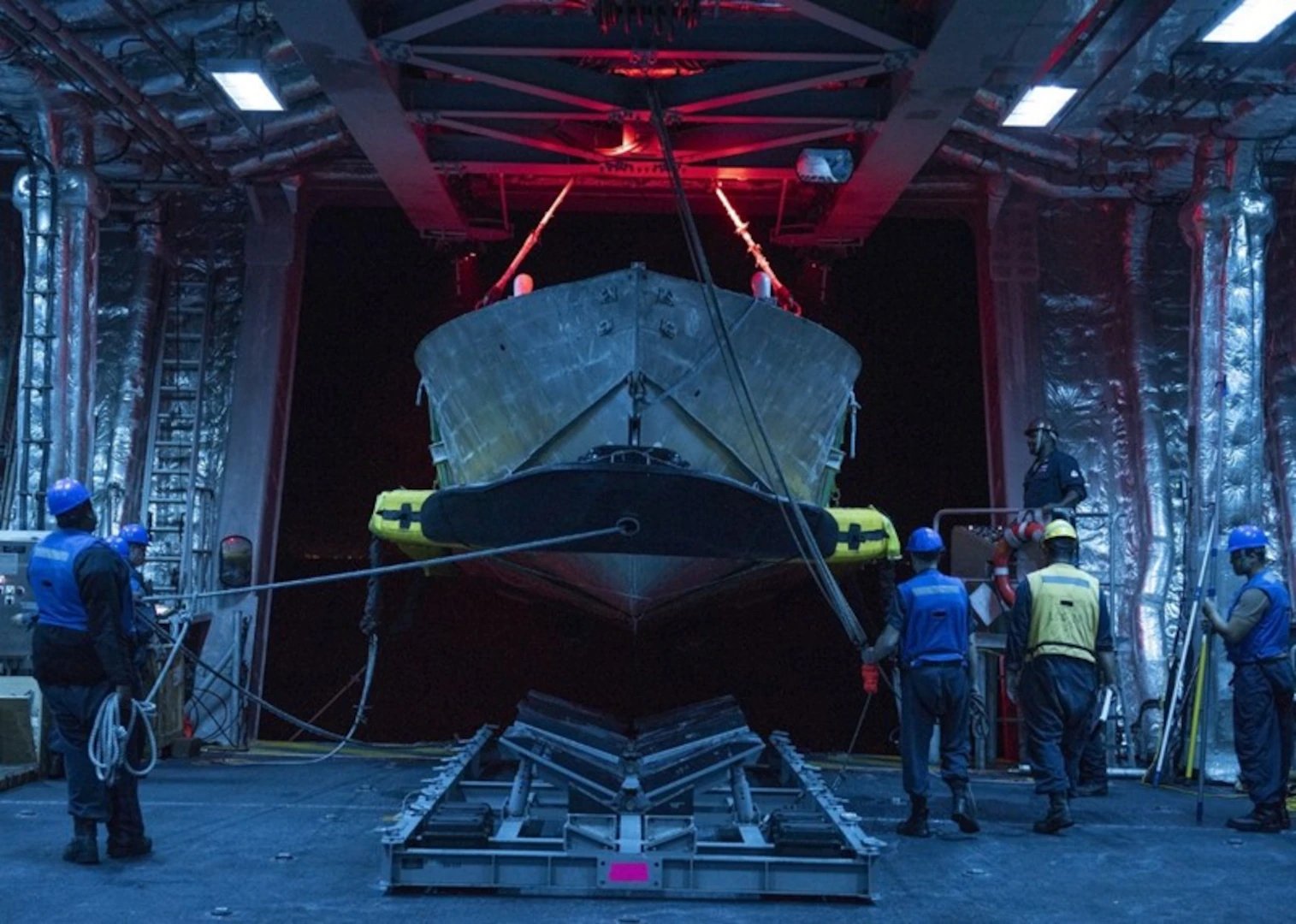
This was the carrier with the Avenger MCMs that USS Canberra (Independence class LCS-30) escorted out of the Persian Gulf in January.

There are two more similarly equipped LCS parked in Singapore.


And the requisite nay-sayer has been found

 
And some more from the Brit side of things


With 1000 km uncrewed RHIBS capable of platforming and launching towed arrays, ROVs, USVs, UUVs and UAVs of their own; with XLUUVs available; with a portable ops control centre that looks, to this untrained eye, indistiguishable from a Predator, or NASAMS air and/or coastal defence control station, or any other station in a Combat Information Centre, how close to the threat does the mothership have to be?

Indeed, in coastal waters, like the Gulf, do you even need to risk a ship at all?
Couldn't the entire effort be managed from shore stations?

....

Britain is hurting politically because Cyprus was attacked because it host two British bases. The politicians want to be seen as doing something and nothing draws headlines more than a big ship sailing into harm's way.
Except, perhaps, a big ship being harmed.

Questions were asked about carriers and destroyers. Until someone said that the UK has a couple of concrete carriers in the region. They just need a few more aircraft and a RAF Regiment redeployment with their new kit.

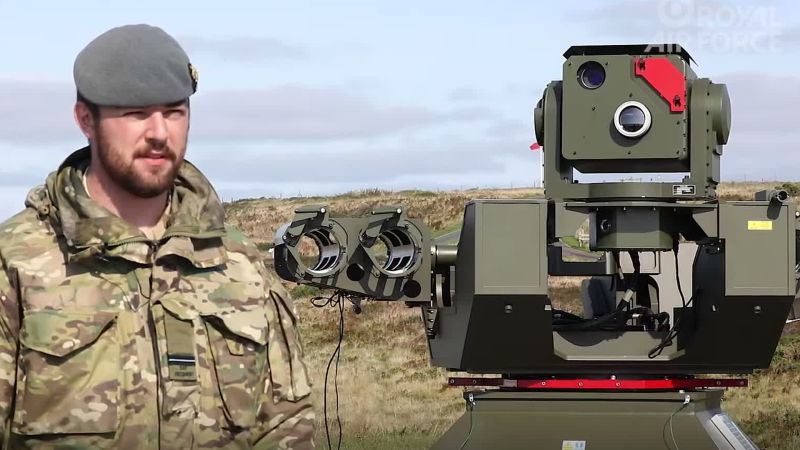
New RAF Air Defence system based on the Martlet LCMM missile (8 km)


Less majestic than parking a carrier off Cyprus, or an LSDA off Hormuz, but probably more effective and less risky.

All the government needs is a better spin doctor and to start handing out medals

 
Back
Top