
- Reaction score
- 13,975
- Points
- 1,160
Any bets that Trump is bribing Putin to not use the nukes?
These days you couldn't get me to bet the sun rises in the east.


Any bets that Trump is bribing Putin to not use the nukes?

 www.kyivpost.com

 tvpworld.com
 www.bbc.co.uk

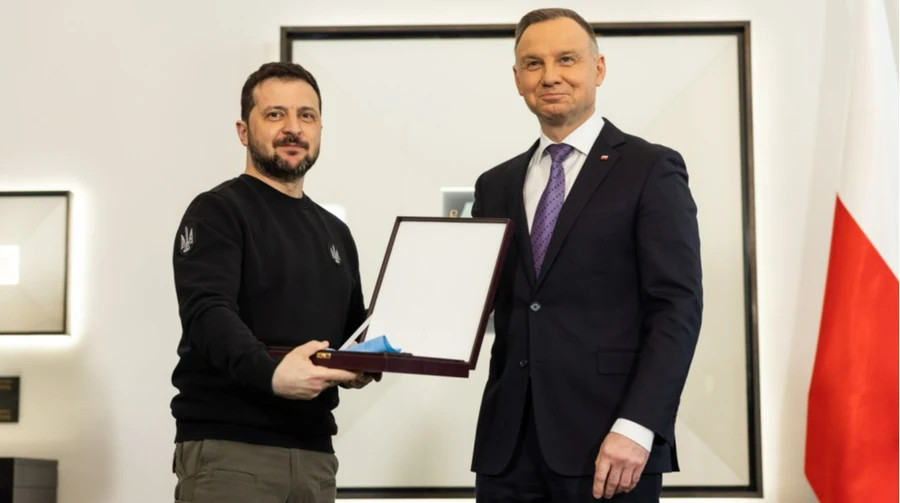
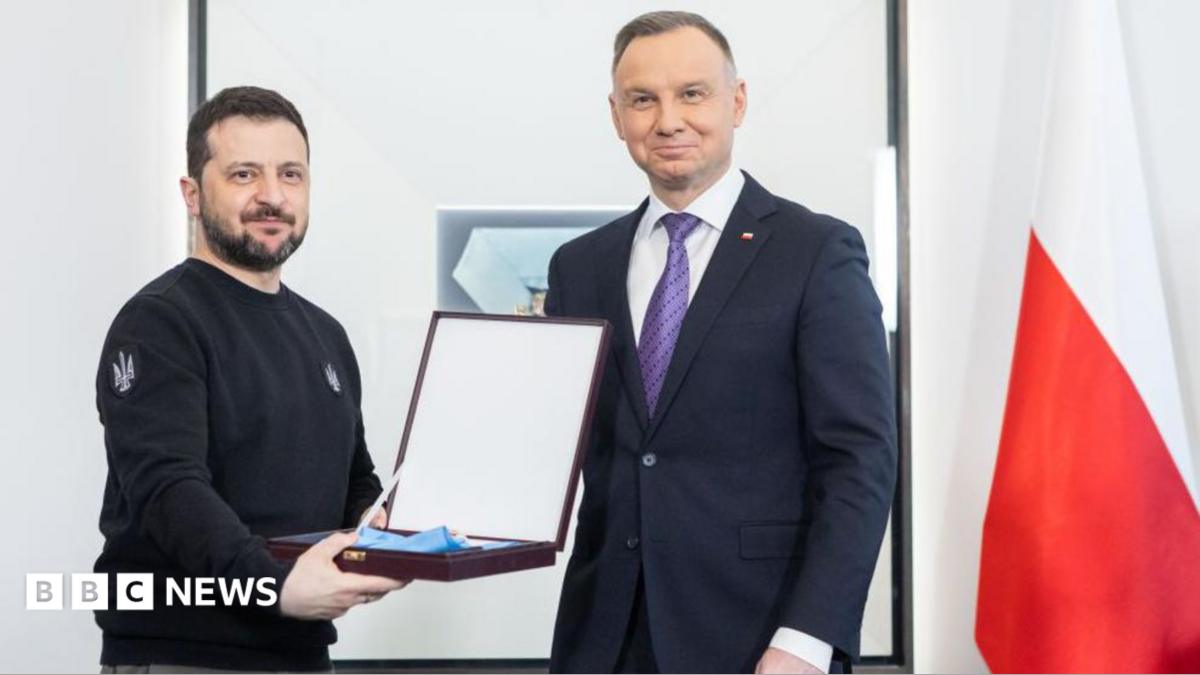
The irony is that they are stripping an award from a Jew who the UPA in Volyn would have killed just as quick as a Pole.Meanwhile, Poland take back one of its gongs from Zelensky.
Poland Strips Zelensky of Highest Honor Over UPA Dispute, Ukraine Hits Back
Polish President revoked Zelensky’s Order of the White Eagle over a dispute involving the UPA, prompting Ukrainian Foreign Minister to return a Polish state decoration in protest.Polish president revokes Zelenskyy's Order of the White Eagle
The move comes amid a rift between Ukraine and Poland, which has been one of Kyiv’s staunchest backers in its war with Russia.One guy's "kicker of Soviet Commie ass" is another's "genocider in Volyn."Zelensky stripped of Polish honour over WW2 name of army unit
Ukraine has denounced the move, calling it a "strategic mistake" and "disrespectful".
Funny how history works in this part of the world, right?The irony is that they are stripping an award from a Jew who the UPA in Volyn would have killed just as quick as a Pole.
TWZ has an absolutely amazing collection of videos showing the latest Ukrainian offensive against oil refineries around Moscow. The videos do show some cases where Russian AD systems take out Ukrainian drones (and in one case an Ukrainian UAV hits a construction tower), but for the most part the AD systems are ineffective.

Extraordinary Footage From Moscow Under Heavy Ukrainian Aerial Attack
Ukraine's large-scale strike on Moscow, triggering massive explosions and fires, may indicate a new phase in the long-range air war. Ukrainian drones strike one of Moscow’s most critical oil refineries, triggering massive explosions and fires.www.twz.com

They also killed Ukrainians who didn’t agree with their interpretation of things.The irony is that they are stripping an award from a Jew who the UPA in Volyn would have killed just as quick as a Pole.
As someone who’s Mothers family came from the old Austrian province of ‘Galicia’ and is Polish descent, I know this history well.They also killed Ukrainians who didn’t agree with their interpretation of things.
Just doing some cursory reading on them they are a very mixed bag. At times they fought just about everyone including the Germans, at other times they were allied with Polish resistance groups.
I can see how they would be romanticized by the Ukrainians as they were mainly fighting for a Ukrainian country. Just as I can see why they would be hated by the Poles for some of their disgusting actions in pursuit of that goal.
As a resident of Sherwood Park - officially the world's largest hamlet - I'm flattered we made the list!Some further thoughts
Sherwood Park
Hardisty
Burnaby
Sarnia
Montreal
Saint John
Come-by-Chance.


 apnews.com
As a resident of Sherwood Park - officially the world's largest hamlet - I'm flattered we made the list!
I have 3 refineries within about a 5 minute drive of me (the ones on refinery row)
But little Fort Saskatchewan has 11!! Poor buggers
(Don't get confused folks, it's here in Alberta & is about a 5-7 minute drive up the highway from me)

 defence-blog.com
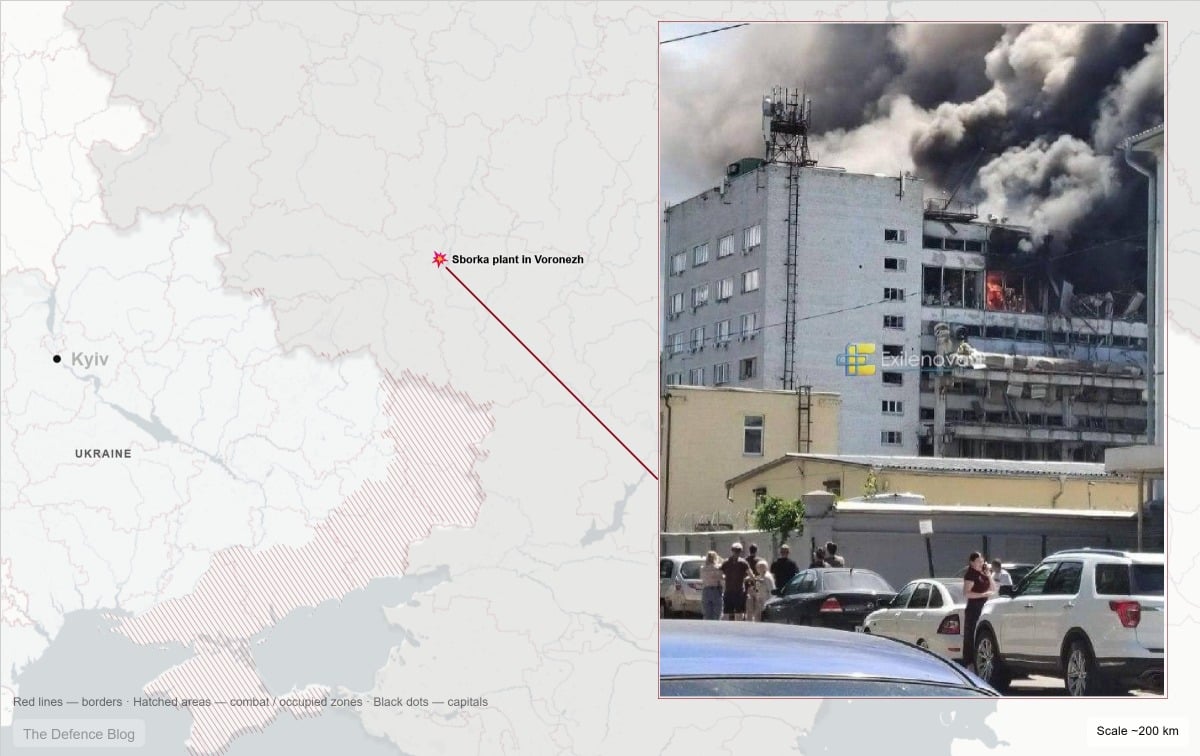
And another article about Russian claims that this strike was carried out by an American-supplied AGM-188A Rusty Dagger cruise missile:Ukraine appears to have struck one of the more obscure but consequential nodes in Russia’s weapons manufacturing chain, hitting the Sborka plant in Voronezh, a facility that Ukrainian military intelligence identifies as a supplier of specialized semiconductor components to three of Russia’s most operationally significant weapons programs: the Kh-101 cruise missile, the Iskander-K ballistic missile complex, and the Pantsir-S1 air defense system.
 defence-blog.com
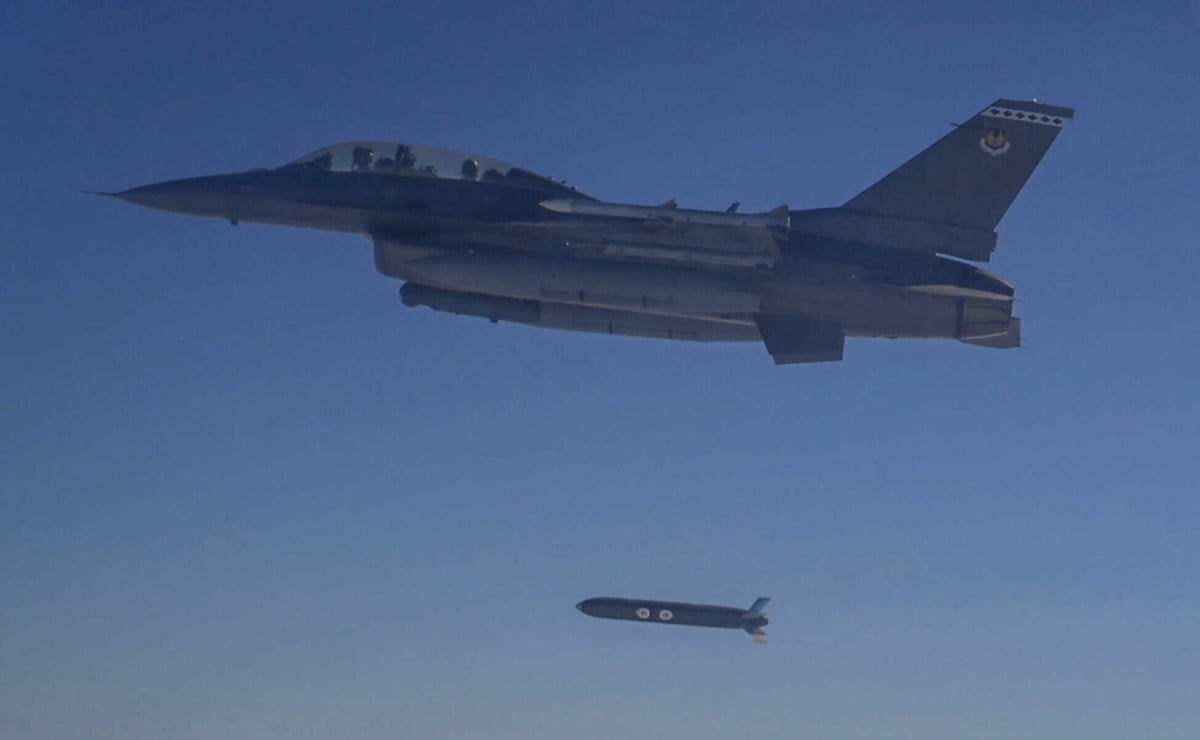
The range of this low(er) cost cruise missile and the volume Ukraine could be getting could definitely cause problems for RussiaA Russian military-affiliated Telegram channel claims Ukraine used U.S.-supplied AGM-188 Rusty Dagger cruise missiles to strike the Sborka semiconductor plant in Voronezh, a claim that, if confirmed, would represent the first documented combat use of a weapon system the United States designed from scratch specifically to give Ukraine a mass-producible long-range strike capability at a fraction of the cost of conventional cruise missiles.
The claim comes from the channel “Voevoda Broadcasts,” cited by the Status-6, and has not been independently verified or confirmed by either the Ukrainian or American governments at time of publication.
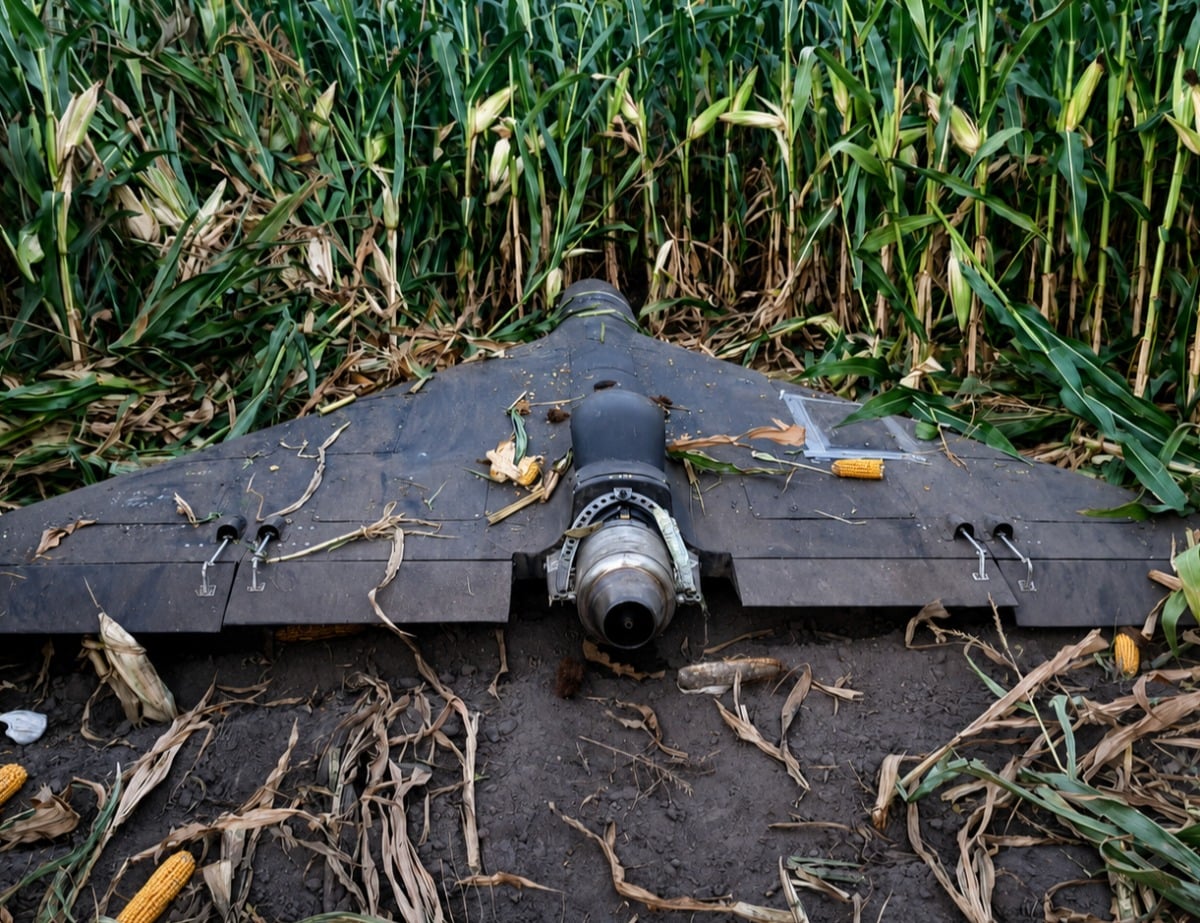
The AGM-188A Rusty Dagger is a turbojet-powered, air-launched, precision-guided standoff munition developed by Zone 5 Technologies under the U.S. Air Force’s Extended Range Attack Munition program, a procurement effort the Air Force launched in early 2024 with an explicit primary purpose: to provide Ukraine with affordable, mass-producible long-range strike weapons faster than existing programs could deliver them. The missile is a hybrid between a conventional cruise missile and a guided aerial bomb, fitting within the size and weight envelope of a standard 500-pound (227-kilogram) Mk 82 unguided bomb, which means any aircraft currently capable of carrying that bomb can potentially carry the Rusty Dagger without significant modification to the weapon station.
The AGM-188A Rusty Dagger is reported to have a range of more than 930 kilometers (578 miles), more than double the original ERAM requirement of 460 kilometers (286 miles), while reportedly weighing only about 200 kilograms (441 pounds) including a 45-kilogram (99-pound) warhead. That warhead mass is modest by cruise missile standards, roughly comparable to the warhead carried by a Russian Shahed-136 kamikaze drone, but the missile’s precision and standoff range compensate for what its warhead lacks in raw explosive power. A target struck by a weapon that arrives from 930 kilometers away, launched from an F-16 flying well behind the front line, has no practical defense against that combination of range, speed, and accuracy using the air defense systems Russia currently fields in depth.
Because the AGM-188A can reportedly be launched from any aircraft capable of employing JDAM-guided munitions, a squadron of 12 F-16 Fighting Falcon fighters could theoretically launch as many as 144 ERAM cruise missiles in a single sortie, creating a saturation attack capability that Russian air defenses would struggle to absorb. That scale of employment is what the ERAM program was built to enable, and it is why the program’s primary purpose was publicly described as supporting Ukraine even before a contract had been awarded.
 defence-blog.com
Ukraine’s drone interceptor crews cannot reliably chase down Russia’s new jet-powered attack drones because their aircraft simply are not fast enough to catch them before their batteries run out, a frontline Ukrainian air defense commander has revealed in an interview to Militarnyi
Added to the technical issues are problems of coordination:The core of the problem is arithmetic. Russia’s jet-powered attack drones, the Geran-3, Geran-4, and Geran-5 series that Moscow has been deploying in increasing numbers throughout 2026, fly at speeds exceeding 300 kilometers per hour (186 mph). For an interceptor drone to reliably pursue and close on a target, the standard operating principle requires the interceptor to be at least 25 percent faster than what it is chasing. Ukraine’s current interceptor fleet, built around electric quadcopters and fixed-wing designs optimized for hunting the slower propeller-driven Shahed-136, which cruises at roughly 185 to 200 kilometers per hour (115 to 124 mph), does not consistently meet that threshold when the target is a jet-powered variant.
Ramzes illustrated the practical consequence with a specific scenario that makes the mathematics undeniable. A Shahed flying at 300 kilometers per hour (186 mph) against an interceptor flying at 310 kilometers per hour (193 mph) produces a closing speed advantage of only 10 kilometers per hour (6 mph). By the time the interceptor narrows the gap enough to engage, it has traveled so far from its launch point that the battery is drained before the kill can be made.
And weather has a major impact on the ability to intercept Russian drones:Even the propeller-driven Shahed variants, which cruise at 200 to 250 kilometers per hour (124 to 155 mph) and represent the bulk of Russia’s ongoing drone campaign, do not present a simple interception problem. Ramzes described scenarios where a crew scrambles to intercept a target only to find the battery partially depleted from a previous sortie, or where another crew positioned closer to the threat completes the interception first, leaving the first crew airborne with nothing to engage and insufficient charge to pursue another target.
“You launch for an intercept, and your battery is already drained. Or the crew in front of you shoots it down, the one that’s closer. You took off, you see it, you confirm it, and you already have no battery, you need to return to catch another one,” he said. “That is, it’s complex work. One must not think that Shaheds are just shot down like that. It is a great deal of work by a large number of people, and not only crews, but also those sitting at the command post, informing, those who communicate with each other, who notify neighboring units.”
The third major constraint Ramzes identified is weather, and it applies across the entire interceptor operation regardless of speed. Visual contact with the target is currently essential in most engagements. When there is precipitation, cloud cover, or fog, the drones simply fly inside the clouds and the interceptors cannot find them.
“All the crews who work with us, almost all the waves they shoot down, but only if there is weather,” he said. “Even now, drones with a guidance system are used, but even they do not guarantee that a Shahed will be found in poor weather conditions. That is, if we have precipitation, fog, cloud cover, Shaheds simply fly in the clouds, we don’t see them, and then almost 100% can fly through.”
Fort Saskatchewan is actually a nice little town. A little less established in that it's growth spurt has been fairly recent.From the Henday it all looks like one tank farm. Kind of like the images from Moscow.
Thanks for the correction.
I regularly visited Sherwood Park on business. Never Fort Saskatchewan.

 www.dw.com
Kiss one railway bridge good bye.
Ukraine says major Crimea bridge destroyed in latest attack
Ukraine says major Crimea bridge destroyed in latest attack
Ukraine continues to hit infrastructure on the Crimea to isolate the Russian-annexed peninsula. Meanwhile, Russia attacked Volodymyr Zelenskyy's hometown with a ballistic missile in a deadly strike.
In a post on Telegram, Ukraine's Special Operations Forces (SOF) said the North Crimean canal bridge "no longer exists."
Got to wonder how they get men to work on that knowing full well that the drones will be coming.Which means the artery connecting to the rail portion of the Kerch bridge is cut.

In Russia you not work on bridge. Bridge w work on you …da tovarisch?Got to wonder how they get men to work on that knowing full well that the drones will be coming.
Got to wonder how they get men to work on that knowing full well that the drones will be coming.
 www.theatlantic.com


