An update on my sense of how the North Atlantic Theatre seems to be developing.
The key to hybrid autonomous operations at sea, from my perspective, is the ability to communicate effectively, especially under water. With that in mind I believe this to be the single most critical component in the system: The L3Harris GPM300 Acoustic General Purpose Modem.
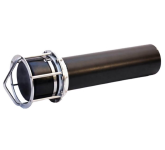
GPM300 acoustic modem is a long-range subsea communications system used for reliably sending and receiving data and/or voice through water for comms, monitoring and remote C2 in harsh, multi path, reverberating and noisy hydro acoustic environment

www.l3harris.com
This forms a key component in the Aussie developed Rock Lobster comms system developed with L3Harris as part of the AUKUS Pillar 2 program.
When dozens of nations gather for the world's largest international maritime exercise, the stakes for demonstrating real capability are high. At Exercise Rim of the Pacific (RIMPAC) 2026, L3Harris delivered in support of the Australia, United Kingdom and United States security partnership known...
www.l3harris.com
.....
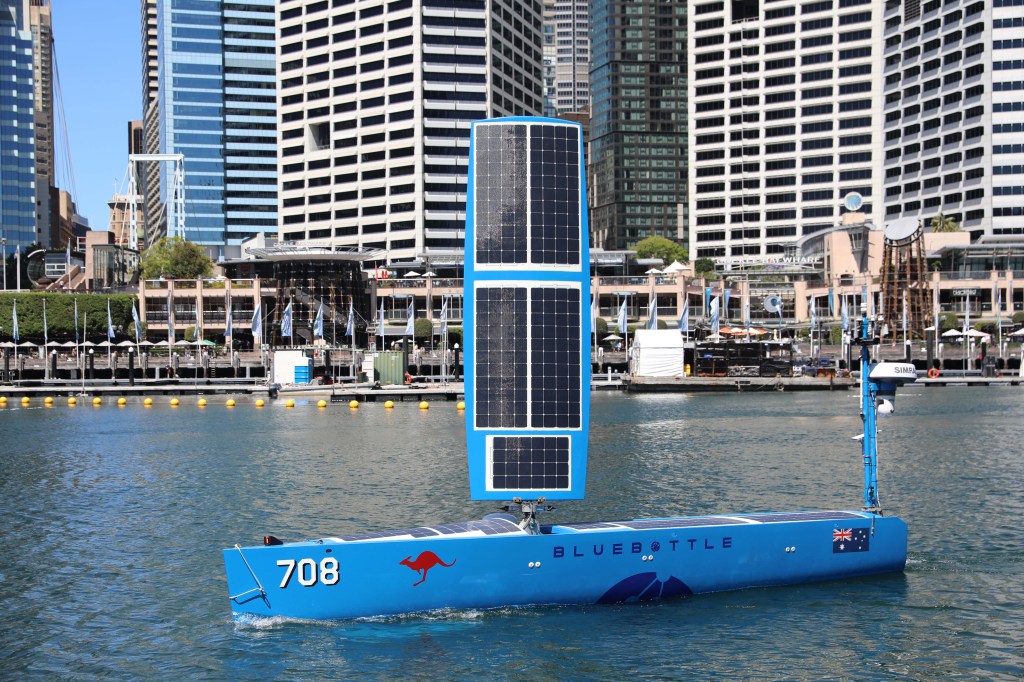
Another key element in the system is the Ocius Bluebottle.
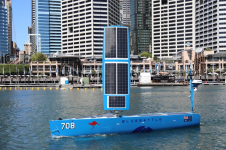
Bluebottles are a communications interface, bridging the communication gap between the subsea and the sky for persistent maritime operations.

ocius.com.au
"I want potential adversaries to understand that, when they see an Ocius Bluebottle USV, it’s a signal to get out of our ocean,” Minister for Defence Industry Pat Conroy said.

www.defensenews.com
"The Bluebottle unmanned surface vessel – or USV for short – produced by Ocius Technology, is powered primarily by wind, wave and sun to give persistent, at-sea surveillance for weeks at a time."
Comparable boats are produced by Saildrone, Wave Glider and Kraken. And these are boats, not ships. They are in the 5 to 25 m length category. The Bluebottle is a 7.4m craft. They and their sisters are designed for endurance. They are platforms for sensors and comms relays. They ride out storms rather than fight them. They are silent, low observable and relocatable. They link submarines with satellites and aircraft. They sense the air, water, and vehicles moving within them.
The Aussies have bought and put into service 15 Bluebottles and are buying 40 more (124 MUSD or 3 MUSD apiece). New Zealand has bought a couple.
....
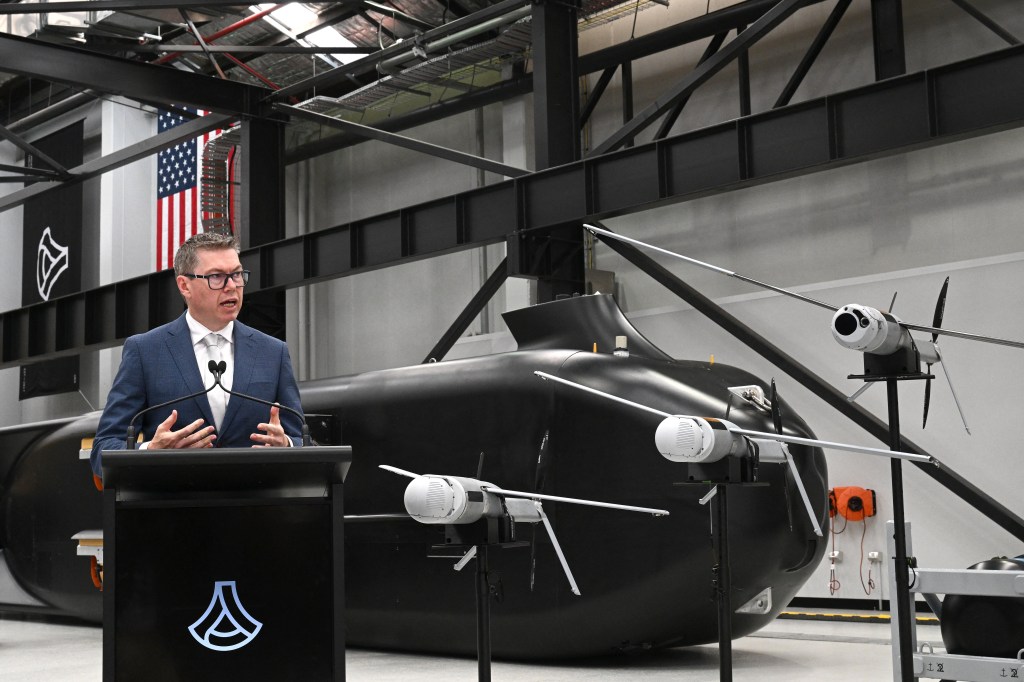
The Bluebottle is joined by UUVs and AUVs. The lead Aussie solution is the Speartooth. An oversized torpedo of 8 to 11m that can be launched by a trailer towed by pickup truck from any available boat ramp. It displaces 2000 kg and can cruise 2000 km over a period of weeks.
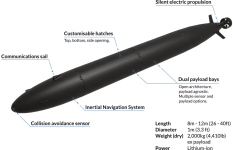
Speartooth is a next-generation autonomous Large Uncrewed Underwater Vehicle (LUUV) built for scalable maritime operations. A modular design, minimal

c2robotics.com.au
1 operator can supervise up to 50 Speartooth UUVs. Some of which will be in motion. Some of which will be lying dormant on the seafloor.
Canada's Cellular Robotics (BAE) and ISE (Elbit) are both well placed in this field.
....
The Bluebottles and Speartooths of the world are joined by the XLAUVs like the Ghost Shark. The Aussie are planning on buying "dozens" for 1.2 BUSD or 1200 MUSD. One dozen would mean a supported unit cost of 100 MUSD each. "Dozens" suggest multiples. 4 dozen would suggest a unit price of 25 MUSD. 8 dozen equates to 12 MUSD.
Australia's Royal Navy moves Ghost Shark autonomous submarine from concept to production in under three years, marking a new era in maritime autonomy.

www.anduril.com
The Australian Navy recently lifted the veil on some payloads the service is fielding on its Ghost Shark extra-large autonomous underwater vehicles.
www.defensenews.com
New test footage shows Anduril’s Ghost Shark autonomous underwater vehicle deploying sea mines and logistics caches, highlighting Australia’s advancing undersea warfare capabilities.

www.facebook.com
The Brits have operated one of their CETUS XLAUVs (XV Excalibur) in British waters from a control station on exercise in Australian waters.
They have also deployed US Mk 48 heavy torpedos from the Excalibur.
The Royal Navy successfully tested the ability to communicate with Experimental Vessel (XV) Excalibur, the Royal Navy’s Extra Large Uncrewed Underwater Vehicle (XLUUV), while submerged on the other side of the world.

www.royalnavy.mod.uk
......
Four characteristics of all this autonomous underwater hardware.:
They are cheaper than crewed vessels
They can be built faster than crewed vessels
They can dive deeper that crewed vessels
The available comms limitations means that there has to be a relay node every 20 to 40 km or so.
The comms limitations suggests that for an effective net to be established there will have to be hundreds of these Bluebottles, Speartooths and Ghost Shark equivalents operating at all depths in the North Atlantic, each equipped with something like the GPM300 modem. However there will be few operators supervising operations.
The available equipment not only permits comms and ISR operations, but also offensive operations with seamines, heavy weight torpedos and long range loitering UAVs/OWEs.
....
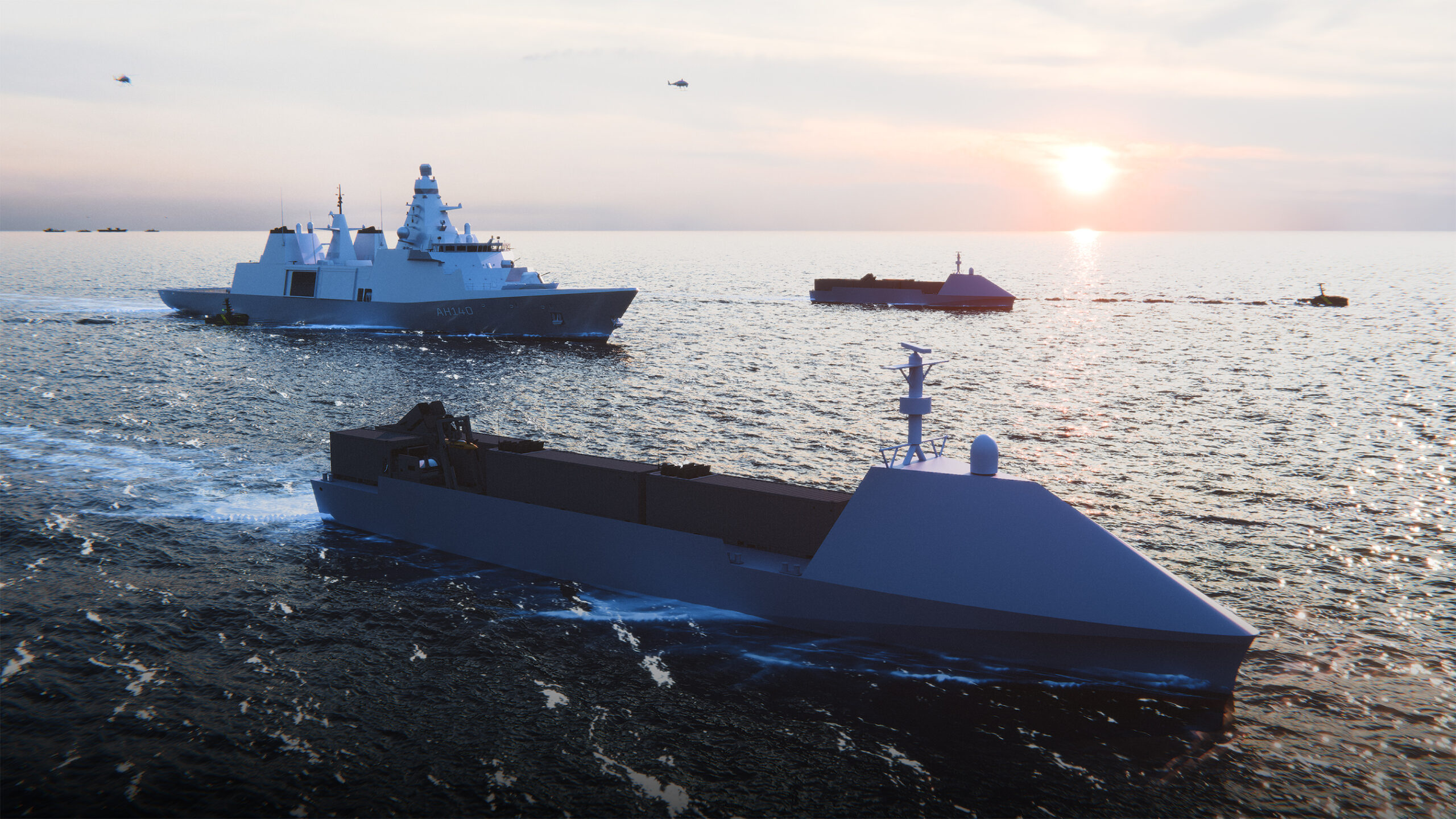
Fighting within this environment the Brits plan to operate their two carriers as floating drone bases.
The trials involved British-made Nyan Maritime one-way drones taking off from the carrier's flight deck

www.forcesnews.com
Business Insider visited the Royal Navy's fleet flagship, HMS Prince of Wales, as it conducted operations in the Norwegian Sea.

www.businessinsider.com
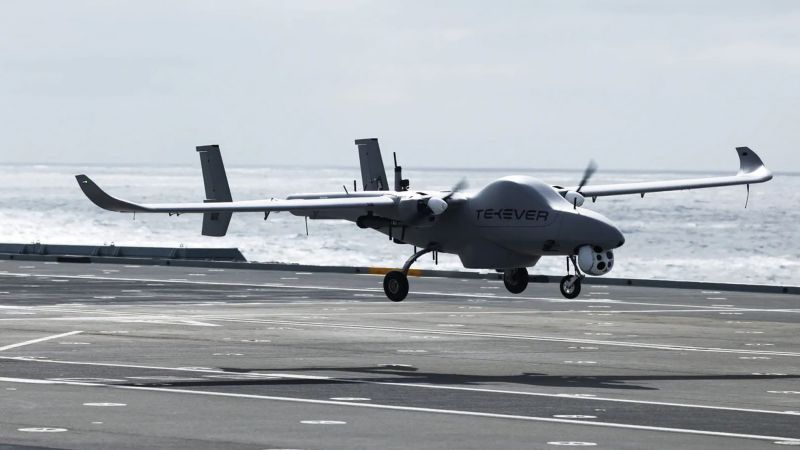
Operating with lean crews and a small number of F35Bs the Brits are already launching ISR and Logistics UAVs from their decks and have started to launch 250 km OWEs (Nyans).
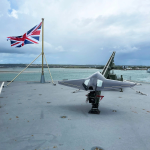
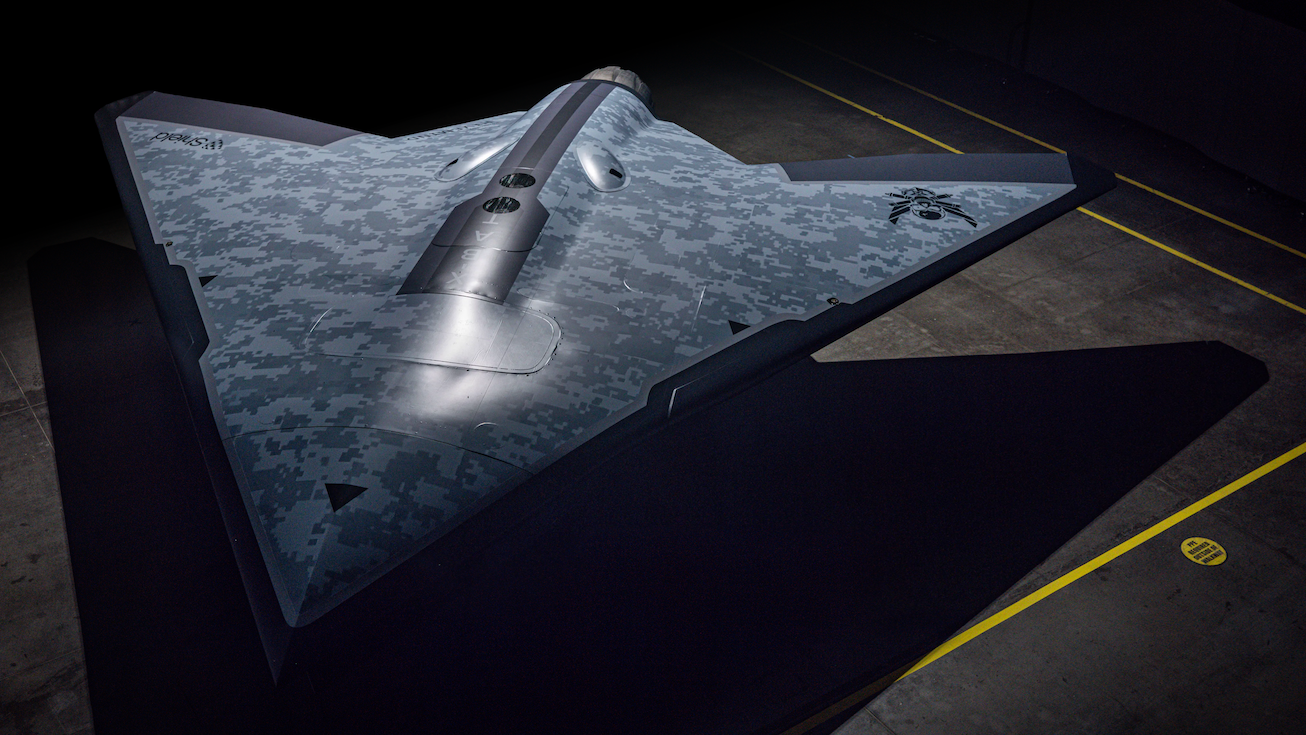
A near term prospect for an addition to the air wing could be the Shield AI XBat which has moved into prototype stage. The XBat builds on the success of the VBat but with a jet engine, larger capacity and longer range. It exploits a vectoring nozzle jet engine developed for the F16 in the last century.
Shield AI said its X-BAT drone will be able to take off and land vertically, letting it hide from enemies and present an asymmetric threat.

www.airandspaceforces.com
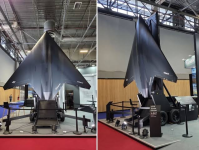
...
And of course, all of this will be working with these
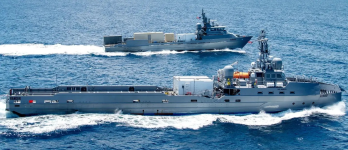
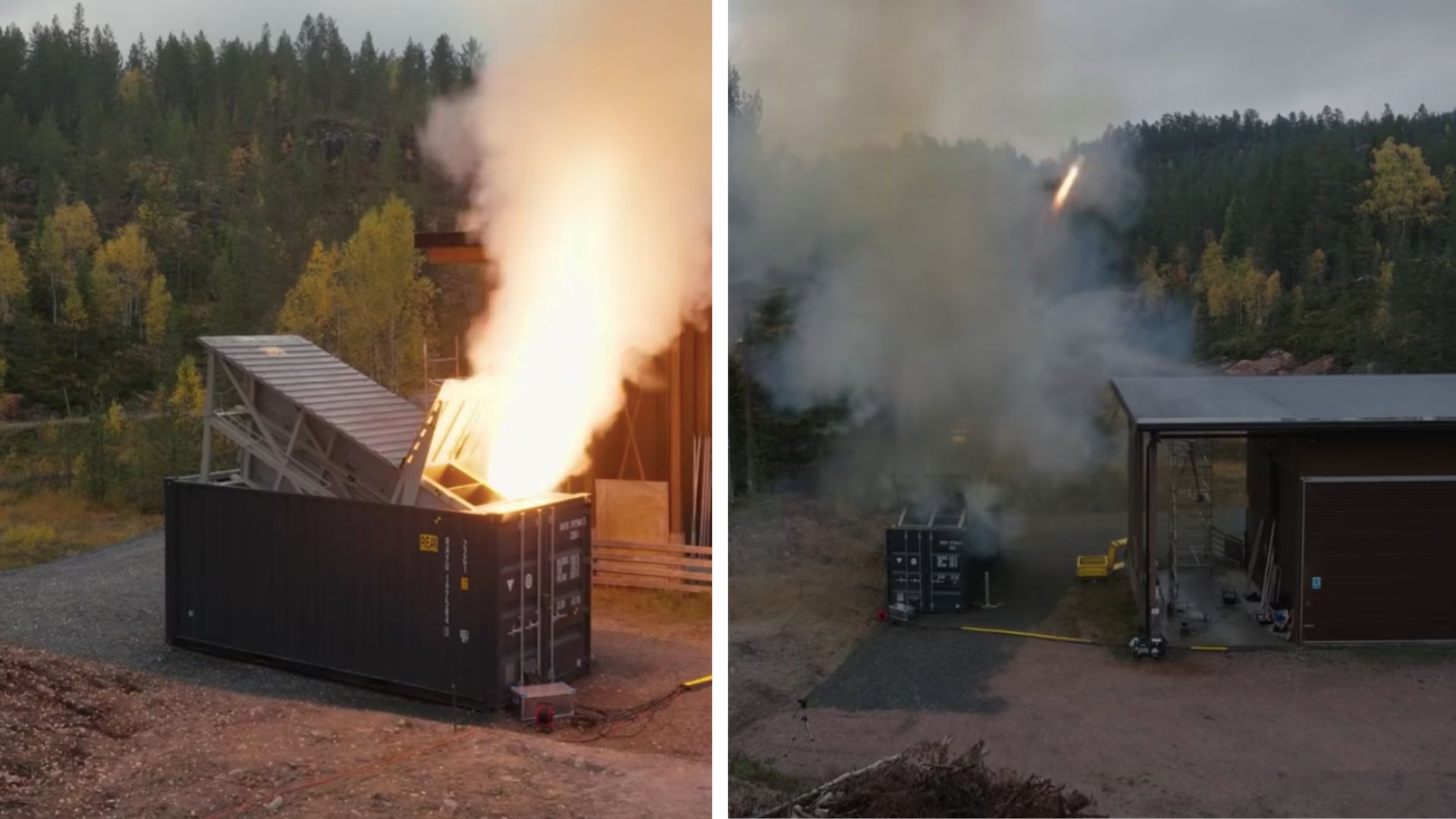
And containerized weapons systems like these.
Known as the NSM Mission Module, the system packages up to four missile canisters inside a standard 20-foot shipping container, offering a potentially simpler way to deploy precision anti-ship strike capabilities.

interestingengineering.com
.....
My sense is that shore based assets are going to be pushed further out into blue water with a lot fewer operators and a lot greater range. The increased range will do a lot to mitigate magazine depth issues. If the payload can be despatched from shore the it doesn't need to be carried aboard and doesn't have to be replenished at sea when the magazine is exhausted.
....
Edit
Comms will also be facilitated by these:
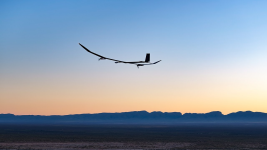
High Altitude Pseudo Satellites
And these:
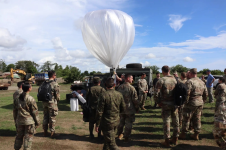
The US Army is exploring new uses for high-altitude balloons that can carry surveillance and communications equipment far above the battlefield.
www.businessinsider.com