• Thanks for stopping by. Logging in to a registered account will remove all generic ads. Please reach out with any questions or concerns.

Status of the US Navy

Kirkhill

Puggled and Wabbit Scot.
Subscriber
Donor
Reaction score
12,297
Points
1,160

Current Status of the Navy and Shipbuilding

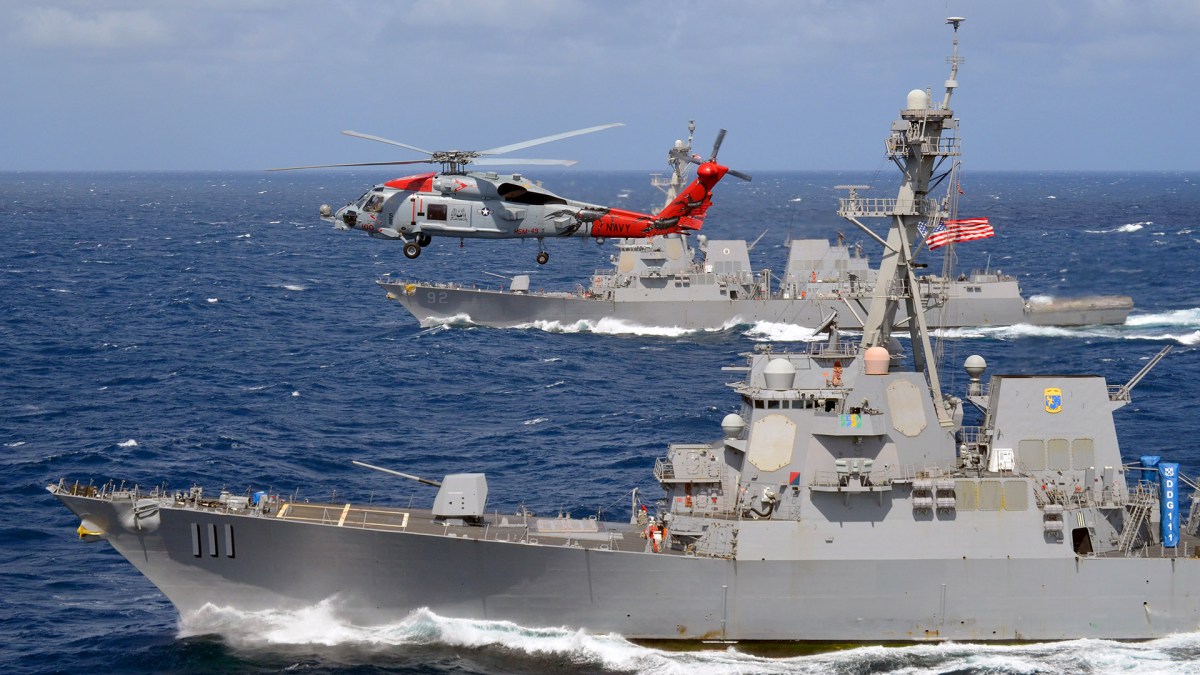
According to the United States Naval Institute, we now have fewer ships than at the end of President Trump’s first term — 293 as of July 21, four fewer than when President Trump left office in 2021. The actual numbers are worse than that. With 293 ships in commission, the reality is that 20%-25% of them at any given time are not deployable. The Navy aims to achieve 80% deployability by 2027. So, the real number of ships we have is roughly 234.

According to the secretary of the Navy, all current shipbuilding programs are missing deadlines and are overbudget despite promises to improve.


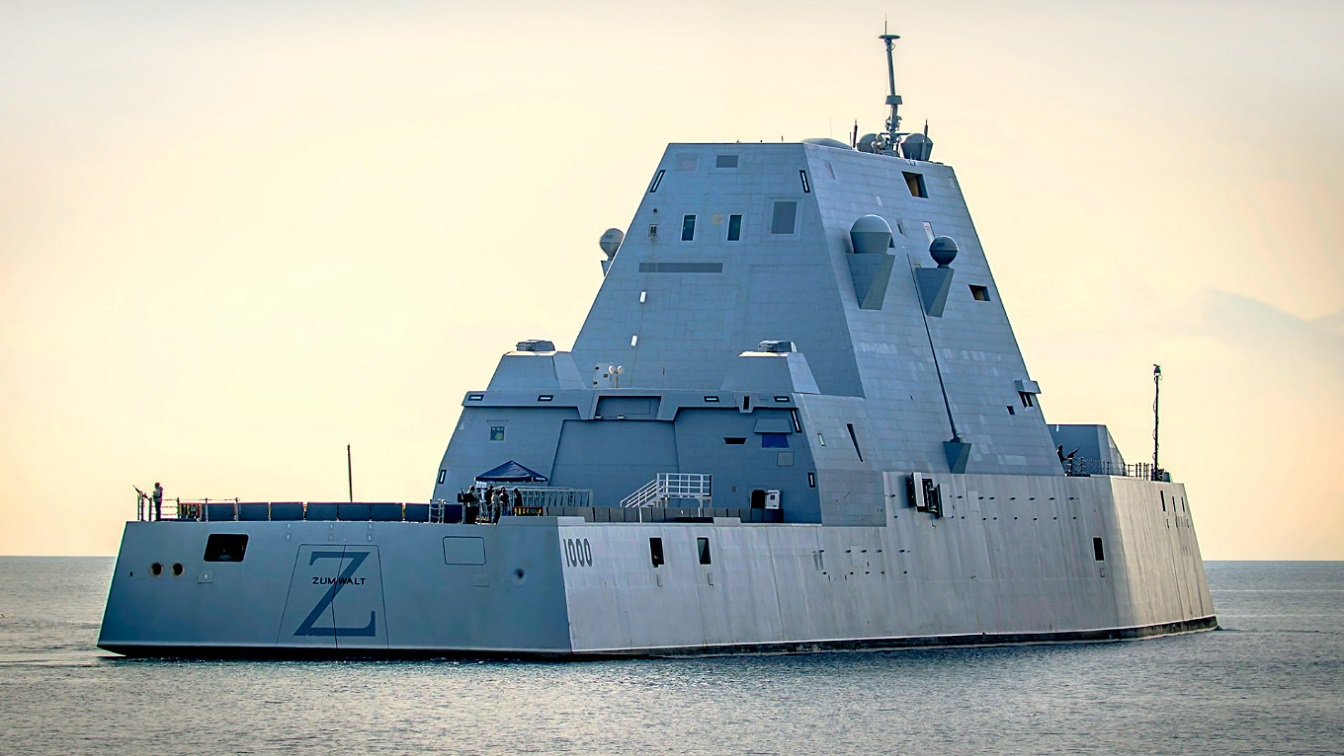
The U.S. Government Accountability Office (GAO) has reported that Navy shipbuilding programs have routinely exceeded their budgets and schedules. For instance, the Zumwalt-class destroyer program experienced a total cost of $24.5 billion for three ships, averaging about $8 billion per ship, which was significantly higher than initial estimates.

A 2024 GAO report indicated that the Navy’s ship design practices often lack alignment with leading commercial practices. This misalignment contributes to delays and cost overruns, as projects proceed without a full understanding of design maturity and readiness for construction.

The GAO has also identified that U.S. shipyards face significant workforce shortages and aging infrastructure. These issues hinder the ability to meet the Navy’s shipbuilding goals, with fewer than 40% of ships completing repairs on time, even when space is available in shipyards.
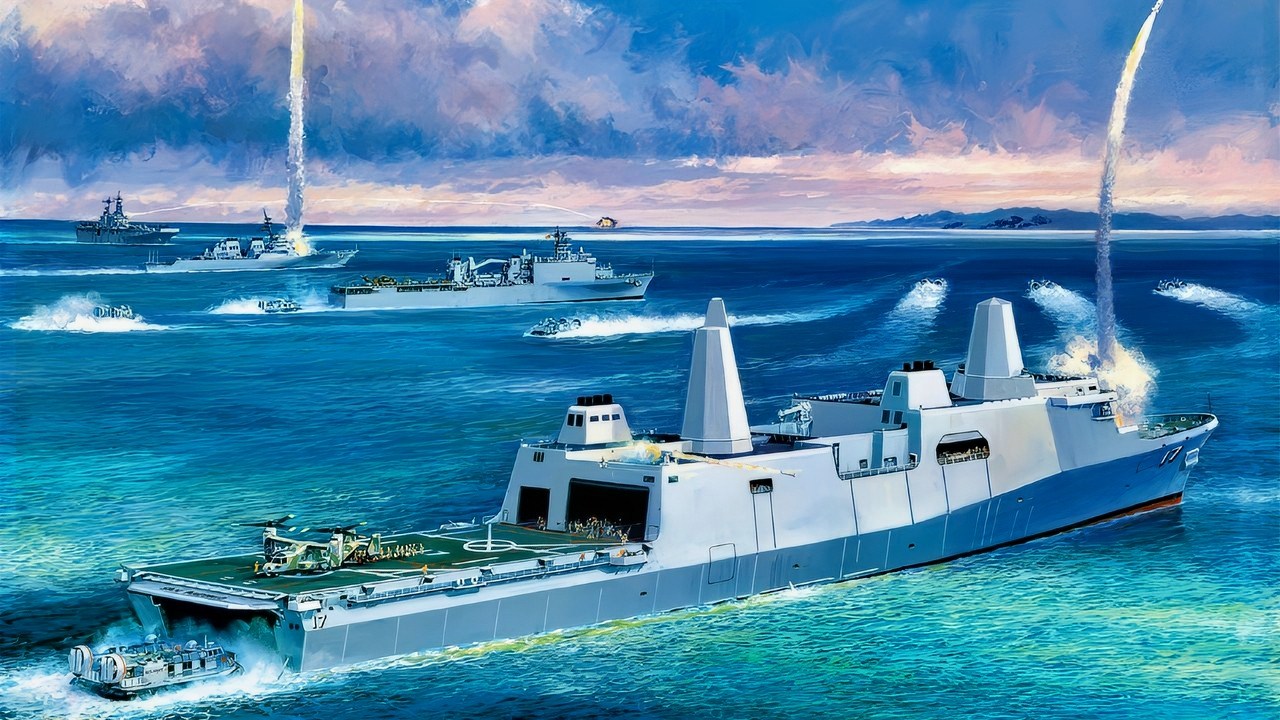
 

San Antonio's need help. Zumwalt didn't show up.
Options are to try and retrofit kit.
Other options around more unmanned arsenal type LUSVs.
 

Another opportunity for me to make a fool of myself and be instructed.

This article seems to suggest that the USN has had two solutions to every problem: the CSG (Carrier Strike Group) and the ARG (Amphibious Ready Group). However both of those forces have been falling in number, reducing in hulls and losing aircraft. And all of it is getting older.

While this has been a problem across numerous administrations it is becoming notably more problematic with the combination of the rise in China's PLA(N) and Trump's current posture.

There was a third option available to the CNO and that was the SAG or Surface Action Group. It sounds as this type of force was used sparingly and was more of an ad hoc solution than a playbook solution. It would be built around Cruisers (Ticonderogas), Destroyers (Arleigh Burkes), Frigates (missing from the order of battle) and, latterly, LCS ships (Independences and Freedoms).

But it doesn't sound as if the USN has much of a recent history in that type of deployment. That might also be linked to a lack of frigates.

....

The article also references mixing Arleigh Burkes and LCS's as something of a novel experiment.

....

So here's where you get to correct me.

If the USN is short on practice mixing different ship types with different capabilities into tailored task forces when they have people on board, how are they going to manage stowing task force capabilities off-board on robot ships?

Second issue: does any of this, partcularly the lack of frigates and smaller combatants that might be appropriate for these tailored SAGs, tie into concerns about loss of shiphandling skills?
 
They are also short tankers, AOR's and other specialized ship. MSC have about 125 ships, recently laying up 17 to improve crewing and time off for the remaining crews. This from 4 years ago touches on some of the issues


Another opportunity for me to make a fool of myself and be instructed.

This article seems to suggest that the USN has had two solutions to every problem: the CSG (Carrier Strike Group) and the ARG (Amphibious Ready Group). However both of those forces have been falling in number, reducing in hulls and losing aircraft. And all of it is getting older.

While this has been a problem across numerous administrations it is becoming notably more problematic with the combination of the rise in China's PLA(N) and Trump's current posture.

There was a third option available to the CNO and that was the SAG or Surface Action Group. It sounds as this type of force was used sparingly and was more of an ad hoc solution than a playbook solution. It would be built around Cruisers (Ticonderogas), Destroyers (Arleigh Burkes), Frigates (missing from the order of battle) and, latterly, LCS ships (Independences and Freedoms).

It actually is, by definition, an ad hoc playbook solution... usually.

A SAG in the formal sense is a detachment of ships that is tasked with executing a surface warfare mission. They are detached from the larger Task Group on a temporary basis. Anything can be part of the SAG: surface ships, submarines, and even MPAs. You could even detach a carrier as part of a SAG.

More contemporarily, and less formally, a SAG is any group of ships that hasn't been formally designated as a naval Task Group (a CSG is just a type of Task Group), and usually that means it doesn't have any carriers/amphibs because those generally don't go to sea in a group without being formally named as a TG. We chased a Russian group of ships all over the Norwegian sea consisting of just one destroyer, an oiler, and a landing ship, but we kept referring to it as a "SAG" even thought they weren't detached from a larger force, and the Russians likely don't even use the term "SAG". But, it was an easy way to refer to that group of ships since they were clearly not a formal "Task Group".

But it doesn't sound as if the USN has much of a recent history in that type of deployment. That might also be linked to a lack of frigates.

Yes, because you don't normally deploy a SAG. You deploy a Task Group, even a small one, and then SAGs detach from that TG for specific purposes. SNMG1/2 are formal Task Groups, but sometimes there are only two ships present in the TG.

....

The article also references mixing Arleigh Burkes and LCS's as something of a novel experiment.

....

So here's where you get to correct me.

If the USN is short on practice mixing different ship types with different capabilities into tailored task forces when they have people on board, how are they going to manage stowing task force capabilities off-board on robot ships?

The capabilities themselves are no different then what is currently available, so you don't need to learn how to employ their effectors. What needs to be figured out is how are their weapons actually "activated" by the other ships in the TG (I'm going to assume CEC over Link-16). But more important is the logistics. Task Groups don't sit at sea. They go into port ever couple of weeks, and can move all over a huge AOO. Where do the robots go when you are in port? What's their range and seakeeping like? If you are current in the Philippine Sea and have been task to go do a port visit in Darwin, followed by a transit and subsequent patrol in the Sulu Sea, how exactly do you control/manage the robots in all that?
 
The fact that the MSC has 125 ships just goes to show how small fry everybody else is, except China

Even with 17 laid up to improve crew readiness, thats still 107 ships. (I suck at math, sorry if my subtraction is wrong)

If anybody has ever been to Coronado/San Diego and been to the waterfront, it's pretty humbling to see just how much raw combat power there is just at that one base... (and that isn't even their largest)

...

The USN tried a few experiments, and those experiments helped dictate what concepts had promise and which ones don't.

Some of the deciding factors were outside of the USN's control. They also had time to fail, learn, and try again.

They tested some new shipbuilding ideas (re concurrency builds) and developed weapons for those new ships. The ship ideas may not have worked out, but the weapons developed for them have shown a lot of promise...


But the time has come for the USN to buckle down and get ships built.

Stick with what works.

If the Legend class cutter is to be the USN's OHP class in the near future - just keep it simple, build to task, and get them built.

If uncrewed missile ships can compliment a warfighting capability, then so be it.

But BUILD THE SHIPS.


The USN's greatest adversary these days isn't the Chinese navy, it's the shipbuilding unions that have taken over their dockyards & their traditional employee sources.

They say it's because of 'unpredictable and delayed orders for ships' due to 'programs of record being significantly altered or cancelled.' Or they say it's hard to retain⁰it ⁰yppypyppyyyppskilled workers due to the boom & bust cycles in shipbuilding.

I think that's bullshit. I think that's the unions deflecting blame.

If you can't keep skilled workers busy while building 2 Ford class supercarriers, a Virginia class submarine every year, a Flight 3 Alreigh Burke destroyer every year, a new fleet of landing ships for the USMC, a landing dock or amphibious assault ship every few years + deep refits, upgrades, and repair work on ships rotating back from deployment...

Then you have some serious employment policy problems
 
Shipyards are pretty merciless when it comes to laying off shipyard workers when there is no work or a lull in work, so it's on again, off again with no rhythm. That is part of the issue that the NSS is supposed to solve, is a steady enough work flow that a smaller set of workers can count on having a fulltime job for their career.
 
Second issue: does any of this, partcularly the lack of frigates and smaller combatants that might be appropriate for these tailored SAGs, tie into concerns about loss of shiphandling skills?
Didn't answer your last part, but, Yes.

I don't have a fulsome picture of state of the US "small boys" fleet (what they call Cruisers on down.. yes, those are the "small boys"), but if it's anything similar to what Canada is experiencing because of our lack of available platforms, it absolutely has a negative impact on core ship handling skills (and every other core skill to boot).
 
Shipyards are pretty merciless when it comes to laying off shipyard workers when there is no work or a lull in work, so it's on again, off again with no rhythm. That is part of the issue that the NSS is supposed to solve, is a steady enough work flow that a smaller set of workers can count on having a fulltime job for their career.
I very much appreciate the NSS for that very reason.

What surprises me in the US context is how shipyards can be laying off workers when the workflow seems pretty consistent.

A new destroyer every year, a new submarine every year, 2 supercarriers under construction, amphibious landing docks, amphibious assault ships (mini carriers), maintenence & repair work, the LCS program (still pumping out ships for the Saudis), etc etc

Just surprises me there is a 'lull' in work given how many shipbuilding programs are currently under way, even with some of them being cancelled, ya know??


...

Didn't answer your last part, but, Yes.

I don't have a fulsome picture of state of the US "small boys" fleet (what they call Cruisers on down.. yes, those are the "small boys"), but if it's anything similar to what Canada is experiencing because of our lack of available platforms, it absolutely has a negative impact on core ship handling skills (and every other core skill to boot).
Do the Orca training ships provide an adequate platform for Navy folks to learn and practice those core ship handling skills?

Or do some of those skills have to be taught on a Kingston or Halifax class?


(I'm from Alberta, so please forgive my ignorance here)
 
I very much appreciate the NSS for that very reason.

What surprises me in the US context is how shipyards can be laying off workers when the workflow seems pretty consistent.

A new destroyer every year, a new submarine every year, 2 supercarriers under construction, amphibious landing docks, amphibious assault ships (mini carriers), maintenence & repair work, the LCS program (still pumping out ships for the Saudis), etc etc

Just surprises me there is a 'lull' in work given how many shipbuilding programs are currently under way, even with some of them being cancelled, ya know??


...


Do the Orca training ships provide an adequate platform for Navy folks to learn and practice those core ship handling skills?

Or do some of those skills have to be taught on a Kingston or Halifax class?


(I'm from Alberta, so please forgive my ignorance here)
Yes and no; it kind of depends on what you classify as core ship handling (and I may have been too broad in my definition).

For learning rules of the road, basic navigation, basic bridge resource management, then yes, ORCAs are GREAT for that.

But, navigation is a bit more complicated when you have a larger vessel with greater draft and a larger turning radius. Bridge resource management becomes a lot more complicated when you have more equipment you are responsible for (more radars, ASW sensors, etc), a more complex engineering plant, and are responsible for preparing the ship to execute the myriad of evolutions a major warship conducts (e.g. air ops, gun shoots, RAS, etc). In this case, the ORCA is not an adequate substitute.

You can also practice the basic principles of low speed ship handling on an ORCA (coming alongside, departures, buoy approaches, tow approaches, etc), but its significantly harder to execute those manoeuvres on a large ship compared to an ORCA.
 
It also depends what aspects of shiphandling skills raises concerns about being lost.

If skills in maneuvering around a formation or carrying out RAS is being lost, that is a big concern. If it is shiphandling in coming alongside, well, yes, it is eroding. But in the old days, the destroyers and frigates and smaller vessels were the cheap and nasty escorts and you could live with bashing them up a bit. Nowadays, they are vessels worth literally billions of dollars, so why risk that investment when tugs and harbour pilots are so cheap? It is so much so that just about everyone of those types of vessels have now gone to a single anchor, so even good anchor work in harbour confines to handle difficult weather/current related difficulties has atrophied.

Do the Orca training ships provide an adequate platform for Navy folks to learn and practice those core ship handling skills?

Or do some of those skills have to be taught on a Kingston or Halifax class?

The Orca's are good shiphandling platforms, and the skills learned there transfer nicely to the Halifax class and in great part to the AOPV's (minus shiphandling in ice :)). The Kingston's are a different animal altogether from a shiphandling point of view and have to be learned on the job, but they wont be around for much longer.
 
I very much appreciate the NSS for that very reason.

What surprises me in the US context is how shipyards can be laying off workers when the workflow seems pretty consistent.

A new destroyer every year, a new submarine every year, 2 supercarriers under construction, amphibious landing docks, amphibious assault ships (mini carriers), maintenence & repair work, the LCS program (still pumping out ships for the Saudis), etc etc

Just surprises me there is a 'lull' in work given how many shipbuilding programs are currently under way, even with some of them being cancelled, ya know??

One thing I learned from spending time at NSS is that you get huge shifts in the skill sets required depending on what phases the ships are going through. Even in the NSS there are some layoffs, with ISI being fairly ruthless.

The front end of building the hull, modules etc is really heavy on welders, then pipefitters painters etc ramp up as you start putting it together. You have a bit of a steady baseline across the trades with some bigger spikes in specific phases

If you are building the same ship back to back, you get pretty good load leveling, but will still have some more of different trades week to week depending on what is scheduled, but some shops like the steel and plate cutting are really heavy on the front end so taper off more.

When you start doing changes between classes there will be ebbs and flows, and sometimes production gaps unless the design is ready to go. The CCG AOPs were actually done mostly to prevent that production gap as it would have cost us huge money and major delays (which adds costs to future ships) if all the ISI production shut down for several years, and all the workers that they spent years finding, training etc left.

One thing VSY did really well is work with the unions to get people with multiple certs, so you'd get electricians that were qualified to weld on studs to mount cable runs, fitters with basic rigging to move around valves and other simple things for installs, but then keep enough work for the high skilled welders, riggers etc to keep everyone happy. ISI didn't have as much luck, and Davie was so and so with the repair work, so that's one area where unions can really help work with a company to get actual efficient production that keeps people working. Aside from the same person doing the job, the big thing is trying to manage the schedule to get a welder to show up for 20 minutes along with an electrician for a few hour wire run, and then run the logistics of that across thousands of jobs over a multiyear production run.

Edit to add; there are some really good reports from First Marine International (FMI) who also consult on NSS that goes into a lot of the shipyard benchmarking, things like learning curve, production efficiency etc that all adds up to why it's so complicated.

I don't think this is the right one, but talks about some of the highlights. There is another more detailed on used by congressional auditors and DNavSea that I think has more details;

https://www.nsrp.org/wp-content/uploads/2024/07/FMI-First_Benchmarking.pdf
 
It helps that VSY and VDC are near each other, meaning the union can also dispatch various trades to either site depending on the workload. Right now VDC, has the Tulley, a large US fishboat, two barges and BC Ferry in for repairs and maintenance, with all 3 drydocks in use.

The downside for a worker/contractor is that if they get kicked off of either VSY or VDC, they cannot work at the other site, unless the union/management can resolve the issue. That only leaves Allied and few small repair yards to work at.
 
Back
Top