• Thanks for stopping by. Logging in to a registered account will remove all generic ads. Please reach out with any questions or concerns.

The Privatization of War

Kirkhill

Puggled and Wabbit Scot.
Subscriber
Donor
Reaction score
12,882
Points
1,160


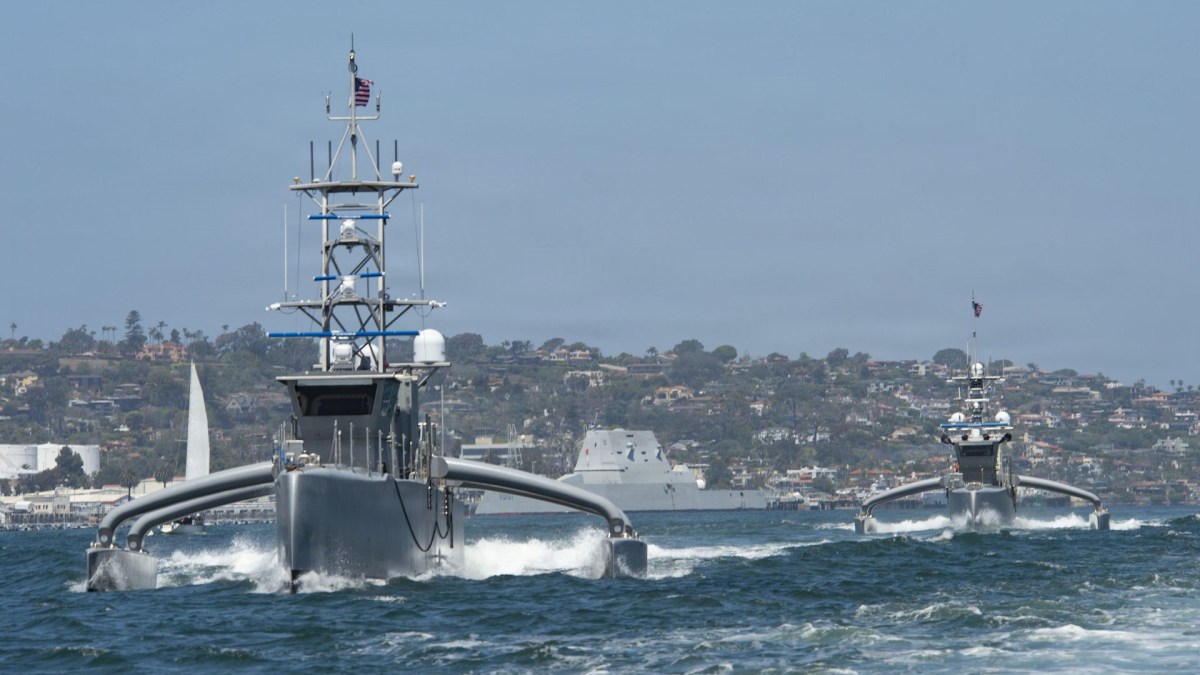
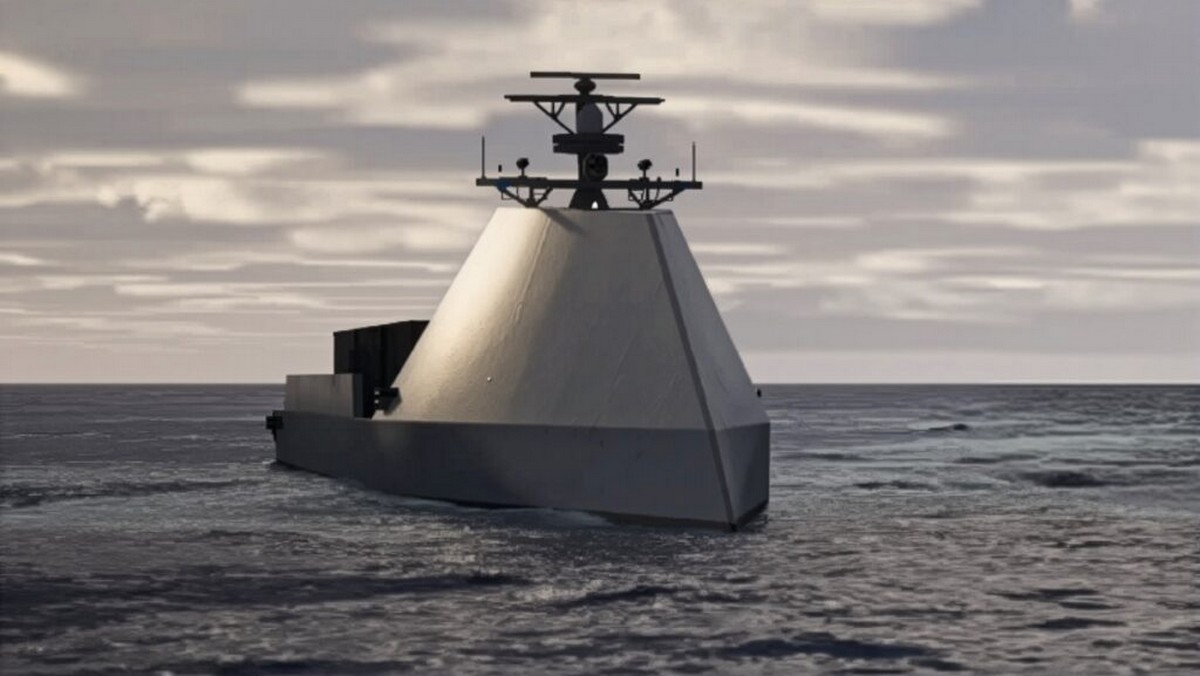
New USV plan

The Navy isn't going to select a ship to operate.
It is going to contract with operators to supply the capability

"the new strategy laid out today “is a replacement for MASC, absolutely,”"
"MASC “was tailored towards a very specific mission and a very specific ask from the Fleet, [and a] very specific quantity."

“As we look across how the Golden Fleet capability, or the Golden Fleet concept, has matured, and we look across where we could use these vessels as part of CNO’s [Chief of National Operations Adm. Daryl Caudle] tailored offsets and tailored forces, we bring ourselves to realize there’s a number of missions that we could immediately use these vessels for,” Gassler said. “That is, that is part of the strategy now, is that we will now have a scalable way to procure vessels that meet specific mission profiles.”

I detest the "Golden" label. But I love the implied inherent flexibility and speed of response.


View attachment 99268


View attachment 99267

Presumably the navy could contract with multiple operators with multiple solutions.

....

WRT the containers

"“There should be no reason why I can’t place a modular container on the back of our ships and carry an array of capabilities to any region in the world."

"Released in February, Caudle’s fighting instructions and associated “hedge” framework are designed to pivot the Navy from primarily relying on large, exquisite platforms toward more adaptable force packages that can be speedily reshaped as new conflicts and priorities emerge.

"Containerization will enable these aims, as it can allow the Navy to rapidly configure suitable ships with modular payloads — including drones, weapons and sensors — to confront localized threats without requiring a massive carrier strike group or other hefty fleet deployments."


""Consider Venezuela, when the Ford Strike Group left the Mediterranean, where was the other strike group to take her place? Imagine the flexibility we can do if, instead of a strike group replacing her, we’re able to provide [U.S. Southern Command] with other maritime options, like one of my new frigates paired with containerized, unmanned options,” Caudle said.
Tailored force packaging will not replace the Navy’s general-purpose fleet, according to the CNO. Instead, the notion is that it will supply military decision makers with “greater degrees of freedom” and help the Navy to “punch above its current weight class.”

"At the McAleese conference, Caudle urged members of America’s maritime and defense industry to “get clever” with ideas about what the Navy can containerize in the near term, such as directed energy weapons and drone swarms

"“I want to containerize everything,” Caudle said. “That’s why I kicked off the containerized capability campaign plan to get after this challenge at scale.”"

....

So Canada joins the RN and the USN and hires a contractor to supply a fleet of work boats and surveillance systems .... someone with experience preferably? Someone, oh, I don't know, that has previously supplied fleet services to the Navy?

View attachment 99269

😁

If weapons go into seacans then the delivery of weapons becomes a logistics problem.
Who are the experts in delivering seacans at sea to ships and maritime structures like rigs and windmills?
The people that operate the Offshore Support Vessels and Fast Crew Supply Vessels.

This is an old problem made new again.

Fighters never liked to waste effort or money on logistics.
Logistics were always available from the civilian market.
But.
You always ran the risk of your Waggon Train not being where you needed it to be because your civilian contractors didn't sign up to be shot at.
But.
That problem disappears if you have no civilian contractors to be shot at.
If your "Waggons" have no drivers then there is less risk of them not driving into the storm.
Head Office will only squawk if one of their autonomous vessels gets destroyed, in which case they will send you the bill.
The containers of weapons and sensors are yours and carried at your risk.

Logistics privatized.

....

Surveillance
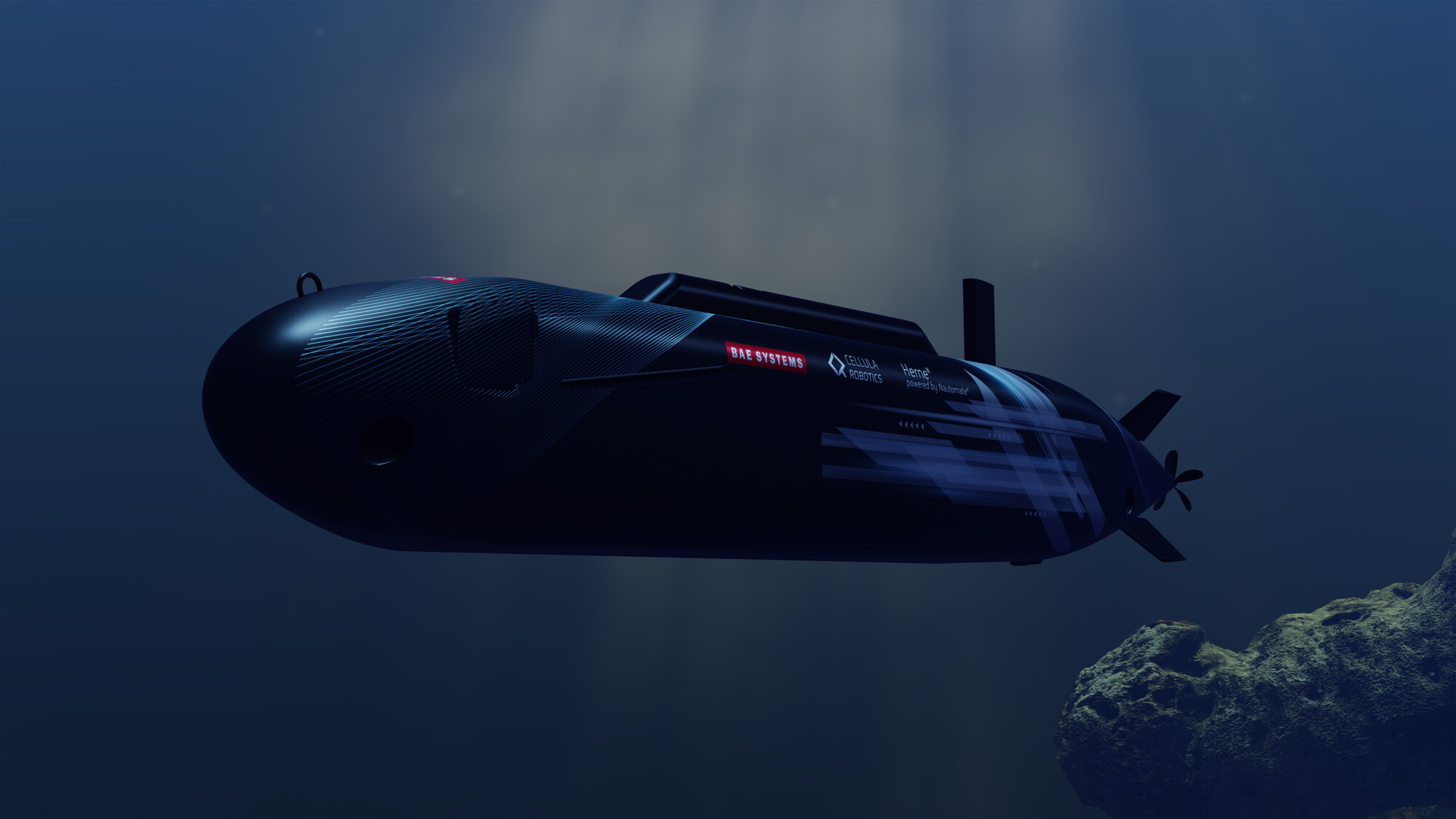

If this is a viable proposition what is to prevent the private sector, which already surveys the terrain, the waters, the air, the ionosphere and space, from providing a Space to Seabed, including Terrestrial and Underground information, from providing a comprehensive, AI curated, system of Satellites, Pseudo-Satellites, HALE and MALE UAVs, USVs and UUVs together with emplaced ground sensors and supplying a complete package to governments for the use of Fighters?

MDA as a service supplier integrating ISR assets? The Forces aren't the only interested consumers. Farmers, Fishers, Shippers and entrepreneurs of all sorts would be interested in the same data and analyses.

Surveillance privatized.

Intelligence and Reconnaissance are probably downstream responsibilities of the surveillance data consumers.

....

Comms

The ubiquity of the Starlinks solution suggests that Comms have already been privatized.

.....

Security

Privatized for a very long time.

Ontario

26,000 Police Officers ca 2023
1,749 RCMP ca 2025
6,400 OPP
18,000 Municipal Officers

156,000 Licenced Security Guards ca 2025

I would like to compare the CAF footprint in Ontario but that would include the multitudes in Ottawa, Kingston and Downsview.

The active effort could probably be reduced to 2 CMBG
Let's call it 5,000.

So,

5,000 soldiers
26,000 police
156,000 security guards

And the security companies have room to grow.

Pearson security is the combined responsibility of the Greater Toronto Airports Authority, the RCMP, Peel Regional Police and CATSA.
Calgary Airport security is entrusted to the Calgary Airport Authority, the RCMP, Calgary Police, CATSA and Paladdin Security
Vancouver Port security is the responsibility of Vancouver Fraser Port Authority, CBSA, RCMP, Vancouver and Delta Police, and mulititudes of private security companies, 29 by one count.

Now,

Rheinmetall is providing services to infrastructure: ports, airports, rail and oil and gas.


And that is morphing over into the military side as drones become an issue to be managed like bird strikes. The technologies are similar.


What authority can be devolved to those civilian operators?

Could the Canadian Railway Police be working models?


....

And you can add all the bank guards, night watch, and security folks in car parks, offices, malls, construction sites.......

CAF bases and head quarters

Patently not jobs for Fighters.

....

And then there is this development

When the virtual becomes real


"CAE is actively expanding its expertise from traditional flight simulation into the operation and control of remotely piloted aircraft systems (RPAS) and unmanned aerial systems (UAS). The company is leveraging its training and simulation technologies to provide comprehensive solutions that include simulator-based training, mission planning, and in-service support for drone operators"


CAE and Callian working with drones?

.....

What roles are left for the Fighters?
 
So, what if the USN is actually going to contract out an autonomous OSV fleet?


What are OSVs - Offshore Support Vessels?

"Offshore Support Vessels (OSVs) are specialized ships designed to provide logistical support, transport supplies, personnel, and equipment to and from offshore oil platforms, wind farms, and subsea installations. Ranging from 50 to 100 meters, they are essential for operating in harsh marine environments, handling tasks like towing, anchor handling, diving support, and emergency response."

Key types and functions of OSVs include:
  • Platform Supply Vessels (PSVs): Transport fuel, water, drilling mud, cement, and deck cargo to offshore rigs.
  • Anchor Handling Tug Supply (AHTS) Vessels: Specifically designed for towing drilling rigs and positioning anchors for them.
  • Construction Support Vessels (CSVs): Equipped with large cranes for subsea construction, maintenance, and repair work.
  • Diving Support Vessels (DSVs): Provide a stable platform for diving operations, often featuring a moonpool and DP3 positioning systems.
  • Seismic Survey Vessels: Specialized vessels that use seismic waves to map the seabed and locate drilling areas.
  • Stand-by/Rescue Vessels: Dedicated to safety, providing fire-fighting, oil spill recovery, and emergency evacuation services.
There are approximately 4,500 to 4,800 Offshore Support Vessels (OSVs) in the global fleet, according to recent industry estimates. These vessels constitute the largest sector of the offshore fleet, with around 900–1,000 vessels currently laid up or inactive.
Spinergie +4

Key statistics regarding the global OSV fleet:
  • Total Fleet: Estimates range from over 4,500 to 4,800 vessels.
  • Active Status: Roughly 4,160 vessels are considered in the active market, with 943 currently laid up as of late 2023.
  • Fleet Composition: Platform Supply Vessels (PSVs) make up about 45% of the total, followed by Anchor Handling Tug Supply (AHTS) vessels and Multipurpose Support Vessels (MPSVs).
  • Top Owners: Major owners include Tidewater, Edison Chouest Offshore (136 vessels), COSL (123), and Bourbon Offshore (113).
  • Age Profile: The average build year for the fleet is 2006, with a median of 2009.
  • Market Trends: Demand is rising due to offshore drilling activity, but high capital costs for newbuilds have limited fleet expansion.
....
The preferred solution is a particular vessel known as the FCS - Fast Crew Supply Vessel
Fast crew support vessels (FSVs) or Crew Transfer Vessels (CTVs) are specialized, high-speed aluminum boats designed for the rapid transport of personnel and cargo to offshore installations, operating at speeds often exceeding 30–38 knots. Ranging from 145 to 200+ feet, these versatile vessels feature large aft decks for cargo, advanced propulsion systems, and dynamic positioning, making them critical for offshore oil, gas, and wind logistics.
YouTube +4

Key Features and Capabilities
  • Design & Performance: Known for their speed, many use "axe bow" or catamaran designs for stability, with some specialized vessels (e.g., Surface Effect Ships) achieving speeds over 53 knots.
  • Propulsion: High-power diesel engines, often quad-powered, with waterjet propulsion systems.
  • Payload & Personnel: They transport 80–100+ passengers and cargo such as fuel, water, and deck cargo to rigs.
  • Safety & Technology: Feature DP-2 (Dynamic Positioning) systems for safe personnel transfer at offshore facilities, even in rough seas.
  • Versatility: Beyond oil and gas, these vessels are increasingly converted into luxury yacht support vessels or specialized security vessels.
    YouTube +5
Key Players and Markets
  • Damen Shipyards offers flexible and efficient Fast Crew Supply vessels.
  • Swiftships builds a range of FSVs (e.g., 56-meter, 62.5-meter variants).
  • Incat Crowther designs rugged crewboats, particularly for operating in regions like Brazil.
  • SEACOR Marine utilizes these vessels heavily in their offshore logistics operations.
    Damen Shipyards +3
These vessels are often built in specialized yards in Louisiana and operate extensively in Brazil, Africa, and Southeast Asia.

....

The construction of fast crew support vessels is primarily driven by the expanding offshore wind and oil & gas sectors, with a significant number of specialized units built annually by major shipbuilders like Damen and Strategic Marine.
Key Findings:
  • Active Construction: As of early 2025, there are over 179 crew or crew/supply vessels (over 99GT) currently on order or under construction worldwide.
  • Damen Shipyards Group: In 2025, Damen reported the delivery of 19 "Fast Crew Suppliers" alone, which was part of a total of 160 new vessels.
  • Regional Trends: The US Gulf of Mexico saw 10 offshore service vessels (including crew boats) completed in 2023, with nine dedicated to offshore wind.
  • Key Markets: Demand is driven by North Sea wind projects, Brazil's pre-salt sector (Petrobras recently signed a deal for 12 new support vessels), and Southeast Asian operations.
  • Types & Speed: The market is shifting toward more specialized, fast, and eco-friendly vessels, including Surface Effect Ships (SES) designed to reach speeds over 50 knots to replace helicopter transfers.
    Rolls-Royce plc +4
While the total number of specialized, high-speed crew vessels (often called Fast Supply Vessels or Fast Crew Suppliers) fluctuates based on energy demand, current data indicates several dozen of these specialized vessels are completed per year globally, with a strong backlog of over 170 units currently in the order books.
marcon.com
marcon.com +2

...

Converting a crewed Offshore Supply Vessel (OSV) or Fast Crew Supplier (FCS) into an autonomous vessel typically takes as little as one week for retrofitting existing autonomy kits, but complete, certified, and fully integrated autonomous conversions can take two years or more depending on the complexity of the project and flag state regulations. The cost varies widely, with simple retrofits costing less, while comprehensive, large-scale autonomous conversions can exceed $6 million USD.
IRI | The Marshall Islands Registry +2

Conversion Timeframe
  • Rapid Retrofit (1-4 weeks): Specialized autonomous systems, such as Sea Machines' SM300, can be retrofitted onto an existing vessel in about a week, assuming the vessel is available for installation.
  • Comprehensive Conversion (2-3+ years): Turning an existing offshore vessel into a fully unmanned vessel (including modifications for unmanned engine rooms, and remote systems) often takes about two years, depending on the shipyard, design, and regulatory approvals.
  • Regulatory Hurdles: The development of the IMO's non-mandatory MASS code, which sets the framework for autonomous operations, is set for 2026, with mandatory codes not arriving until 2030 or 2032, making full, global autonomous operations a longer-term project.
    National Research Council Canada +3

Conversion Costs
  • Basic Autonomy/Remote Control Kits: Installing essential autonomy kits (sensors, remote control) can cost between $500,000 and $5 million per vessel.
  • Full Conversion Cost: According to the World Bank, converting a traditional vessel into an autonomous one can cost approximately $6 million USD.
  • Smaller Scale/Research Tools: Smaller autonomous toolkits (AI-powered) can have project values in the range of $3.8 million.
    Canada's Ocean Supercluster +2

Factors Affecting Cost and Time
  1. Level of Autonomy: The complexity ranges from "remote control" (operator in the loop) to "fully autonomous" (system makes decisions), with costs rising with the level of independence.
  2. Vessel Size and Type: Larger vessels and those requiring complex retrofits (e.g., modifying machinery to run unmanned) are more expensive and time-consuming to convert.
  3. Shipyard and Class Society Availability: The scarcity of specialized shipyards and the need for new class certifications (e.g., Lloyd’s Register, DNV) can cause bottlenecks.
  4. Operational Requirements: The need for redundancy (back-up systems) and high-level cybersecurity to prevent hacking significantly increases cost.
    IRI | The Marshall Islands Registry +4

....

A new build 60-meter (approx. 197 ft) Fast Crew Supplier (FCS) or similar Fast Supply Intervention Vessel (FSIV) generally costs between $10 million and $20 million USD, depending on specifications, propulsion systems, and builder.
  • Commercial/Offshore Grade: A high-speed, aluminum-hulled 60m+ fast crew supplier or support vessel (similar to Damen FCS or high-spec FSIV) is generally in the $10M–$20M+ range. Specialized, high-speed, and high-passenger-capacity designs are on the higher end.
  • Support/Hybrid Vessels: Specialized 60m support vessels, such as the Damen Seaxplorer 60/Yacht Support 60, can have significantly higher prices for new builds, often ranging into the €70-85 million EUR ($75M–$90M+ USD) mark for luxury-capable support vessels.
  • Used Market Proxy: Used 60m Fast Supply Intervention Vessels (FSIV) often come on the market in "price on request" (POR) terms, but recent 60m AHTS (similar tonnage) builds are listed around $14 million USD.
    YachtBuyer +3
Key Cost Factors:
  • Speed & Propulsion: High-speed capability (30+ knots) requiring extensive engine power significantly increases cost.
  • Class Notation: Dynamic Positioning (DP2/DP3) and passenger capacity (50+ pax) increase the cost over standard cargo supply vessels.
  • Material: Specialized aluminum construction for high speeds is more expensive than steel.
    Horizon Ship Brokers, Inc. +2

....

An existing fleet of just under 5000 hulls with just about 20% idle, or 1000, with an average age of 15 years.
The most desirable category, the FCS, is built at a handful of yards at a rate of 10 to 20 per yard per year at a cost of 10-20 MUSD each.

Converting an existing hull to autonomous operation takes 1 to 4 weeks and can cost 0.5 to 5.0 MUSD per vessel.

Technically the process is well defined. Getting the vessel registered is complex and lengthy.

Presumably, though, once a class has been accepted for naval service subsequent vessels would be licenced raoidly.

....

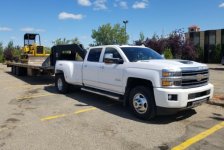
The entire concept reminds me of the Hotshot delivery services that support the oil and gas industry out here in Alberta.

Guys in pickup trucks...

1774631390072.jpeg
 
And the US Army - getting drnes delivered to the frontline by Amazon drones?


"This digital one-stop shop will allow Army units, government partners and allied nations to efficiently procure vetted UAS solutions.

"Developed in collaboration with Amazon Web Services and the Army Enterprise Cloud Management Agency, the digital storefront features tools that allow users to compare system functionalities, provide direct feedback and place orders with ease."

...

I wonder if these are on the shopping list?

 
Back
Top