• Thanks for stopping by. Logging in to a registered account will remove all generic ads. Please reach out with any questions or concerns.

CAN-USA Tariff Strife (split from various pol threads)

I wont put you on ignore and you wont put me on ignore so I guess we're stuck with this... Merry Christmas.
I don't find this unduly unpleasant.

You talk, I talk, you're respectful, I'm respectful.

Seems like dialog to me.

Merry Christmas, all the best to you and yours.
 
Those Canadian tourists dispersed to other countries won't make much a difference in those places either. This is small potatoes.
Canadians spend 53b on international tourism.

Picking up extra pieces of that pie is in no way small potatoes to many countries.

I know when I was in Mexico, the staff were commenting on how they are seeing more Canadian visitors, and how periods of lull are now actually busy. While anecdotal, I think this points towards other nations being happy to have the influx of Canadian tourists.
 
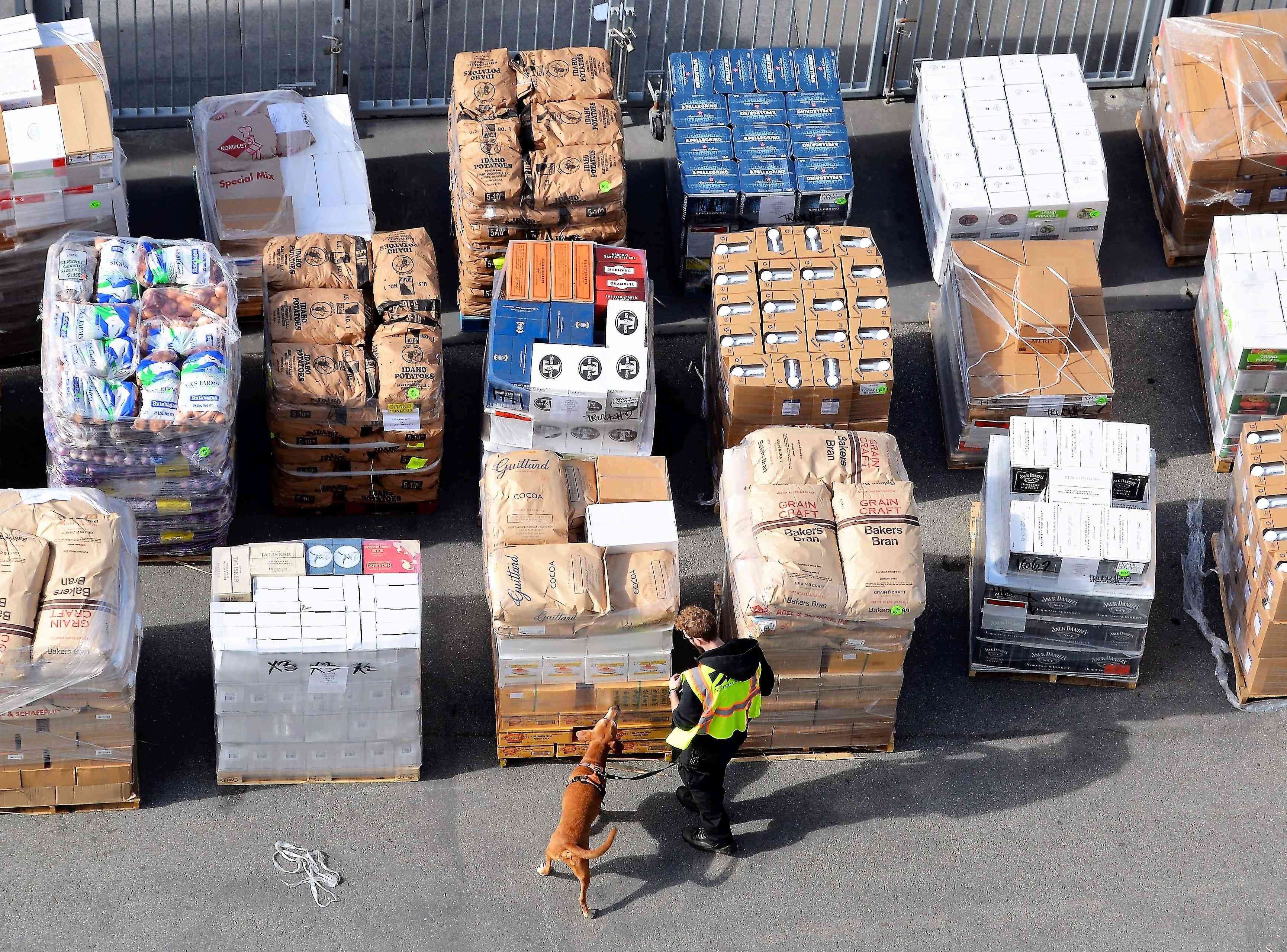
Sounds like it's not an uncommon situation due to the huge volume of containers that are being moved around the planet.

By comparison (according to ChatGPT):
At the Port of Los Angeles (which, together with the Port of Long Beach forms the largest port complex in the U.S.), only a small fraction of arriving cargo containers are physically inspected. The exact percentage varies by source and inspection type, but the broadly cited figures are:

📦

• Physical inspections:
Only about 2 % (or less) of containers unloaded at U.S. ports are physically opened and examined by customs officials. This low rate reflects the challenge of physically inspecting a huge volume of cargo without disrupting commerce. GovInfo+1

• X‐ray or scanner screenings:
Historical reporting (e.g., at Los Angeles/Long Beach) indicates roughly about 6 % of containers might be selected for scanning (e.g., X-ray / radiation screening) upon arrival, with a smaller fraction of those then unloaded for detailed inspection. Los Angeles Times
 
I went to Hawaii back in 2010 and Fargo ND in 2014. Even though it was several years after the Great Recession, I heard nothing but comments from folks there grateful to Canadians who were still able to come visit and spend money then when everyone else in the Western world were not going so well.

If the Yanks noticed our presence during the Great Recession, they will notice our absence now.
 
Sounds like it's not an uncommon situation due to the huge volume of containers that are being moved around the planet.

By comparison (according to ChatGPT):

It's complicated...

Shipping takes action on drug smuggling​


Global drug activity has increased by an estimated 23% between 2011 and 2021, with some 296 million users worldwide, per United Nations Organization on Drugs and Crime (UNODC). Traffickers have been particularly successful at evading detection at ports, and have begun to utilise increasingly innovative methods to achieve their aims — such as hacking into customs computer systems to preclear consignments before inspection.

“Drug use is increasing,” Chris Trelawny, Deputy Secretary General of INTERPORTPOLICE tells ICS Leadership Insights, adding that seafarers carry the risk of becoming “the unwitting victims of traffickers” if they are arrested for involvement in illegal activities.

Given the vast amount of trade moving quickly, resolving the issue will be challenging. Per Europol’s March 2023 report, only 2-10% of containers transiting EU ports are physically inspected, making detection of illicit goods extremely challenging and allowing a number of such shipments to slip through loopholes in port procedures.

“Over the last five years, the size of the consignments has increased significantly.” David Caunter, Assistant Director, Criminal Networks at INTERPOL tells ICS Leadership Insights. “Additionally, destination countries rarely scan and search 100 percent of the containers, making this a very lucrative business model.”

The industry has launched multiple countermeasures in response to this concern. The EU recently allocated funds of €200m to Port of Antwerp-Bruges (PoAB)’s proposal, Certified Pick Up. The digital platform was launched in January 2024 and implements an efficient and faster way of managing container transport.

“By passing the digital release right to the next party in the chain you know which parties are involved in import container flow. Also, every container needs to clear customs before it can leave the terminal and be picked up on the basis of identity.” Kurt Van Loon, Project Manager of Certified Pick up tells ICS Leadership Insights. “This will prevent fraud, improve security and make acting with bad intentions more difficult.”

 
Saying it out loud, in plain language ....
The U.S. wants Canada to expand dairy market access for American products and lift provincial bans on U.S. alcohol as part of the upcoming review of the Canada-U.S.-Mexico Agreement (CUSMA), Washington’s top trade envoy says.

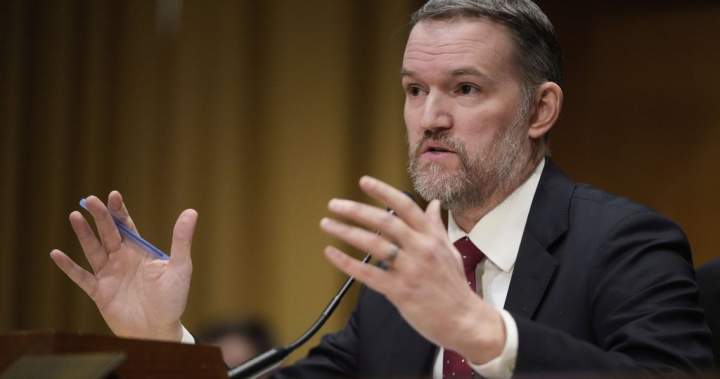
U.S. Trade Representative Jamieson Greer told members of Congress this week the joint review “will depend on the successful resolution” of those and other issues, according to a copy of his opening statement shared online after the closed-door meetings ...
... with the full wish list attached.
 

Attachments

If it means lower prices I'm all for it
The top item on their list of gripes against us is dairy, then a bit of bitching about some US alcohol difficulties exporting in some provinces, complicated export forms and Alberta being hard on some Montana energy consumers or something.
 
Saying it out loud, in plain language ....

... with the full wish list attached.
US milk is full of hormones and antibodies from infections, pus pretty much. Gross. No.

For the rest, depends on the concessions Canada gets.

Otherwise, politely say no, and wait him out. He will be in the grave before 2036.
 
The top item on their list of gripes against us is dairy, then a bit of bitching about some US alcohol difficulties exporting in some provinces, complicated export forms and Alberta being hard on some Montana energy consumers or something.
The thing that caught my eye as potentially problematic is buried midway thought the "both countries" list:

"Developing mechanisms to penalize offshoring of U.S. production to Mexico or Canada as the result of regulatory and other arbitrages;"

Based on the language that can easily be interpreted as wanting to incorporate a one way mechanism that gives them carte blanche to circumvent the agreement and penalize any grievance related to... anything. Tax regimes, subsidies, hell even intrinsic factors like logistic advantages.
 
US milk is full of hormones and antibodies from infections, pus pretty much. Gross. No.

For the rest, depends on the concessions Canada gets.

Otherwise, politely say no, and wait him out. He will be in the grave before 2036.
That would seem to be something that could be addressed simply through appropriate food quality regulations, no?
 
That would seem to be something that could be addressed simply through appropriate food quality regulations, no?
Sure. Except the USA already doesn't use its full allotment of dairy exports.

Why?

Canadian regulations.

If the USA is talking about further access to the Canadian dairy market while already not using their full allotment, what barrier do you think they want struck down to achieve that?

Food quality regulations.
 
The thing that caught my eye as potentially problematic is buried midway thought the "both countries" list:

"Developing mechanisms to penalize offshoring of U.S. production to Mexico or Canada as the result of regulatory and other arbitrages;"

Based on the language that can easily be interpreted as wanting to incorporate a one way mechanism that gives them carte blanche to circumvent the agreement and penalize any grievance related to... anything. Tax regimes, subsidies, hell even intrinsic factors like logistic advantages.
Well they absolutely hate it when we take ANY grievance to any trade body because they have overwhelmingly came up short. They lose on a ratio of like 4 to 1 easily.
 
That would seem to be something that could be addressed simply through appropriate food quality regulations, no?
I believe that they pushed the EU into 'bending' their food regulation rules in the agreement between the 2 of them earlier in the year. I'll try and find it, but if I'm right on that not a good thing for us.

EDIT:

Key Provisions & Regulations
  • Tariff Reductions: EU eliminates tariffs on US industrial goods; offers reduced tariffs/quotas for US seafood, dairy, nuts, pork, bison, processed foods, fruits/veg.
  • Sensitive Products: Beef, poultry, sugar, rice, ethanol largely excluded from preferential access, though some beef/ethanol deals might exist.
  • Mutual Recognition: Aims to streamline requirements like sanitary certificates for pork and dairy.
  • Regulatory Alignment: Focuses on reducing "trade irritants" from differing standards, but big differences (e.g., GMOs, pesticide rules) remain challenges.
  • Safeguards: EU can use mechanisms to protect its farmers from sudden import surges from Mercosur (and potentially the US deal).
  • IP Rights: Concerns raised about broader US patent scope (software, seeds) impacting EU agriculture and innovation.
  • Agricultural groups remain concerned about the deal's impact on EU food standards and farm viability, as seen in recent protests.
In essence, while the deal lowers tariffs and speeds some certificates, it's less about harmonizing all food regulations and more about creating easier market access where possible, with strong (and debated) safeguards for EU-sensitive areas
 
I believe that they pushed the EU into 'bending' their food regulation rules in the agreement between the 2 of them earlier in the year. I'll try and find it, but if I'm right on that not a good thing for us.

EDIT:

Key Provisions & Regulations
  • Tariff Reductions: EU eliminates tariffs on US industrial goods; offers reduced tariffs/quotas for US seafood, dairy, nuts, pork, bison, processed foods, fruits/veg.
  • Sensitive Products: Beef, poultry, sugar, rice, ethanol largely excluded from preferential access, though some beef/ethanol deals might exist.
  • Mutual Recognition: Aims to streamline requirements like sanitary certificates for pork and dairy.
  • Regulatory Alignment: Focuses on reducing "trade irritants" from differing standards, but big differences (e.g., GMOs, pesticide rules) remain challenges.
  • Safeguards: EU can use mechanisms to protect its farmers from sudden import surges from Mercosur (and potentially the US deal).
  • IP Rights: Concerns raised about broader US patent scope (software, seeds) impacting EU agriculture and innovation.
  • Agricultural groups remain concerned about the deal's impact on EU food standards and farm viability, as seen in recent protests.
In essence, while the deal lowers tariffs and speeds some certificates, it's less about harmonizing all food regulations and more about creating easier market access where possible, with strong (and debated) safeguards for EU-sensitive areas
The maximum levels of pus in milk in the USA is 750,000 cells/mL.

The maximum in Canada, the EU, Australia, New Zealand, is 400,000 cells/mL, which is still high when you consider how little pus there was in non factory farmed milk.

Still, being nearly double the Canadian and European standards makes it hard for the USA to export their dairy products. If they are allowed to export their pus loaded dairy, local producers will be up in arms and want the Canadian standards dropped for domestic milk as well in order to compete.

This should be a non starter, allowing pus filled milk into our system will be horrible for our collective health. It acts as an inflammatory agent in our bodies and we have enough inflammation related health issues as it is.
 
Our dairy industry would be overwhelmed and cease to exist as an independent industry. Canadian dairy farmers would be put out of business or absorbed into US corporate dairy businesses. The quality of our available dairy products would drop and the price improvement to consumers, if any, would amount to a few cents per gallon.
 
You would think that some entrepreneurial Americans would tighten the standards they make their product to. It would allow them to take advantage of not hitting the current quota and in true capitalistic form allow them to make more money in a more limited market than their competitors.

Instead they lobby to have other countries drop their standards. Must be cheaper than upping the quality.
 
Given their desire to increase origin labelling requirements on beef, I wonder about that to bridge the gap on dairy. We'll let more in- but labelling needs to clearly communicate where its from and what regulatory standard it was produced under- and advertising based on standards is fair play for domestic producers.
 
Given their desire to increase origin labelling requirements on beef, I wonder about that to bridge the gap on dairy. We'll let more in- but labelling needs to clearly communicate where its from and what regulatory standard it was produced under- and advertising based on standards is fair play for domestic producers.
Edit: misunderstood your comment.
 
Given their desire to increase origin labelling requirements on beef, I wonder about that to bridge the gap on dairy. We'll let more in- but labelling needs to clearly communicate where its from and what regulatory standard it was produced under- and advertising based on standards is fair play for domestic producers.
The amount of times a beef cow crosses back and forth across the border makes this sort of labelling of beef difficult.

EDIT: Added from AI

It's very common and routine for cattle to cross the US-Canada border back and forth, as the North American beef industry is highly integrated, with hundreds of thousands of live cattle (feeder, slaughter, purebred) moving annually to balance feedlot capacity, processing needs, and genetics, operating almost like one large market with strong two-way trade despite strict health rules.
Why It Happens:
  • Market Integration: The US and Canadian beef industries are deeply linked, functioning as one large market where cattle flow to where they're needed.
  • Feeder Cattle: Many Canadian-born cattle go to US feedlots to be finished (fattened) before slaughter.
  • Slaughter Cattle: Canadian cattle are also sent to US processing plants, while US cattle can come to Canada.
  • Genetic Improvement: Farmers import purebred animals to improve their herds.
How Common Are the Numbers?
  • Daily Movement: Significant numbers of live cattle cross daily.
  • Annual Totals: In 2024, the US imported over 155,000 Canadian cattle, representing a large chunk of Canadian exports, and similar large numbers flow the other way.
 
Back
Top