• Thanks for stopping by. Logging in to a registered account will remove all generic ads. Please reach out with any questions or concerns.

Informing the Army’s Future Structure - CAMO Discussion

Honestly I like the Battle Group context we deployed with the Bosnia. Each 12-1500 group in theory had their own tanks, artillery Heli support, engineers, infantry, medical support comms, transport CSS etc.

Have three to four battle groups per Brigade. Each one being self sufficient in the Combined arms battle. Able to be combined together or operate separately.
Ummmm, don't take offence to this.

This is way beyond that. A BG was tasked organized for specific missions.

We are talking about preparing ourselves for literally any kind of war that we can for see.
 
Ummmm, don't take offence to this.

This is way beyond that. A BG was tasked organized for specific missions.

We are talking about preparing ourselves for literally any kind of war that we can for see.
If you equip the battle group (Combat Team) with a bit of everything then they have direct control of how to employ it within their AOR. Brigade Can utilize their own assets as required and draw upon each Battle group when needed.

With the amount of potential intel being acquired, the required change of scope command and control needs to be passed down to the unit level to adapt as required. While informing higher of the change and why.

If we are planning for the Plains of Abraham war where All the Infantry are lined up in a row, Calvary behind, Artillery offset, the observers on the nearest hill top to control the fight. We are planning for the wrong operations.
 
Would they be expected to fight that deep? And presumably if yes, the adversary would be of the same weight or lighter?

How are they going to get through the close area, considering the mass persistent surveillance and strike that is available today?

When thinking about how Division Cav fits into the battlefield framework of deep, close, and rear, perhaps its useful to not consider any of them as purely isolated from one another.

The Deep for example has a gray zone where it transitions to the close area. In some doctrine references this could be seen as the Division Security Area.

This transition zone is where the forward line of own troops resides for both the Division and its subordinate Bdes.

It’s also where the various emerging control features are located. Items such as the FLOR (Forward Line Own Robotics), IHL (Intelligence Handover Line between the Div assets and the Bde assets) and FLOS (Forward Line Own Sensors). Its also the area where the fires support coordination measures exist.

The Div CAV could exist in a Division Security Area which is inside and up to the Fire Support Coordination Line (FSCL) but forward of the Bde Coordinated Fires Lines. This space would be where the Div CAV would be trying to push back the opposing forces own FLOS and FLOR.

While any manned ground vehicles belonging to the Div CAV are highly unlikely to be pushed past this transition zone (or the FSCL) into the rest of the Division Deep Area, if resourced with the necessary stand in sensors its feasible that the Div CAV would be pushing unmanned UAS into the Division Deep cued by other stand off sensors. Basically, this would see the unmanned systems being pushed across the FSCL to enable the Division Recce-Strike Fires Complex targeting inside the Division Deep.

Note however this concept is NOT explicitly laid out in the Canadian Army or RCAC doctrine yet but its in line with the open source doctrine evolution happening in other peer armies.

Looking at doctrine helps. US defines doctrine defines deep operations as "tactical actions against enemy forces, typically out of direct contact with friendly forces, intended to shape future close operations and protect rear operations. At the operational level, deep operations isolate current battles and influence the timing, location, and enemy forces involved in future battles. At the tactical level, deep operations set favorable conditions for close combat and subsequent engagements." [FM 3-0]. The UK defines it similarly as those "conducted at long range and often over a protracted timescale, against an adversary’s forces or resources not currently engaged in the close battle." [AFM:WT 1] For what it's worth, our own Land Ops defines it the same, as we are unoriginal and just ripped it off the Brits.

I can't see many situations where you would put the deep area along the FLOT as, for battlespace framework, doing so limits your ability to fight "out of contact" or "at long range" against the enemy. Perhaps, in a specific context where forces are separated and the Division has the opportunity to get a security force far enough forward to establish a cover or guard task. The Brits are trying to build off this concept with the Deep Recce-Strike concept, but I'm not completely sold on it.

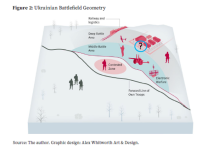
Let's go from theory to practice. Watling paints an interesting picture of the battlespace in Ukraine (he also notes that the Deep Area could not be consistently defined by senior UK offices, meaning the concept is far from definitive). The concepts of Middle and Deep Battle can be be parallel to Western concepts of Deep and Extended Deep areas.
1780965014707.png

Note I've added a question mark. How is an element going to get into close engagements in that space, making it past the mass persistent surveillance and strike along the "0 Line" (FEBA) ahead of the FLOT. Then make it through the contested zone and fight (and be sustained) in the "Middle" or "Deep" Battle areas depicted above?

Now Ukraine is not necessarily how future conflicts will unfold as context is everything, but lets look at two other Divisional conflicts - Gulf War and Iraq War. Neither of these wars featured the requirement to get a land element in deep (save the 101st doing air mobile insertions) but rather saw sharp, powerful thrusts by tank/infantry teams.

To bring this back this back to my original question. Is the cavalry concept designed to fight "in the deep" for the Division - if so, how does it defeat or avoid this phenomenon, which is probably here to stay? Or does it operate uncrewed systems to fight "in the deep" - if so, why are we talking about fighting mounted in 50 ton armoured vehicles? Finally, how does this integrate with the 1 Cdn Div concept of fighting the deep, specifically with 1 Cdn Arty Bde standing up?

Perhaps the concept needs to shift away from a narrative of "fighting in the deep" and position itself as the Division's security element, one of the few (if not only) elements outside of a CMBG that can be tasked with the full suite of security tasks (screen, guard, cover). If so, I think the conversation on structure, number of units, and equipment changes somewhat.

 
Honestly I like the Battle Group context we deployed with the Bosnia. Each 12-1500 group in theory had their own tanks, artillery Heli support, engineers, infantry, medical support comms, transport CSS etc.

Have three to four battle groups per Brigade. Each one being self sufficient in the Combined arms battle. Able to be combined together or operate separately.

Battle Group commanders don't want to (and shouldn't) be saddled with all of that stuff when trying to fight the close fight in MCO.
 
If you equip the battle group (Combat Team) with a bit of everything then they have direct control of how to employ it within their AOR. Brigade Can utilize their own assets as required and draw upon each Battle group when needed.

With the amount of potential intel being acquired, the required change of scope command and control needs to be passed down to the unit level to adapt as required. While informing higher of the change and why.

If we are planning for the Plains of Abraham war where All the Infantry are lined up in a row, Calvary behind, Artillery offset, the observers on the nearest hill top to control the fight. We are planning for the wrong operations.
@Infanteer summed it up best

You only delicate so many assets down the chain. Give the commanders at lower levels what they need to achieve mission success. Without compromising what the higher commander needs to achieve/be prepared to react to.

Your last comment, was out of line and you need to do some serious reading to catch up. The modern fight can take many forms and new technology changes how we fight. Drones, Loitering munitions, electronic warfare (on a much more higher level than ever before), cyber operations, Psy Ops, etc. The battlefield in how it fights is much different and every war/battle has its own unique challenges.

Looking at everything from purely the grunts eye level of view of the battle group is very limited.
 
@Infanteer summed it up best

You only delicate so many assets down the chain. Give the commanders at lower levels what they need to achieve mission success. Without compromising what the higher commander needs to achieve/be prepared to react to.

Your last comment, was out of line and you need to do some serious reading to catch up. The modern fight can take many forms and new technology changes how we fight. Drones, Loitering munitions, electronic warfare (on a much more higher level than ever before), cyber operations, Psy Ops, etc. The battlefield in how it fights is much different and every war/battle has its own unique challenges.

Looking at everything from purely the grunts eye level of view of the battle group is very limited.
Your not going to be able to respond to the constant changing situation on the ground if you do not have dedicated resources tied to the group on the ground. having to ask two to three levels above for resources is a known slow process.
If I need a tank to support my operations that just started and I have no tanks in direct support now I have a problem.
If I need local Air Defence and I have to ask two levels higher to deploy those assets to me I am in trouble.
I I need EW, Counter Battery tracking and fire support. Again if I have to ask two levels plus above me it may be to late.
It is thinking on how best to support the people on the ground. Who are the ones gathering up to the minute intel using various equipment sources. Piecing it all together with the higher resources. But if you can get the support you need when you need it then what's the point. Having those resources under your direct control is a very valuable resource. Anyone who argues against that is a fool.
Having direct access to a drone that can scan ahead, be used to target and call for fire at the local level is a valuable tool. I remember being laughed at when I suggested this a number of years ago.
The bigger issue I feel is how to do you support the smaller groups, who have to fit into the larger groups who all need to work together in the modern battle field where you have so much information coming in at all levels now. It takes time at the higher levels to approve distribution or redistribution of assets. Time is money so to speak. So hand down those assets to the local level level under one umbrella, keep reserves/ larger assets at the higher level.
 
Your not going to be able to respond to the constant changing situation on the ground if you do not have dedicated resources tied to the group on the ground. having to ask two to three levels above for resources is a known slow process.
If I need a tank to support my operations that just started and I have no tanks in direct support now I have a problem.
If I need local Air Defence and I have to ask two levels higher to deploy those assets to me I am in trouble.
I I need EW, Counter Battery tracking and fire support. Again if I have to ask two levels plus above me it may be to late.
It is thinking on how best to support the people on the ground. Who are the ones gathering up to the minute intel using various equipment sources. Piecing it all together with the higher resources. But if you can get the support you need when you need it then what's the point. Having those resources under your direct control is a very valuable resource. Anyone who argues against that is a fool.
Having direct access to a drone that can scan ahead, be used to target and call for fire at the local level is a valuable tool. I remember being laughed at when I suggested this a number of years ago.
The bigger issue I feel is how to do you support the smaller groups, who have to fit into the larger groups who all need to work together in the modern battle field where you have so much information coming in at all levels now. It takes time at the higher levels to approve distribution or redistribution of assets. Time is money so to speak. So hand down those assets to the local level level under one umbrella, keep reserves/ larger assets at the higher level.
What level do you get to in military service? Please tell me something beyond Corporal? Otherwise, your way, way out of your league.
I say this because the way your presenting your post comes off as only seen things from the ground level.

Have you actually been trained on the combat estimate including mission analysis? Even if only at the platoon level?
 
Your not going to be able to respond to the constant changing situation on the ground if you do not have dedicated resources tied to the group on the ground. having to ask two to three levels above for resources is a known slow process.
If I need a tank to support my operations that just started and I have no tanks in direct support now I have a problem.
If I need local Air Defence and I have to ask two levels higher to deploy those assets to me I am in trouble.
I I need EW, Counter Battery tracking and fire support. Again if I have to ask two levels plus above me it may be to late.
It is thinking on how best to support the people on the ground. Who are the ones gathering up to the minute intel using various equipment sources. Piecing it all together with the higher resources. But if you can get the support you need when you need it then what's the point. Having those resources under your direct control is a very valuable resource. Anyone who argues against that is a fool.
Having direct access to a drone that can scan ahead, be used to target and call for fire at the local level is a valuable tool. I remember being laughed at when I suggested this a number of years ago.
The bigger issue I feel is how to do you support the smaller groups, who have to fit into the larger groups who all need to work together in the modern battle field where you have so much information coming in at all levels now. It takes time at the higher levels to approve distribution or redistribution of assets. Time is money so to speak. So hand down those assets to the local level level under one umbrella, keep reserves/ larger assets at the higher level.
If "you" are a unit CO, you don't need everything on hand to cover every possible contingency for the next month or even three days*. "You" receive atts (and may be required to provide dets) in accordance with whatever your formation commander has decided you need to do for the next few hours to couple of days*. What I see proposed amounts to penny-packeting everything (1/3 of the tanks for Battle Groups Larry, Moe, and Curly; 1/3 of the guns for same; 1/3 of X...) and risks turning the formation commander into basically a shopkeeper for his subordinates who keeps their pantries stocked.

There is no reason the army of today couldn't manage cross-attachment between formations, let alone within formations, right down to sub-units of one attached to units of another in times comparable to what was achieved in 1943-45.

*I could be well off on my appreciation of the appropriate time horizon, but I can guess that's it's pretty short at unit level.
 
Your not going to be able to respond to the constant changing situation on the ground if you do not have dedicated resources tied to the group on the ground. having to ask two to three levels above for resources is a known slow process.
If I need a tank to support my operations that just started and I have no tanks in direct support now I have a problem.
If I need local Air Defence and I have to ask two levels higher to deploy those assets to me I am in trouble.
I I need EW, Counter Battery tracking and fire support. Again if I have to ask two levels plus above me it may be to late.
It is thinking on how best to support the people on the ground. Who are the ones gathering up to the minute intel using various equipment sources. Piecing it all together with the higher resources. But if you can get the support you need when you need it then what's the point. Having those resources under your direct control is a very valuable resource. Anyone who argues against that is a fool.
Having direct access to a drone that can scan ahead, be used to target and call for fire at the local level is a valuable tool. I remember being laughed at when I suggested this a number of years ago.
The bigger issue I feel is how to do you support the smaller groups, who have to fit into the larger groups who all need to work together in the modern battle field where you have so much information coming in at all levels now. It takes time at the higher levels to approve distribution or redistribution of assets. Time is money so to speak. So hand down those assets to the local level level under one umbrella, keep reserves/ larger assets at the higher level.

You are describing the Russian BTG concept, which fell apart one month into Ukraine.
 
You are describing the Russian BTG concept, which fell apart one month into Ukraine.
The difference between a professional Military and a rag tag outfit I would think.
What level do you get to in military service? Please tell me something beyond Corporal? Otherwise, your way, way out of your league.
I say this because the way your presenting your post comes off as only seen things from the ground level.
Does it matter what rank I made it to or what level of training I had. Your words I am way out of my league. Wouldn't matter if I was a no hook private, Mcpl, Sgt or Colonel.
Have you actually been trained on the combat estimate including mission analysis? Even if only at the platoon level?
Yes
If "you" are a unit CO, you don't need everything on hand to cover every possible contingency for the next month or even three days*. "You" receive atts (and may be required to provide dets) in accordance with whatever your formation commander has decided you need to do for the next few hours to couple of days*. What I see proposed amounts to penny-packeting everything (1/3 of the tanks for Battle Groups Larry, Moe, and Curly; 1/3 of the guns for same; 1/3 of X...) and risks turning the formation commander into basically a shopkeeper for his subordinates who keeps their pantries stocked.

There is no reason the army of today couldn't manage cross-attachment between formations, let alone within formations, right down to sub-units of one attached to units of another in times comparable to what was achieved in 1943-45.

*I could be well off on my appreciation of the appropriate time horizon, but I can guess that's it's pretty short at unit level.
Saying that sure is nice to be ale to call on direct fire without requesting hire, or call on Artillery and not be told unavailable.
Your Brigade in theory already has all these resources, Just dole them out to the groups so they have direct support.

Yes I like to speak from the ground level up. It makes it so everyone in the room understands what is being said and discussed.
Any successful endeavor requires control of all sides. You cant afford to wait for things to free up and be available if you need it now.

If we keep doing things the same way as we always have and look to no change then we will make the same mistakes over and over.
 
Looking at doctrine helps. US defines doctrine defines deep operations as "tactical actions against enemy forces, typically out of direct contact with friendly forces, intended to shape future close operations and protect rear operations. At the operational level, deep operations isolate current battles and influence the timing, location, and enemy forces involved in future battles. At the tactical level, deep operations set favorable conditions for close combat and subsequent engagements." [FM 3-0]. The UK defines it similarly as those "conducted at long range and often over a protracted timescale, against an adversary’s forces or resources not currently engaged in the close battle." [AFM:WT 1] For what it's worth, our own Land Ops defines it the same, as we are unoriginal and just ripped it off the Brits.
Its interesting though that the US/UK/NATO conception of Deep Operations that emerged out of the US Army Air Land Battle doctrine in the 1980s had its predecessor in the Soviet Union's development of Deep Operations in the 1930s and during WW2. The Soviet conception though was much more maneuver ground unit focused, for some obvious technical reasons pertaining to the capabilities and range of weapons then.

Of note the Ukrainian's 93rd Mech Bde in May-June of 2022 conducted a deep operation into the Russian rear to break the Izium offensive by hitting Russia’s rear support. Of course the battlefield conditions were different then, but it is an example of a ground based deep operation vs the fires and aviation centric approach of the US, UK and NATO.

Now Ukraine is not necessarily how future conflicts will unfold as context is everything, but lets look at two other Divisional conflicts - Gulf War and Iraq War. Neither of these wars featured the requirement to get a land element in deep (save the 101st doing air mobile insertions) but rather saw sharp, powerful thrusts by tank/infantry teams.

For Desert Storm, the case could be made that the entire left hook by VII Corps and XVII Corps were in fact a deep operations. Those two Corps isolated the Iraqi Forces in Kuwait, being fixed by 1 MEF and influenced the ability of the Iraqis to commit the Republican Guard Divisions as well as blocked any Iraqi reserves from Central Iraq. That is a deep operation by Soviet doctrine, if not US, UK and NATO.

More specific to the conversation about how does the future 1 Cdn Div and the RCAC envision deep operations with a medium CAV I would suggest that its more in the reconnaissance and security task. To that end both the Corps in Desert Storm employed heavy armor/infantry/artillery CAV Regiments as their recon/security element. The same was true of 3rd ID in 2003 using 1/7 CAV (although slighly lighter). However 1 MEF in both 1991 and 2003 employed USMC Light Armored Regiments with LAV-25s as the recon/security force in front of their main ground formations. However I would not characterize those as "deep operations" as per the doctrinal pams.

I think its in line with my rough description of a grey zone transition area between the Div Deep as per the definition and the Bde areas.

Let's go from theory to practice. Watling paints an interesting picture of the battlespace in Ukraine (he also notes that the Deep Area could not be consistently defined by senior UK offices, meaning the concept is far from definitive).

Its not just the UK, the US also struggles with this at their Divisions. In this paper the US Army Mission Command Training Program lays out three typical failures in thinking about deep operations, where staff and commanders conceptualize the Div Deep only in terms of either space, time or enemy systems.

To bring this back this back to my original question. Is the cavalry concept designed to fight "in the deep" for the Division - if so, how does it defeat or avoid this phenomenon, which is probably here to stay? Or does it operate uncrewed systems to fight "in the deep" - if so, why are we talking about fighting mounted in 50 ton armoured vehicles? Finally, how does this integrate with the 1 Cdn Div concept of fighting the deep, specifically with 1 Cdn Arty Bde standing up?

Perhaps the concept needs to shift away from a narrative of "fighting in the deep" and position itself as the Division's security element, one of the few (if not only) elements outside of a CMBG that can be tasked with the full suite of security tasks (screen, guard, cover). If so, I think the conversation on structure, number of units, and equipment changes somewhat.


To tie this into the original question, I don't think that the Divisional deep fight will be or can be done by ground units, at least not inline with the current definitions of what deep operations are. Certainly not by a medium Cav unit size element. I think that the more proper role of the Div Cav element is that of reconnaissance / security in the space forward of the Brigade forward boundaries. Now what that looks like is certainly up for debate and I think that what Jack Watling is suggesting for his maneuver force (ie a force designed to aggressively blind the enemy, enable fires in the zone of contestation, pushing back the enemy stand in systems that enable the transparent battlefield and expanding the friendly zone of opportunity while) might be a useful start point. Of note the UK Recce/Strike Bde might also with some tweaks fit into that model although not the force employment concept currently.

However I think the conversation about what are Deep Operations and how to conduct them and how to control them are highly useful because the Army needs to figure that out for itself now that its going to have a Division needing to conduct those operations. That is something that we are going to need to develop an understanding of. Going back to the MCTP paper, even the Division staffs coming from an Army that is well versed in Deep Operations and has been doing them for decades both on exercise and in war has struggles.
 
Saying that sure is nice to be ale to call on direct fire without requesting hire, or call on Artillery and not be told unavailable.
Your Brigade in theory already has all these resources, Just dole them out to the groups so they have direct support.
Fire support is handled somewhat differently than almost every other kind of support. Supported units don't get guns; they get fire control teams that plug into unit and sub-unit command elements, and they often keep (or have) that support for long periods. That has been core doctrine for decades. It is a matter of people and comms, not large amounts of heavy combat equipment. A sub-unit (company) has access not to a battery of guns, but potentially everything available (in range, on station).

[Add: and for the infantry at the unit and sometime sub-unit and even platoon level, there is often some kind of integral direct and indirect support: anti-armour, mortars]
 
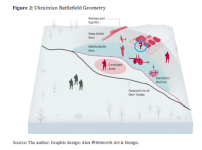
Perhaps of relevance as well. I am not super super well versed on the UK Recce Strike concept and the language can get confusing at times, but reusing this image of the Ukrainian Battlefield geography.
3rd Deep Recce Strike
Physically resides on or behind the FLOT
Functionally it SENSES into the Contested Zone and the Middle Battle Area
Functionally is STRIKES into the Contested Zone and the Middle Battle Area

Therefore its not living and needing to be sustained in a Deep or Extended Deep area but its sensors and effectors are oriented onto those areas from along the FLOT and into the contested Zone (for unmanned systems).

1780981438934.png
 
  • Insightful
Reactions: ytz
Of note the Ukrainian's 93rd Mech Bde in May-June of 2022 conducted a deep operation into the Russian rear to break the Izium offensive by hitting Russia’s rear support. Of course the battlefield conditions were different then, but it is an example of a ground based deep operation vs the fires and aviation centric approach of the US, UK and NATO.

Got a source on that fight? I don't recall the Ukrainians achieving anything like that in the summer of 2022 - their back were against the wall then as Russia transitioned forces from the Kyiv axis to Donbas. Their fall counteroffensive featured a breakout, but I wouldn't call it "into the deep."

For Desert Storm, the case could be made that the entire left hook by VII Corps and XVII Corps were in fact a deep operations. Those two Corps isolated the Iraqi Forces in Kuwait, being fixed by 1 MEF and influenced the ability of the Iraqis to commit the Republican Guard Divisions as well as blocked any Iraqi reserves from Central Iraq. That is a deep operation by Soviet doctrine, if not US, UK and NATO.

I would just call that an Army-level envelopment.

Its not just the UK, the US also struggles with this at their Divisions. In this paper the US Army Mission Command Training Program lays out three typical failures in thinking about deep operations, where staff and commanders conceptualize the Div Deep only in terms of either space, time or enemy systems.

Good link.

To tie this into the original question, I don't think that the Divisional deep fight will be or can be done by ground units, at least not inline with the current definitions of what deep operations are. Certainly not by a medium Cav unit size element. I think that the more proper role of the Div Cav element is that of reconnaissance / security in the space forward of the Brigade forward boundaries. Now what that looks like is certainly up for debate and I think that what Jack Watling is suggesting for his maneuver force (ie a force designed to aggressively blind the enemy, enable fires in the zone of contestation, pushing back the enemy stand in systems that enable the transparent battlefield and expanding the friendly zone of opportunity while) might be a useful start point. Of note the UK Recce/Strike Bde might also with some tweaks fit into that model although not the force employment concept currently.

Probably.
 
Perhaps of relevance as well. I am not super super well versed on the UK Recce Strike concept and the language can get confusing at times, but reusing this image of the Ukrainian Battlefield geography.
3rd Deep Recce Strike
Physically resides on or behind the FLOT
Functionally it SENSES into the Contested Zone and the Middle Battle Area
Functionally is STRIKES into the Contested Zone and the Middle Battle Area

Therefore its not living and needing to be sustained in a Deep or Extended Deep area but its sensors and effectors are oriented onto those areas from along the FLOT and into the contested Zone (for unmanned systems).

It depends. There are different conceptual "aim points" at different echelons. Some focus on a "Middle Battle" area, while other echelons go deep.
 
Got a source on that fight? I don't recall the Ukrainians achieving anything like that in the summer of 2022 - their back were against the wall then as Russia transitioned forces from the Kyiv axis to Donbas.
Not a good one, and the more I dig the more suspect it looks. I was initially thinking of the 2014 Zabrodskyi’s Raid by the 95th Bde with about 170km of travel behind insurgent/Russian lines. At the time it was equated to Stonewall Jackson type raiding deep operations. However the actual detailed sources for that are also lacking I would say.

Perhaps in 50 years we will actually be able to better understand what did and did not happen.
 
Not a good one, and the more I dig the more suspect it looks. I was initially thinking of the 2014 Zabrodskyi’s Raid by the 95th Bde with about 170km of travel behind insurgent/Russian lines. At the time it was equated to Stonewall Jackson type raiding deep operations. However the actual detailed sources for that are also lacking I would say.

Perhaps in 50 years we will actually be able to better understand what did and did not happen.

Izyum fell to the Russians on 1 April 22, after they had managed to cross the Donets river on either side of the city. Aside from some attacks towards Slovyiansk that were parried away by the Ukrainians that month, not much happened there until September.

May-Aug 22 is actually a good case study in the deep battle, as the Ukrainians received HIMARS and started targeting Russian ammunition depots far beyond the front, shaping the close battle by starving Russian artillery of munitions due to their logistical policy of storing ammo in massive open air dumps that were easy targets for MLRS.
 
Last edited:
f we keep doing things the same way as we always have and look to no change then we will make the same mistakes over and over.
We aren't. The CAF adapts more than you realize. The CDN army has a much bigger handle on the modern fight than you realize. Please for the love of god, read @Infanteer post. He is very informative and trust me, very aware of the modern fight.
 
Izyum fell to the Russians on 1 April 22, after they had managed to cross the Donets river on either side of the city. Aside from some attacks towards Slovyiansk that were parried away by the Ukrainians that month, not much happened there until September.

May-Aug 22 is actually a good case study in the deep battle, as the Ukrainians received HIMARS and started targeting Russian ammunition depots far beyond the front, shaping the close battle by starving Russian artillery of munitions due to their logistical policy of storing ammo in massive open air dumps that were easy targets for MLRS.

I'm guessing the 'deep battle' of the future likely won't feature dashing columns of intrepid cavalry as much as it will long range indirect fire, airforce assets, and drones.

Every one wants to Blitzkrieg until it comes time to do some real Blitzkrieging ;)
 
Back
Top