• Thanks for stopping by. Logging in to a registered account will remove all generic ads. Please reach out with any questions or concerns.

Australian Army Chief searches for a new 'theory of the army'

Blackadder1916

Army.ca Fixture
Subscriber
Reaction score
4,143
Points
1,160
Some thinking from a force that we are often compared to.
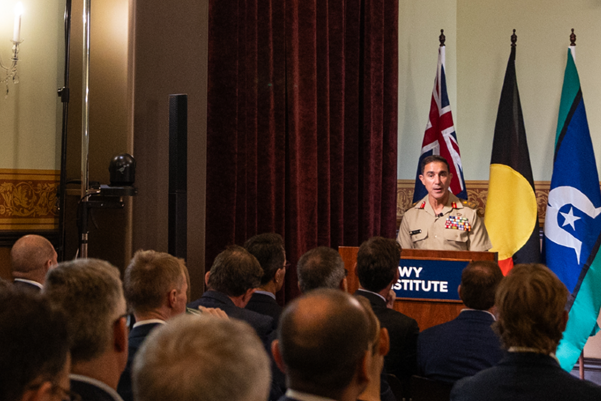
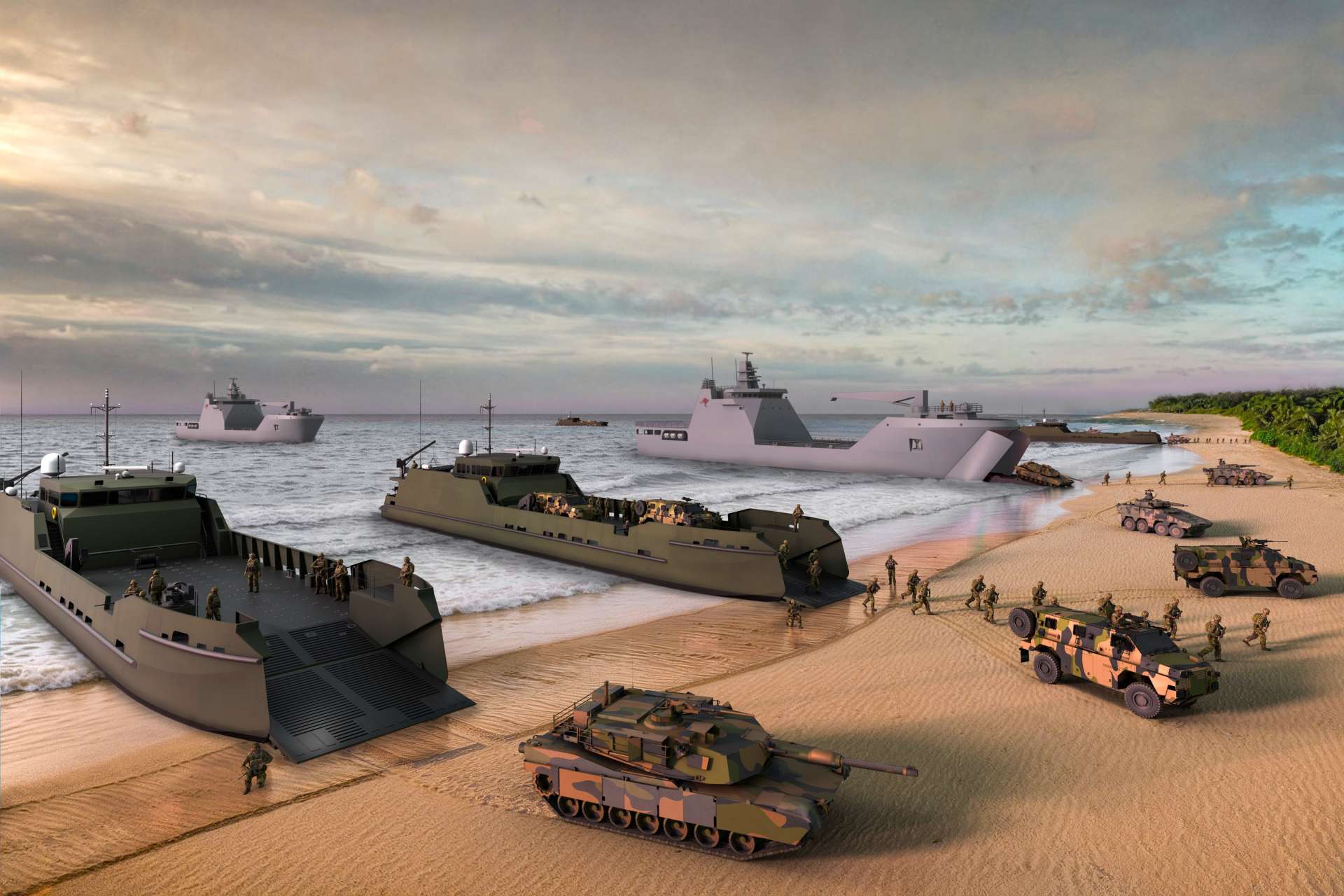
In his April address—the third in a series of four keynotes on the state of the army profession—the Chief of Army, Lieutenant General Simon Stuart, outlined the aims of this new theory. It will build on what the army already is, and what it wants to be: a littoral fighting force ready to compete and fight to secure strategic land positions and logistics supply lines, and protect remote airfields and ports in northern Australia, the Pacific islands and the archipelago to Australia’s north.

However, littoral manoeuvre is designed for high-end scenarios and violent stabilisation missions. If a crisis were to escalate to war, the army would have to figure out how to deploy ground troops and materiel forward inside adversary anti-access and area denial ranges. And supposing army units and formations would be prepositioned, many grey-zone or hybrid threats would put Australian soldiers in harm’s way. Accordingly, the new theory will have to spell out for the Australian public how the army intends to deter adversary forces from greater distances, and how it will manoeuvre, fight and resupply on islands with scant infrastructure or local capacity to supply military needs.

The army that begins a war will not be the same one that sees the end of it. Considering this, the army and society must both have the will and the capacity to sustain forces at war.

The transcript of that April address.

 
Some thinking from a force that we are often compared to.


The transcript of that April address.


Further to...


Littoral Manoeuvre Group

"being framed as a practical instrument for operating across archipelagic and coastal terrain where access, mobility and sustainment are likely to shape future military options."

Littoral Manoeuvre Group
Littoral Manoeuvre Group HQ (Brisbane)
Littoral Riverine Survey Squadron (Brisbane)
1st Landing Craft Battalion (Brisbane)
Landing Craft Battalion (Cairns)
Landing Craft Battalion (Darwin)
35th Water Transport Squadron (Townsville)

The Littoral Manoeuvre Group is subordinated to 17th Sustainment Brigade, previously the 17th Combat Service Support Brigade.

A couple of 500 tonne LSTs form moving a Combat Team each around the coast, taking HIMARS and Bushmasters with them. They will also be taking the tanks that the USMC forgot.
 
To paraphrase Patrick O'Bri[a]n, the main purpose of an army is to secure sources of marine stores for the navy.
 
Last edited:
A new theory of the Australian Army appears to have been found.


“Our role is explicit: we are the ADF’s experts in land combat. Our mission is set: prepare land power in order to enable the integrated force in competition and conflict,” Lieutenant General Stuart said."

...


"ACNDS26 defines the Army’s role – what it does, why it matters – and how it is transforming to meet the demands of today’s strategic environment.

"At its core are four key requirements shaping Army’s contribution:

fight and win in the littorals;
strike at long range;
win the close fight on, from and onto the land;
and integrate with the ADF, with allies and partners, and with sovereign industry."

...


The NDS, which was unveiled in April, highlighted the specific role of the Army to “optimise for littoral manoeuvre with a long-range strike capability”, which the contribution documents said is at the “centre of our ethos, mindset, investment and training”.

The Army defines the littorals as “the areas of the sea that influence the land, and the areas of the land that influence the sea”.


....


"The Australian Army has been engaged in a multitude of advancement operations in recent years, and within the past three alone, has “progressed the largest modernisation since WWII”.

"It specifically highlighted missile and strike technology (HIMARS, GMLRS), mobility vehicles, counter drone and aircraft (UH-60M Black Hawk, AH-64E Apache) development as some of the major capabilities of Army defence that have been accelerated."
 
Last edited:
A new theory of the Australian Army appears to have been found.


“Our role is explicit: we are the ADF’s experts in land combat. Our mission is set: prepare land power in order to enable the integrated force in competition and conflict,” Lieutenant General Stuart said."

...


"ACNDS26 defines the Army’s role – what it does, why it matters – and how it is transforming to meet the demands of today’s strategic environment.

"At its core are four key requirements shaping Army’s contribution:

fight and win in the littorals;
strike at long range;
win the close fight on, from and onto the land;
and integrate with the ADF, with allies and partners, and with sovereign industry."

...


The NDS, which was unveiled in April, highlighted the specific role of the Army to “optimise for littoral manoeuvre with a long-range strike capability”, which the contribution documents said is at the “centre of our ethos, mindset, investment and training”.

The Army defines the littorals as “the areas of the sea that influence the land, and the areas of the land that influence the sea”.


....


"The Australian Army has been engaged in a multitude of advancement operations in recent years, and within the past three alone, has “progressed the largest modernisation since WWII”.

"It specifically highlighted missile and strike technology (HIMARS, GMLRS), mobility vehicles, counter drone and aircraft (UH-60M Black Hawk, AH-64E Apache) development as some of the major capabilities of Army defence that have been accelerated."

IOW, counter-China posturing similar to the USMC rebranding
 
IOW, counter-China posturing similar to the USMC rebranding

But hanging on to the tanks, IFVs and SPHs.

Also interesting to note that Long Range Fires and GBAD get grouped together in their own brigade. (Multi-Domain Task Force?)
 
But hanging on to the tanks, IFVs and SPHs.

Also interesting to note that Long Range Fires and GBAD get grouped together in their own brigade. (Multi-Domain Task Force?)

More likely being set up to give the artillery a coveted one star position ;)
 
But hanging on to the tanks, IFVs and SPHs.

Also interesting to note that Long Range Fires and GBAD get grouped together in their own brigade. (Multi-Domain Task Force?)
The Aussies have been a little light on arty for some time (It's been a long time since 104 Bty did its thing at Long Tan). Their move to HIMARS makes sense but keeping guns around is a wise move. (Balance in all things)

I'm not sure I like the comparison to MDTF very much. I think the underlying concept of the MDTF should be the foundation of every artillery brigade in that there needs to be a headquarters that is a fusion cell for sensors (from everywhere; from ground to air to space), of both offensive and defensive EW, of signals, and of effector systems (guns, loitering munitions, rockets, EW) together with appropriate logistics and maintenance support and local security forces. For the most part the fusion cell needs to exist as a full-time entity (whether as the headquarters or as a "fusion battery") that is roughly the same as every other arty brigade. After that every arty brigade needs to be bespoke for its specific role. An A2/AD arty brigade will look slightly different from a mechanized division one and so on. Some may not need guns just rockets; or a different air defence, local security and EW structure.

In my little napkin force I call these fusion units pan domain regiments but I dislike the name and am searching for a new one. STA isn't right either because STA is only one part of its function.
More likely being set up to give the artillery a coveted one star position ;)
IMHO, colonel is the right rank for a brigade of any type. I thought that back in the day when we had one stars commanding combat groups/ brigades. I haven't changed my mind.

🍻
 
The Aussies have been a little light on arty for some time (It's been a long time since 104 Bty did its thing at Long Tan). Their move to HIMARS makes sense but keeping guns around is a wise move. (Balance in all things)

I'm not sure I like the comparison to MDTF very much. I think the underlying concept of the MDTF should be the foundation of every artillery brigade in that there needs to be a headquarters that is a fusion cell for sensors (from everywhere; from ground to air to space), of both offensive and defensive EW, of signals, and of effector systems (guns, loitering munitions, rockets, EW) together with appropriate logistics and maintenance support and local security forces. For the most part the fusion cell needs to exist as a full-time entity (whether as the headquarters or as a "fusion battery") that is roughly the same as every other arty brigade. After that every arty brigade needs to be bespoke for its specific role. An A2/AD arty brigade will look slightly different from a mechanized division one and so on. Some may not need guns just rockets; or a different air defence, local security and EW structure.

In my little napkin force I call these fusion units pan domain regiments but I dislike the name and am searching for a new one. STA isn't right either because STA is only one part of its function.

IMHO, colonel is the right rank for a brigade of any type. I thought that back in the day when we had one stars commanding combat groups/ brigades. I haven't changed my mind.

🍻

My allusion to the MDTF stems from the MDTF including (like the USMC MLR) both a Long Fires element and a local Air Defence element. NASAMs is primarily a local defence system.

I will be curious to see how the IAMD (Theater protection) gets managed.

As of now I am seeing both the LRPF assets and the IAMD assets as analogous to historic Garrison artillery but with a nationwide protective zone rather than a Vauban citadel.
 
Back
Top