

You are using an out of date browser. It may not display this or other websites correctly.
You should upgrade or use an alternative browser.
You should upgrade or use an alternative browser.
AML - Autonomous Multi-Domain Launcher (LRPF-IFPC)
- Thread starter Kirkhill
- Start date

FJAG
Army.ca Legend
- Reaction score
- 20,946
- Points
- 1,160
It's the ammo issue I was wondering about. I'm used to seeing an initial stock of arty ammo come with a new system project but subsequent to that its a national procurement budget issue. Correct? I seem to recall M777 was a bit messy going from UOR to in-service.Projects follow this process:
Identification
Options Analysis
Definition
Implementation
Major contracts will generally be let as a project exits Def to enter Imp.
Projects may have multiple phases of Def and Imp, and often will have infra components as well, which may include second order requirements as well.

- Reaction score
- 43,097
- Points
- 1,210
UOR is a four letter word...It's the ammo issue I was wondering about. I'm used to seeing an initial stock of arty ammo come with a new system project but subsequent to that its a national procurement budget issue. Correct? I seem to recall M777 was a bit messy going from UOR to in-service.
But yes, a non UOR is responsible for initial provisioning of spares and ammo. I believe the current standard is thirty days of supply.

- Reaction score
- 7,017
- Points
- 1,160
Some updates on the Common Autonomous Multi-Domain Launcher (CAML) program in the US as well as some further details on what they are looking for in terms of autonomy.

 defence-blog.com
Also notable that a key focus of the project is the wider Army shift to "smaller crews, dispersed launch sites, and automated logistics".
U.S. Army seeks new autonomous missile launcher
The United States Army has released a set of new Requests for Information aimed at advancing the Common Autonomous Multi-Domain Launcher, or CAML, a next-generation autonomous fires platform intended to reshape how the service moves, loads, and employs missile systems
defence-blog.com
The United States Army has released a set of new Requests for Information aimed at advancing the Common Autonomous Multi-Domain Launcher, or CAML, a next-generation autonomous fires platform intended to reshape how the service moves, loads, and employs missile systems across future battlefields.
The Autonomous Mobility Platform RFI asks companies to outline their capacity to design, build, test, and deliver an uncrewed mobility vehicle, a convoy leader vehicle, and an autonomy command-and-control system within 12–18 months. The Army notes that solutions “are not required to be standard Army-inventory vehicles,” and adds that commercial platforms are encouraged.
The platform must support three modes: autonomous convoy following, waypoint navigation, and optionally piloted manual control. It must also be capable of autonomously loading and unloading heavy palletized payloads, supporting at least 40,000 to 60,000 pounds without trailers, generating 120 kW of onboard electrical power, and meeting strict size limits for transport and mobility.
They seem to have pretty quick timelines for the program with demos in FY 2026 and planned design, build, test and deliver in 12-18 months.The CAML program represents the Army’s broader move toward autonomous fires, distributed launchers, and reduced crew exposure. Autonomous systems like CAML are part of a shift toward future formations that rely on smaller crews, dispersed launch sites, and automated logistics—factors that directly affect how U.S. forces deter and respond to emerging threats.
Also notable that a key focus of the project is the wider Army shift to "smaller crews, dispersed launch sites, and automated logistics".

- Reaction score
- 13,909
- Points
- 1,160
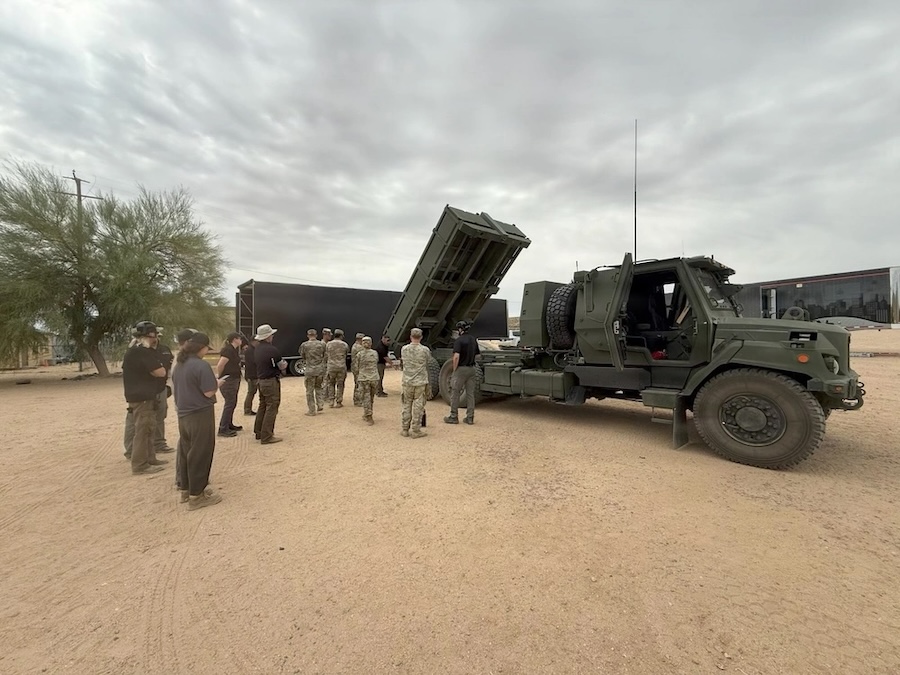
U.S. Army tests DeepFires autonomous rocket launcher and robotic resupply system at Project Convergence Capstone 6 in California
The U.S. Army has tested an experimental autonomous rocket launcher, robotic resupply vehicle and mobile command system at Fort Irwin, California.
 defence-industry.eu
Autonomous launcher trials
"The U.S. Army has tested an experimental autonomous rocket launcher, robotic resupply vehicle and mobile command system at Fort Irwin, California. The evaluation formed part of Project Convergence Capstone 6, an Army campaign focused on integrating emerging technologies into field operations.
"Soldiers from the 2nd Battalion, 18th Field Artillery Regiment, 75th Field Artillery Brigade, conducted the testing at the National Training Center. The Fort Sill-based unit worked directly with developers to assess the system under operational conditions.
"The experiment centered on DeepFires, a highly mobile autonomous launcher designed for multiple missions. The project was developed with the Army, Oshkosh, Forterra, Corvid Technologies and Collins Aerospace."
- Reaction score
- 13,909
- Points
- 1,160
Further to the previous:
 www.armyrecognition.com
....
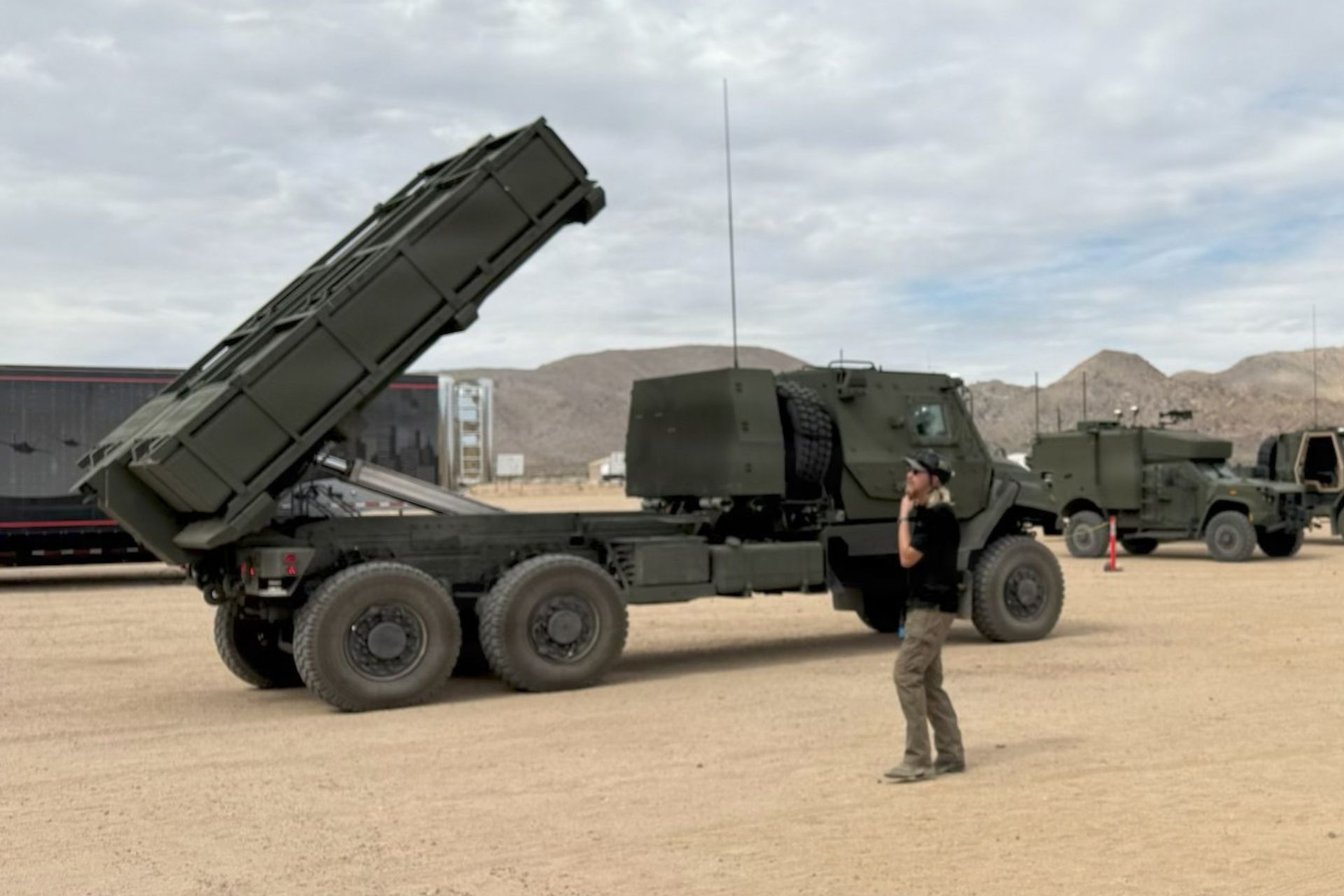
Three (or more) trucks - one crew in one command truck, one (or more) launcher vehicles, one (or more) resupply vehicles with the launchers and limbers playing follow the leader in convoy and being distributed and remotely controlled in action.
"The architecture addresses vulnerabilities observed in recent conflicts. The widespread use of ISR drones, satellites, counter-battery radars, and precision-guided weapons has reduced the survivability of conventional artillery units. By physically separating the command element from the launchers and resupply vehicles, DeepFires reduces the visual, thermal, and electromagnetic signature of the crewed component. If a launcher is detected, the command crew can remain several kilometers away in a protected location. Future development plans indicate that a single JUMPS C2 vehicle could control up to four autonomous launchers and multiple robotic resupply vehicles, increasing available firepower without a proportional increase in personnel while improving force survivability. This distributed architecture is also intended to sustain a high operational tempo in contested multidomain environments."
....
The launchers and limber are compatible with all HIMARS/MLRS rounds, Tomahawks and Patriots as well, apparently, as shorter range SAMs, meaning they can be used across all artillery functions.
"The rear section of the vehicle incorporates a containerized launcher module equipped with two rows of vertical launch cells that can be configured according to mission requirements. This modular architecture enables the integration of different weapon types. Equipped with Tomahawk cruise missiles, the system provides long-range conventional strike capability against command posts, strategic infrastructure, or integrated air defense systems at ranges exceeding 1,600 kilometers. Configured with Patriot PAC-3 MSE interceptors, the same launcher can perform air and missile defense missions against aircraft, unmanned aerial systems, cruise missiles, and tactical ballistic missiles using hit-to-kill interception technology. This modular approach enables the platform to shift from deep-strike operations to force protection missions without major structural modifications. "
....
"DeepFires is designed to operate across a wide range of terrain and weather conditions. It incorporates onboard power generation, can sustain autonomous operations over extended periods, and features increased payload capacity to reduce the frequency of resupply missions. The platform is also C-130-transportable, enabling rapid deployment to remote operational areas or locations with limited infrastructure. This level of strategic mobility supports the rapid deployment of long-range fires capabilities during expeditionary operations."
Increased payload capacity means that the "HIMARS" sized vehicle can carry "MLRS" sized payloads (2 pods instead of one, 12 GMRLS instead of 6, 4 PrSMs instead of 2)
...
"Beyond its technical characteristics, DeepFires reflects the U.S. Army's broader transition toward a distributed artillery architecture in which launchers, logistics assets, and command elements are physically separated but connected through resilient digital networks. The program aligns with the Army's Long Range Precision Fires (LRPF) modernization effort and its Multi-Domain Operations (MDO) concept, both of which seek to preserve operational freedom in contested environments. If the system reaches operational maturity, it could influence future artillery modernization programs among allied armed forces facing similar requirements for dispersion, mobility, and survivability against adversaries capable of combining electronic warfare, persistent surveillance, and long-range precision strike capabilities."
....
Is the Canadian Army following developments here as they seem to have implications for the recently expressed intent to buy HIMARS systems for the Long Range Precision Fires programme?
U.S. Army Evaluates DeepFires Autonomous Launcher for Future Long Range Precision Fires
DeepFires validates Human Machine Integration by letting robotic launchers operate while commanders retain fire control.
www.armyrecognition.com
....
Three (or more) trucks - one crew in one command truck, one (or more) launcher vehicles, one (or more) resupply vehicles with the launchers and limbers playing follow the leader in convoy and being distributed and remotely controlled in action.
"The architecture addresses vulnerabilities observed in recent conflicts. The widespread use of ISR drones, satellites, counter-battery radars, and precision-guided weapons has reduced the survivability of conventional artillery units. By physically separating the command element from the launchers and resupply vehicles, DeepFires reduces the visual, thermal, and electromagnetic signature of the crewed component. If a launcher is detected, the command crew can remain several kilometers away in a protected location. Future development plans indicate that a single JUMPS C2 vehicle could control up to four autonomous launchers and multiple robotic resupply vehicles, increasing available firepower without a proportional increase in personnel while improving force survivability. This distributed architecture is also intended to sustain a high operational tempo in contested multidomain environments."
....
The launchers and limber are compatible with all HIMARS/MLRS rounds, Tomahawks and Patriots as well, apparently, as shorter range SAMs, meaning they can be used across all artillery functions.
"The rear section of the vehicle incorporates a containerized launcher module equipped with two rows of vertical launch cells that can be configured according to mission requirements. This modular architecture enables the integration of different weapon types. Equipped with Tomahawk cruise missiles, the system provides long-range conventional strike capability against command posts, strategic infrastructure, or integrated air defense systems at ranges exceeding 1,600 kilometers. Configured with Patriot PAC-3 MSE interceptors, the same launcher can perform air and missile defense missions against aircraft, unmanned aerial systems, cruise missiles, and tactical ballistic missiles using hit-to-kill interception technology. This modular approach enables the platform to shift from deep-strike operations to force protection missions without major structural modifications. "
....
"DeepFires is designed to operate across a wide range of terrain and weather conditions. It incorporates onboard power generation, can sustain autonomous operations over extended periods, and features increased payload capacity to reduce the frequency of resupply missions. The platform is also C-130-transportable, enabling rapid deployment to remote operational areas or locations with limited infrastructure. This level of strategic mobility supports the rapid deployment of long-range fires capabilities during expeditionary operations."
Increased payload capacity means that the "HIMARS" sized vehicle can carry "MLRS" sized payloads (2 pods instead of one, 12 GMRLS instead of 6, 4 PrSMs instead of 2)
...
"Beyond its technical characteristics, DeepFires reflects the U.S. Army's broader transition toward a distributed artillery architecture in which launchers, logistics assets, and command elements are physically separated but connected through resilient digital networks. The program aligns with the Army's Long Range Precision Fires (LRPF) modernization effort and its Multi-Domain Operations (MDO) concept, both of which seek to preserve operational freedom in contested environments. If the system reaches operational maturity, it could influence future artillery modernization programs among allied armed forces facing similar requirements for dispersion, mobility, and survivability against adversaries capable of combining electronic warfare, persistent surveillance, and long-range precision strike capabilities."
....
Is the Canadian Army following developments here as they seem to have implications for the recently expressed intent to buy HIMARS systems for the Long Range Precision Fires programme?
FJAG
Army.ca Legend
- Reaction score
- 20,946
- Points
- 1,160
I can assure you that the Canadian army is following developments on a daily basis. HIMARS is the LRPF program which is funded and contracted for the delivery of 26 systems and ammo.Is the Canadian Army following developments here as they seem to have implications for the recently expressed intent to buy HIMARS systems for the Long Range Precision Fires programme?
That tends to close the four decades long project for the time being. That's not to say that there will not be more projects now that funding is becoming available and the nature of warfare is changing. AD for instance has concentrated GBAD on VSHORAD and SHORAD solutions. IMAD is an ongoing concept and IMHO, PAC 3 MSE should play a part in that therefore even if we do not initiate a new LRPF project in the near future I think this type of system could play a part (my only reservation is that PAC 3 MSE is dreadfully expensive. There may be near-peer less costly equivalents we will want to look at.
Aside from the fact that we have HIMARS in hand, I'm of the view that we need to keep an eye on land launched anti-ship missiles to work into an A2/AD system. I frankly don't care what the launcher is. It's the missile and its integration into the ISTAR/joint fires system that matters. If we can get a good one that launches off HIMARS then great. If not, get whatever truck - manned or unmanned - that's around that launches it. Honestly, unmanned launchers are a glossy brochure sales pitch that is way overhyped. Most launchers will need manning of some type - for ammo resupply in the rear and for local defence - ground and air - in the rear and near the launch site. I'd just as soon have a manned launcher that has a CUAS RWS on it then sending out an unmanned system.

- Reaction score
- 13,909
- Points
- 1,160
I can assure you that the Canadian army is following developments on a daily basis. HIMARS is the LRPF program which is funded and contracted for the delivery of 26 systems and ammo.
That tends to close the four decades long project for the time being. That's not to say that there will not be more projects now that funding is becoming available and the nature of warfare is changing. AD for instance has concentrated GBAD on VSHORAD and SHORAD solutions. IMAD is an ongoing concept and IMHO, PAC 3 MSE should play a part in that therefore even if we do not initiate a new LRPF project in the near future I think this type of system could play a part (my only reservation is that PAC 3 MSE is dreadfully expensive. There may be near-peer less costly equivalents we will want to look at.
Aside from the fact that we have HIMARS in hand, I'm of the view that we need to keep an eye on land launched anti-ship missiles to work into an A2/AD system. I frankly don't care what the launcher is. It's the missile and its integration into the ISTAR/joint fires system that matters. If we can get a good one that launches off HIMARS then great. If not, get whatever truck - manned or unmanned - that's around that launches it. Honestly, unmanned launchers are a glossy brochure sales pitch that is way overhyped. Most launchers will need manning of some type - for ammo resupply in the rear and for local defence - ground and air - in the rear and near the launch site. I'd just as soon have a manned launcher that has a CUAS RWS on it then sending out an unmanned system.
From what I can gather it seems like the key element, the interface, is the Pod that contains the missiles. Those pods are now containing the MRLS Family of Missiles, from M31 to GMRLS-ER, to ATACMs, PrSMs, and now Tomahawks and PAC3s. The same launcher is in the running for AIM9s and AIM-120s as well as the Standard replacements.
U.S. Navy Reveals Details Of Standard Missile Replacement Plan | Aviation Week
A newly obtained document reveals the full scope of the U.S. Navy’s preliminary plans for replacing all members of the venerable, RTX-made Standard Missile.
 aviationweek.com
As for the price of the PAC3s - the Ukrainians might be of assistance. 20% of the price, produced at a rate of 3-a-day.
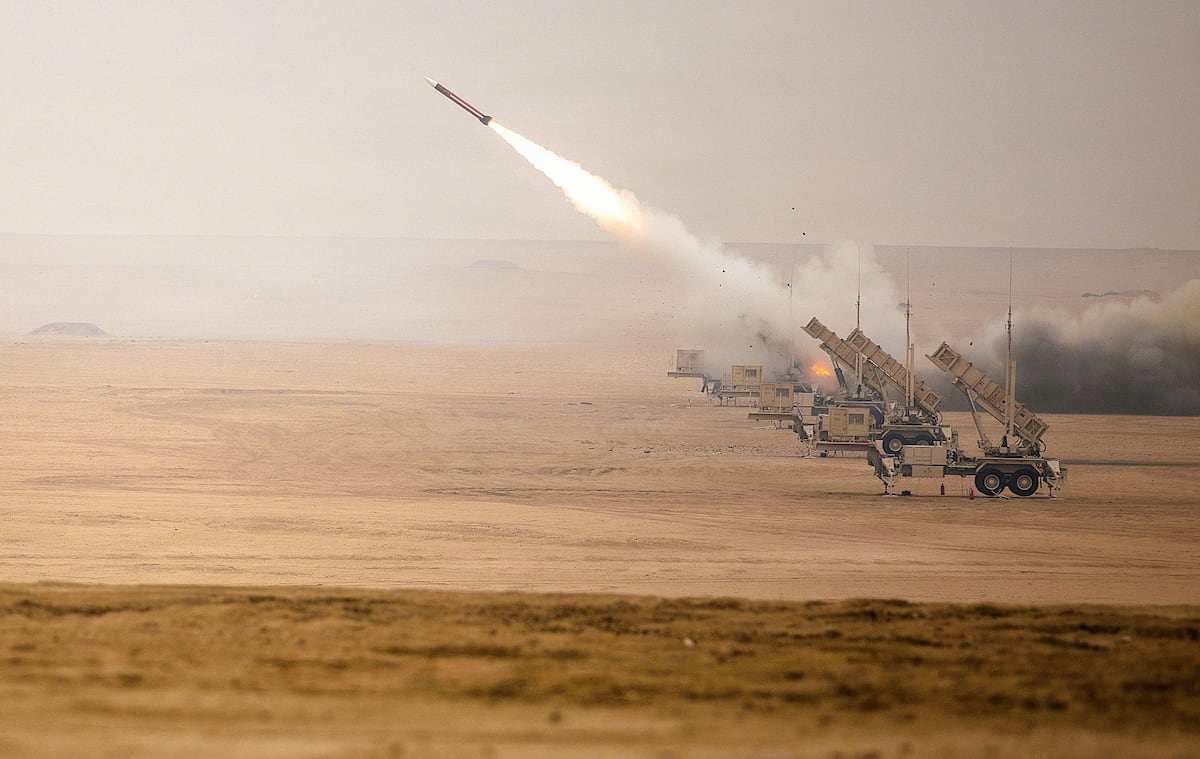
The arms race for cheaper anti-ballistic weapons is underway
After years of a Patriot monopoly, new anti-ballistic alternatives are emerging. Officials hope to see some of them on the battlefield by the end of 2026.
 www.defensenews.com
"Freyja is a full Patriot-style anti-ballistic system that includes an interceptor, launcher, radar and command-and-control network.
"The system, designed by Kyiv startup Fire Point, is built around its FP-7.X interceptor missile and various capabilities supplied by European partners.
"Zelenskyy called Freyja “an analogue of Patriot, but a system for more mass production and a cheaper system.”
"His comments came as he formally launched the Integrated Anti-Ballistic Missile Coalition in Paris on July 13 alongside nine other countries, including Denmark, France, Germany, Italy, the Netherlands, Norway, Spain, Sweden and the United Kingdom.
"The FP-7.X flew for the first time in early June and is built to kill ballistic targets at roughly 15 miles up using a high-explosive fragmentation warhead rather than the PAC-3’s hit-to-kill collision — which may come in later versions — at a target price of approximately $700,000 per interceptor, or roughly one-fifth the price of a PAC-3.
"The company says it will build three interceptors a day starting in August. Zelenskyy wants the system up and running within 12 months, and the coalition is targeting its first real ballistic intercept for the end of 2027.
“We have an ambitious goal: to have an MVP ready by the first half of next year,” Davyd Aloian, deputy secretary of Ukraine’s National Security and Defense Council, told Reuters on July 27. “That is a prototype that can already demonstrate its first practical results.”
FJAG
Army.ca Legend
- Reaction score
- 20,946
- Points
- 1,160
Except Trump has once again done and about face and hasn't given the okay to produce there.As for the price of the PAC3s - the Ukrainians might be of assistance. 20% of the price, produced at a rate of 3-a-day.
Guess Putin was against it.

- Reaction score
- 13,909
- Points
- 1,160
Except Trump has once again done and about face and hasn't given the okay to produce there.
Guess Putin was against it.
The FP-7 is the non-American solution. It is the work of the same Ukrainian company that developed the Flamingo when the Americans wouldn't supply ATACMs and Tomahawks.
FJAG
Army.ca Legend
- Reaction score
- 20,946
- Points
- 1,160
I thought we were talking about Trump's reneged promise for PAC3s made in Turkey. At this point the FP-7 is pre-production and quite different.The FP-7 is the non-American solution. It is the work of the same Ukrainian company that developed the Flamingo when the Americans wouldn't supply ATACMs and Tomahawks.
Similar threads


- Replies
- 26
- Views
- 16K

