- Reaction score
- 4,462
- Points
- 1,040
First off as to why should we? It is because we could make life so much better for our citizens. The less housing costs the better our economy will be as we can spend money elsewhere and enjoy life.sure we can, but should we? We can afford to borrow money too. That is why our credit rating is so good. Debt makes you the slave of the person who holds the paper. How much of our paper is held in Beijing? It is quite conceivable that many of Carney's actions re: China are the result of string pulling. It is certain that that is the motive behind Trump.
I have seen pictures of that. Leningrad post war, council housing in London. No one packed into that kind of development is going to give a s**t about looking after the place so in 5 years the place will look 30.
As long as there is no grass or trees to clutter the place up. Your world is depressing.
How be we stop paying for the Brazilian rain forest instead
Most of the seniors I know have fought like hell to stay out of that type of living. For them that move is one step closer to death
We spend tons of money on programs which do nothing for us. This program pays for itself in the long term. Imagine just getting rid of OAS from the budget, thats hundreds of billions saved over decades. There is likely a lot of other programs that could be removed as well as we wouldn’t need to subsidize people for them to afford the bare necessities.
As to seniors not wanting to live in that type of housing, I suspect what you are saying is true. That being said if they don’t want to live like that, why should the taxpayer subsidize them to live a way they can’t afford on their own then?
Your jumping to conclusions without doing any research on what Vienna public housing looks like, here is a example from Vienna of one of these structures.
‘Perhaps the best-known example of a well-functioning public housing complex in Vienna, the Wohnpark Alt-Erlaa includes 3180 apartments, each with a balcony or loggia. The multifunctional complex also comprises two health centres, two kindergartens, three schools, a day-care centre, a public library, a gym, six solariums, a mall, a church, bars, restaurants, playgrounds, an administration building and several leisure facilities and hobby rooms for more than 20 leisure clubs. There is a swimming pool on every rooftop and an indoor pool and sauna in every basement. Built on a vast area of 240 000 square metres the almost self-sufficient micro-town called Wohnpark Alt-Erlaa is home to about 11 000 residents. It may be considered a city within the city.’
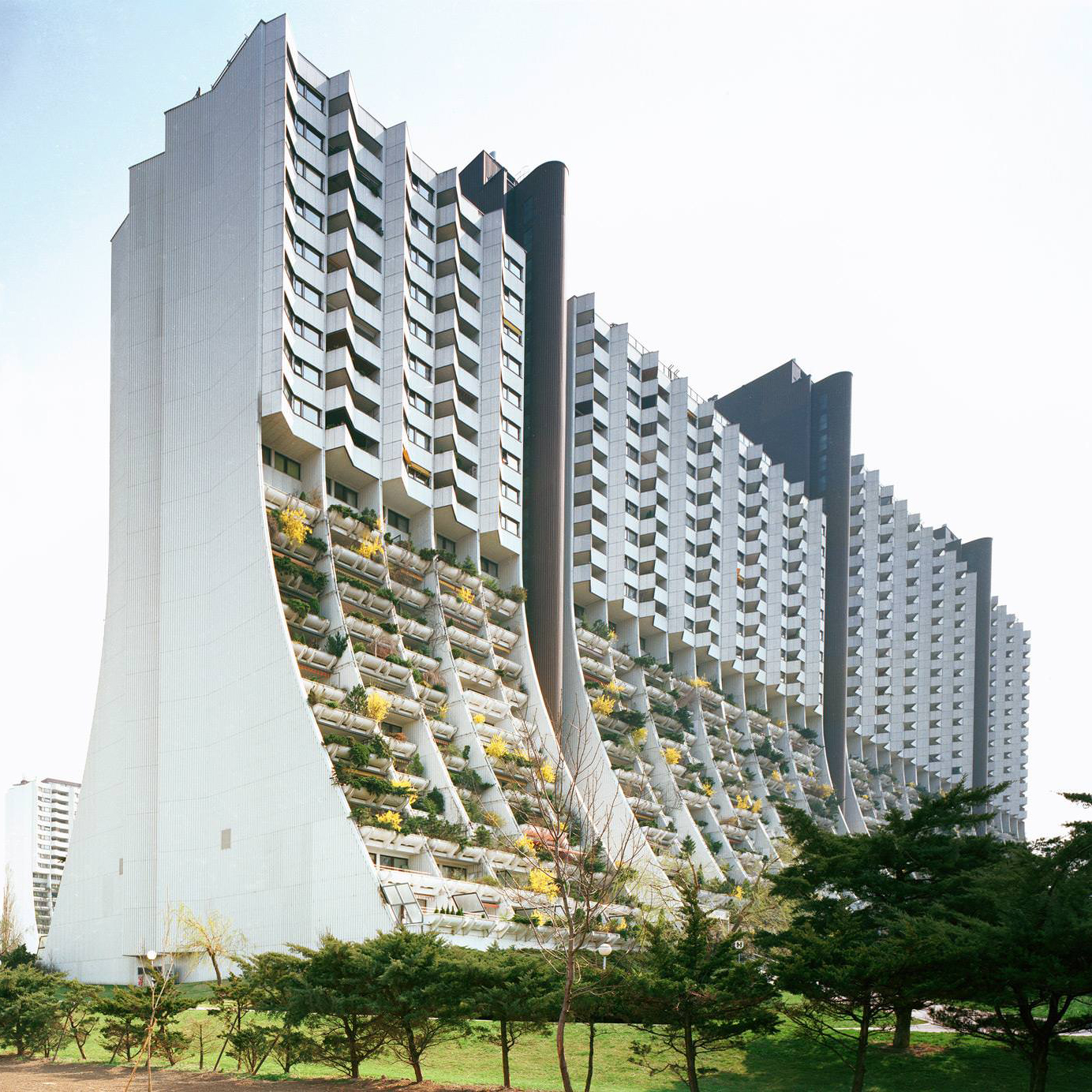
Allt-Erlaa - Hidden Architecture
Perhaps the best-known example of a well-functioning public housing complex in Vienna, the Wohnpark Alt-Erlaa includes 3180 apartments, each with a balcony or loggia. The multifunctional complex also comprises two health centres, two kindergartens, three schools, a day-care centre, a public...
 hiddenarchitecture.net
They don’t just build the cheapest buildings and they don’t just pack it full of low income families. They award points for architecture, each building has some sort of feature that makes it unique (say a pub, gym, library, etc.) in it, and they build a decent quality home.
This model works, and it works very well. It is self sustaining and it provides real competition in the housing market forcing the private housing market to be competitive.
Because two things:The fact that models exist doesn't mean they'll be applied here.
If government could do all these things that people keep claiming government can do well, why do things never work out that way?
1) This works against our politicians fiscal interests as they basically are all homeowners/multiproperty owners. They haven’t addressed the housing crisis because they will lose out on it.
2) It is a long term project which is something democracies tend to suck at. It isn’t a throw money at it solution, you actually have to do something.
To counter your argument that the government always screws things up, the private sector really isn’t shining here. Seeing as basically all the housing in Canada has been privately built since the 90s and the housing crisis has come into existence since then with the private sector doing everything it can to keep prices up it isn’t exactly a good look for a pure capitalistic model.
Those shoebox condos are a great example of pure greed in action and wasted years of construction on useless housing.
If you take the need to make profit out of it, the housing prices go down very quickly.