- Reaction score
- 8,804
- Points
- 1,360
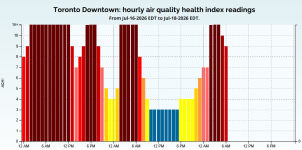
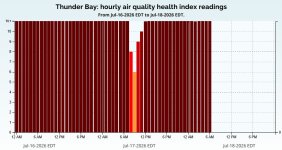
Dear 416/905, at least you seem to be getting some breaks from the smoke here and there ...



It would be interesting to do a comparetive GIS overlay and show how much of their forest is within, say, five miles of any sort of road, compared to ours.One of the CNN commentators mentioned that since most of Canada's Boreal Forest is Government (re: Crown) owned and that most of the forests in the lower 48 are privately owned, that the US does a much better job at forest management. What the CNN crew failed to mention:
The Canadian Boreal forest is 7 times the size of all US forests put together;
99% of the Canadian forest is wilderness and has no road or rail access;
US led Softwood Lumber war has severely damaged Canada's forestry industry and there fore less wood is being harvested; and
Forest Fire Smoke is the Honey Badger of the Atmosphere, it don't give a shit where it goes or who it annoys.

It would be interesting to do a COMPRWTIVR GIS overlay and show how much of their forest is within, say, five miles of any sort of road, compared to ours.
Privately owned largely = logging = accessible and actively managed. Ours is just woods that for much of it no human has ever touched.
I remember driving from Vancouver to the Yukon many years back. At one point we were stopped at some outlook, I feel like it was up past Fort Nelson, and I was looking out northeast and just marvelling at how much utterly untouched wilderness there was out there. Same feeling driving up across the top of Lake Superior a couple years ago. Canada’s really big.

 globalnews.ca

which taken together makes Canada one giant carbon sink sequestering far more CO2 than we could possibly produce. The figures floored me.Bigger than India and, unlike India, largely untouched...
How much forest does Canada have?
Canada is home to 369 million hectares (ha) of forest, or 3.69 million km2, which is close to 9% of the world’s total forest. To get a sense of the area of Canada’s forests, the land area of India is about 297 million ha. Canadians depend on and value these forests for many different uses including recreation, conservation, traditional Indigenous practices and sustainable timber harvest. Strict rules require harvest areas to be regenerated either through planting or natural regrowth. Canada’s National Deforestation Monitoring System reports that over the last 34 years, less than half of 1% of Canada’s forest has been deforested.
How much forest does Canada have? - Natural Resources Canada
natural-resources.canada.ca
which taken together makes Canada one giant carbon sink sequestering far more CO2 than we could possibly produce. The figures floored me.
- CO2 Absorption: With 594.7 billion trees absorbing approximately 14.87 gigatonnes of CO2 annually, Canada’s forests are a formidable carbon sink.
- National Emissions: Canada emits roughly 559 megatonnes (0.559 gigatonnes) of CO2 equivalent each year.
- The Net Effect: When comparing these figures, Canada’s trees are absorbing carbon dioxide at a rate 26.6 times higher than the country’s total greenhouse gas emissions.
Wait until we start sending bills - with interest - for acid rain.I think that fair is fair:
We get tariffed for our more frequent wild fires sending smoke their way, then they get tarriffed for all the damages caused by wind, flooding, hail and other consequences from the more and more frequent hurricanes they are doing nothing to stop from coming North at us.


 www.americanforests.org

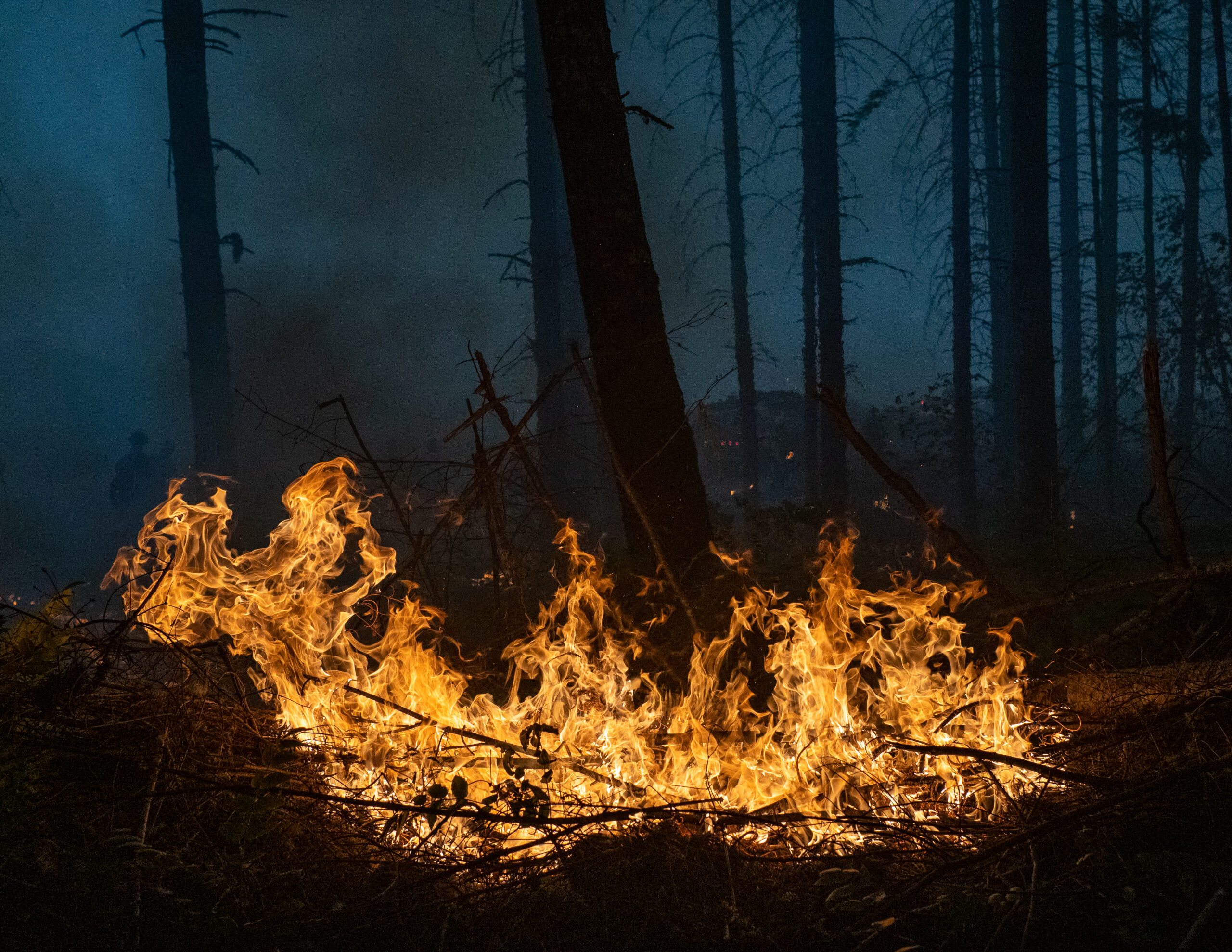
That there is Freedom smoke.Currently 585 active wildfires burning in the US, and those are totally not producing any smoke.
Active Wildfire Map - American Forests
Hotter, drier and more variable conditions have caused an increase in destructive and high severity wildfires. Check your area for active wildfires today.


Same result we will push the infiltrators out.

... and no guns.We as in combat vets dragging around CPAP machines or we as in everyone with their trauma and mental health tags in their instagram profile?
I don't have no cpap machine, nor do my friends have them or mental health tags.We as in combat vets dragging around CPAP machines or we as in everyone with their trauma and mental health tags in their instagram profile?
The majority if not all of my military friends would look forward to defending our Country on our ground for once.

I think you'll find that the Secretary of Testosterone is shaping the military leadership of the US to slavishly follow the orders of him and Big Orange.That only hinges on if they would attack us or not. I do not think the average US service member would follow that order, nor do I think their Generals would either.
As shown by Iran and Venezuela, there are no longer any functioning checks on the executive branches ability to start a new war.i hope for everyone's sake DT and his merry war machine doesn't push people to the brink.
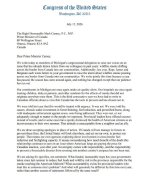
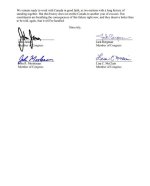
I'm sure all those factors have been considered by the honourable members from the great state of Michigan, especially when suggesting this in their letter attached here (highlights mine): "... If Canada will not manage its forests to prevent these fires, the United States will look elsewhere, and act on our own, to protect our people. This means our own agencies exploring direct involvement in cross-border fuel reduction and firefighting capacity ..." So, does this mean USSCOM will be tasked with coming up to do prescribed burn raids on Canadian Crown land?One of the CNN commentators mentioned that since most of Canada's Boreal Forest is Government (re: Crown) owned and that most of the forests in the lower 48 are privately owned, that the US does a much better job at forest management. What the CNN crew failed to mention:
The Canadian Boreal forest is 7 times the size of all US forests put together;
99% of the Canadian forest is wilderness and has no road or rail access;
US led Softwood Lumber war has severely damaged Canada's forestry industry and there fore less wood is being harvested; and
Forest Fire Smoke is the Honey Badger of the Atmosphere, it don't give a shit where it goes or who it annoys.
 Stepping in with their own firefighters (and billing us) instead of just using ours? I'm sure the folks who signed the letter have it all in hand, though.
 walberg.house.gov