
- Reaction score
- 28,522
- Points
- 1,360
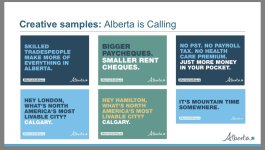
I wonder when the the Premier or AB government will take this offline? Not a good look when she’s trying to make the case for being unfairly inundated with Canadian foreigners.



She said I'd the petition is successful it will be on the October ballot. Yes forever canada is notI didn’t think separation was on the menu in Smith’s referendum. I thought it was a bunch of separatist dog whistles.
What the heck is a payroll tax??I wonder when the the Premier or AB government will take this offline? Not a good look when she’s trying to make the case for being unfairly inundated with Canadian foreigners.
View attachment 98583
I don’t know, but it seems Alberta doesn’t have one, whatever it is.What the heck is a payroll tax??

A payroll tax is something a company pays when the payroll is over a certain amount per year. We have one here in Mb.I don’t know, but it seems Alberta doesn’t have one, whatever it is.


A payroll tax is something a company pays when the payroll is over a certain amount per year. We have one here in Mb.
I stand to be corrected .
HEALTH TAXES/LEVIES
Five jurisdictions impose employer paid health taxes or levies on assessable remuneration paid to
employees, which are included in the previously mentioned employer taxes.
BRITISH COLUMBIA EMPLOYER HEALTH TAX (BCEHT)
EHT is applied to remuneration paid to an employee who either:
• reports to work at a physical establishment of the employer in British Columbia;
• is attached to an establishment of the employer in British Columbia; or
• does not report to work at an establishment of the employer but is paid from or through an
establishment in British Columbia.
MANITOBA HEALTH AND POST SECONDARY EDUCATION TAX LEVY (HE LEVY)
The HE Levy is applied to remuneration paid to an employee who:
• reports to work at a permanent establishment of the employer in Manitoba; and/or
• is not required to report to work at a permanent establishment of the employer but is paid from or
through a Manitoba permanent establishment.
NEWFOUNDLAND HEALTH AND POST SECONDARY EDUCATION TAX
(HAPSET)
HAPSET is applied to remuneration paid or credited to or on behalf of each employee who
reports for work to or who is paid by an employer through an establishment in the province of
Newfoundland and Labrador.
ONTARIO EMPLOYER HEALTH TAX (EHT)
EHT is applied to remuneration paid to an employee who either:
• reports to work at a physical establishment of the employer in Ontario;
• is attached to an establishment of the employer in Ontario; or
• does not report to work at an establishment of the employer but is paid from or through an
establishment in Ontario.
QUEBEC HEALTH SERVICES FUND (QHSF)
QHSF is applied to remuneration paid to an employee who:
• reports to work at a physical establishment of the employer in Quebec; or
• does not report to a physical establishment but is paid from an establishment in Quebec.

 angusreid.org
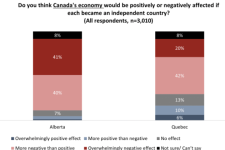
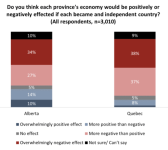
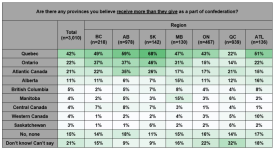
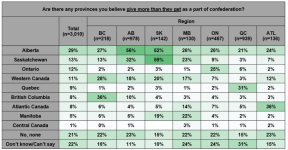
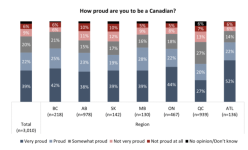
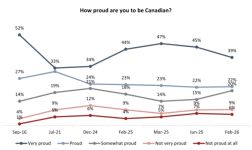

Survey says: "If it were possible, vast majority of Canadians would block QC (71%) or AB (79%) from separating"
Highlights (including how proud folks are - and have been over time - to be Canadian) ....Canada Separation Views
Canada Separation Views shows most Canadians would block Quebec or Alberta from leaving and see separation as harmful to the country.
View attachment 98612
View attachment 98613
View attachment 98608
View attachment 98609
View attachment 98610
View attachment 98611
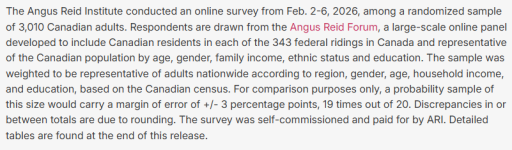
... and survey details:
View attachment 98607
Granular data attached.
I would block Alberta from separating if I was from the rest of Canada also. A significant amount of people from both Eastern and Western Canada make above average wages and take them home to spend in their local towns.Yikes.

 www.facebook.com

For joining, sure.Interesting bit of precedence.
I was today years old when i learned that NFLD voted by referendum to join Canada or not in 1948. The join side narrowly won: 52.3% to 47.7%.
Interesting bit of precedence.
If you are trying to find some comfortable comparison with a possible Alberta result, try looking at political shenanigans and corruption.

None in Canada.For joining, sure.
Any precedence for leaving?

For joining, sure.
Any precedence for leaving?
 )
)
I think it’s attempt find a comfortable comparison with a possible Alberta joining the US scenario.


