'The powers that be must do their utmost to avoid the mistakes of the SA80' | Writes Jonathan Ferguson
The British military’s distinctive-looking SA80 service rifle has equipped generations of soldiers since its introduction over 40 years ago, but it is in dire need of replacement and the MoD is expected to announce requirements in the new year.
Fans of the weapon might suggest simply making more of them, but this is not an option. No new rifles have been produced since 1994 and spares to rebuild and keep running the current modernised L85A2 and A3 versions have to be sourced from overseas.
Even its small calibre 5.56 mm ammunition is being brought into question by the wide availability of modern body armour.
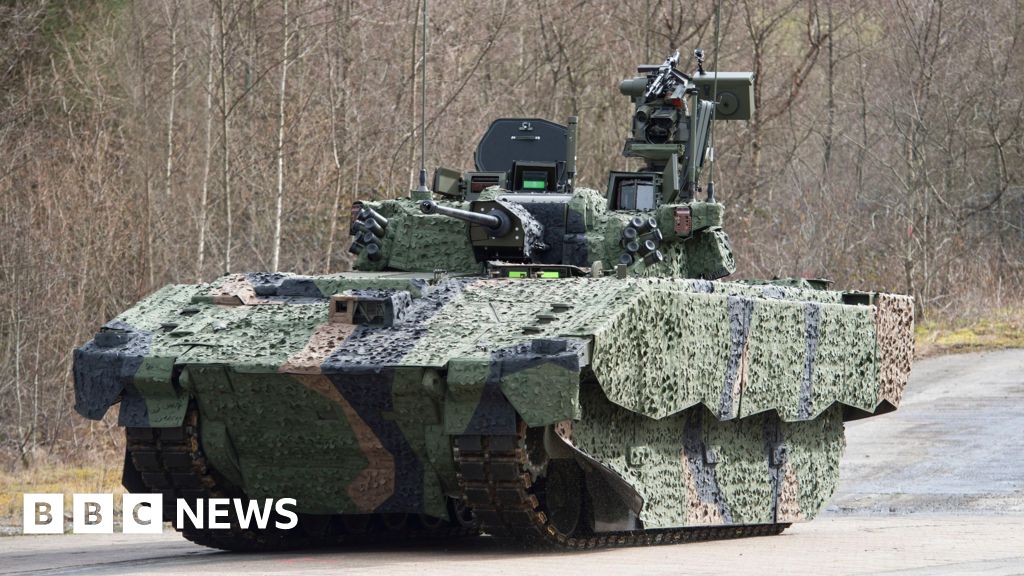
Though the SA80 is now a capable weapon, its introduction was as shambolic as the current Ajax vehicle programme appears to be.
The first ‘A1’ versions of the rifle – and its L86 Light Support Weapon counterpart (which provided extra firepower and range) – were so bad, in fact, that late former Liberal Democrat leader Menzies Campbell once said there “should be a sign reading, ‘Remember the SA80’ above the desk of every civil servant and every service man or service woman in the armed forces with responsibility for procurement”.
Despite already being years late, the weapon was effectively unfinished at the point of introduction. Problems were reported from the start but cascaded into an outright scandal during the First Gulf War.
Stories from the soldiers in the field and a scathing official report detailed instances of magazines falling off, parts breaking (including the firing pin) and fragile plastic parts that could be melted by insect repellent.
It was even possible for soldiers to break the weapon simply by making a small mistake on reassembly, requiring the intervention of an armourer to fix. The rifle could essentially not be relied upon to fire when the trigger was pulled.
The official report noted that some “commanders considered that casualties would have occurred due to weapon stoppages if the enemy had put up any resistance in the trench and bunker clearing operation”.
Thankfully the SA80 functioned when Her Majesty Queen Elizabeth II ceremonially pulled the trigger at the grand unveiling, but it clearly was not ready for war – so what went wrong and how was it fixed?
The project had started well enough in 1971 with a clear understanding of what was needed and a design study to meet it. The new weapons would equip the British military for mechanised warfare against the Soviet Union as well as service in Northern Ireland.
Instead of buying “off the shelf” from elsewhere, Britain turned to the state-owned Royal Small Arms Factory at Enfield, legendary for the Lee series of bolt-action rifles.
The project was dubbed “Small Arms for the 1980s” (hence ‘SA80’) and settled upon a configuration known today as a “bullpup”. Like its namesake the bulldog puppy, this type of weapon was compact but powerful. It retained a long barrel capable of shooting out to hundreds of metres, but set this well to the rear, placing the working parts in the butt.
With no need for a conventional stock, the weapon could be lighter. Even more weight would be saved by moving to a reduced size of ammunition, allowing more of it to be carried. The smaller rounds also produced less recoil, disturbing the aim less. Coupled with a telescopic sight for every rifle, every soldier could be an expert marksman.
A rifle like this could in theory combine the long range accuracy and power of the long and unwieldy (but much-loved) SLR rifle, and the close range automatic fire capability of the Sterling submachine gun. A “Light Support Weapon” version could even replace the Bren Light Machine Gun. This new weapon could do it all!
But Enfield hadn’t built anything like this in twenty years, and specific requirements from MoD for this ambitious effort kept changing. The project quickly ran over schedule and over budget, requiring a total redesign to even make manufacture viable.
Design work to fix the problems encountered in trials and on actual issue continued alongside manufacturing. Matters were not helped by the sale and (in 1988) closure of the Enfield factory – and the move to brand-new production facilities in Nottingham did nothing to help fix the design or improve poor quality control.
The weapon was left with systemic issues and, despite having been in development for well over a decade, was still effectively rushed into service. This is what had left soldiers in the Gulf with one of the worst military weapons ever created.
It wasn’t until the late 1990s that German firm Heckler & Koch, then under British ownership, was called upon to create a robust and reliable upgrade.
Introduced in 2001 the SA80 A2 was an almost total redesign of the internal parts, although the outward appearance remained visually unchanged aside from a new cocking handle shaped to stop fired cartridge cases from bouncing back into the action.
The weapon has since earned the trust of many in uniform, but never fully recovered from its poor initial reputation. It still lacks the intuitive controls, superior handling and lighter weight of modern rifles.
The search for a replacement has begun under Project Grayburn. This time, for better or worse, no home-grown British rifle design is available. However, the intent is to select an “industry partner” to rebuild something of the nation’s lost “sovereign” small arms manufacturing capability.
Candidates are headquartered in continental Europe (e.g. Beretta, FN, Heckler & Koch) and the US (e.g. SIG Sauer). The successful partner will need to coordinate not only new weapons but optical sights and ammunition and perhaps even a change in calibre as 5.56mm Nato struggles to deal with modern body armour.
However the powers that be make their decision, they should heed the words of Menzies Campbell and do the absolute utmost to avoid the mistakes of the SA80. Britain deserves better than to send its soldiers to war with inadequate rifles.
Jonathan Ferguson is a firearms historian and the Keeper of Firearms and Artillery at the Royal Armouries Museum
Log in to Facebook to start sharing and connecting with your friends, family and people you know.

www.facebook.com




 www.bbc.com